Graphene Battery
Demystifying the Graphene Battery
In modern energy storage discourse, few terms generate as much excitement—and technical misunderstanding—as the graphene battery. Popular tech commentary often portrays graphene batteries as monolithic carbon power cells ready to replace lithium-ion overnight. In commercial engineering and electrochemical practice, however, the reality is more grounded, precise, and practical.
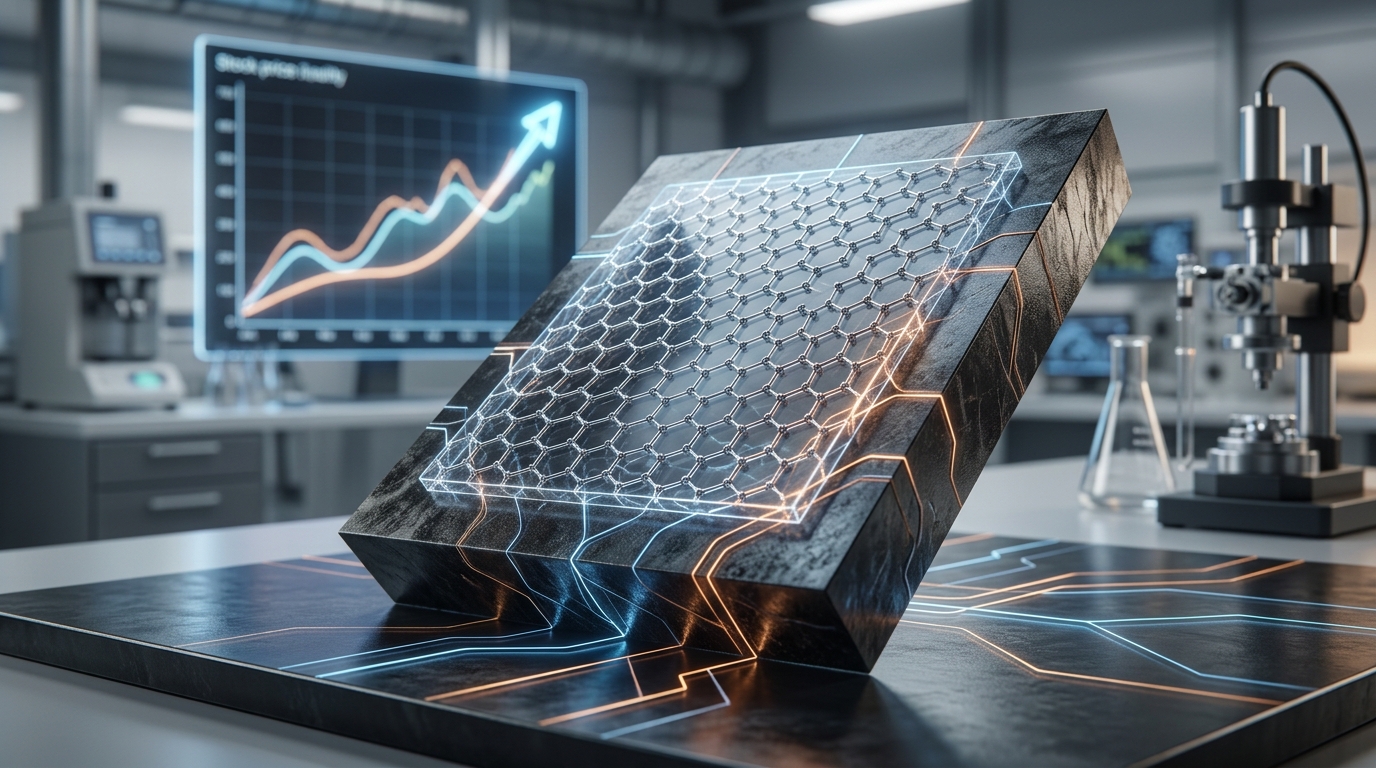
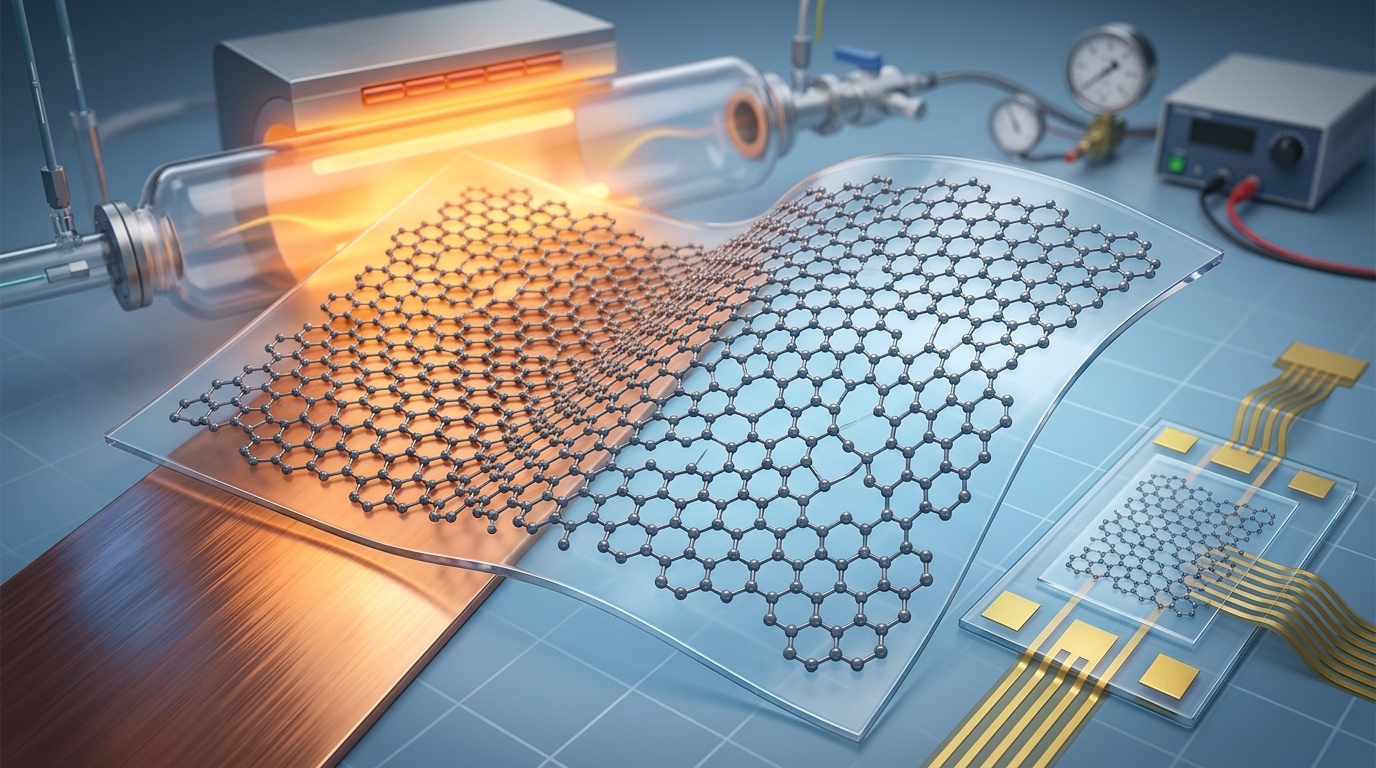
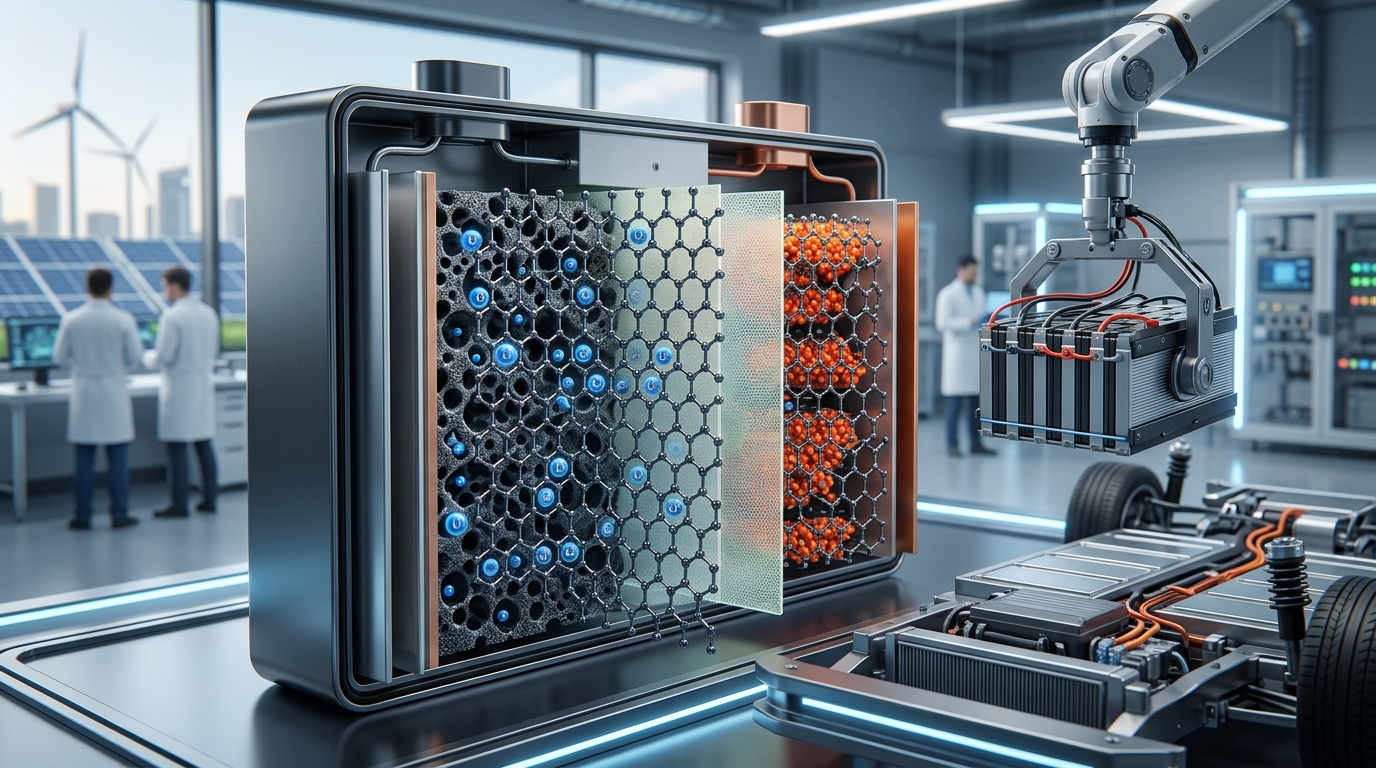
Today, practical graphene energy storage relies primarily on graphene-enhanced battery systems. Rather than replacing active battery materials entirely, single- and few-layer graphene ($sp^2$-bonded carbon lattices) serve as advanced conductive additives, mechanical stabilization matrices, and thermal conductors within established chemistries like lithium-ion, silicon-composite anodes, and hybrid ultracapacitors. Integrating nanoscale carbon networks directly addresses the primary bottlenecks of contemporary batteries: internal electrical resistance, electrode degradation during high-rate cycling, and localized thermal accumulation.
Architectural Roles of Graphene in Energy Storage
To understand how a graphene battery operates, one must look inside the cell architecture. Graphene is integrated at several critical interfaces across both the positive and negative electrodes, as well as the inactive structural components.
1. Cathode Conductive Additives
Conventional cathodes based on lithium nickel manganese cobalt oxide (NMC) or lithium iron phosphate (LFP) are limited by relatively poor intrinsic electronic conductivity. Battery engineers traditionally incorporate conductive carbon black (such as Super-P) or carbon nanotubes (CNTs) into the electrode slurry.
Graphene nanoplatelets (GNPs) and reduced graphene oxide (rGO) offer a distinct geometrical advantage. Because of their high aspect ratio and two-dimensional planar structure, graphene sheets establish a long-range, continuous 3D percolating electrical network at low weight concentrations—typically between 0.5 wt% and 2.0 wt%. This conductive web bridges isolated active cathode particles, lowering internal cell resistance ($R_i$) and facilitating fast electron transport during aggressive charge and discharge cycles.
2. Anode Matrix and Silicon Stabilization
Silicon is widely considered the premier anode material for high-energy-density cells due to its theoretical specific capacity of over $3,500text{ mAh/g}$, compared to roughly $372text{ mAh/g}$ for conventional graphite. However, silicon particles experience severe volumetric expansion—up to 300%—during lithiation and delithiation, causing particle pulverization, loss of electrical contact, and continuous solid electrolyte interphase (SEI) breakdown.
Graphene addresses this structural failure by acting as a flexible, highly conductive mechanical scaffold. Wrapping or encapsulating silicon nanoparticles within resilient graphene sheets buffers dramatic volume swings. The elastic carbon matrix maintains continuous electrical connectivity throughout repetitive cycling, shielding active silicon from direct electrolyte exposure and preventing rapid capacity fade.
3. Current Collector Coatings
Electrochemical performance is heavily dependent on the interface between active electrode coatings and metallic current collectors (aluminum for the cathode and copper for the anode). Applying a sub-micron graphene primer coating onto these metal foils provides three major benefits:
- Interfacial Resistance Reduction: It fills micro-scale surface roughness on the foil, substantially lowering contact resistance between the metal substrate and the active material coating.
- Corrosion Barrier: Graphene acts as an impermeable physical barrier against corrosive acidic electrolyte components, such as hydrofluoric acid formed by moisture traces reacting with $text{LiPF}_6$ salts.
- Dendrite Mitigation: On anode copper foils, a uniform graphene interface promotes smooth, homogeneous electric field distribution, suppressing the localized charge hotspots that trigger hazardous lithium dendrite nucleation.
4. Integrated Thermal Management
Pristine graphene possesses an extraordinary in-plane thermal conductivity of 3,000 to 5,000 W/m·K. When incorporated into electrode matrices or placed as thin interface sheets between battery tabs and module casings, graphene disperses localized heat spikes rapidly across the cell volume. Preventing localized thermal hot spots reduces thermal runaway risks under high continuous current draws.
Theoretical Pure Graphene vs. Commercial Graphene-Enhanced Systems
Distinguishing between theoretical carbon storage concepts and practical commercial technologies is essential when evaluating performance claims.
| Parameter | Theoretical “Pure Graphene” Systems | Commercial Graphene-Enhanced Systems |
|---|---|---|
| Operational Mechanism | Double-sided adsorption of lithium ions on isolated graphene sheets (theoretical capacity $sim 744text{ mAh/g}$). | Standard intercalation chemistry (NMC, LFP, Silicon-Graphite) augmented by graphene conductive networks and protective layers. |
| Manufacturing Feasibility | Commercially unviable. Severe sheet restacking, low first-cycle coulombic efficiency, large voltage hysteresis, and absence of a flat discharge plateau. | Commercially deployed. Drop-in formulations (GNPs or rGO dispersions) compatible with existing roll-to-roll electrode manufacturing lines. |
| Primary Function | Primary active storage medium. | Kinetic enhancer: lowers internal impedance, accelerates C-rates, and improves heat dissipation. |
| Practical Role | Academic exploration of carbon surface-storage mechanics. | High-rate consumer electronics, industrial battery backup units, and fast-charging electric vehicle packs. |
A pure graphene cell relying solely on surface adsorption suffers from significant operational flaws. Without structural spacers, 2D graphene sheets rapidly agglomerate back into bulk graphite due to strong van der Waals forces. Furthermore, the immense specific surface area causes massive electrolyte decomposition during the initial charge cycle, consuming a substantial portion of the active lithium inventory before the battery ever completes its first cycle. As a result, commercial engineering focuses strictly on graphene-enhanced architectures.
Head-to-Head: Graphene-Enhanced vs. Standard Lithium-Ion
Integrating graphene into conventional lithium chemistries yields noticeable improvements across specific operational metrics, though it requires design trade-offs regarding volumetric space.
Charge and Discharge Rates (C-Rate)
Standard lithium-ion cells are generally limited to continuous charge rates between 0.5C and 1C (requiring 60 to 120 minutes for a full charge). Subjecting conventional cells to fast-charging rates above 2C–3C accelerates degradation and risks lithium metal plating on the graphite anode.
Graphene-enhanced cells regularly sustain continuous charge rates of 4C to 6C or higher, enabling an 80% state-of-charge (SOC) in 10 to 15 minutes. The 3D conductive percolation network ensures electrons reach reaction sites rapidly, preventing high polarization voltages that trigger plating side-reactions.
Cycle Lifespan and Degradation
A standard high-energy lithium-ion battery typically provides between 500 and 1,500 full charge-discharge cycles before its capacity drops below 80% of its original rating (State of Health). In contrast, graphene-enhanced lithium-ion cells routinely reach 1,500 to 3,500+ cycles under comparable testing conditions. In hybrid energy storage systems that merge electrostatic graphene capacitors with battery-grade materials, operating lifetimes can surpass 50,000 cycles.
Operating Temperature and Thermal Safety
Internal cell resistance is the primary driver of Joule heating ($P = I^2 R$) during aggressive charging and high-output acceleration. Because graphene reduces cell internal resistance ($R_i$) and conducts heat outward rapidly, graphene-enhanced cells consistently run 5°C to 15°C cooler under heavy loads than standard cells of equivalent capacity. This thermal buffer keeps the cell well below the critical thresholds (typically 150°C–180°C) where separator breakdown and exothermic chemical decomposition lead to thermal runaway.
Energy Density: Gravimetric vs. Volumetric Realities
A common misconception is that adding graphene automatically doubles energy density. In reality, the gravimetric energy density (weight-based, $text{Wh/kg}$) of graphene-enhanced lithium-ion sits between 250 and 310 Wh/kg—a competitive, moderate improvement over standard lithium-ion cells (220–280 Wh/kg), driven primarily by the ability to utilize higher ratios of active silicon.
However, volumetric energy density (size-based, $text{Wh/L}$) presents an engineering trade-off. Pristine and low-defect graphene materials feature a low bulk tap density. If electrodes are loaded with excessive low-density carbon, the volumetric capacity of the cell can decline, requiring slightly larger physical enclosures for the same total energy capacity.
Current Commercial Applications
Graphene battery enhancements have moved from laboratory prototypes into targeted commercial sectors where high thermal stability, longevity, and ultra-fast charging justify specialized material costs.
Consumer Electronics and Fast-Charging Power Banks
Commercial power bank manufacturers (such as Real Graphene and Apollo Traveller) utilize graphene composite cells to deliver 60W to 100W Power Delivery (PD) fast charging. These packs can be fully replenished in 15 to 20 minutes without triggering excessive thermal throttling or premature cell swelling.
Automotive and Electric Vehicles
Automotive manufacturers actively utilize graphene-enhanced chemistries to compress charging times at high-power DC fast-charging stations. GAC Group deployed graphene-assisted battery configurations in vehicles like the Aion V 6C, capable of utilizing high-voltage charging infrastructures to reach an 80% charge in approximately 8 to 10 minutes. Tier-1 battery suppliers also deploy graphene as a conductive backbone in next-generation silicon-dominant anodes to ensure structural integrity across thousands of high-speed charging cycles.
Industrial, Grid Storage, and Data Centers
In high-reliability industrial settings, high-power graphene hybrid devices bridge the performance gap between traditional batteries and pure electrostatic supercapacitors. Skeleton Technologies manufactures curved-graphene “SuperBattery” modules that provide burst power, rapid regenerative braking energy capture for heavy transport, and sub-second bridging power for AI data center battery backup units (BBUs) and grid frequency regulation.
Technical and Economic Barriers to Mass Adoption
While graphene delivers demonstrable electrochemical advantages, widespread adoption across all price-sensitive battery sectors faces real-world engineering and supply-chain hurdles.
- Dispersion and Slurry Agglomeration: Due to strong surface van der Waals forces, graphene flakes naturally attract one another and re-aggregate in liquid slurries. Incomplete or uneven dispersion leads to localized carbon clumping, uneven electrode resistance, and inconsistent cell quality during high-speed roll-to-roll manufacturing.
- Low Initial Coulombic Efficiency (ICE): Graphene’s vast specific surface area ($>500text{ m}^2/text{g}$) exposes a large interface to the liquid electrolyte. On the initial formation cycle, this high surface area accelerates decomposition reactions, building an excessively thick solid electrolyte interphase (SEI) layer that irreversibly traps active lithium ions and lowers initial energy capacity.
- Slurry Rheology and Compaction Penalties: Pristine graphene materials feature an exceptionally low tap density ($<0.1text{ g/cm}^3$). Introducing high proportions of graphene into wet electrode formulations drastically spikes slurry viscosity, requiring extra solvents, prolonged drying times, and increased binder quantities—all of which raise manufacturing costs and compromise final electrode compaction density.
- Cost Parity Against Legacy Carbons: High-purity, few-layer battery-grade graphene is significantly more expensive per kilogram than standard carbon black or high-grade synthetic graphite. Until synthetic exfoliation and scalable methane-cracking processes achieve broader economies of scale, manufacturers reserve graphene additives for high-performance applications where charging speed and cycle life outweigh raw bill-of-materials costs.
Next-Generation Horizons: Solid-State and Lithium-Sulfur
Beyond optimizing liquid-electrolyte lithium-ion systems, graphene is being engineered into advanced, next-generation battery architectures:
- Solid-State Interface Mechanics: Solid-state batteries often suffer from void formation and contact loss at the rigid solid-electrolyte/electrode boundary during cycling. Thin graphene interlayers provide a flexible, electronically conductive interface that accommodates micro-scale interfacial strain while preventing local lithium filament growth.
- Lithium-Sulfur (Li-S) Polysulfide Trapping: Lithium-sulfur chemistries offer high theoretical energy capacities ($>1,600text{ mAh/g}$) but degrade quickly due to the “shuttle effect”—the dissolution and migration of lithium polysulfides into the electrolyte. Functionalized, chemically modified graphene frameworks serve as physical and chemical cages that immobilize polysulfides within the cathode, preserving capacity retention over extended cycling.
The graphene battery is not a single speculative device waiting for a laboratory breakthrough; it is an active family of material advancements already improving charge rates, cycle life, and thermal resilience across commercial energy storage platforms.