Adams Graphene
Adams Graphene refers to a specialized family of automotive surface protectants that blend traditional ceramic resin backbones with functionalized graphene derivatives. Developed to address common shortcomings in conventional silicon dioxide (SiO2) ceramic coatings, these formulations incorporate reduced graphene oxide into liquid silazane and siloxane matrices. The resulting hybrid chemical barrier provides high hydrophobic contact angles, heightened resistance to chemical etching, and a marked reduction in persistent water spotting.
The Formulation Architecture: Ceramics Meets Graphene
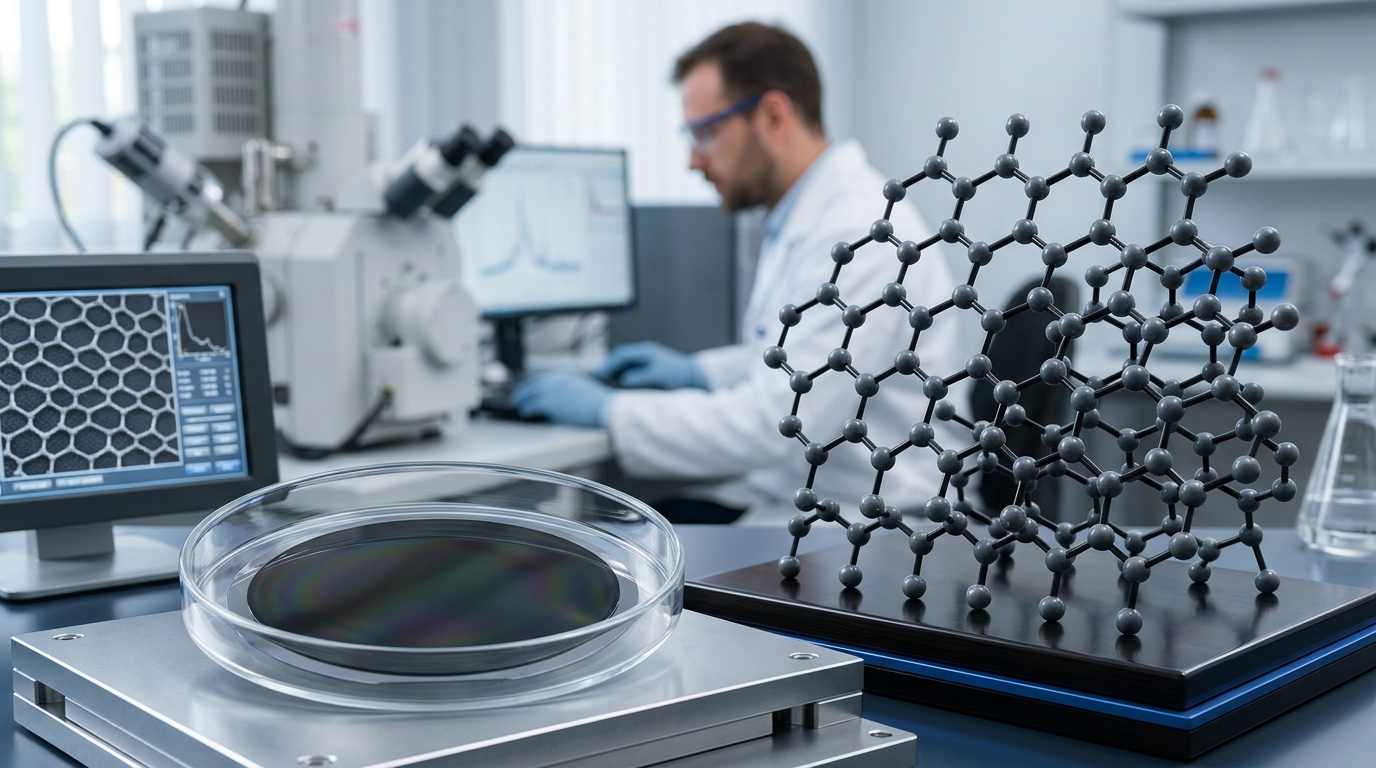
To evaluate these formulations accurately, one must first distinguish between raw mechanical-grade graphene sheets and the chemical additives used in surface sealants. A liquid coating cannot consist of pristine, freestanding monolayer graphene; instead, manufacturers formulate using reduced graphene oxide (rGO) nanoplatelets or functionalized carbon nanomaterials suspended within a curable polymer carrier.
The foundational carrier in the Adam's Graphene chemistry relies heavily on organopolysilazanes and siloxane oligomers dissolved in organic solvents. When exposed to ambient moisture after surface application, these liquid polymers undergo hydrolysis and polycondensation reactions. As the solvent evaporates, the ceramic backbone cures into a glassy, cross-linked matrix bonded directly to the vehicle's clear coat. The embedded graphene nanoplatelets distribute throughout this cross-linked lattice, reinforcing the mechanical structure and modifying the surface energy of the finished layer.
Core Protective Mechanisms
The addition of carbon-based nanomaterials to a silicon-based protective layer influences several physical and thermal properties of the vehicle's exterior.
1. Reduction of Water Spotting and Mineral Etching
Traditional SiO2 coatings, while exceptionally hydrophobic, are notorious for creating tall, beaded water droplets that act as miniature magnifying lenses under direct sunlight. As hard water beads bake onto dark paint finishes, minerals such as calcium carbonate and magnesium precipitate out of the droplet, etching into the top resin layer. Graphene-enhanced coatings lower the thermal retention of the surface and promote lower droplet sliding angles. Water beads shear off dynamic surfaces more readily, drastically minimizing the opportunity for mineral deposits to bake onto clear coat panels.
2. Chemical Resistance Across Broad pH Ranges
The dense molecular packing enabled by nanoscale fillers creates a non-porous chemical shield. A cured graphene matrix resists aggressive environmental contaminants, including industrial fallout, acidic bird droppings, road salts, and alkaline degreasers ranging across broad chemical pH spectrums (typically spanning pH 2 through pH 12). This barrier prevents reactive acidic compounds from reaching and oxidizing the underlying urethane clear coat.
3. Hydrophobic and Oleophobic Surface Energy
Graphene-infused coatings exhibit water contact angles exceeding 110 degrees, coupled with exceptionally low roll-off sliding angles often under 15 degrees. This dual behavior repels both polar liquids (water) and non-polar substances (oils, road tar, and grime). The resulting self-cleaning effect ensures that dirt remains loosely suspended atop the coating, allowing routine washing without requiring abrasive mechanical scrubbing.
4. Optical UV Tracer Technology
A distinctive functional component integrated into these specific formulations is a fluorescent tracking additive visible under ultraviolet light. Known as patent-pending UV tracer technology, this feature addresses one of the most common difficulties in ceramic installation: missed high spots or uneven coverage. When illuminated with a blue or long-wave UV light source (around 395nm wavelength), the wet or semi-cured coating glows, allowing the installer to confirm complete surface transfer and verify that all excess residue has been leveled flat.
Adams Graphene Formulation Tiers
The product architecture is categorized by active solid concentrations, intended durability, and application complexity:
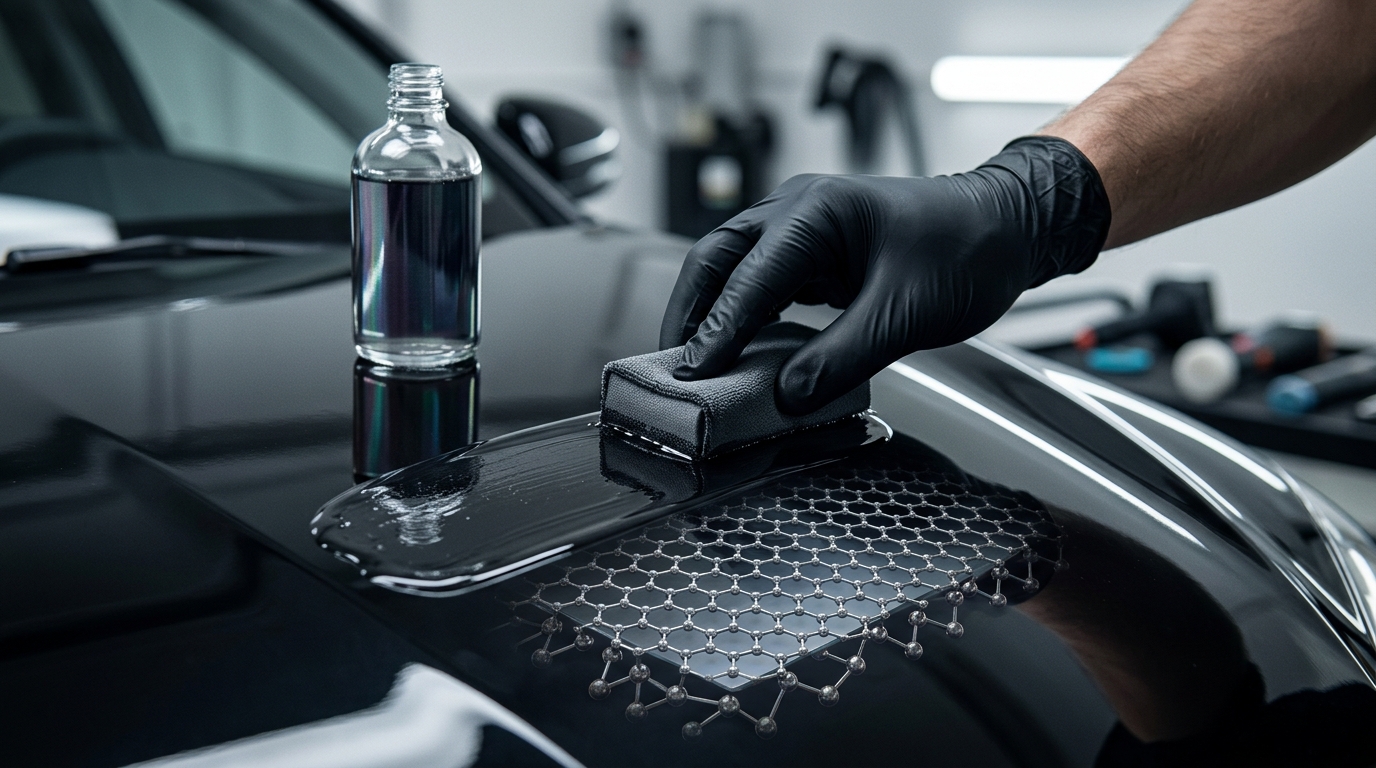
- True Professional Liquid Coatings: Packaged in small glass vials, these concentrated formulations contain the highest percentage of active polysilazane resins and graphene solids. Designed for rigorous multi-year service lifespans, they require thorough paint correction and careful leveling.
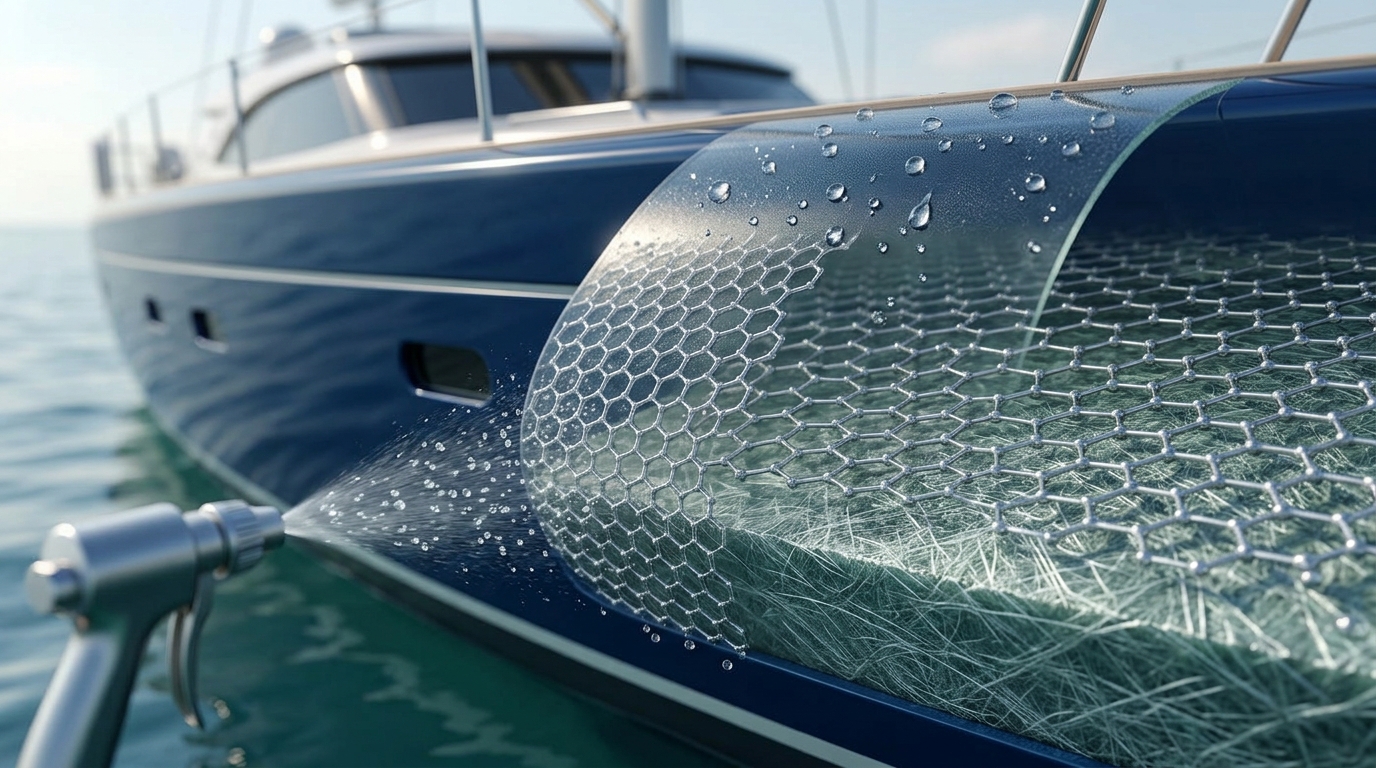
- Sprayable Graphene Coatings: Diluted carriers containing reduced solids allow for spray-trigger application. While offering shorter operational lifespans than glass-vial concentrates, sprayable variants provide a balance of true ceramic-graphene cross-linking with simplified wipe-on, wipe-off installation.
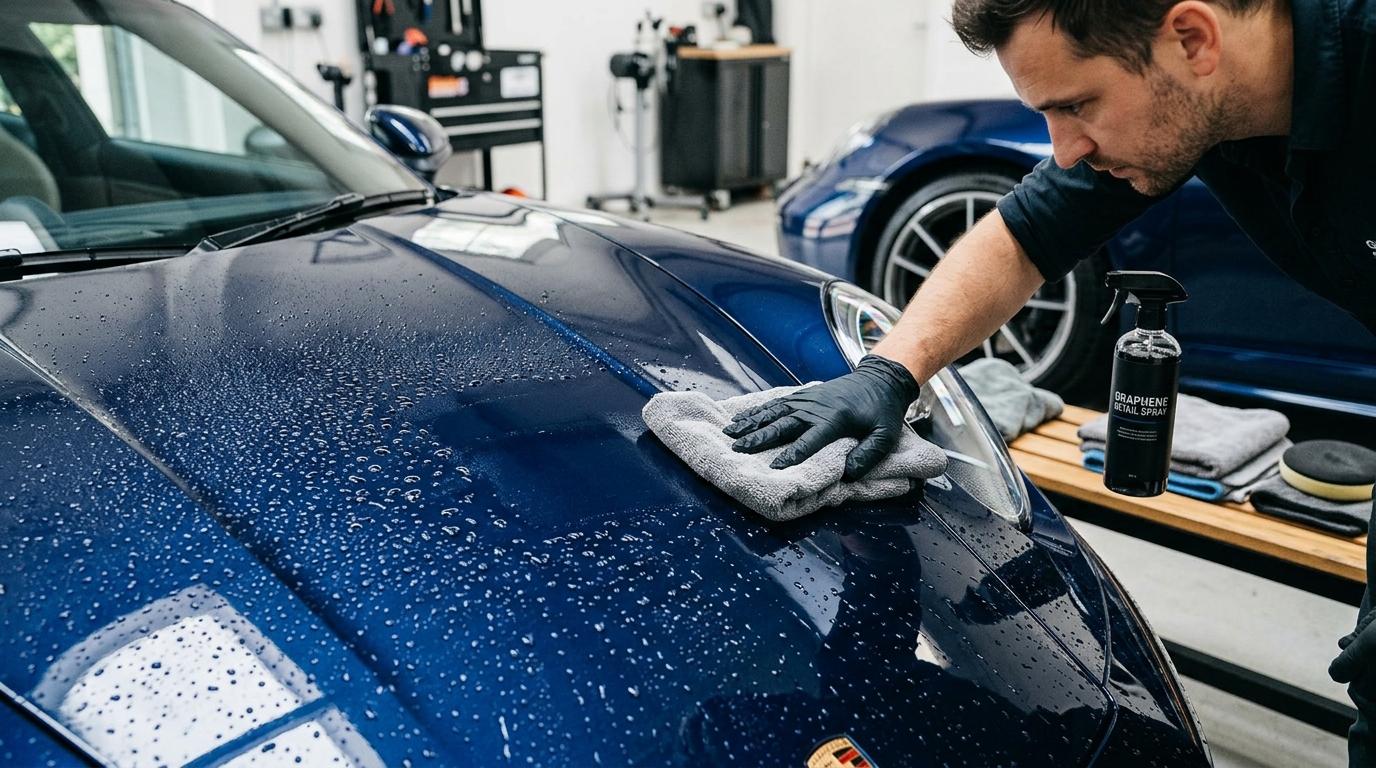
- Graphene Infused Maintenance Chemistry: Waterless wash formulas, detail sprays, and shampoo concentrates incorporate trace graphene dispersions. These maintenance products deposit sacrificial protective films designed to revitalize the hydrophobic properties and slickness of an existing base coating.
Direct Comparison: Graphene vs. Traditional SiO2 Coatings
Understanding the operational differences between standard quartz (SiO2) protectants and graphene-infused alternatives clarifies expectations for vehicle maintenance:
| Performance Attribute | Traditional SiO2 Ceramic Coating | Adams Graphene Coating |
|---|---|---|
| Water Spot Susceptibility | Moderate to High (due to high bead retention) | Low (promotes droplet roll-off and sheeting) |
| Thermal Absorption | Retains heat on darker painted panels | Aids local surface heat dissipation |
| Application Visibility | Clear visual flash; prone to unseen high spots | UV tracer reveals missed coverage under blacklight |
| Slickness / Tactile Feel | Glassy but sometimes grabby initially | Notably slicker tactile surface feel |
| Flexibility on Substrates | Rigid; can micro-crack on flexible trim | Compatible across paint, glass, trim, and wheels |
Step-by-Step Application Protocol
Achieving structural adhesion between the cross-linking silazane matrix and the automotive clear coat demands meticulous mechanical and chemical decontamination. Skipping surface preparation will lead to premature coating failure.
Phase 1: Chemical and Mechanical Decontamination
The vehicle must be washed with an alkaline, wax-stripping shampoo to remove existing road films and sealants. Follow this with an iron-dissolving chemical decon agent to extract embedded ferrous brake dust. The surface must then be treated with a dedicated clay bar or synthetic clay mitt to pull out sub-surface industrial fallout.
Phase 2: Paint Correction
Because the cured coating creates an optically clear, semi-permanent layer, any underlying swirl marks, holograms, or scratches will be sealed underneath. Machine polishing with a dual-action polisher and suitable compound/polish combinations restores paint clarity. Once compounding is complete, wipe down the entire vehicle using a pure isopropyl alcohol surface prep solution to strip polishing oils and leave raw, bare clear coat.
Phase 3: Coating Application and Leveling
Working in controlled indoor environments away from direct sunlight:
- Apply several drops of the liquid coating onto a micro-suede applicator wrapped around a foam block.
- Spread the product across a designated 2-foot by 2-foot section using a cross-hatch motion (horizontal passes followed immediately by vertical passes) to ensure continuous coverage.
- Observe the flash and sweat phase. Within 1 to 3 minutes, the carrier solvents will evaporate, leaving behind a rainbow-like sheen that separates into small beads or droplets (sweating).
- Using a high-pile, edgeless microfiber towel, gently level the surface to knock down high spots.
- Follow immediately with a separate low-pile microfiber towel to buff the panel to a crystal-clear, streak-free gloss.
- Verify uniformity by scanning the completed panel with a 395nm UV inspection light to catch any remaining residue.
Phase 4: Curing Constraints
The coating undergoes an active ambient moisture cure. It must remain completely dry and unexposed to rain, dew, or car washes for at least 24 hours. Full cross-linking and hardness stabilization continue over a 5 to 7 day duration, during which abrasive contact and chemical washing must be avoided.
Realistic Limitations and Common Misconceptions
While graphene-enhanced products offer genuine advantages in surface chemistry, consumer detailing conversations frequently suffer from exaggerated claims. Understanding the engineering boundaries ensures realistic expectations.
Physical Scratch Immunity: Marketing narratives often reference "10H hardness" (derived from pencil hardness tests, not the Mohs mineral scale). While graphene coatings improve wash-induced marring resistance, they will not protect paint against high-velocity stone chips, severe key scratches, or aggressive automated car wash brushes. Physical impact protection at that scale requires high-thickness polyurethane paint protection film (PPF).
Pure Carbon Sheets vs. Additive Nanoplatelets: The product is not a single, continuous atomic sheet of pure carbon wrapped around the vehicle. It is a polymer coating enriched with nanoplatelet additives. The protective longevity stems primarily from the density of the polysilazane cross-linked resin, augmented by the graphene material's surface-modifying properties.
Maintenance Requirements: Graphene surfaces are not "apply and forget." Road film, organic sap, and atmospheric pollutants will eventually clog the microscopic hydrophobic peaks. Periodic maintenance washing with pH-neutral shampoos and occasional decontamination with dedicated boost sprays are essential to keep the surface active over its intended lifespan.