Adams Graphene Detail Spray Review
Quick detail sprays have long served as the final step in automotive detailing, lifting light dust, boosting gloss, and enhancing slickness between washes. With the emergence of nanomaterial additives in surface care, detailing formulations evolved to integrate reduced graphene oxide into standard polymer and siloxane chemistry. Evaluating this product category requires looking past marketing hype to understand how functionalized carbon nanomaterials perform in water-based surface maintenance sprays.
This comprehensive review examines Adam’s Graphene Detail Spray, analyzing its underlying chemistry, application methods, real-world durability, and performance relative to conventional silicon dioxide (SiO2) quick detailers and permanent coatings.
Formulation Chemistry and the Role of Graphene
Traditional quick detailers rely on light emulsifiers, surfactant packages, and trace amounts of silicone oils or carnuba emulsions to lubricate paint and impart temporary shine. Ceramic-infused detailers upgraded this baseline by adding silane or siloxane polymers that leave a thin inorganic glass-like film. Graphene-enhanced detail sprays advance this concept further by suspending functionalized graphene nanoplatelets within a water-based polysiloxane matrix.
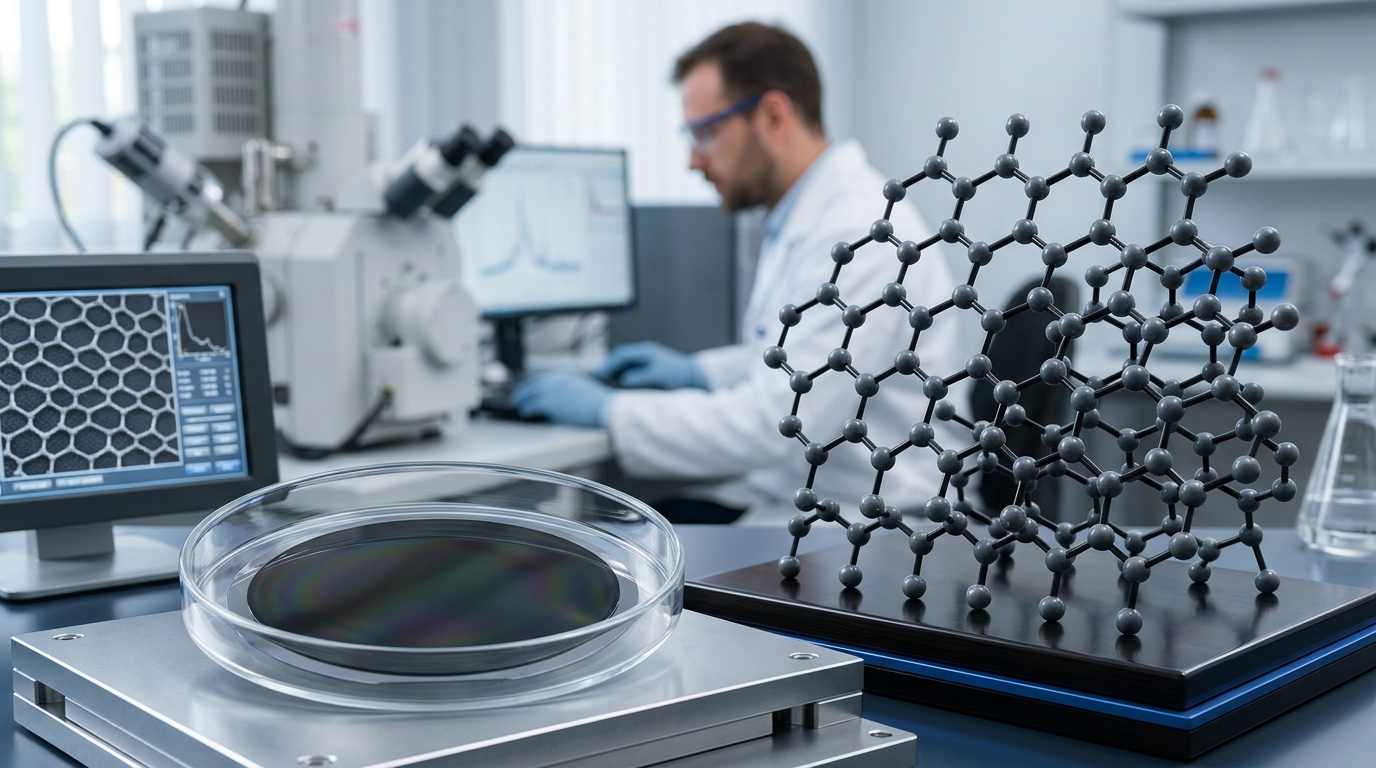
Pure pristine graphene is chemically inert and completely insoluble in water. To incorporate carbon nanomaterials into a shelf-stable sprayable liquid, manufacturers utilize functionalized graphene derivatives—primarily graphene oxide or reduced graphene oxide—bearing carboxyl, hydroxyl, and epoxy surface groups. These functional groups allow the nanomaterial to disperse uniformly in liquid carriers without settling into unusable sludge.
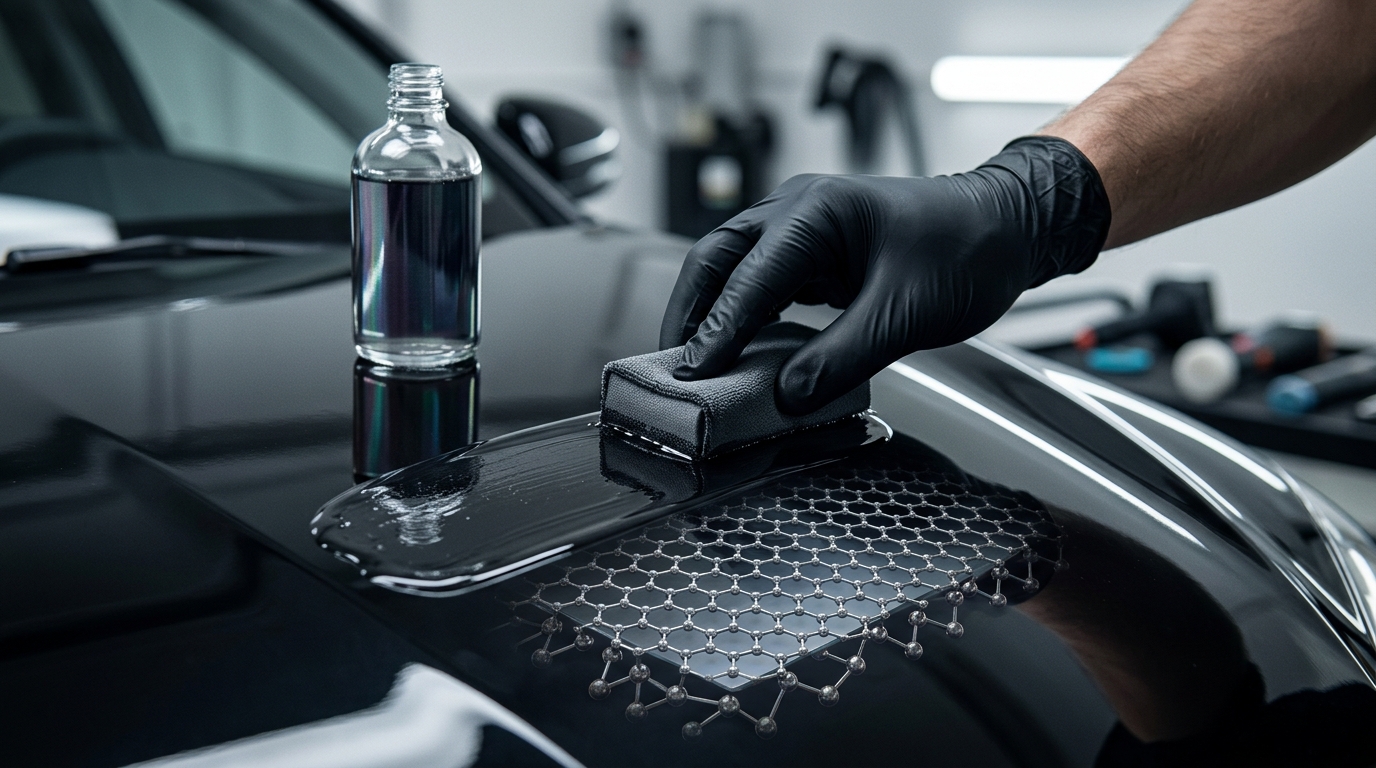
When sprayed and buffed across clear coat, the carrier solvents evaporate, allowing the cross-linking silane polymers to lock the graphene platelets into a microscopic lattice over the substrate. This creates an ultra-thin, durable sacrificial film across paintwork, glass, trim, and existing coatings.
Core Performance Characteristics
Hydrophobic Behavior and Water Evacuation
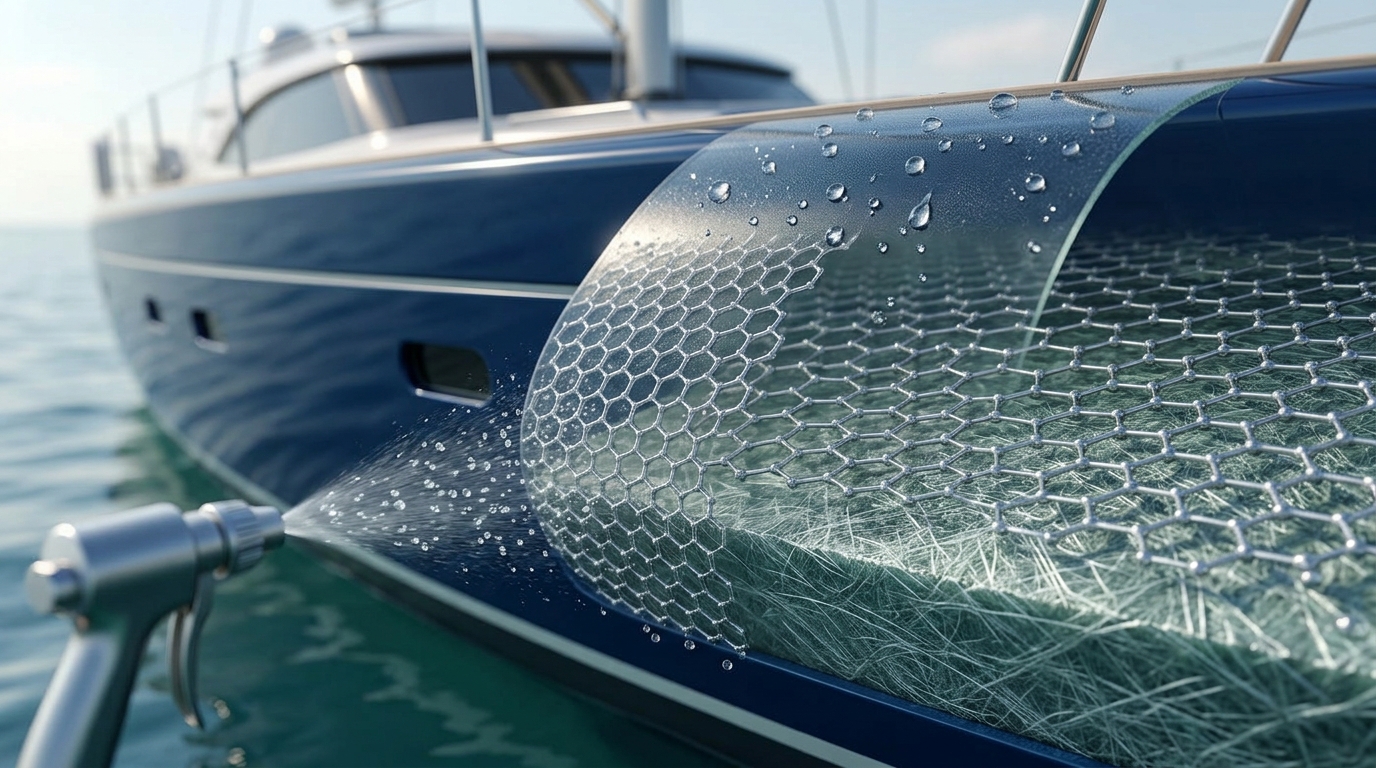
The primary benefit observed during an analytical test is the altered water behavior. Graphene-infused sprays yield high static water contact angles, often exceeding 105 degrees, producing tight, spherical water beads. More importantly, they significantly reduce contact angle hysteresis—the difference between advancing and receding contact angles. A lower hysteresis means water beads require less physical tilt or wind velocity to roll off vertical and horizontal panels, dramatically reducing standing water after rain or washing.
Water Spot Mitigation
Mineral spotting remains the single largest operational flaw of pure SiO2 ceramic coatings. Silicon dioxide coatings retain heat on dark vehicle panels, accelerating the evaporation of hard water droplets before they can slide off, which concentrates calcium and magnesium minerals into etch marks. Graphene nanoplatelets possess high thermal dissipation properties. When integrated into a surface layer, the modified microscopic texture and thermal dissipation profile help shed droplets faster and reduce the localized surface heating that bakes minerals into clear coat.
Gloss, Depth, and Tactile Slickness
Pure ceramic coatings often produce a hard, glassy, reflective appearance that can occasionally look sterile. The incorporation of carbon nanomaterial composites tends to impart a deeper, warm optical reflection reminiscent of traditional carnauba waxes, while maintaining the crisp reflections typical of synthetic sealants. Tactile slickness is noticeably higher than standard SiO2 sprays, providing substantial surface lubricity that helps reduce micro-marring when wiping clean surfaces.
Primary Application Scenarios
Detail sprays are versatile maintenance chemicals designed to fulfill distinct roles throughout standard wash regimens:
- Maintenance Topper: Applying the spray over existing ceramic or graphene coatings rejuvenates degraded top-layer hydrophobics, masks minor micro-abrasions, and leaves a fresh sacrificial protection layer without altering the base coating chemistry.
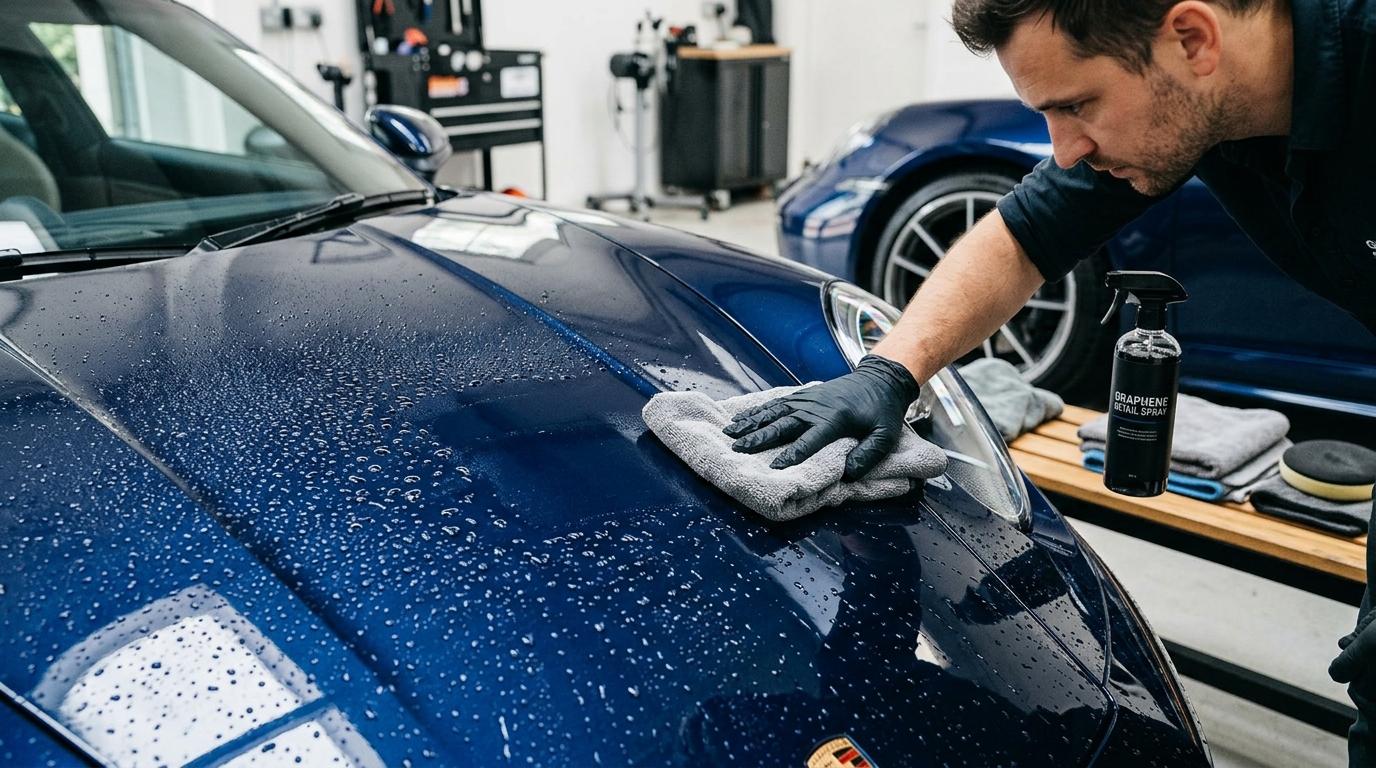
- Drying Aid: Misting panels while the vehicle is still wet after a rinse lubricates drying towels, prevents swirl marks from drying friction, breaks surface water tension for faster drying, and lays down protection in a single step.
- Light Dust and Smudge Removal: High lubricity allows safe removal of fresh fingerprints, light environmental dust, and bird drop residue between full washes without scratching clear coat.
- Stand-Alone Sealant: On bare, unprotected paint, repeated applications build a resilient, short-term hydrophobic barrier that repels road grime and eases routine washing.
Application Protocol and Practical Tips
Applying graphene detail spray is straightforward, but achieving streak-free optical clarity on dark or temperamental paint systems requires proper microfiber management.
Standard Dry Application
- Ensure the vehicle surface is cool to the touch and out of direct, intense sunlight.
- Mist a light, even spray directly onto one body panel or directly into a clean, plush microfiber towel (350–500 GSM).
- Gently spread the product using straight, overlapping passes, allowing the lubricating agents to lift surface dust.
- Flip the towel to a dry side—or use a secondary low-pile buffing towel—to buff away any residual carrier liquid to a streak-free finish.
Use as a Post-Wash Drying Aid
- Perform a thorough two-bucket contact wash and final rinse.
- While the vehicle panels are still wet, mist one to two squirts of spray per panel.
- Dry the panel using a large twisted-loop drying towel. The formula will accelerate water pickup while leaving behind gloss and hydrophobicity.
Performance Comparison Matrix
Understanding where a graphene detail spray fits in vehicle protection requires comparing it against alternative detailing chemistries.
| Parameter | Graphene Detail Spray | Standard SiO2 Detailer | True Graphene Ceramic Coating |
|---|---|---|---|
| Primary Role | Maintenance, drying aid, light cleaning | Maintenance, gloss enhancement | Long-term base protection |
| Durability | 4 to 8 weeks | 2 to 4 weeks | Multiple years |
| Application Complexity | Very low (spray and wipe) | Very low (spray and wipe) | High (paint prep, leveling, curing) |
| Bonding Type | Polymer film adhesion | Polymer film adhesion | Semi-permanent covalent bonding |
| Water Spot Resistance | High | Moderate to Low | Very High |
Limitations and Technical Realities
While graphene detail sprays offer measurable improvements over older quick detailers, keeping technical limitations in perspective prevents unrealistic expectations.
Not a Substitute for True Coatings
A spray-and-wipe formulation cannot deposit the thickness, structural density, or chemical cross-linking of an authentic bottled ceramic or graphene coating. Liquid detailers have low active solids content—generally under 5% by weight—enabling easy wiping without flashing instantly or leaving heavy high spots. As such, durability is measured in weeks or wash cycles, not years.
Scratch and Chip Resistance
No detail spray can prevent stone chips, heavy parking lot scratches, or severe mechanical abrasion. Claims of high mineral hardness ratings do not apply to microscopic polymer films deposited via a misting nozzle. The protection offered against scratching is entirely preventative: high surface slickness lowers friction, which reduces the chance of inflicting wash swirls during wiping.
Solvent and Chemical Resistance
A graphene detail spray will comfortably withstand environmental precipitation, mild road salts, and neutral car shampoos (pH 6–8). However, aggressive pre-wash degreasers, heavy iron removers, or alkaline traffic film removers (pH 11+) will strip the sacrificial layer, requiring a reapplication after decontamination washes.
Final Verdict
Adam’s Graphene Detail Spray successfully utilizes functionalized graphene dispersion technology to solve real-world detailing challenges. By combining reduced graphene oxide platelets with slick siloxane carriers, it provides improved water spot prevention, lower sliding angles, and enhanced gloss compared to traditional SiO2 sprays.
For enthusiasts maintaining an existing ceramic or graphene coating, or for vehicle owners seeking an effective, high-lubricity drying aid that leaves tangible hydrophobic protection behind, this formula represents a practical, chemically sound evolution in quick surface care.