What Is Graphene Used for?
Graphene is used to dramatically improve electrical conductivity, thermal dissipation, mechanical strength, and barrier performance in everyday materials and high-tech devices. Rather than replacing existing materials wholesale, it predominantly functions as a high-performance additive, a specialized coating, or a precision membrane across energy storage, structural composites, thermal management, and sensor electronics.
To understand what graphene is used for in the real world, one must first recognize that “graphene” is not a single off-the-shelf commodity. It is an umbrella term covering several distinct material grades—ranging from atom-thick sheets grown on metal foils to microscopic powders blended into plastics. The specific form chosen determines both its performance mechanism and its practical application.
The Connection Between Graphene Properties and Uses
Isolated for the first time in 2004, graphene consists of a single layer of carbon atoms arranged in a two-dimensional hexagonal honeycomb lattice. This unique geometry grants the material a suite of extreme physical characteristics that directly dictate its functional uses:
- Ballistic electron transport: Charge carriers travel through defect-free sheets with minimal scattering, making the material valuable for high-frequency electronics, ultra-sensitive detectors, and transparent conductive films.
- High in-plane thermal conductivity: Heat disperses rapidly along the atomic plane, enabling graphene to act as a lightweight heat spreader in compact electronic assemblies.
- Extreme intrinsic tensile strength: Carbon-carbon covalent bonds provide unmatched mechanical integrity, allowing tiny additions to reinforce structural polymers and building materials.
- Impermeability: Pristine basal planes are impermeable even to helium atoms, making graphene-derived layers exceptional barriers against moisture, oxygen, and corrosive ions.
- High theoretical surface area: Providing up to 2,630 square meters per gram, exfoliated carbon sheets offer expansive interfaces for charge storage and chemical sensing.
1. Thermal Management and Heat Dissipation
As electronic packages shrink and processing power increases, managing localized hot spots becomes a critical design bottleneck. Standard metals like copper and aluminum are heavy and rigid, whereas thermal greases can degrade or pump out under thermal cycling.
Graphene films and heat spreaders provide an anisotropic solution. Because in-plane thermal conductivity can exceed 1,500 W/m·K in high-quality sheets (compared to roughly 400 W/m·K for pure copper), laminated graphene foils redirect heat laterally away from processors, power amplifiers, and batteries. These foils are widely deployed in mobile devices, optical transceivers, and light-emitting diode (LED) systems to eliminate concentrated heat build-up without adding significant weight or thickness.
In thermal interface materials (TIMs), microscopic flakes are blended into silicones or phase-change matrices. The flakes bridge microscopic air gaps between components and heat sinks, lowering overall contact resistance and preserving electronic component lifespans.
2. Energy Storage: Batteries and Supercapacitors
Energy storage remains one of the largest industrial destinations for bulk graphene materials, primarily in the form of graphene nanoplatelets (GNPs) and reduced graphene oxide (rGO).
Lithium-Ion Battery Electrodes
In conventional lithium-ion batteries, inactive conductive carbon additives (such as carbon black) must be mixed with active cathode materials (like lithium iron phosphate or nickel-manganese-cobalt oxides) to ensure electrons move freely. Substituting carbon black with graphene establishes a continuous conductive network at a significantly lower percolation threshold.
Because the flakes are wide and thin, they wrap around active electrode particles, establishing face-to-point electronic contacts. This architectural change achieves several benefits:
- Decreases internal cell resistance (equivalent series resistance).
- Facilitates higher charge and discharge rates with less resistive heating.
- Preserves electrode integrity over hundreds of deep cycles by accommodating microscopic volume changes.
Supercapacitor Electrodes
Supercapacitors store charge electrostatically on the surface of an electrode rather than through chemical reactions. By utilizing the massive surface area of exfoliated carbon layers, graphene-based supercapacitors deliver rapid charge-discharge cycles with exceptional power density, serving regenerative braking systems, industrial cranes, and power grid stabilization.
3. Polymer Composites and Structural Materials
Adding tiny fractions of graphene to polymers—often between 0.1% and 2.0% by weight—produces dramatic structural changes. The high aspect ratio of the flakes allows them to anchor polymer chains, arresting crack growth and dispersing mechanical loads.
Sporting Goods and Automotive Components
Graphene-reinforced carbon fiber and epoxy composites are standard in elite cycling wheels, tennis racquets, hockey sticks, and automotive body panels. The additive boosts fracture toughness, dampens vibration, and increases resistance to torsional stress without incurring weight penalties.
Thermoplastics and Industrial Elastomers
When compounded into engineering thermoplastics like polyamide (nylon), polypropylene, or polyurethane, graphene improves tensile modulus, reduces wear rates, and dissipates static electricity. In automotive tires and industrial belts, graphene compounds decrease rolling resistance while simultaneously boosting abrasion resistance and mechanical grip.
Concrete and Construction Materials
In civil engineering, functionalized carbon dispersions added to concrete serve as microscopic nucleation sites during cement hydration. This accelerates the formation of calcium silicate hydrate gels, yielding concrete with higher early compressive strength, reduced micro-porosity, and lower water permeability. The resulting structures require less total cement to achieve target strengths, directly reducing the carbon footprint of structural engineering.
4. Protective Coatings, Inks, and Barrier Films
Corrosion occurs when water, oxygen, and electrolytes reach a vulnerable metallic surface. Traditional zinc-rich primers and epoxy barriers slowly degrade as corrosive agents diffuse through the resin matrix.
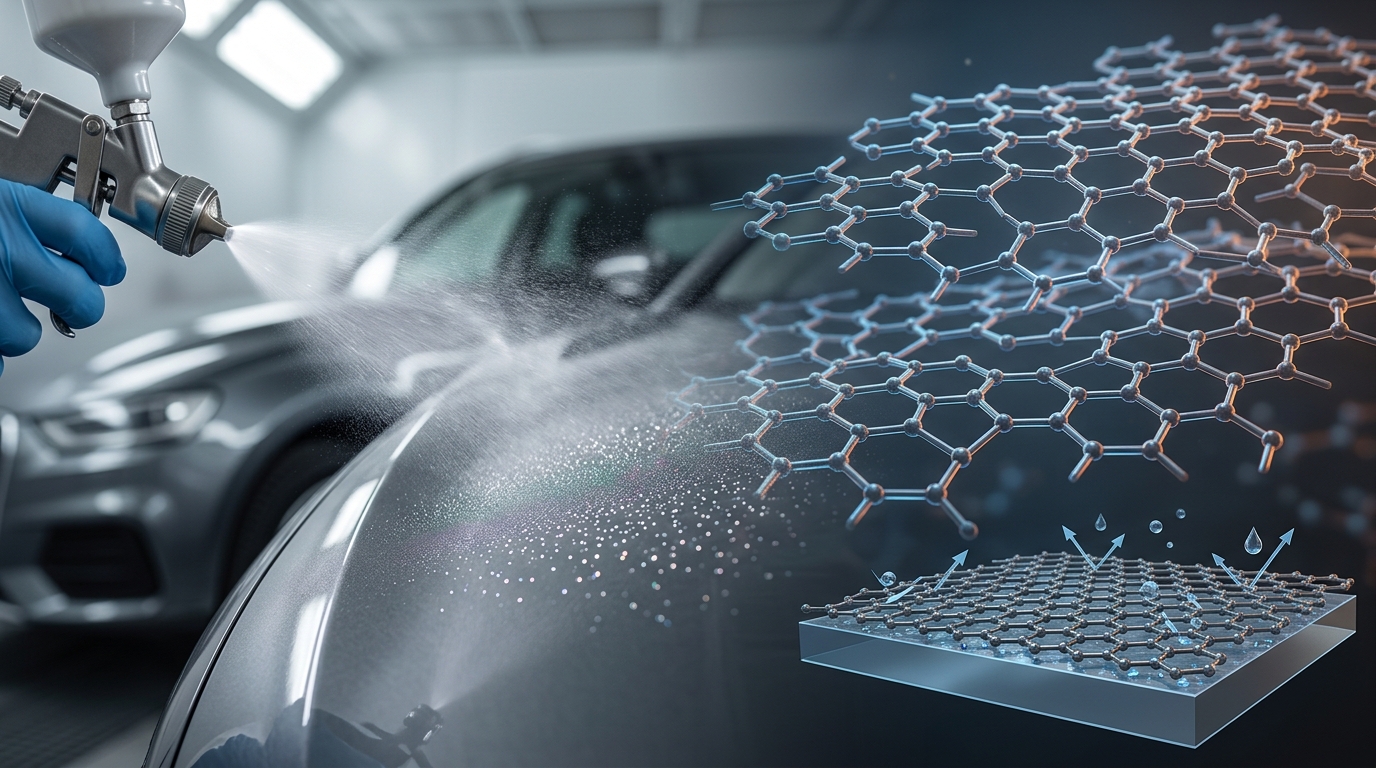
Incorporating overlapping graphene platelets creates a microscopic tortuous diffusion pathway. Molecules of oxygen and water cannot pass through the hexagonal carbon lattice; instead, they must navigate around millions of overlapping platelets to reach the substrate. This extended pathway delays rust formation on marine infrastructure, industrial pipes, and automotive underbodies.
Additionally, formulated graphene dispersions serve as conductive printing inks for flexible radio-frequency identification (RFID) tags, printed sensors, heating elements, and smart packaging, curing at temperatures compatible with paper and plastic substrates.
5. Water Filtration and Separation Membranes
Water purification leverages chemically modified forms of the material, particularly porous graphene oxide sheets. In these laminates, the spaces between stacked layers act as sub-nanometer channels.
Water molecules pass rapidly through these nano-channels due to low-friction capillary flow along unoxidized patches of the lattice, while larger hydrated ions, microplastics, dyes, and organic contaminants are physically blocked. This selective transport mechanism allows separation membranes to operate at higher permeate fluxes and lower operating pressures than standard polyamide reverse-osmosis membranes, lowering energy requirements for wastewater reclamation and industrial separation.
6. Electronics, Photonics, and Biosensors
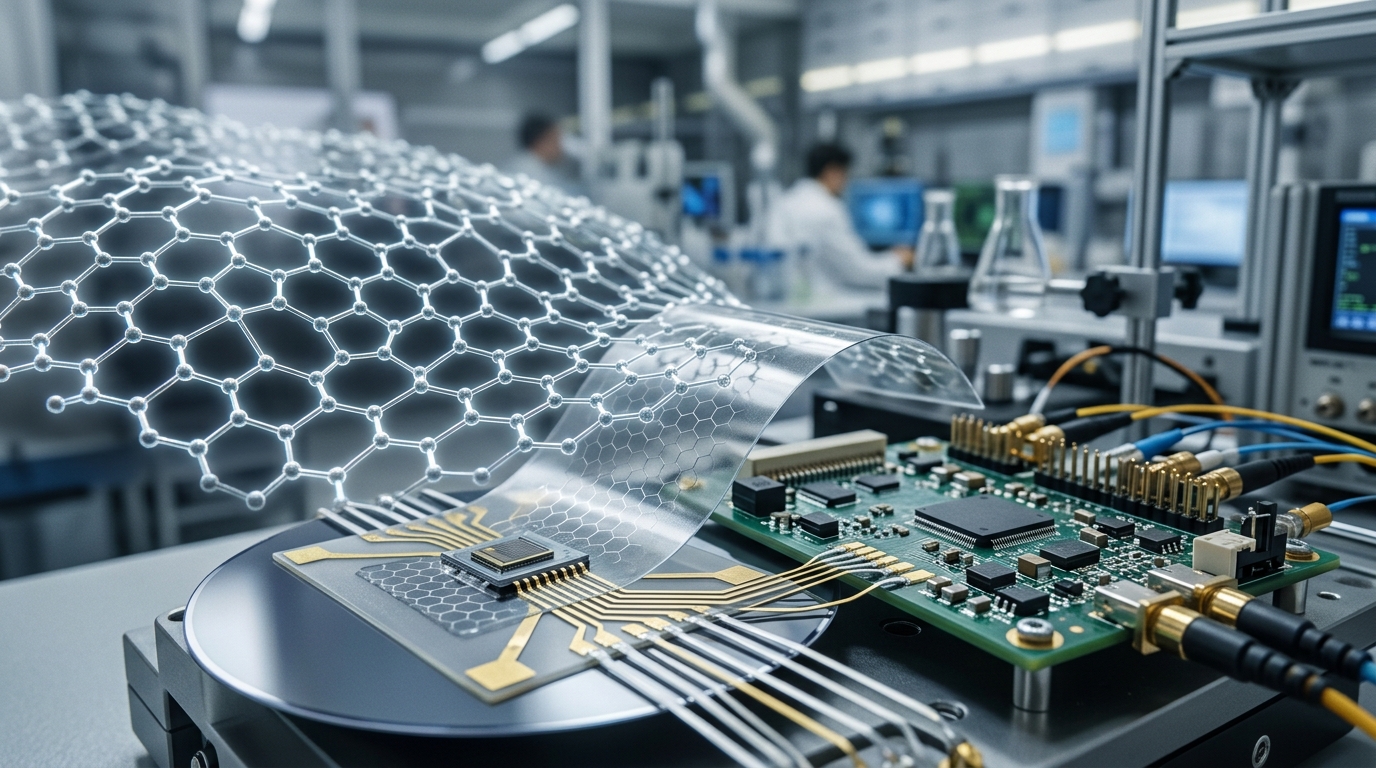
While bulk graphene dominates structural and energy uses, ultra-pure monolayer graphene grown via chemical vapor deposition (CVD) powers advanced optoelectronics and diagnostic hardware.
Field-Effect Biosensors
Because every single atom in a monolayer sheet is directly exposed to its environment, the material’s electrical conductivity is extremely sensitive to electrostatic disturbances. In field-effect biosensors, functionalized receptor molecules are anchored to the carbon surface. When target biomarkers—such as specific viral proteins, glucose molecules, or DNA strands—bind to these receptors, the local charge shifts, instantly altering the channel conductance. This permits label-free, real-time diagnostic testing with detection limits reaching femtomolar concentrations.
Magnetic and Photonic Detectors
High carrier mobility makes monolayer carbon an ideal candidate for Hall effect magnetic sensors that function reliably across broad temperature ranges. In photonics, graphene absorbs light across an exceptionally wide spectral range (from ultraviolet to terahertz), enabling ultra-fast photodetectors for optical interconnects and precision infrared imaging.
Material Grades: Matching the Form to the Application
One of the most common misconceptions is that any graphene sample can serve any purpose. The material form dictates both the cost profile and the viable engineering applications:
| Graphene Form | Primary Production Method | Key Characteristics | Typical Applications |
|---|---|---|---|
| Monolayer CVD Graphene | Chemical vapor deposition on copper/nickel foil | Continuous, ultra-thin single atomic layer; high electron mobility; optical transparency. | Optoelectronics, biosensors, Hall effect sensors, high-frequency transistors. |
| Graphene Nanoplatelets (GNPs) | Liquid-phase or mechanical exfoliation of natural graphite | Multi-layer stacks (5 to 30 layers); high mechanical stiffness; strong thermal conductivity. | Polymer composites, sporting equipment, automotive parts, concrete, thermal greases. |
| Graphene Oxide (GO) | Chemical oxidation of graphite (e.g., modified Hummers method) | Oxygen-functionalized (epoxy, hydroxyl, carboxyl groups); water-dispersible; electrically insulating. | Water purification membranes, cement admixtures, specialized chemical barriers. |
| Reduced Graphene Oxide (rGO) | Thermal or chemical reduction of graphene oxide | Restored electrical conductivity; contains structural defects; scalable powder format. | Battery conductive additives, supercapacitor electrodes, anti-static coatings, conductive inks. |
Technical Bottlenecks and Practical Tradeoffs
While the physical properties of graphene are extraordinary, transitioning from laboratory experiments to standard manufacturing introduces several technical challenges:
Agglomeration and Restacking
Due to strong inter-sheet van der Waals forces, pristine graphene sheets naturally attract one another and restack into graphite unless chemically stabilized or mechanically separated. If flakes clump together during composite manufacturing, they act as defect sites rather than structural reinforcements, weakening the final part.
Interfacial Compatibility
Pristine basal carbon is chemically inert and hydrophobic, making it difficult to bond with hydrophilic polymers or aqueous solutions. Surface functionalization (attaching targeted chemical groups) improves dispersion and interface adhesion, but disrupts the pristine sp² carbon lattice, partially reducing electrical and thermal conductivity. Formulators must carefully balance chemical compatibility against property retention.
Quality and Standardization
Powdered products sold under the general label of graphene can vary wildly in lateral flake size, thickness (number of layers), defect density, and residual ash content. A material optimized for battery electrode connectivity may perform poorly as a barrier coating, making strict characterization testing (using Raman spectroscopy, atomic force microscopy, and X-ray photoelectron spectroscopy) essential for reliable industrial adoption.
Summary of Demonstrated Commercial Realities
Graphene is not an exotic theoretical concept; it is an active engineering additive functioning inside consumer electronics, commercial vehicles, structural building projects, and precision medical devices. By pairing specific material forms—whether CVD monolayers, functionalized oxides, or robust nanoplatelets—to corresponding mechanical, thermal, and electrical requirements, manufacturers leverage graphene to push the operational limits of traditional materials.