Graphene vs. Ceramic Coating
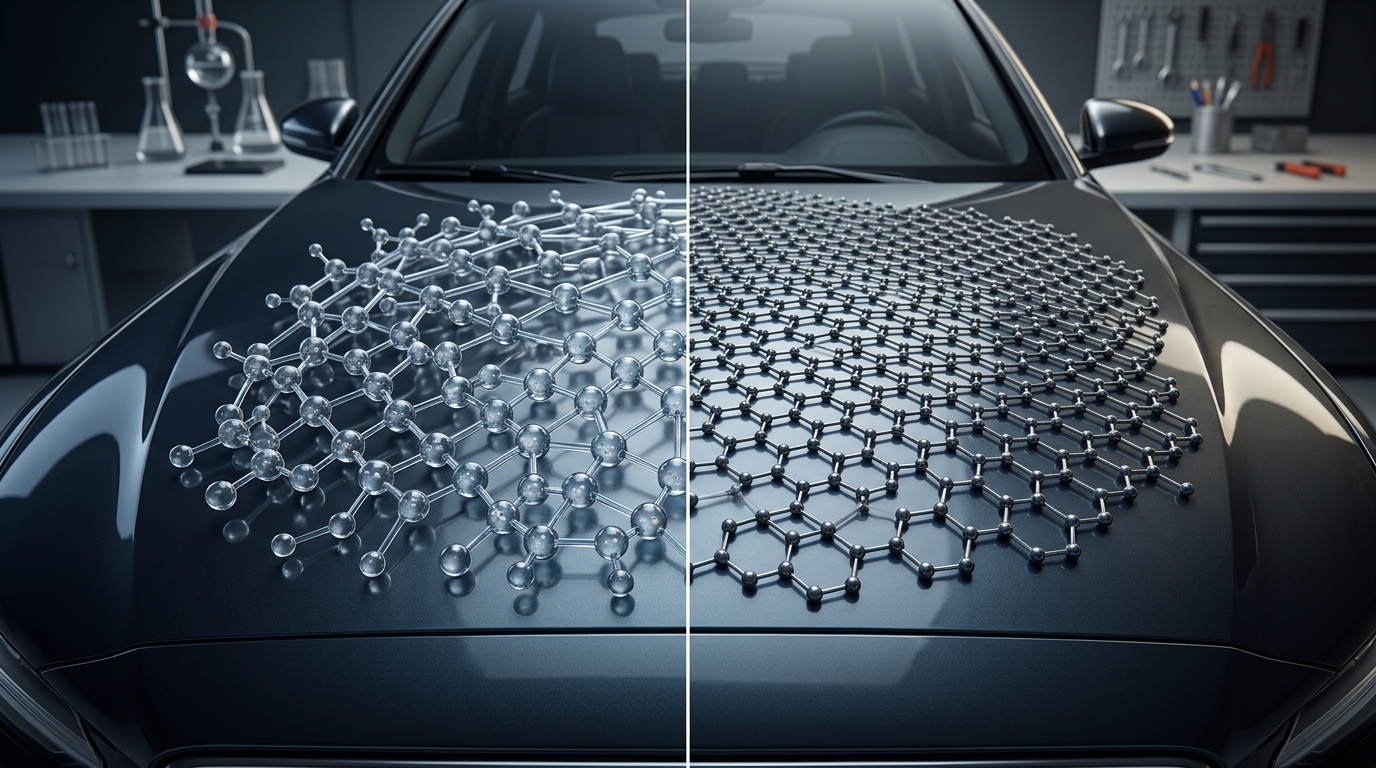
When comparing a graphene vs ceramic coating, the central distinction lies in formulation chemistry rather than an entirely new category of surface protection. Traditional ceramic coatings rely on silicon dioxide or polysilazanes to build a hard, glassy barrier over automotive clear coat. Graphene coatings, in contrast, are ceramic-resin hybrid matrices infused with microscopic platelets of graphene oxide or reduced graphene oxide. While marketing claims often portray graphene as an impenetrable shield, the real-world advantage comes down to measurable physical differences: reduced water spotting, improved heat dissipation, lower surface friction, and greater matrix flexibility.
The Chemistry Behind Ceramic and Graphene Formulations
To understand how these protective layers function on a vehicle, one must first look at their chemical architecture.
Ceramic Coatings: The Silicon Dioxide Standard
Conventional ceramic coatings are liquid polymers formulated with silanes, siloxanes, or polysilazanes suspended in a solvent carrier. When applied to clean automotive clear coat, the product undergoes a hydrolysis and condensation reaction, curing into a rigid, crosslinked siloxane matrix.
This cured quartz-like lattice bonds covalently to the paint, creating a sacrificial barrier with several distinct properties:
- Hardness: Forms a dense surface layer measured on the pencil hardness scale (typically 9H).
- Hydrophobicity: Increases the static water contact angle to roughly 100° to 110°, forcing water to bead tightly.
- Chemical Resistance: Shields the underlying clear coat from organic contamination like bird droppings, tree sap, and road salts.
Graphene Coatings: Carbon-Enhanced Hybrid Resins
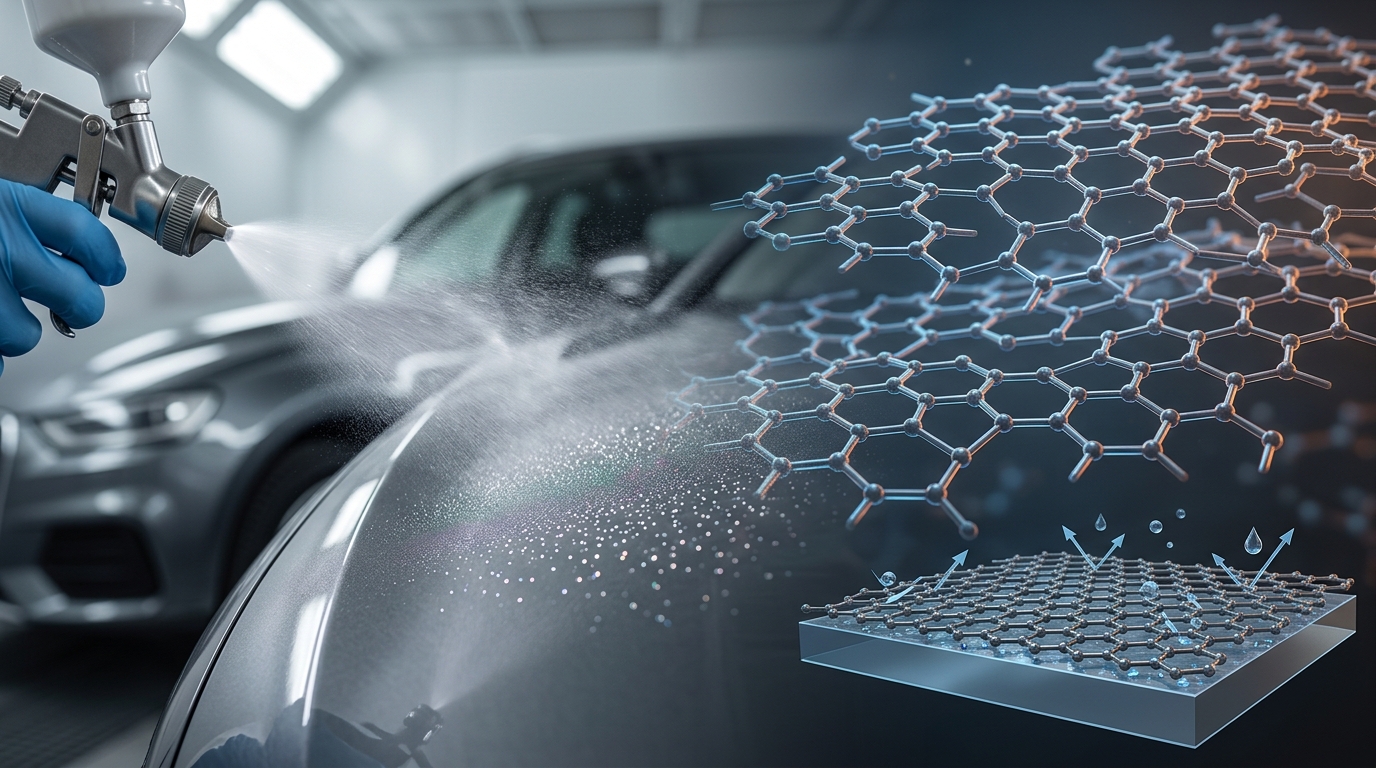
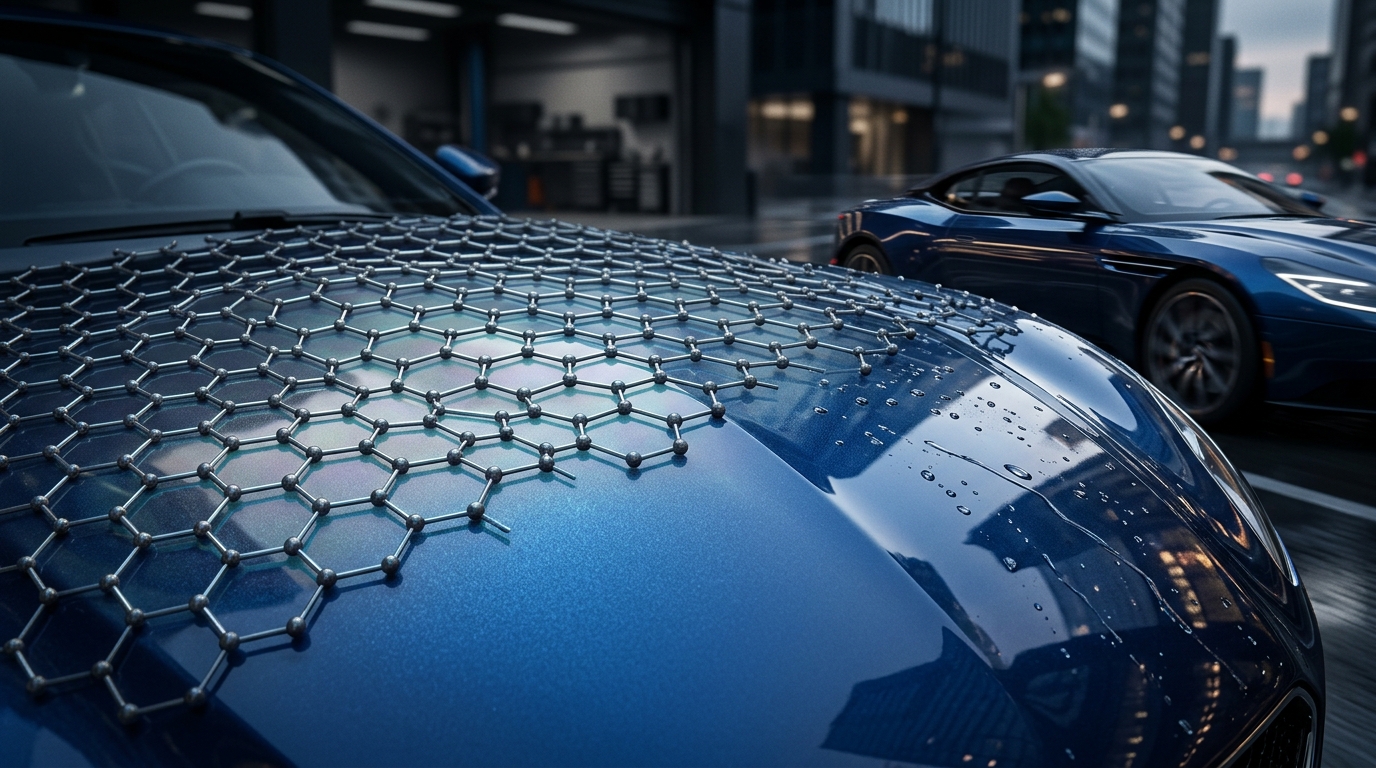
Pure, pristine graphene consists of a single layer of carbon atoms arranged in a two-dimensional hexagonal lattice. However, applying a single-atom sheet directly to an automobile body is physically impossible outside of a chemical vapor deposition laboratory chamber. Detailing products therefore utilize reduced graphene oxide (rGO) or functionalized graphene nanoplatelets suspended inside a conventional ceramic or fluoropolymer resin carrier.
The carrier liquid provides the chemical bonding mechanism to anchor to the paint, while the suspended carbon platelets interlock within the cured resin matrix. This composite architecture changes the mechanical and thermal characteristics of the cured film without abandoning the proven durability of ceramic binders.
Performance Showdown: Graphene vs Ceramic Coating
1. Water Spotting and Contact Angle Dynamics
Water spotting is the primary operational weakness of traditional ceramic coatings. Because ceramic layers create high surface tension with steep water contact angles, beads sit tall and spherical on horizontal panels like hoods and roofs. When sunlight hits these beads, the water acts as a magnifying lens, concentrating heat and baking dissolved minerals (calcium and magnesium) deep into the coating.
Graphene coatings alter this behavior by adjusting both the static contact angle and the sliding angle (dynamic roll-off angle). By lowering contact angle hysteresis, graphene coatings allow water droplets to roll off flat surfaces at much lower tilt angles. Furthermore, the molecular dispersion of carbon platelets creates a smoother surface profile, allowing droplets to sheet away before severe evaporation occurs.
2. Heat Dissipation and Surface Temperature
Dark automotive finishes absorb substantial infrared radiation, driving surface temperatures high during direct sun exposure. High panel heat accelerates the etching process when acidic contaminants land on the paint.
Carbon allotropes possess exceptionally high thermal conductivity. When integrated into a surface resin, graphene platelets help distribute localized thermal energy across the panel rather than letting hot spots concentrate beneath individual mineral deposits. While this does not make the car cool to the touch, it slows the rate at which mineral deposits bake into the resin.
3. Mechanical Flexibility and Impact Tolerance
Standard quartz ceramic coatings cure into a rigid, glass-like state. Automotive body panels, however, expand and contract continuously with environmental temperature swings. Furthermore, soft polyurethane and polycarbonate bumpers flex under minor physical stress.
Because pure siloxane networks are inherently brittle, excessive thermal cycling or micro-flexing can cause microscopic stress fractures over long periods. The two-dimensional platelets in graphene-infused composites act much like microscopic rebar in concrete, providing shear stress dissipation that allows the coating to flex with the substrate without micro-cracking.
4. Chemical and Corrosion Resistance
Both coating styles offer strong defense against chemical wash solutions, industrial fallout, and acidic wash cycles. A high-quality ceramic coating generally resists solutions across the pH 2 to pH 12 range. Graphene-enhanced resins often widen this margin to pH 1 through pH 13 or 14, providing higher resistance to harsh alkaline degreasers and road-cleaning salts.
5. Anti-Static Behavior and Dust Accumulation
A frequent consumer complaint regarding ceramic coatings is dust attraction. Because cured ceramic is an electrical insulator, buffing microfiber towels or airflow across dry paint generates static electricity, drawing ambient dust particles immediately after washing.
Graphene is an exceptional electrical conductor. When properly formulated within the resin matrix, the conductive network can reduce surface static charge accumulation, making dry dust and pollen less prone to clinging tenaciously between washes.
Direct Comparison Matrix
| Attribute | Traditional Ceramic Coating | Graphene-Infused Coating |
|---|---|---|
| Primary Active Ingredient | Silicon dioxide (SiO2), Polysilazanes | Graphene oxide (rGO) in a siloxane/polymer matrix |
| Water Spot Resistance | Moderate; prone to bead etching on flat panels | High; lower sliding angle promotes fast drainage |
| Water Behavior | High contact angle beading | Fast hydrophobic roll-off and sheeting |
| Flexibility | Low; brittle crystalline structure | Moderate to High; platelet-reinforced composite |
| Chemical Tolerance | pH 2 – 12 | pH 1 – 13+ |
| Application Viscosity | Clear, water-like or light oil consistency | Dark grey/black tint in bottle; clears upon wipe-off |
Application and Installation Realities
Both coating types require identical preparation processes. No surface coating can mask paint defects, swirl marks, or oxidation. The long-term performance of either coating relies directly on thorough decon wash steps, mechanical clay bar treatment, multi-stage machine polishing, and an isopropyl alcohol or solvent wipe down to remove residual polishing oils.
Working Window and Flashing Behavior
Ceramic coatings display a distinct “rainbowing” or oil-slick appearance as their solvent carriers evaporate, signaling the precise moment to level the coating with a microfiber towel. High-solid ceramic coatings can be unforgiving; missing the flash window can result in stubborn high spots that require mechanical compounding to remove.
Graphene-infused coatings often carry a dark, charcoal tint in the bottle due to the carbon suspension, but they apply completely transparently on paint. Many graphene formulations feature a slightly wider flashing window, which makes leveling more predictable under varying ambient humidity levels. However, if allowed to over-cure before leveling, graphene coatings can be equally difficult to correct.
Common Misconceptions in the Detailing Industry
The isolation of graphene in 2004 sparked intense scientific exploration, but consumer marketing has introduced several misleading claims into the surface protection space:
- “It’s 100% pure graphene”: A pure monolayer of graphene cannot be bottled as a liquid. Any consumer or professional product is a hybrid resin using graphene oxide as a specialized additive.
- “It prevents all rock chips”: Neither ceramic nor graphene coatings prevent physical rock chips from highway debris. Their cured film thickness is measured in micrometers (typically 1 to 3 microns), which is insufficient to absorb high-velocity stone impacts. Dedicated paint protection film (PPF) is the only solution for physical impact protection.
- “It lasts forever without maintenance”: All coatings degrade when neglected. Traffic film, industrial fallout, and mineral scale clog the microscopic peaks and valleys of both ceramic and graphene surfaces over time, dampening their hydrophobic properties unless washed and decontaminated regularly.
Selecting the Right Protection
Choosing between a ceramic coating and a graphene formulation depends on vehicle usage, climate, and storage conditions:
A traditional ceramic coating is ideal if:
- The vehicle is garage-kept and infrequently exposed to standing rain followed by intense sunlight.
- You prefer a proven, decades-tested technology with widespread installer support and standardized maintenance lines.
- Tight, tall water beading is the aesthetic visual standard you prefer to see during maintenance washes.
A graphene coating is ideal if:
- The vehicle is parked outdoors daily, making it vulnerable to sprinkler water, acid rain, and harsh midday sun.
- You drive a dark-colored or black vehicle where water spotting and visible dust accumulation are persistent frustrations.
- You operate in regions with aggressive winter road salts or industrial fallout requiring higher chemical resilience.