Graphene Nanoparticles Conductive Additive
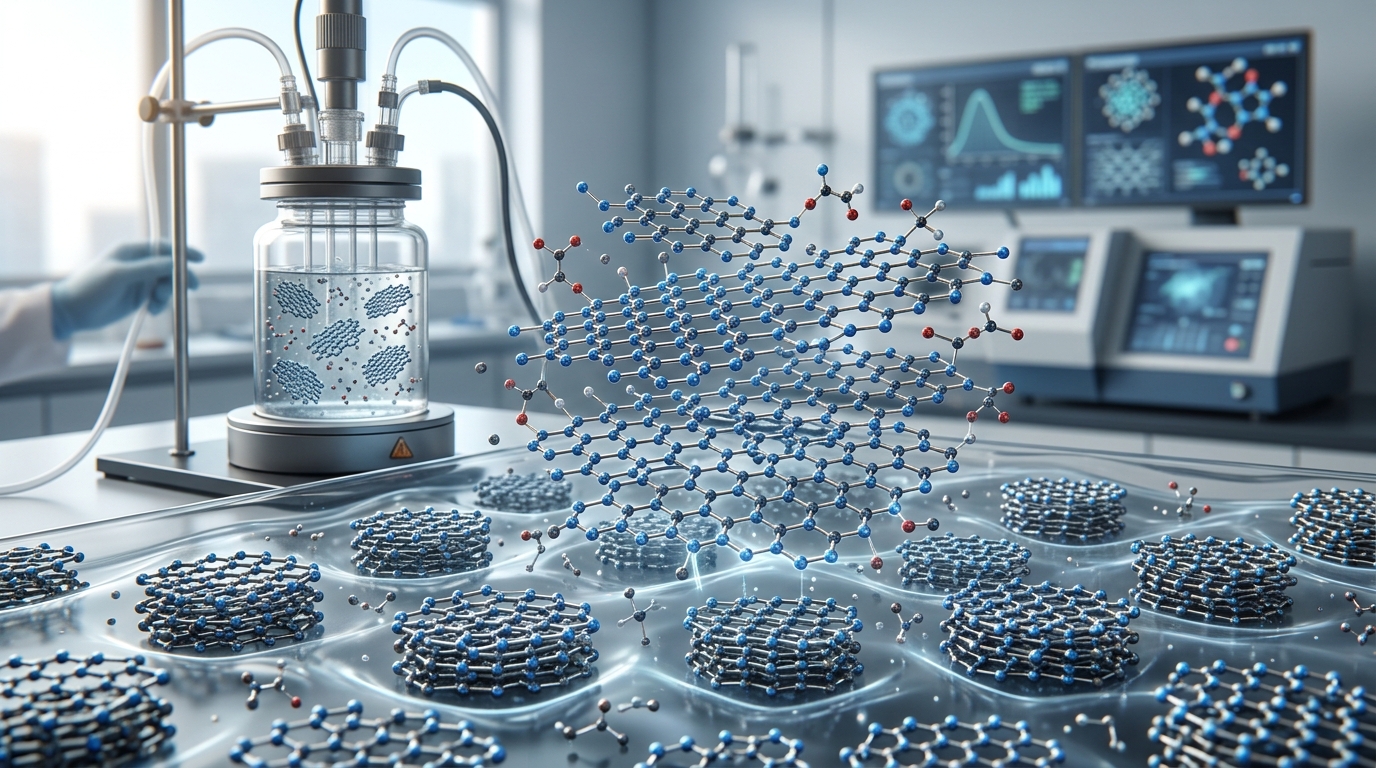
In modern materials compounding, a graphene nanoparticles conductive additive serves as a functional constituent engineered to impart electrical pathways into insulating or semi-insulating matrices. While pristine, single-atom graphene remains a benchmark in academic solid-state physics, industrial processing relies on multi-layer graphene nanoplatelets (GNPs), reduced graphene oxide (rGO) flakes, and sub-micron graphene particle powders. These two-dimensional (2D) carbon nanomaterials bridge the performance gaps of legacy fillers by providing low electrical percolation thresholds, robust mechanical reinforcement, and incidental thermal dissipation at lower mass fractions than conventional carbon black.
Electrical Percolation Mechanics and Electron Transport
The core objective of introducing any conductive additive into a polymer, ceramic, or battery slurry is to achieve the electrical percolation threshold. This threshold is the minimum filler volume fraction at which isolated conductive particles form an interconnected, continuous network throughout the host matrix, shifting the material from an insulator to a semiconductor or conductor.
Electron transport across a graphene-modified matrix occurs via two primary physical mechanisms:
- Direct Ohmic Contact: Physical overlap between adjacent graphene sheets facilitates unhindered pi-electron migration along the basal planes of the platelets.
- Quantum Tunneling (Hopping Conduction): When graphene platelets are separated by a thin inter-particle barrier of polymer matrix (typically under 2 to 5 nanometers), electrons overcome the potential barrier via quantum tunneling, governed by Flory-Stockmayer percolation principles and Simmons’ tunneling theory.
The distinct geometric advantage of graphene nanoparticles is their high aspect ratio (lateral diameter divided by thickness). Classic statistical percolation models dictate that the critical volume fraction needed to form a conductive network scales inversely with aspect ratio:
φc ∝ 1 / (Aspect Ratio)
While zero-dimensional or spherical fillers (such as standard furnace carbon black) possess an aspect ratio close to 1, planar graphene nanoplatelets regularly exhibit aspect ratios ranging from 200 to over 1,000. Consequently, graphene can induce percolation at fractions between 0.1 wt% and 2.0 wt%, whereas spherical carbon blacks often demand 8 wt% to 20 wt% to achieve comparable volume conductivity.
Comparative Matrix: Graphene vs. Legacy Conductive Additives
Formulators evaluate conductive fillers based on particle morphology, rheological penalty, mechanical reinforcement, and cost-in-use. The following table contrasts graphene nanoparticles with traditional furnace carbon black and multi-walled carbon nanotubes (MWCNTs):
| Parameter | Carbon Black (Furnace) | MWCNTs (1D Tubes) | Graphene Nanoparticles (2D) |
|---|---|---|---|
| Morphology | 0D / Spherical aggregates | 1D / High-aspect cylinders | 2D / Planar platelets / flakes |
| Typical Percolation Threshold | 8.0 – 20.0 wt% | 0.05 – 1.0 wt% | 0.2 – 2.5 wt% |
| Slurry / Melt Viscosity Impact | High at effective loadings | Extreme (shear thinning) | Moderate to High (morphology-dependent) |
| In-Plane Electron Mobility | Moderate (amorphous shells) | High (axial direction) | Very High (across x-y basal plane) |
| Thermal Conductivity Contribution | Minimal | Moderate to High | High (dual thermal/electrical network) |
| Impact on Base Mechanicals | Reduces elongation, embrittles | Increases tensile, preserves toughness | Increases modulus, preserves impact resistance |
Primary Industrial Applications
1. Lithium-Ion Battery Electrodes
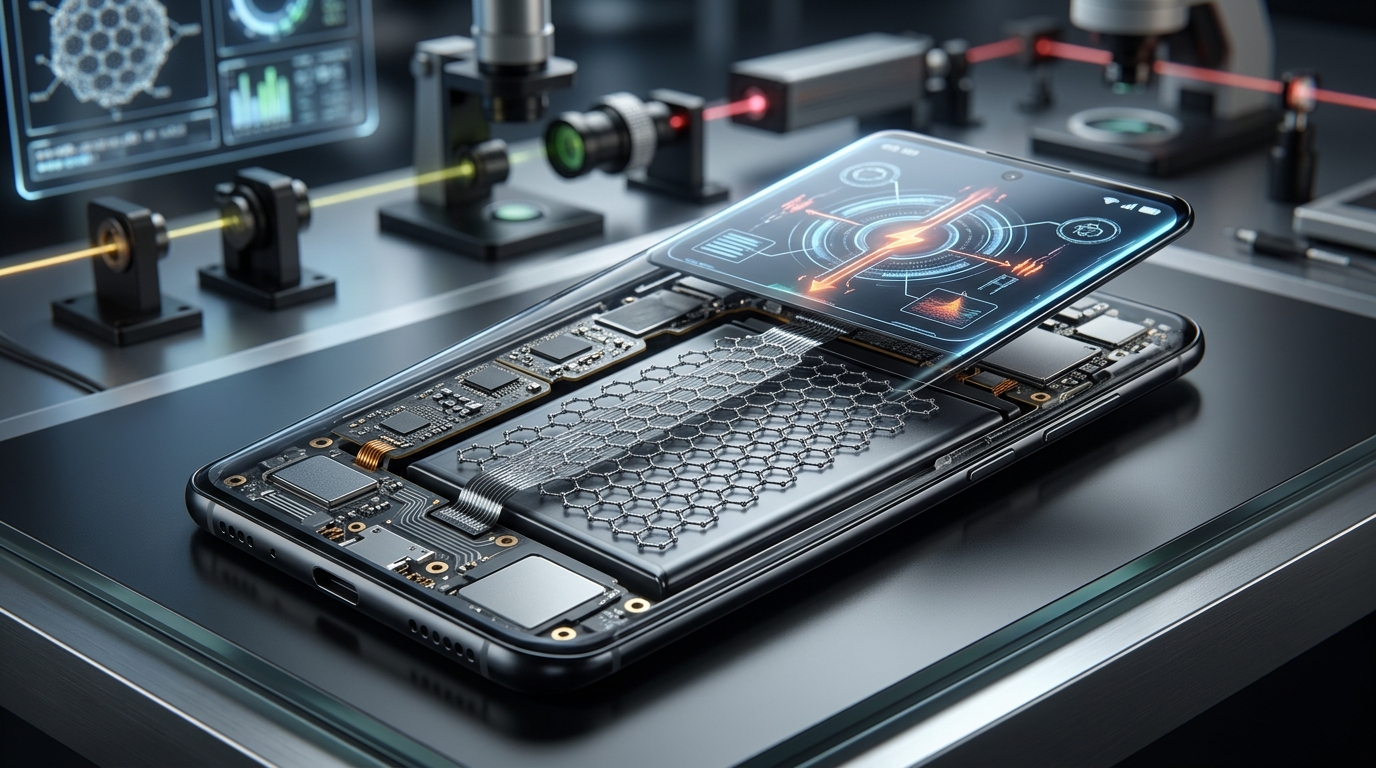
In lithium-ion battery (LIB) manufacturing, the active cathode materials (such as lithium iron phosphate, LFP, or nickel manganese cobalt oxide, NMC) suffer from intrinsically low electronic conductivity. Formulators incorporate conductive carbons into the electrode slurry to permit electron extraction during charge and discharge cycles.
Replacing or supplementing carbon black with a graphene nanoparticles conductive additive yields several functional benefits:
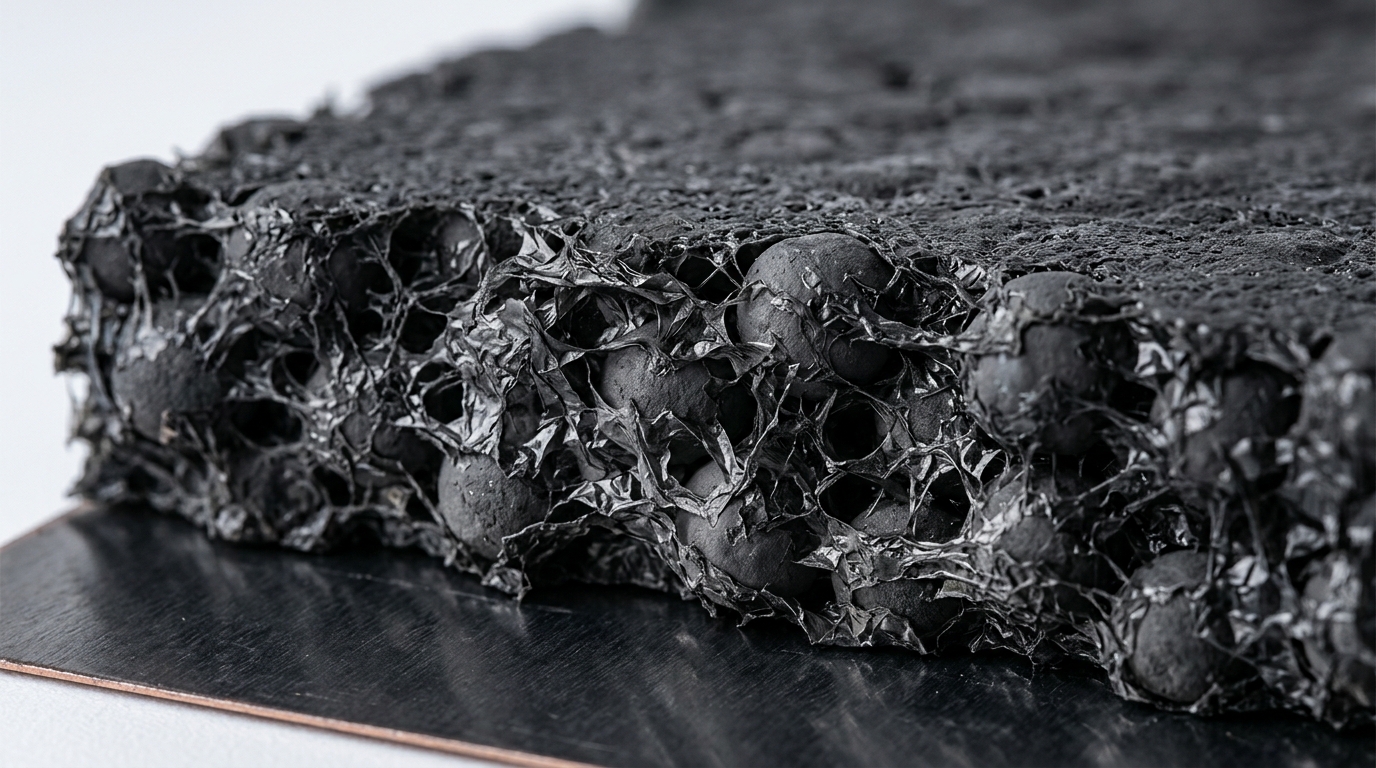
- Long-Range Electronic Bridging: Planar flakes span across multiple micron-sized active material particles, establishing low-resistance highways down to the metallic current collector (aluminum for cathodes, copper for anodes).
- Reduced Inactive Mass: Because graphene establishes conductivity at lower weight fractions, active material content can be increased by 1 wt% to 3 wt%, directly improving total volumetric and gravimetric energy density.
- C-Rate and Heat Management: The low internal impedance enables faster charge and discharge rates with reduced Joule heating inside the cell pack.
2. Conductive Polymers and Thermoplastics
Polymer engineering requires tailored conductivity for electromagnetic interference (EMI) shielding, automotive fuel system components, and automated robotics enclosures. Using graphene nanoparticles conductive additives within engineering resins (such as PA6, PA66, PBT, PC, and PEEK) creates static-dissipative or semi-conductive compounds without severely degrading the base polymer’s melt-flow index (MFI) or ductile elongation properties.
Because high loadings of conventional carbon black embrittle polymers, graphene enables thin-walled injection molding for electronics housings where structural toughness must remain intact alongside an electrical resistivity target between 104 and 108 Ohm/sq.
3. Electrostatic Discharge (ESD) and Anti-Static Coatings
Industrial flooring, aerospace priming, and fluid-handling pipelines require controlled surface resistance (typically 106 to 109 Ohm/sq) to safely bleed off static charges without sparking. Standard graphene dispersions formulated into epoxy, polyurethane, or vinyl ester topcoats provide stable ESD properties. Furthermore, the 2D aspect of graphene forms a physical barrier network, simultaneously suppressing moisture ingress and volatile organic corrosion.
Synergistic Hybrid Additive Networks
In high-throughput industrial compounding, pure graphene is rarely used as a sole additive. Instead, modern formulations use hybrid conductive systems combining zero-dimensional carbon black with two-dimensional graphene nanoparticles, or combining 1D carbon nanotubes with 2D platelets.
This synergy addresses the fundamental geometric limitation of platelets: planar restacking. Small spherical carbon black particles act as physical spacers between adjacent graphene sheets, preventing face-to-face restacking and filling the void volumes between larger graphene planes. Simultaneously, the graphene plates bridge the structural gaps between disparate carbon black agglomerates. The resulting network exhibits electrical percolation at lower total additive loadings than either material could achieve on its own.
Dispersion Barriers and Compounding Complexities
Despite theoretical advantages, integrating a graphene nanoparticles conductive additive presents distinct rheological and physical challenges during industrial compounding:
- Irreversible Agglomeration: Driven by strong van der Waals forces and pi-pi orbital interactions across their flat surfaces, de-agglomerated graphene sheets naturally re-stack into graphite-like microstructures if dispersion energy is insufficient.
- Extreme Viscosity Build-Up: As the specific surface area (SSA) of the additive increases (often 100 to 500 m2/g for commercial GNPs), the required volume of liquid vehicle or polymer melt needed to wet the particle surfaces rises exponentially. This can cause severe viscosity spikes in battery slurries and excessive torque in compounding extruders.
- Sheet Attrition via Excessive Shear: Applying extreme mechanical shear forces to disperse agglomerates can fracture the lateral dimensions of the graphene sheets, reducing their aspect ratio and inadvertently shifting the percolation threshold back upward.
Processing Techniques and Surface Functionalization
To overcome dispersion barriers, manufacturers utilize targeted mechanical dispersion and chemical modification techniques tailored to the specific host medium.
Surface Functionalization
Direct chemical tailoring lowers interfacial surface tension and prevents platelet re-agglomeration:
- Non-Covalent Functionalization: Amphiphilic surfactants (such as sodium dodecyl sulfate, Triton X-100, or polyvinylpyrrolidone) adsorb onto the graphene surface via hydrophobic or pi-pi interactions without disrupting the conjugated sp2 carbon lattice. This method is preferred when maximizing electrical conductivity is the paramount goal.
- Covalent Functionalization: Functional groups such as hydroxyl (-OH), carboxyl (-COOH), or silane couplings are chemically bonded to the defect edges of the graphene flakes. While covalent functionalization disrupts some electron mobility by creating sp3 defect centers, it dramatically improves compatibility and stress-transfer efficiency in polar matrices like polyamides, epoxies, and waterborne coatings.
Processing Equipment and Integration Routes
Integrating bulk powder directly into high-viscosity resins during dry blending often yields poor performance due to incomplete separation. Industrial compounding relies on three established processing routes:
- Masterbatch Concentrates: Graphene powders are pre-compounded at elevated loadings (10 wt% to 25 wt%) into carrier polymers using co-rotating twin-screw extruders configured with dedicated screw designs (alternating forward kneading blocks and distributive mixing elements). The concentrate is subsequently let down into virgin polymer during final injection molding or extrusion.
- High-Energy Bead Milling: For liquid dispersions and battery slurries, media mills (using zirconia beads from 0.1 to 0.5 mm) provide a controlled balance of impact and hydrodynamic shear, un-nesting graphene agglomerates without causing excessive planar fracture.
- High-Shear Rotor-Stator Systems: Used in intermediate-viscosity liquid blends to maintain turbulent flow regimes that pull flakes apart before final stabilizer introduction.
Formulation Loading Levels and Trade-Offs
Optimizing a formula with a graphene nanoparticles conductive additive requires balancing raw material expense, rheological boundaries, and performance goals:
- Anti-static / ESD Levels (106 to 109 Ohm/sq): 0.2 wt% to 1.5 wt% graphene; preserves base resin color choices, low viscosity, and high ductile properties.
- Semiconductive / High-Rate Battery Electrodes (102 to 104 Ohm/sq): 0.5 wt% to 2.0 wt% graphene (often paired in a 1:1 or 1:2 ratio with carbon black); minimizes binder requirements while facilitating fast kinetics.
- EMI Shielding and High Conductive Regimes (< 102 Ohm/sq): 3.0 wt% to 8.0 wt% graphene; requires specialized lubricants or processing aids to mitigate the substantial rise in melt viscosity and manage raw material costs.
By tailoring sheet lateral dimensions, managing surface chemistry, and balancing hybrid particulate networks, industrial formulators leverage graphene nanoparticles conductive additives as precise, functional components for demanding electrical and electrochemical applications.