Graphene Manufacturing Group
Graphene Manufacturing Group is an advanced materials and technology enterprise focused on the sustainable production of pure graphene and the engineering of commercial applications using its proprietary material. Unlike conventional graphene operations that rely on mining natural graphite flake and subjecting it to harsh acid oxidation, the organization centers its manufacturing strategy on direct carbon extraction from hydrocarbon gases. By decoupling synthesis from mined graphite supply chains, this manufacturing route delivers engineered carbon structures tailored specifically for energy storage systems, heat-transfer coatings, and high-performance industrial fluids.
The Methane Cracking Production Route
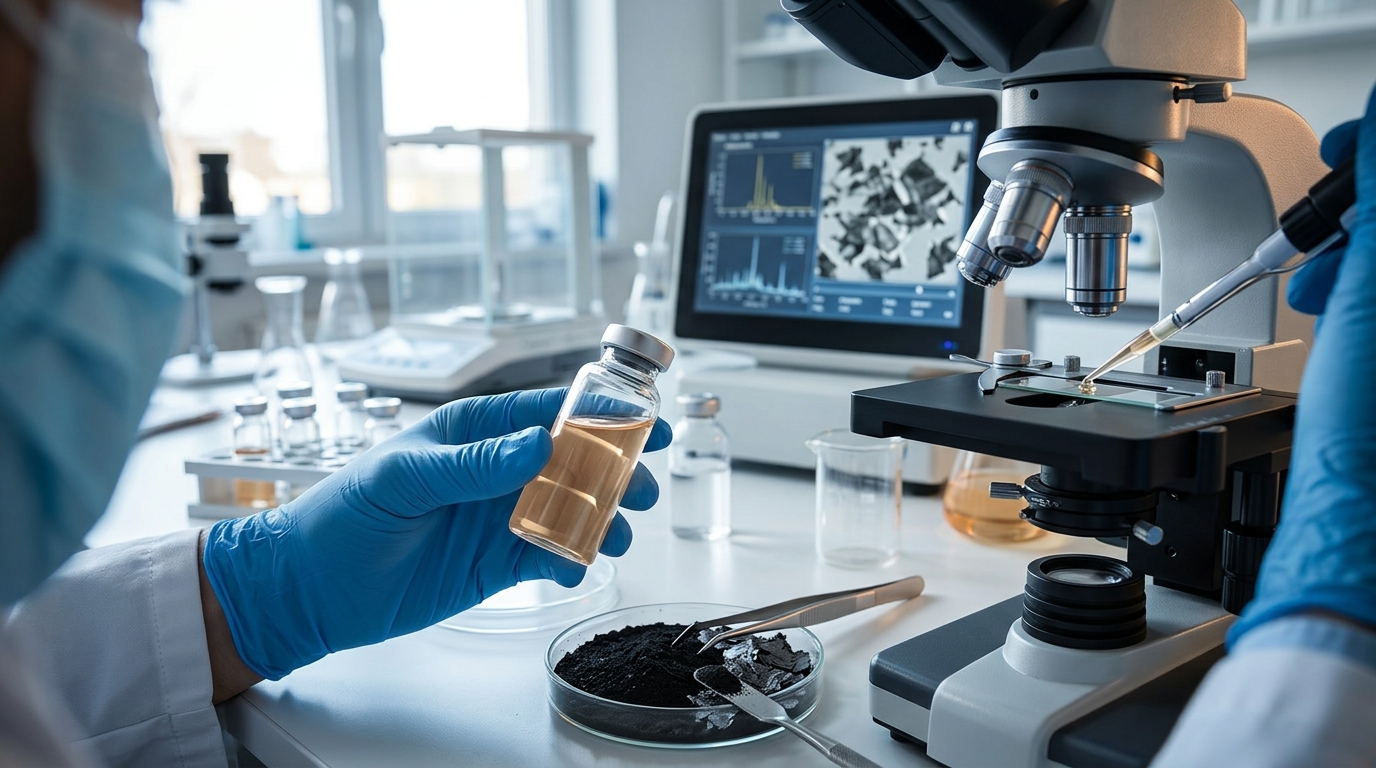
The standard industrial approach to bulk graphene synthesis has historically relied on the top-down mechanical or chemical exfoliation of mined crystalline graphite. While methods such as modified Hummers processing can produce large volumes of graphene oxide, they introduce extensive structural defects, disrupt sp² carbon bonding networks, and require aggressive chemical reduction steps that leave residual oxygen functional groups and chemical impurities behind.
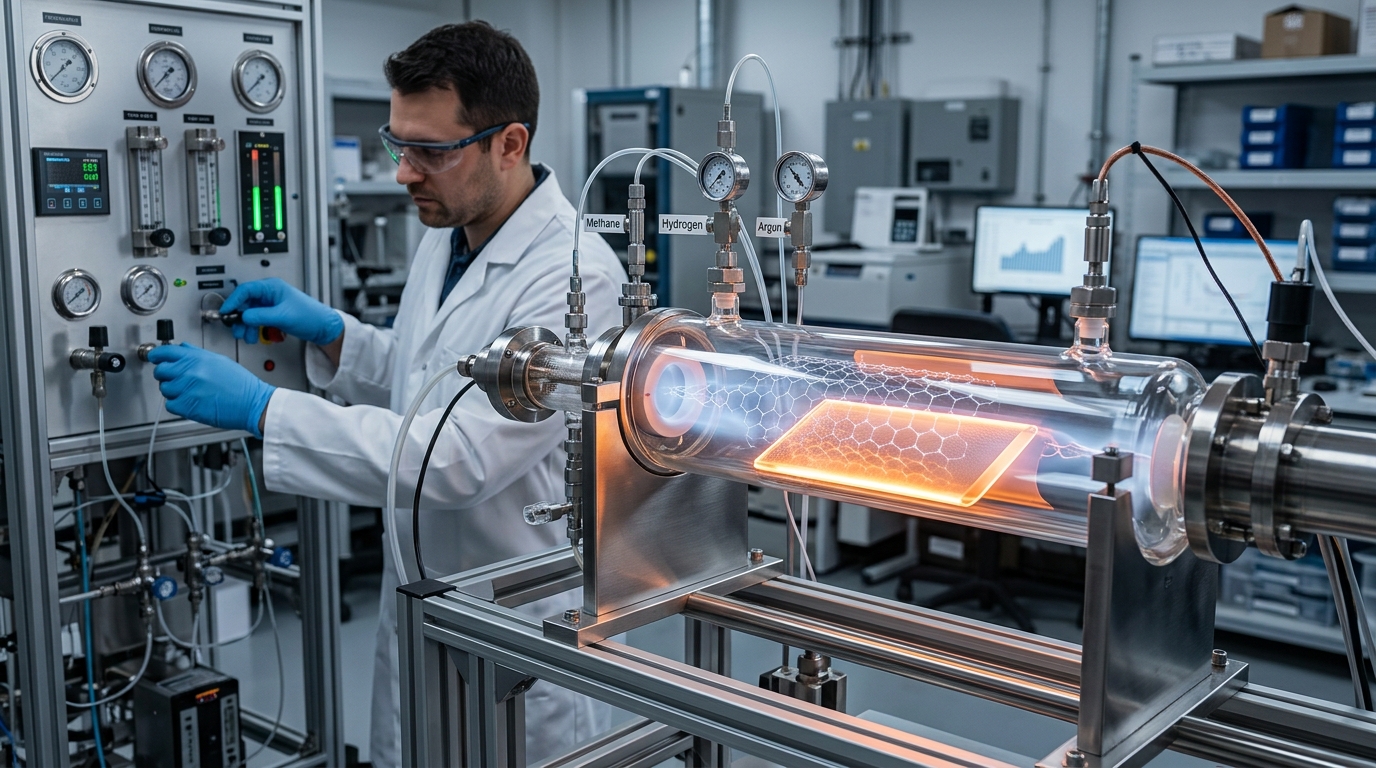
Graphene Manufacturing Group circumvents these issues by utilizing a bottom-up chemical process based on methane thermal cracking. In this system, natural gas (methane, CH₄) serves as the primary carbon feedstock. When subjected to controlled thermal plasma or high-temperature catalytic pyrolysis, methane molecules dissociate directly into their constituent elements:
CH₄ (g) → C (s) + 2H₂ (g)
This gas-phase reaction yields dry graphene nanoplatelets alongside clean hydrogen gas as a valuable byproduct. Because the process builds graphene from gaseous precursors in a closed environment, it offers precise control over the reaction atmosphere, eliminating mineral contaminants like iron, silica, and sulfur that naturally occur in mined graphite. The resulting material exhibits low defect density, superior electrical conductivity, and high chemical purity without requiring post-synthesis acid washing or wastewater neutralisation.
Material Properties and Structural Quality
The performance of graphene in practical engineering depends entirely on its morphological parameters: layer count, lateral sheet dimensions, crystallite size, and surface chemistry. The exfoliation-free synthesis utilized by Graphene Manufacturing Group yields distinct structural characteristics:
- Multi-Layer Nanoplatelet Morphology: The synthesized material consists predominantly of few-layer to multi-layer graphene platelets, balancing mechanical integrity with high surface area.
- Intact Graphitic Lattice: High Raman I_G/I_D ratios indicate a well-ordered honeycomb crystal structure with minimal basal-plane functionalization, preserving intrinsic electrical and thermal transport channels.
- High Dispersibility: The absence of heavy surface oxidation allows the nanoplatelets to interact effectively with carrier liquids, specialty polymers, and battery electrolytes when modified with specific physical surface treatments.
Graphene Aluminium-Ion Energy Storage
Among the most technically significant developments linked to Graphene Manufacturing Group is the commercialization of the graphene aluminium-ion battery (G/Al). Developed in collaboration with university research institutes, this architecture pairs an engineered graphene cathode with an aluminium metal anode in a non-flammable ionic liquid electrolyte.
Electrochemical Mechanism
Conventional lithium-ion batteries rely on the intercalation of single-charge lithium ions (Li⁺) into host lattices, a process constrained by slow diffusion rates and internal heating. In contrast, the graphene aluminium-ion cell utilizes the rapid intercalation and de-intercalation of complex chloroaluminate anions (primarily AlCl₄⁻) between graphene sheets.
Because the graphene cathode offers open inter-layer pathways, intercalation kinetics are exceptionally rapid. This structure enables charge rates dozens of times faster than standard lithium-based cells, allowing full recharges in minutes rather than hours.
Performance Tradeoffs and Safety Profiles
The graphene aluminium-ion configuration addresses several intrinsic vulnerabilities of conventional battery chemistry, though with specific trade-offs:
- Thermal Stability: The ionic liquid electrolyte is virtually non-flammable, significantly reducing the risk of thermal runaway under mechanical puncture, external heating, or overcharging.
- Cycle Longevity: The rigid graphitic structure resists mechanical degradation and phase transitions during repeated cycling, providing thousands of operational charge-discharge cycles with minimal capacity loss.
- Energy vs. Power Density: While graphene aluminium-ion cells demonstrate exceptional power density (rapid energy delivery and recovery), their volumetric energy density is generally lower than high-nickel lithium-ion chemistries. As a result, early target implementations prioritize stationary energy storage, industrial equipment, and fast-charging consumer devices over space-constrained electric passenger vehicles.
Thermal Management and Surface Coatings
Thermal management represents another core focus area. Heating, ventilation, air conditioning, and refrigeration (HVAC-R) systems experience severe efficiency losses due to thermal boundary layer resistance and corrosion on heat exchanger fins.
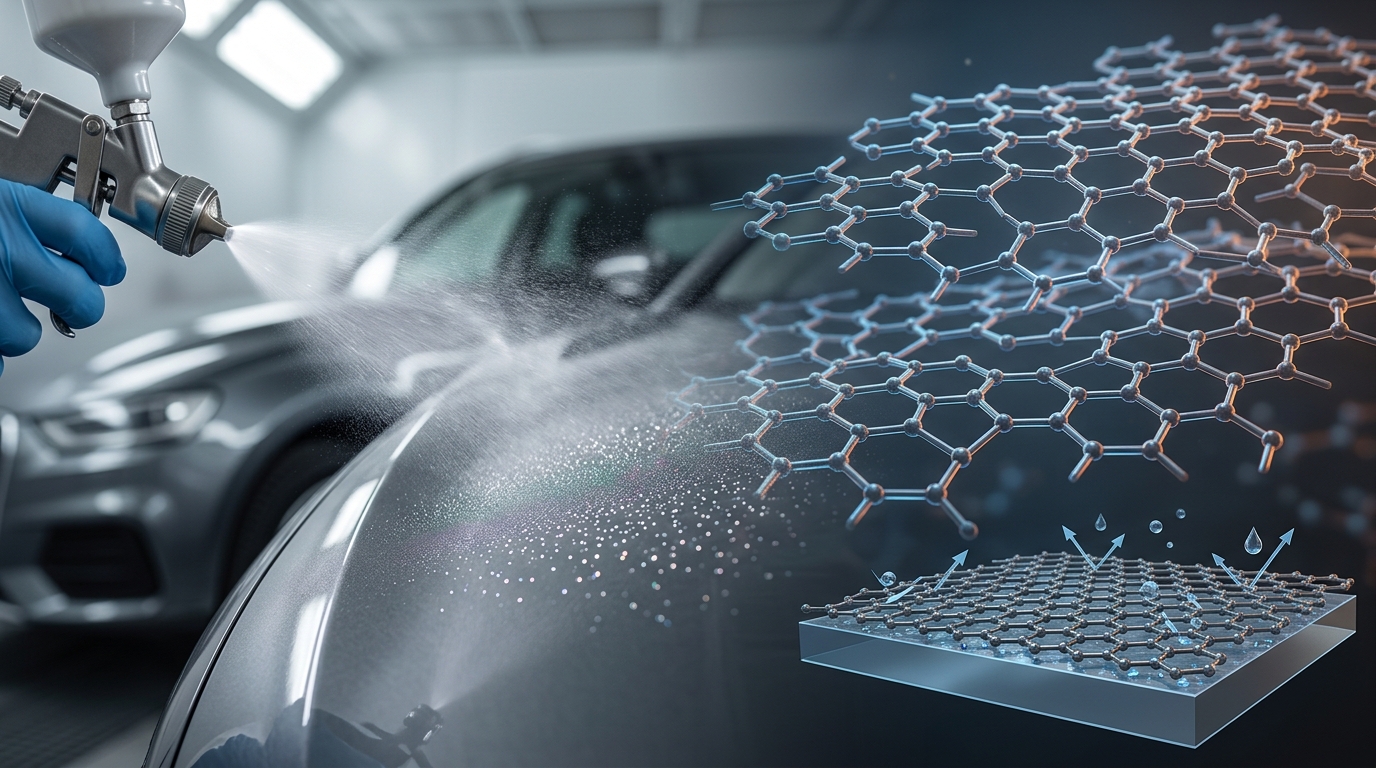
To resolve this, Graphene Manufacturing Group developed graphene-infused thermal coatings designed for direct application to aluminium and copper condenser coils. These formulations leverage two primary physical mechanisms:
- Radiative Heat Dissipation: The incorporation of high-conductivity graphene nanoplatelets increases the thermal emissivity and convective surface area of the coating matrix, facilitating faster heat rejection from refrigerant lines to the surrounding air.
- Corrosion Protection: The high aspect ratio of graphene platelets creates a tortuous barrier path that impedes the penetration of moisture, salt ions, and atmospheric pollutants, preventing coil degradation and preserving heat transfer efficiency over time.
Tribology and Industrial Lubricants
In mechanical systems, friction and surface wear consume substantial energy and reduce equipment lifespan. Graphene Manufacturing Group formulates concentrated graphene fluid additives designed to enhance the performance of standard engine oils and industrial lubricants.
Under operational shear stress, graphene platelets migrate to friction points, establishing a protective boundary lubrication film between sliding metal surfaces. The ultra-thin carbon sheets shear easily against one another, lowering the friction coefficient and preventing direct metal-to-metal contact under extreme contact pressures.
Comparison of Industrial Graphene Synthesis Routes
Understanding where methane-derived graphene fits within the wider materials landscape requires comparing synthesis methods, feedstocks, and practical output profiles.
| Method | Primary Feedstock | Structural Quality | Byproducts & Waste | Primary Fit |
|---|---|---|---|---|
| Methane Cracking (GMG) | Natural gas (CH₄) | High purity, low defect density, dry powder | Hydrogen gas (valuable) | Batteries, thermal coatings, lubricants |
| Chemical Oxidation (Hummers) | Mined flake graphite | High defect density, oxygen-rich lattice | Acidic wastewater, heavy chemical salts | Membranes, cement, basic composites |
| Chemical Vapor Deposition (CVD) | Gaseous hydrocarbons + metallic catalyst | Continuous single-layer films | Spent metallic substrates, process off-gases | Semiconductors, flexible electronics, sensors |
Integration Realities and Manufacturing Considerations
While bottom-up methane cracking avoids mining bottlenecks, commercial deployment involves real-world material handling and industrial integration challenges:
- Agglomeration Dynamics: Pristine, non-oxidized graphene sheets naturally tend to restack due to strong van der Waals forces. Maintaining uniform dispersion in liquids or polymer matrices requires tailored surfactant packages or continuous mechanical dispersion techniques.
- Energy Efficiency and Heat Input: Cracking methane is an endothermic process requiring sustained thermal or plasma energy. Manufacturing efficiency relies on optimizing reactor energy consumption against carbon yield and capturing value from the generated hydrogen.
- System Engineering for Batteries: Transitioning graphene aluminium-ion chemistry from pouch-cell prototypes to standardized commercial formats demands high-precision automated assembly lines, specialized cell balancing electronics, and corrosion-resistant current collectors compatible with ionic liquid salts.
Industrial Outlook
The model demonstrated by Graphene Manufacturing Group highlights an evolutionary shift in the advanced carbon sector: moving away from raw material supply toward vertically integrated, application-specific engineering. By combining clean gas-phase synthesis with targeted end-use technologies like ultra-fast energy storage and thermal management coatings, the organization provides a practical framework for scaling graphene solutions into mainstream industrial markets.