Graphene Nanoparticles
In materials science and engineering, graphene nanoparticles is a broad term that refers to zero-dimensional and two-dimensional carbon nanomaterials derived from or structurally related to graphene. Unlike conventional spherical metal or metal-oxide nanoparticles (such as gold, silver, or titanium dioxide), nanoscale graphene structures are fundamentally defined by their high aspect ratio, planar sp2-hybridized carbon lattice, and structural anisotropy.
Because the term is often used generically across commercial specifications and academic literature, precise classification is critical. At the nanoscale, carbon atoms bonded in a honeycomb geometry exhibit behaviors that diverge sharply from bulk graphite, conventional carbon black, and isotropic particulate additives. Understanding these materials requires distinguishing between the distinct sub-classes of graphene nanoparticles, their synthesis pathways, and the physicochemical mechanisms that govern their integration into functional matrices.
Defining Graphene Nanoparticles: Morphologies and Classifications
In standard nanomaterial taxonomy, isolated monolayer graphene consists of a single planar sheet of sp2 carbon atoms. However, materials commercially designated as graphene nanoparticles rarely exist as isolated infinite monolayers. Instead, they fall into three distinct physical categories categorized by lateral dimensions, defect density, and layer count.
1. Graphene Nanoplatelets (GNPs)
Graphene nanoplatelets—sometimes termed graphene nanosheets—consist of stacks of multi-layer graphene possessing a thickness typically between 1 and 20 nanometers (roughly 3 to 60 atomic layers) and lateral dimensions ranging from several hundred nanometers to several tens of micrometers. GNPs preserve the pristine or near-pristine sp2 carbon framework of natural graphite, retaining high in-plane electrical and thermal conductivities. They are primarily utilized where structural stiffness, thermal dissipation, or electrical percolation is needed at an industrial scale.
2. Graphene Oxide (GO) and Reduced Graphene Oxide (rGO) Fragments
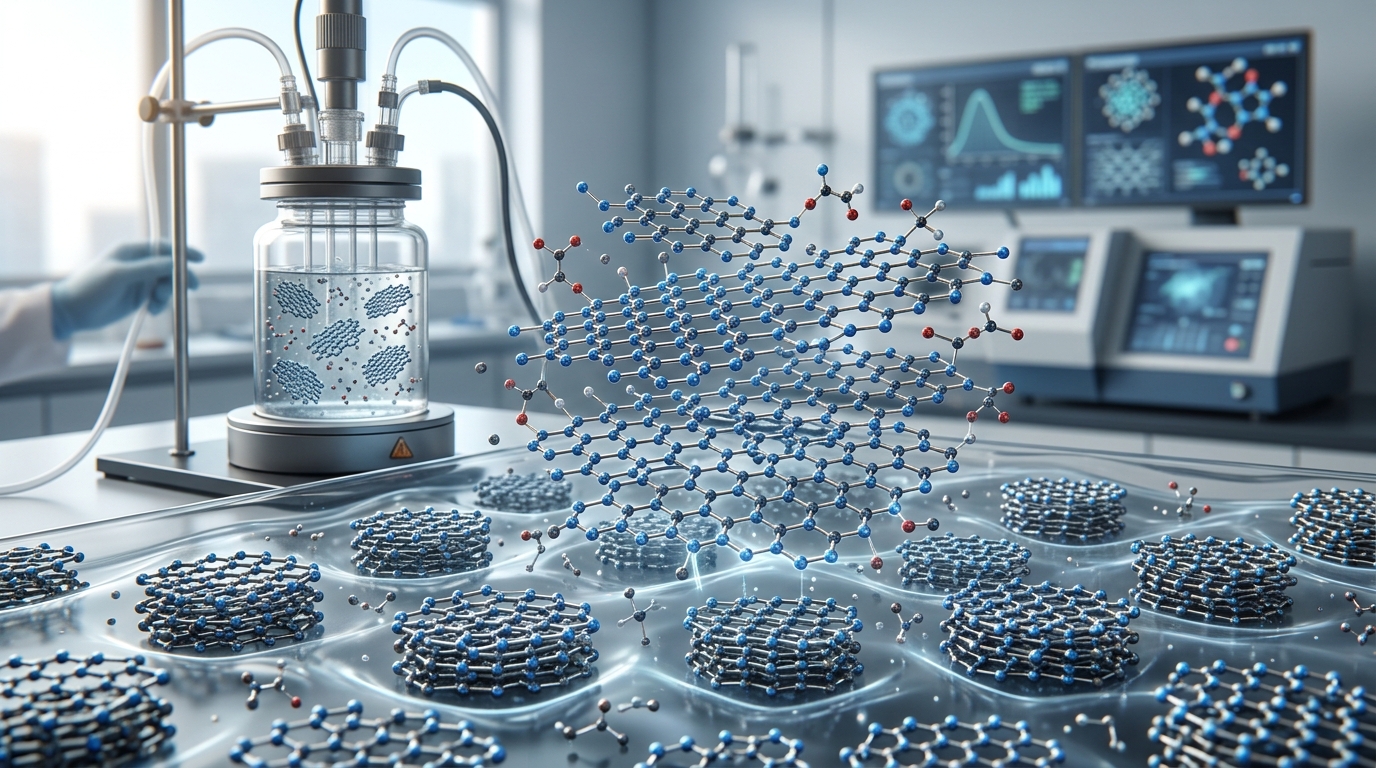
When graphite is aggressively oxidized, the planar carbon scaffold is disrupted by oxygen-containing functional groups, including hydroxyl, epoxide, carbonyl, and carboxyl moieties. When exfoliated into nanoscale flakes, these are referred to as graphene oxide nanoparticles. The functional groups disrupt the electrical conductivity of the lattice by converting sp2 carbon atoms into sp3 hybridized centers. Subsequent chemical, thermal, or electrochemical reduction yields reduced graphene oxide (rGO), which partially restores the conjugated conductive network while retaining residual edge defects and oxygen functionality.
3. Graphene Quantum Dots (GQDs)
Graphene quantum dots represent the zero-dimensional (0D) regime of the graphene family. GQDs have lateral dimensions strictly below 20 nanometers—frequently under 10 nanometers—and consist of single or few layers of graphene. At this scale, quantum confinement and edge effects dominate their behavior. While pristine infinite-sheet graphene is a zero-bandgap semimetal, GQDs exhibit a tunable, non-zero electronic bandgap. This produces photoluminescence upon excitation, making GQDs fundamentally distinct in their optoelectronic properties compared to wider lateral nanoplatelets.
Fundamental Properties Distinguishing Nanoscale Graphene
Graphene nanoparticles yield performance gains disproportionate to their weight loading when added to host matrices. This performance stems from four primary physical properties:
- Planar Aspect Ratio: Unlike spherical carbon black, graphene nanoplatelets possess aspect ratios (lateral diameter divided by thickness) that can exceed 1,000:1. High aspect ratios dramatically lower the statistical percolation threshold—the volumetric or weight fraction required to form continuous, interconnected transport networks through an insulating host matrix.
- In-Plane Thermal Conductivity: Within the basal plane of low-defect graphene, heat is carried predominantly by long-mean-free-path acoustic phonons. In-plane thermal conductivities can exceed 2,000 to 3,000 W/m·K in ideal layers, compared to isotropic carbon black values below 10 W/m·K.
- Intrinsic Mechanical Tenacity: The in-plane carbon-carbon covalent sigma bonds possess an intrinsic tensile strength on the order of 130 GPa and an elastic modulus approaching 1 TPa for single-crystal basal sections. Although multi-layer stacks experience interlayer shear under stress, GNPs still impart significant tensile modulus and barrier properties to polymer systems.
- Electronic Transport: In-plane charge carrier mobilities in low-defect graphene flakes can reach thousands of cm2/V·s at ambient conditions, supported by delocalized pi-electron clouds across the conjugate network.
Comparative Analysis: Graphene Nanoparticles vs. Legacy Carbon Additives
Industrial formulations frequently evaluate graphene nanoparticles against carbon nanotubes (CNTs) and conventional carbon black. While all three are elemental carbon allotropes, their dimensional morphology creates divergent physical trade-offs in processing and performance.
| Material | Dimensionality | Typical Percolation Threshold | Melt Rheology Impact | Dominant Reinforcement Mechanism |
|---|---|---|---|---|
| Graphene Nanoplatelets (GNPs) | 2D (Planar) | Low to Moderate (0.5% – 5.0% wt) | Moderate increase in viscosity; shear-thinning alignment | Planar barrier, multi-axial mechanical stiffening, 2D heat spreading |
| Carbon Nanotubes (CNTs) | 1D (Tubular) | Very Low (0.05% – 1.0% wt) | High increase; rapid entanglements and high melt elasticity | High aspect-ratio 1D bridging, flexural toughness, high electrical conductivity |
| Carbon Black | 0D / Quasi-Spherical Aggregates | High (8.0% – 25.0% wt) | High particulate loading required; potential embrittlement | Isotropic antistatic dissipation, UV blocking, economical bulk pigmentation |
Synthesis and Production Methodologies
The performance profile of graphene nanoparticles is intimately linked to the synthesis method used. Production routes balance defect concentration, layer thickness, lateral dimension, yield volume, and production cost.
Liquid-Phase Exfoliation (LPE)
Liquid-phase exfoliation involves suspending natural or synthetic graphite in an engineered solvent or surfactant-stabilized aqueous solution. High-intensity energy is applied via tip ultrasonication, hydrodynamic cavitation, or high-shear rotor-stator mixing. The applied shear stresses overcome the weak interlayer van der Waals forces (approximately 300 meV/nm2) separating graphite layers. Because LPE does not require strong covalent oxidizers, it yields flakes with low defect concentrations and high electrical conductivity, though with a polydisperse distribution of layer counts and lateral dimensions.
High-Energy Mechanical Milling
Ball milling, jet milling, and mechanochemical shear mills produce graphene nanoplatelets through direct kinetic impact and shear cleavage. When operated dry, unfunctionalized milling often causes basal plane fragmentation and structural amorphization alongside delamination. However, wet mechanochemical milling using organic modifiers, water-soluble salts, or dry ice (subliming CO2) enables shear-assisted delamination with edge-selective functionalization, preserving the structural integrity of the internal basal plane.
Oxidation-Reduction (Modified Hummers Method)
This chemical pathway uses strong protonated oxidants (such as potassium permanganate in concentrated sulfuric acid) to intercalate and oxidize graphite into graphite oxide. The material easily exfoliates in water due to hydrophilic hydroxyl and epoxide groups. Subsequent chemical reduction (using hydrazine, ascorbic acid, or sodium borohydride) or thermal thermal shock reduction removes a significant portion of oxygen atoms. While scalable, the resulting rGO flakes contain high concentrations of topological defects (Stone-Wales defects and vacancies), leading to lower electrical conductivities compared to pristine flakes produced by mechanical shear.
Bottom-Up Synthesis of GQDs
While top-down cutting of carbon fibers, coal, or graphite through acid-assisted hydrothermal oxidation produces GQDs, bottom-up wet-chemical approaches allow for atomic precision. Organic precursors such as citric acid, glucose, or polycyclic aromatic hydrocarbons (PAHs) undergo controlled thermal carbonization, pyrolytic fusion, or step-growth condensation to generate uniform quantum dots with defined lateral dimensions, precise heteroatom doping (such as nitrogen or boron), and controlled photoluminescence spectra.
The Dispersion Challenge and Functionalization Techniques
The primary barrier to deploying graphene nanoparticles in industrial manufacturing is agglomeration. Thermodynamic stability drives planar carbon sheets to restack due to pervasive van der Waals attraction and strong attractive pi-pi interactions between aromatic domains. When graphene nanoparticles agglomerate, they revert to poorly integrated graphite-like clusters, degrading the interface with the matrix, inducing local stress concentrations, and raising the percolation threshold.
To prevent phase separation and restacking, processors employ two functionalization routes:
1. Non-Covalent Functionalization
Non-covalent functionalization preserves the pristine sp2 conjugated lattice and its intrinsic electronic properties. This mechanism uses physical adsorption governed by pi-pi stacking, hydrophobic interactions, or ionic forces. Common modifiers include:
- Aromatic surfactants (such as sodium dodecylbenzene sulfonate, SDBS).
- Block copolymers and hyperbranched dispersants with hydrophobic anchor segments and matrix-compatible stabilizing tails.
- Pyrene-derived functional molecules that anchor their aromatic cores directly to the graphene surface, leaving tail groups free to interact with surrounding solvents or resins.
2. Covalent Functionalization
Covalent functionalization forms direct chemical bonds on the graphene scaffold. While modification of the basal plane alters sp2 hybridization to sp3—reducing electrical conductivity—it produces strong interfacial bonding with the surrounding matrix:
- Edge-Selective Functionalization: Oxygen-containing end-groups (carboxyls, ketones) situated at broken flake perimeters can be reacted with thionyl chloride, silanes, or primary amines without disrupting the conductive central plane.
- Free Radical Additions: Reactive chemistries, such as diazonium salt reactions or atom transfer radical polymerization (ATRP), graft covalent polymer brushes directly to graphene surfaces, enabling high steric stability inside specific polymer melts or organic solvents.
Industrial Application Sectors
Rather than replacing bulk materials entirely, graphene nanoparticles are incorporated at low-to-moderate fractions to modify the physical behavior of commercial host media.
Polymer Nanocomposites and Lightweighting
In thermosets (such as epoxy systems) and engineering thermoplastics (including polyamide, PEEK, and polypropylene), incorporating between 0.1% and 5% weight fractions of GNPs increases flexural modulus, tensile strength, and fatigue resistance. Because the planar sheets physically obstruct gas molecule migration paths, graphene nanoparticle additives reduce gas and moisture permeability, finding practical use in barrier liners, corrosion-resistant marine coatings, and lightweight aerospace structural panels.
Thermal Management and Dissipation
As electronic packages decrease in size, dissipation of localized thermal loads becomes critical. Graphene nanoplatelets are compounded into thermal interface materials (TIMs), including silicone greases, phase-change adhesives, and elastomeric gap pads. Aligned 2D platelets build thermal pathways that bridge microscopic air gaps between processors and heat sinks, lowering boundary thermal resistance without requiring heavy metallic filler loadings.
Conductive Coatings, Inks, and EMI Shielding
Conductive formulations filled with high-surface-area graphene nanoparticles enable printed radio-frequency identification (RFID) tags, flexible planar heaters, and antistatic packaging for volatile chemical transport. In high-frequency communications, coatings containing dispersed graphene nanoplatelets attenuate stray electromagnetic waves via combined internal reflection and dielectric absorption, serving as thin electromagnetic interference (EMI) shields.
Electrochemical Energy Storage
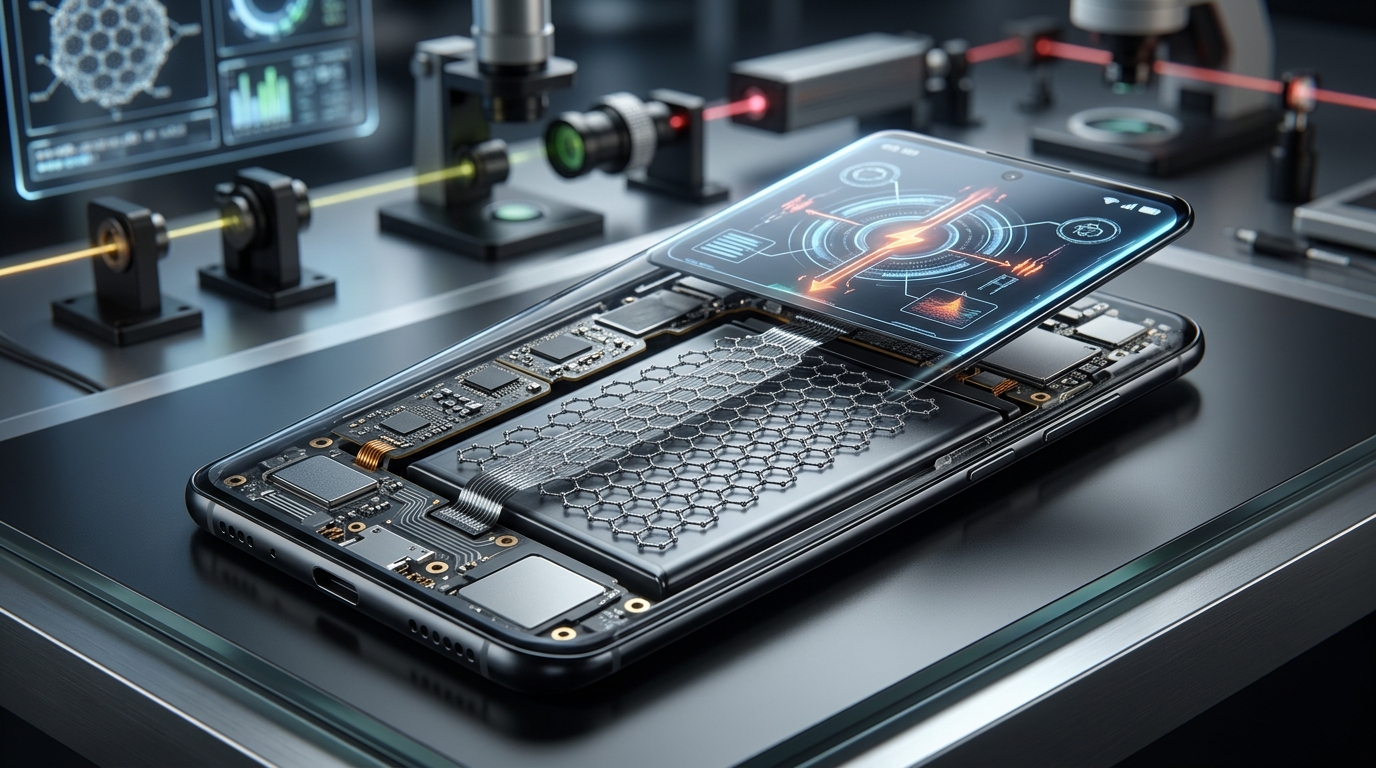
In modern lithium-ion and sodium-ion battery architectures, graphene nanoparticles serve as conductive additives within both cathode (e.g., LFP, NMC) and anode slurries. Unlike point-contact carbon black, planar graphene sheets coat active electrode particles, establishing multi-point electrical connections that preserve conductivity during volume expansion-contraction cycles. In supercapacitors, high-surface-area rGO nanoparticles maximize the accessible electrochemical double-layer capacitance without sacrificing ion transport kinetics through porous electrode architectures.
Occupational Handling, Safety, and Nanomaterial Hygiene
Industrial handling of dry graphene nanoparticles requires strict adherence to nanosafety protocols. Like other high-surface-area carbon nanomaterials, free powders pose an inhalation risk due to aerosolization:
- Respirable Dust Hazard: Dry, low-bulk-density graphene powders can easily become airborne and penetrate deep into the alveolar regions of the human respiratory system. Inhalation toxicology studies indicate that high concentrations of biopersistent carbon nanomaterials may induce localized pulmonary inflammation, oxidative stress, and granuloma formation.
- Engineered Exposure Controls: Powder manipulation should be restricted to closed environments, continuous-negative-pressure gloveboxes, or local exhaust ventilation hoods equipped with high-efficiency particulate air (HEPA) filtration systems. Dry brushing or atmospheric compressed-air cleaning should not be permitted in processing areas.
- Liquid and Masterbatch Formats: Where commercially feasible, processors mitigate dust hazards by procuring graphene nanoparticles pre-dispersed in liquid masterbatches, water slurries, or pre-compounded polymer pellets. These non-friable physical formats prevent the generation of free airborne nanomaterials during mixing.
- Personal Protective Equipment (PPE): Personnel handling dry powders must use elastomeric half-mask or full-face respirators fitted with certified particulate filters (such as NIOSH N100/P100 or European FFP3 equivalents), supplemented with nitrile gloves, anti-static lab apparel, and tight-fitting eye protection.
As academic characterization aligns with large-scale industrial compounding, graphene nanoparticles continue to evolve from novel laboratory materials into standardized chemical additives, defined by predictable particle sizes, established surface chemistries, and controlled industrial safety profiles.