Graphene Coating
A graphene coating is a specialized surface treatment that incorporates two-dimensional carbon allotropes—either as continuous atomic sheets or dispersed microscopic platelets—into a protective matrix. By harnessing the physical properties of graphene, including exceptional mechanical strength, chemical inertness, high thermal conductivity, and structural impermeability, these coatings provide robust protection against corrosion, friction, environmental weathering, and chemical degradation.
While consumer markets often associate graphene coatings with automotive paint protection, the technology encompasses a broad spectrum of industrial, aerospace, and electronics applications. Understanding how these coatings function requires distinguishing between laboratory-grown atomic monolayers and practical liquid formulations reinforced with graphene nanomaterials.
The Two Primary Classes of Graphene Coatings
The term “graphene coating” describes two fundamentally different material architectures, each engineered for distinct performance parameters and manufacturing scales.
1. Monolayer and Few-Layer CVD Films
Synthesized via chemical vapor deposition (CVD) on metallic substrates such as copper or nickel, pure graphene films consist of continuous sheets of sp²-hybridized carbon atoms arranged in a hexagonal lattice. In 2004, the initial mechanical isolation of graphene demonstrated the immense tensile strength and barrier potential of this atomic lattice. When transferred to target components, these continuous films act as atomically thin, optically transparent barriers capable of blocking gas diffusion and electromagnetic interference.
Because CVD films require high-temperature synthesis and complex substrate-transfer processes, their use remains largely focused on microelectronics, semiconductor devices, specialized optical sensors, and micro-electromechanical systems (MEMS).
2. Graphene-Infused Composite Formulations
The vast majority of commercial and industrial protective coatings are liquid suspension matrices—such as epoxy, polyurethane, polysilazane, or acrylic resins—reinforced with graphene nanoplatelets (GNPs) or reduced graphene oxide (rGO). Rather than forming a single continuous atomic sheet, millions of microscopic, multi-layer graphene flakes are dispersed throughout a liquid carrier.
When applied and cured, the carrier resin binds to the substrate, while the suspended graphene platelets orient within the film to deliver structural reinforcement, thermal dissipation, and barrier enhancement without requiring high-temperature processing.
Core Mechanisms: How Graphene Enhances Surface Protection
Graphene does not simply act as an inert filler. Its geometric aspect ratio and sub-nanometer thickness introduce specific physical and chemical mechanisms that alter how a coated surface interacts with its environment.
The Tortuous Diffusion Path
Corrosion and chemical degradation occur when small molecules—such as water, oxygen, chloride ions, and industrial pollutants—penetrate a coating matrix to reach the underlying substrate. In standard polymer or resin coatings, these penetrants travel in a relatively direct path through microscopic voids between polymer chains.
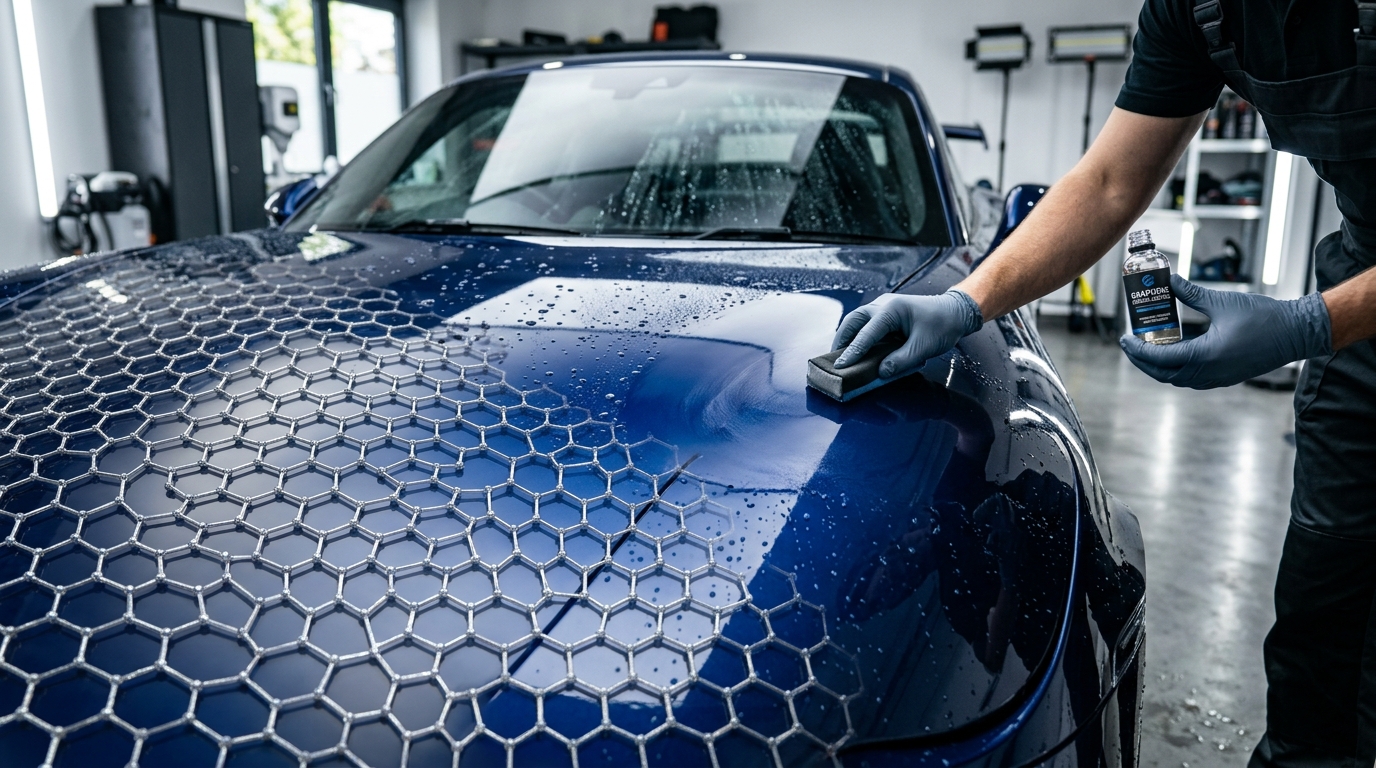
Graphene sheets possess an aspect ratio where lateral dimensions are thousands of times greater than their thickness. Because the dense electron cloud of pristine graphene is impermeable even to helium atoms, penetrating molecules cannot pass through the platelets. Instead, they are forced to navigate around every flake, creating a tortuous diffusion path. This geometric obstacle significantly lengthens the diffusion route, slowing down moisture and oxygen ingress by orders of magnitude compared to unreinforced coatings.
Thermal Dissipation and Reduced Water Spotting
In exterior applications, liquid coatings often suffer from mineral etching caused by evaporated water droplets. Conventional ceramic coatings, typically based on silicon dioxide (SiO²) or titanium dioxide (TiO²), have low thermal conductivity and retain solar heat, creating localized hotspots that bake mineral deposits into the clear coat.
Graphene exhibits an in-plane thermal conductivity exceeding 3,000 W/m·K. When integrated into surface coatings, graphene platelets assist in lateral heat distribution across the surface. By lowering localized surface temperatures, the coating reduces the rapid evaporation rate that drives mineral scale deposition.
Tribological Wear Reduction and Hardness
Graphene platelets provide exceptional mechanical reinforcement. When shear forces are applied to a surface, the platelets can slide relative to one another at the nanoscale, acting as a solid-state lubricant that lowers the friction coefficient. This tribological wear resistance reduces micro-marring, swirl marks, and abrasive erosion from airborne dust, road debris, or mechanical contact.
Hydrophobicity and Low Surface Energy
Engineered graphene coatings typically establish a high water contact angle (frequently exceeding 100 to 115 degrees), producing a hydrophobic barrier that repels liquids, oils, and environmental contaminants. Crucially, graphene formulations also reduce contact angle hysteresis—the difference between the advancing and receding contact angles of a rolling droplet. Low hysteresis allows water beads to roll off surfaces at shallower tilt angles, taking surface dust and debris with them in a self-cleaning action.
Graphene Coatings vs. Traditional Ceramic Coatings
Because graphene-enhanced liquid coatings often compete directly with conventional ceramic coatings in the surface protection industry, comparing their foundational characteristics illustrates where graphene additions provide genuine advantages.
| Performance Attribute | Traditional Ceramic Coating (SiO² / Polysilazane) | Graphene-Infused Composite Coating |
|---|---|---|
| Primary Composition | Silicon dioxide, titanium dioxide, or polysilazane matrices | Silica/polysilazane matrix reinforced with rGO or GNPs |
| Water Spot Susceptibility | Higher; low thermal conductivity retains heat, accelerating mineral evaporation | Lower; enhanced heat dissipation reduces localized evaporation rings |
| Flexibility & Impact Tolerance | Rigid; prone to micro-cracking under substrate flexure or thermal shock | Higher tensile compliance; graphene network dissipates stress |
| Anti-Static Properties | Non-conductive; tends to generate static charge that attracts dry dust | Mild electrical dissipation; reduces electrostatic dust attraction |
| Corrosion Barrier Mechanism | Porous barrier dependent entirely on resin crosslink density | Dual protection: crosslinked matrix plus physical platelet tortuous path |
| Coating Transparency | Optically clear at all practical thicknesses | Translucent to clear at correct loadings; high loadings impart a dark tint |
Key Applications Across Industries
Automotive and Transportation
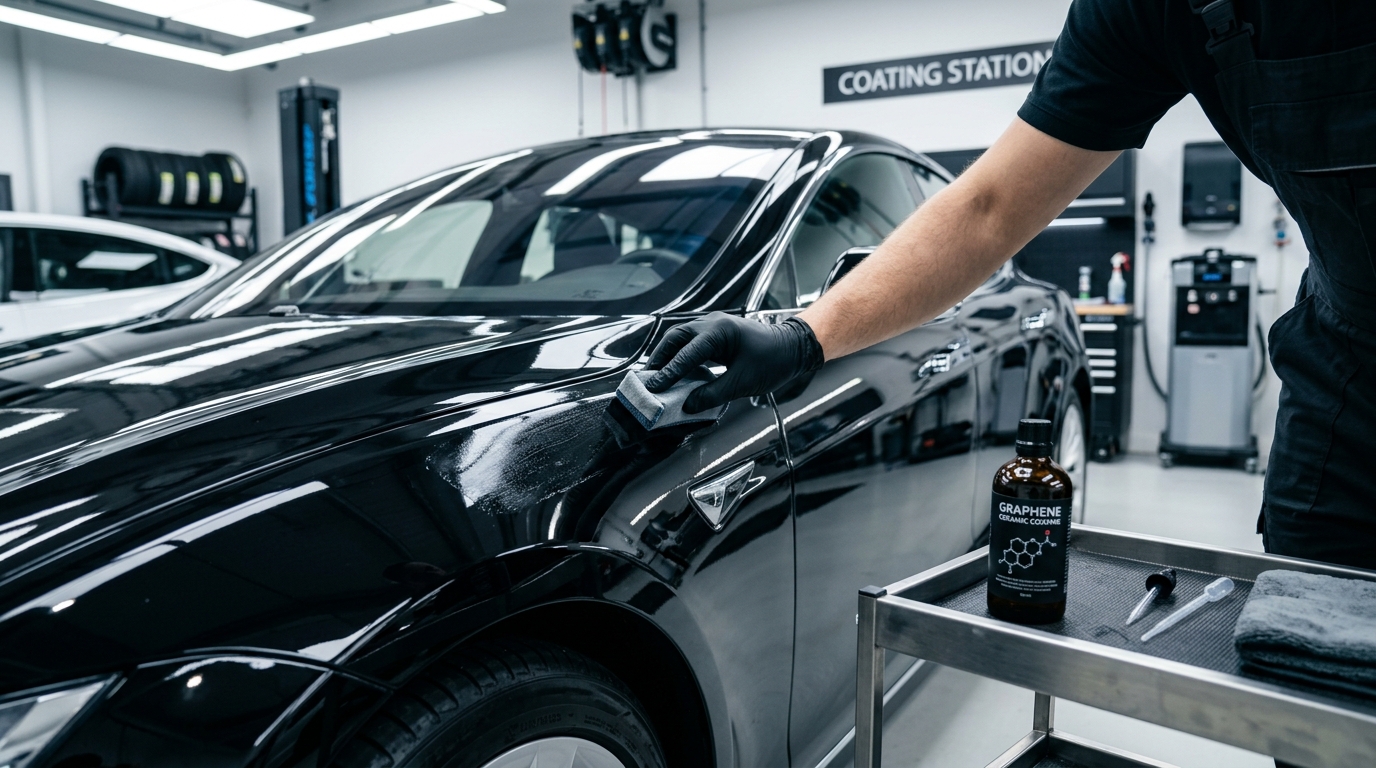
In automotive detailing and commercial fleet maintenance, graphene coatings are applied over clear coats, wheels, glass, and exterior plastics. They provide extended resistance against UV-induced oxidation, acid rain, bird droppings, insect acids, and road salt. The improved flexibility of graphene-reinforced resins makes them particularly resilient on flexible plastic bumpers and composite panels that experience continuous vibration.
Marine and Offshore Structures
Marine environments subject metals and gelcoats to severe electrolytic attack from saltwater and persistent biofouling. Marine-grade graphene epoxy formulations act as impermeable moisture barriers on hulls, ballast tanks, and offshore platforms. In addition to retarding rust formation, the low surface energy of graphene-modified topcoats reduces the adhesion strength of marine organisms, facilitating easier hull cleaning.
Industrial Anti-Corrosion and Chemical Containment
Pipelines, storage tanks, and structural steel in chemical processing plants encounter concentrated acids, alkalis, and organic solvents. Integrating graphene into heavy-duty epoxy primers increases chemical resistance and reduces the permeability of corrosive gases such as hydrogen sulfide and sulfur dioxide.
Aerospace and Defense
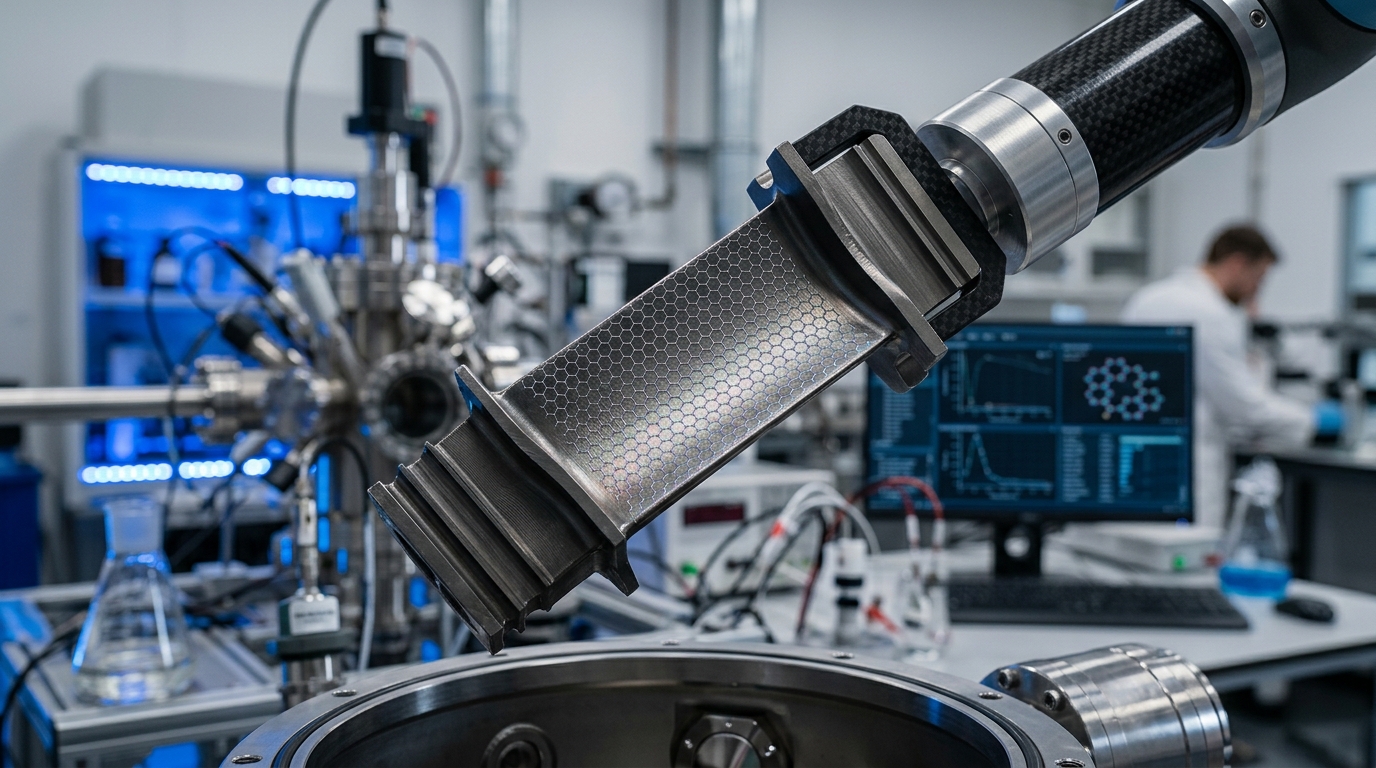
Aerospace applications leverage the multi-functional nature of graphene coatings. By combining electrical conductivity with environmental protection, specialized coatings assist in electrostatic discharge management, lightning strike protection, and ice adhesion mitigation on aerodynamic surfaces.
The Galvanic Corrosion Dilemma: Critical Engineering Considerations
While graphene offers remarkable barrier performance, improper application or sub-standard formulations carry a distinct physical risk: galvanic corrosion acceleration.
Graphene is highly electrically conductive and electrochemically noble compared to common structural metals like steel, iron, and aluminum. If a continuous, pure graphene film applied directly to metal sustains a pinhole, scratch, or mechanical defect, a galvanic couple is created. The exposed base metal acts as a small anode, while the vast conductive graphene sheet acts as a large cathode. In the presence of an electrolyte (such as saltwater), the corrosion rate of the metal at the defect site accelerates dramatically compared to an uncoated specimen.
To prevent galvanic corrosion, industrial formulators apply specific engineering strategies:
- Insulating Binder Systems: Graphene platelets are fully encapsulated within an electrically insulating polymer resin (such as epoxy or silane), preventing direct electrical contact with the metal substrate.
- Passivating Interlayers: A non-conductive primer or chemical conversion layer is applied to the metal before the graphene composite topcoat is installed.
- Optimized Percolation Thresholds: The concentration of graphene is maintained below the electrical percolation threshold, ensuring the cured film retains barrier benefits without conducting galvanic currents across the surface.
Manufacturing and Formulation Challenges
Producing a high-performance graphene coating involves complex chemical engineering challenges that distinguish reliable formulations from simple marketing claims.
Dispersion and Agglomeration Control
Pristine graphene sheets experience strong inter-planar van der Waals attractions, which cause them to re-stack into bulk graphite if not properly stabilized. Once agglomerated, graphene loses its high surface area and barrier efficiency. Formulators rely on chemical functionalization (such as covalent attachment of organic groups) or high-shear planetary mixing and ultrasonication to maintain uniform dispersion in the liquid carrier.
Viscosity and Rheology Balance
Introducing high-aspect-ratio nanomaterials alters the viscosity and flow characteristics of a liquid coating. Excessive loading can cause shear-thickening behavior, orange peel texturing, or poor atomization during spray application. Formulators must balance the graphene loading—often optimizing between 0.1% and 2.0% by weight—to achieve maximum physical reinforcement without compromising leveling, optical clarity, or cure kinetics.
Evaluating Graphene Coating Quality
When assessing a graphene-infused surface coating for consumer or industrial use, several verification criteria separate functional technology from cosmetic additives:
- Independent Standardized Testing: Reputable industrial coatings demonstrate ASTM B117 salt spray resistance, ASTM D3363 pencil hardness ratings, and ASTM D4541 cross-hatch adhesion data.
- Curing Requirements: Professional-grade graphene coatings require specific ambient humidity levels or infrared heat curing to complete the chemical crosslinking of the polysilazane or siloxane backbone.
- Substrate Preparation Requirements: High-performance graphene coatings cannot adhere properly to contaminated or oxidized surfaces. Effective installation requires thorough decontamination, mechanical polishing, and solvent wiping to expose clean bonding sites.
By combining impermeable physical barriers with low surface energy and thermal stability, properly engineered graphene coatings provide a versatile, highly durable defense against mechanical wear, chemical exposure, and environmental degradation.