Graphene Ceramic Coating
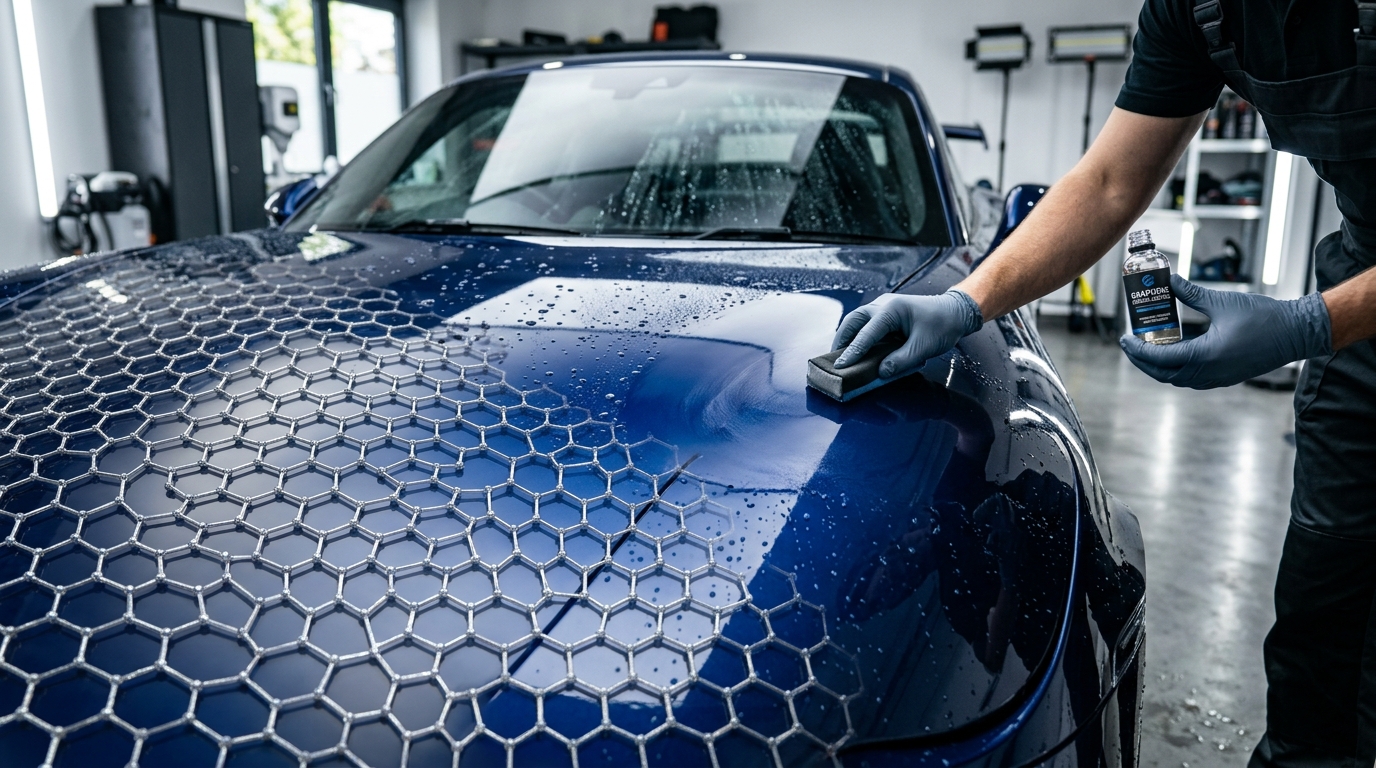
A graphene ceramic coating is an advanced liquid polymer formulation designed to protect automotive paint, gel coats, metal, and industrial substrates. Unlike standard liquid sealants or organic carnauba waxes, it relies on a chemical backbone of inorganic silicon-based polymers infused with functionalized carbon nanomaterials, most commonly reduced graphene oxide (rGO) or graphene nanoplatelets (GNPs). When applied to a prepared surface, the liquid carrier evaporates, allowing the reactive resins to cross-link with the underlying clear coat and form a semi-permanent, sacrificial barrier measuring between one and three microns in thickness.
The introduction of graphene into surface protection aims to solve the primary operational shortcomings of traditional silicon dioxide (SiO2) ceramic formulations: susceptibility to hard-water mineral spotting, static dust accumulation, and localized heat retention. Understanding the real-world performance of these hybrid coatings requires examining their underlying chemistry, physical mechanisms, application dynamics, and genuine limitations.
The Chemistry of Graphene-Infused Coatings
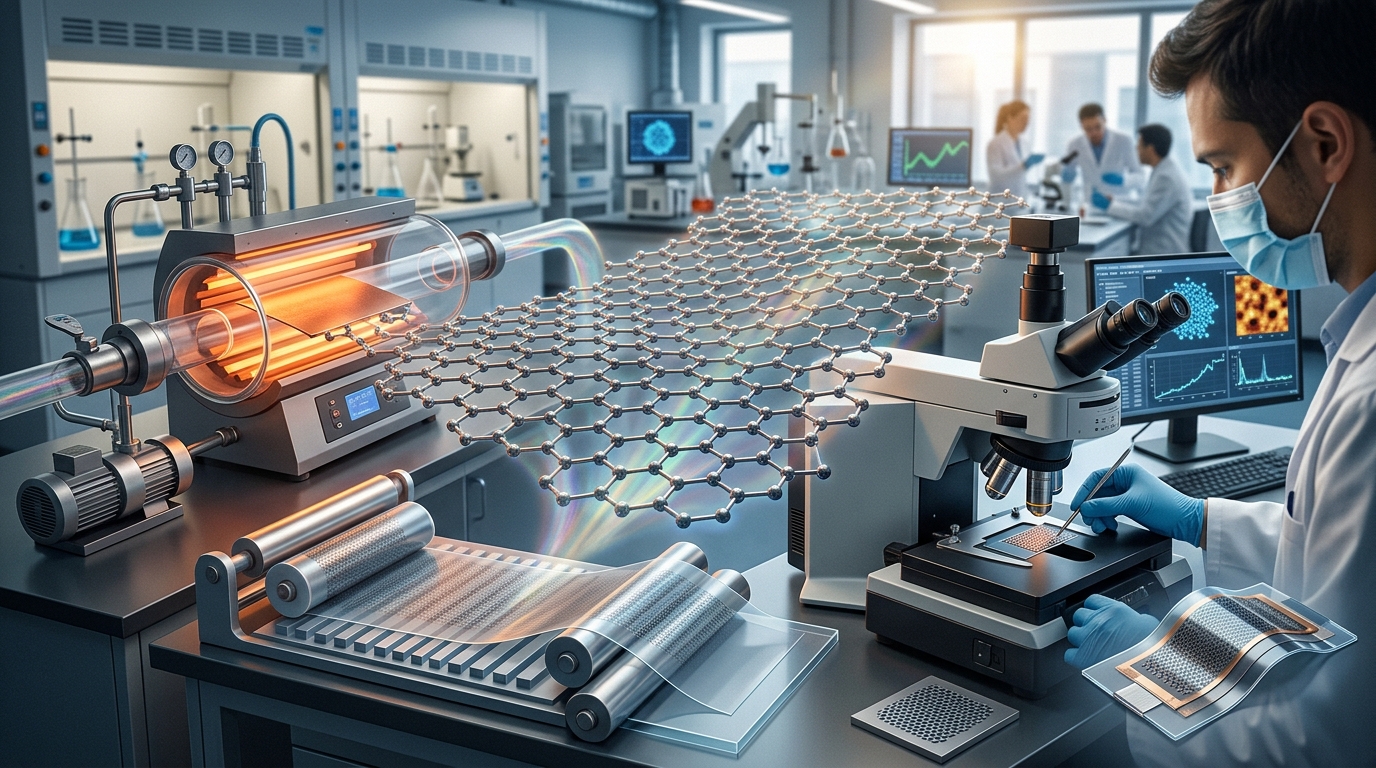
To understand what a graphene ceramic coating does, one must first look at its constituent resin matrix. Pure graphene is an allotrope of carbon consisting of a single layer of atoms arranged in a two-dimensional hexagonal lattice. In isolation, raw monolayer graphene cannot adhere to automotive polyurethane clear coat; it lacks the chemical functional groups necessary to anchor to an organic or semi-organic substrate.
Consequently, commercial formulations do not consist of pure liquid carbon. Instead, they utilize a pre-ceramic polymer binder, typically a polysilazane matrix, an organosilane, or a suspension of functionalized silica oligomers. Graphene derivatives, primarily graphene oxide sheets that have been chemically or thermally reduced, are introduced into this liquid carrier at low weight percentages, usually below five percent.
Functional chemical groups, such as hydroxyl and carboxyl groups remaining on the edges of the graphene oxide platelets, permit stable dispersion within the solvent. These oxygen-containing sites enable the platelets to chemically bond with both the siloxane backbone and the hydroxyl groups present on a vehicle’s clear coat. As the carrier solvents flash off, the composite cures into an organosilicon ceramic network reinforced with interconnected carbon nanosheets.
Performance Mechanisms: How Graphene Alters Surface Physics
The incorporation of carbon nanomaterials alters several macroscopic physical properties of the cured protective layer. These changes are measurable through standardized surface analysis techniques.
Hydrophobic Behavior and Sliding Angle
Ceramic coatings are widely recognized for high surface tension, producing a high water contact angle typically exceeding 100 degrees. However, contact angle alone does not determine how easily water leaves the panel. The more critical metric in exterior automotive care is the sliding angle (or roll-off angle), which measures the degree of tilt required for a bead of water to roll off a panel.
Graphene-modified matrices lower the surface energy and hysteresis of the coating, allowing water droplets to roll off at significantly shallower angles, often below ten to fifteen degrees. This rapid evacuation prevents standing droplets from remaining on flat horizontal panels such as hoods and roofs.
Water Spot Reduction and Thermal Dissipation
Traditional SiO2 ceramic coatings are notorious for mineral etching. When a bead of mineral-laden tap water or acid rain sits on a dark ceramic-coated surface under direct sunlight, the clear ceramic layer acts like a lens while absorbing radiant heat. As the water evaporates rapidly, calcium carbonate and silicate minerals bake into the clear coat, creating etched craters that cannot be washed away.
Graphene possesses exceptional intrinsic thermal conductivity. When dispersed within the resin matrix, the microscopic sheets facilitate lateral heat distribution across the surface rather than concentrating thermal energy directly beneath the water bead. Combined with a lower sliding angle that evacuates standing water quickly, this thermal characteristic significantly reduces the incidence and severity of mineral etching.
Electrical Dissipation and Dust Resistance
Standard ceramic coatings are electrical insulators. During driving and towel drying, friction creates a triboelectric charge on the vehicle panels, resulting in electrostatic dust attraction that pulls airborne particulate matter, brake dust, and pollen directly onto the surface. Graphene networks introduce conductive pathways throughout the cured film, allowing static electrical charges to dissipate more readily. As a result, treated surfaces exhibit less dry dust accumulation between washes.
Graphene Ceramic Coatings vs. Traditional Ceramic Coatings
While both product categories share similar pre-ceramic resin backbones, their operational behavior in daily use shows distinct differences across several environmental and mechanical criteria.
| Attribute | Traditional SiO2 Ceramic Coating | Graphene-Infused Ceramic Coating |
|---|---|---|
| Primary Resin | Silica (SiO2), Polysilazanes, Titanates | Polysilazane / Siloxane matrix with rGO/GNPs |
| Water Sliding Angle | Moderate (20° to 35°) | Low (10° to 18°) |
| Water Spot Susceptibility | High (prone to mineral baking) | Low to Moderate (better heat distribution) |
| Static Resistance | Low (insulating surface attracts fine dust) | Moderate to High (conductive pathways dissipate charge) |
| Chemical Resistance | pH 2 to pH 12 | pH 1 to pH 13 |
| Cured Film Appearance | Optically transparent glassy gloss | Deep, reflective gloss with slight darkening effect |
The Application and Curing Mechanism
Applying a graphene ceramic coating requires stringent surface preparation because the polymer must directly access unoxidized polyurethane or raw substrate to form covalent bonds.
- Decontamination and Paint Correction: The paintwork undergoes chemical decontamination (iron removers and tar solvents), mechanical claying, and abrasive machine polishing. Any remaining swirl marks, scratches, or oxidation sealed beneath the coating will remain locked in place indefinitely.
- Solvent Wipe: An isopropyl alcohol (IPA) or specialized panel wipe removes polishing oils, surfactants, and lubrication residues to expose clean, bare clear coat.
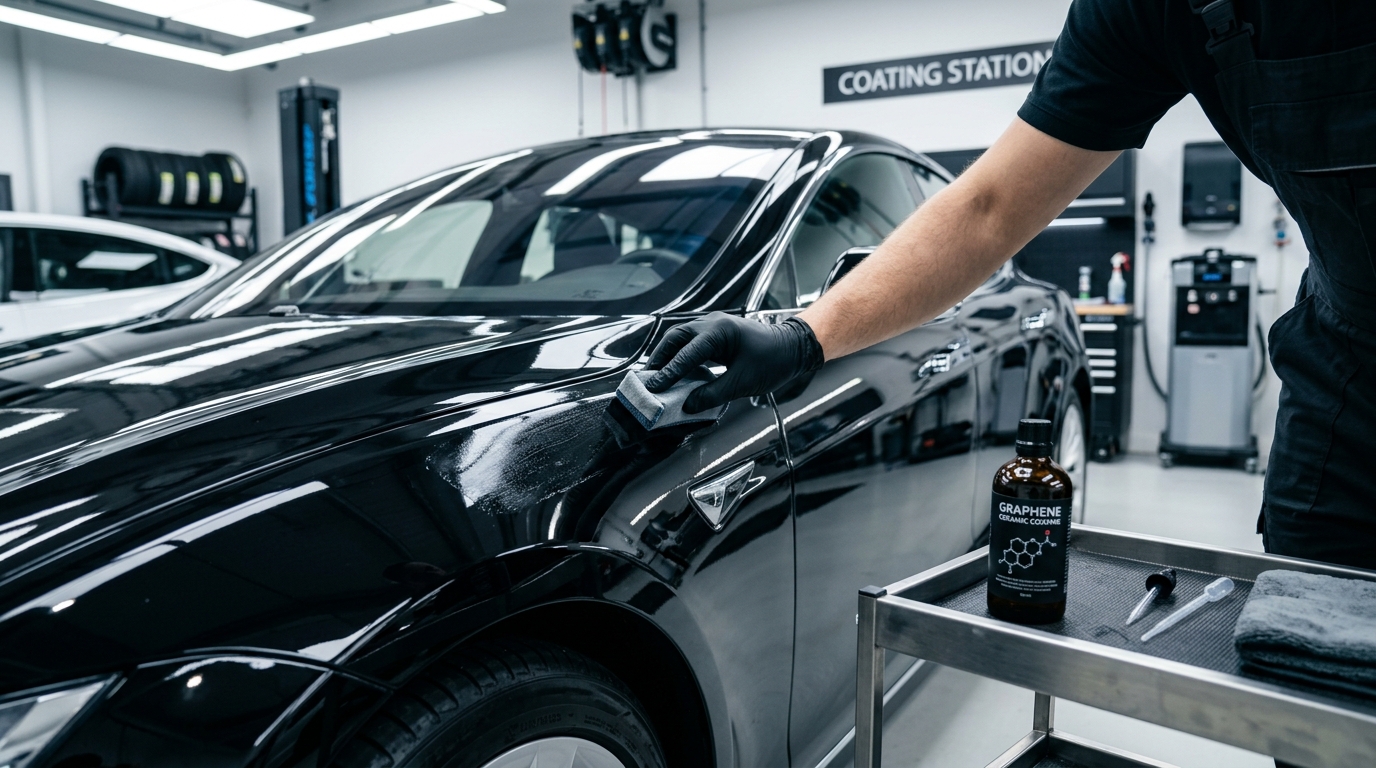
- Liquid Application: The installer drops the coating onto a microfiber-wrapped applicator block and spreads it in cross-hatch patterns (horizontal followed by vertical passes) over small sections (typically two feet by two feet).
- Flashing: Within thirty seconds to three minutes, depending on ambient humidity and temperature, the carrier solvents begin evaporating. This phenomenon, known as “sweating” or “rainbowing,” indicates that the active solids are settling and binding.
- Leveling and Buffing: Microfiber towels gently level high spots and buff away excess carrier resin before the surface becomes tacky.
- Curing: The coating undergoes cross-linking polymerization. Initial moisture-cure dry time requires twelve to twenty-four hours before exposure to water, while complete chemical cure and full hardness stabilization typically require seven to fourteen days.
Dissecting Common Misconceptions
Because graphene is a renowned supermaterial in materials science, its inclusion in protective coatings has generated several unrealistic consumer expectations. Clarifying the physical reality of these formulations separates genuine protection from marketing exaggeration.
Hardness Claims and Scratch Immunity
Many coatings advertise a “10H” or “9H” hardness rating. This metric does not refer to the geological Mohs mineral hardness scale, where a diamond rates at 10 and quartz at 7. Instead, it references the standard pencil hardness scale (ASTM D3363), where a specialized 9H graphite pencil lead fails to scratch the film under controlled downward force.
A cured coating measuring only two microns in depth cannot prevent rock chips, deep key scratches, or improper washing techniques involving dirty wash mitts. It provides sacrificial resistance against light wash marring, minor bird dropping etching, and fine abrasive dust, but it is not scratch-proof.
The “Pure Graphene Sheet” Myth
No automotive product deposits a continuous, defect-free monolayer of pristine graphene across a car body. Isolating pure single-layer carbon sheets over large irregular areas requires chemical vapor deposition (CVD) processes on copper substrates at temperatures near 1,000 degrees Celsius—conditions impossible to replicate on automotive paint. Liquid coatings use microscopic platelets suspended as an additive in a polymer resin, functioning as functional fillers rather than a continuous solid carbon wrapper.
Technical Limitations and Manufacturing Challenges
Developing an effective graphene ceramic coating presents notable chemical engineering hurdles. The most significant is steric stabilization and agglomeration. Graphene nanoplatelets naturally tend to restack and agglomerate due to strong van der Waals forces. If the platelets clump together within the bottle, they fall out of suspension, leaving an uneven concentration that can clog applicator pads, create dark streaks on light paint, and reduce product shelf life.
Manufacturers solve this by functionalizing the graphene edges and employing specific surfactant packages. However, excessive surfactants can weaken the water-repellent properties of the cured matrix, requiring precise chemical balance.
Additionally, improper leveling during application can leave semi-permanent dark shadows or hazy “high spots” on the paint. If not buffed off within the designated flash window, these imperfections require machine wet-sanding or aggressive compound polishing to remove once the resin matrix fully cross-links.
Evaluation Criteria for Vehicle Owners and Detailers
When selecting or evaluating a graphene ceramic coating, several technical factors dictate real-world performance:
- Solids Content Percentage: Higher active solids (pre-polymers and carbon additives) generally produce thicker cured layers and greater longevity, though they shorten the flash time, requiring faster, more precise application.
- Carrier Chemistry: Formulations using volatile organic solvents require proper personal protective equipment (respirators with organic vapor cartridges), whereas newer water-borne or low-VOC carriers offer safer installation at the cost of longer cure cycles.
- Substrate Compatibility: Premium formulations are engineered to bond not only to automotive clear coat but also to textured exterior plastics, bare aluminum, chrome, polycarbonate headlights, and glass without causing discoloration.
- Maintenance Requirements: Hydrophobic coatings are not maintenance-free. Environmental road film and exhaust oils will eventually mask the low-energy surface. Periodic washing with dedicated pH-neutral shampoos and occasional mineral-removing decontamination washes are required to maintain water-sheeting performance over multiple years.