Graphene Coating vs. Ceramic Coating
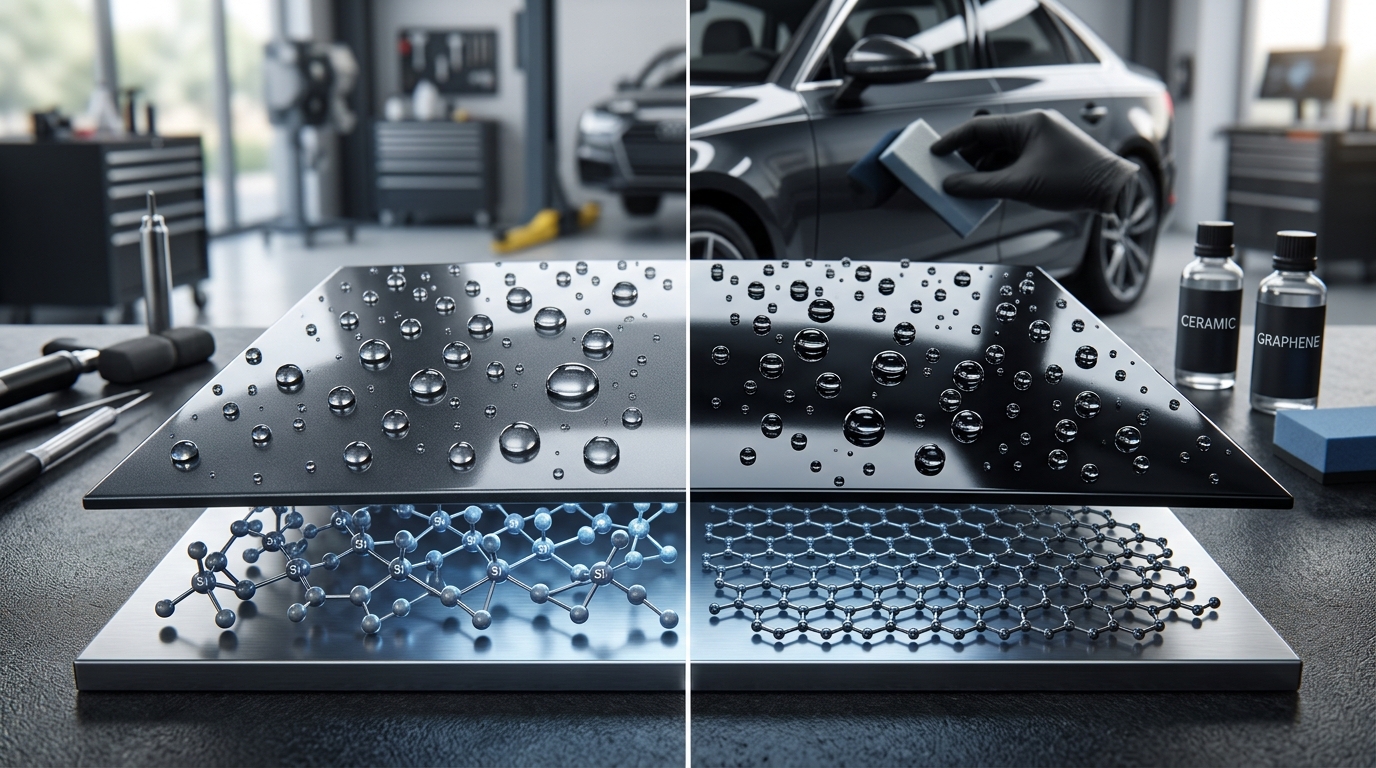
When comparing a graphene coating vs ceramic coating, the core difference lies in the additive chemistry integrated into the protective layer. Traditional ceramic coatings rely on a silicon dioxide polymer matrix that crosslinks into an inorganic, glass-like quartz barrier over a substrate. Graphene coatings build upon this identical ceramic backbone by infusing microscopic flakes of reduced graphene oxide or graphene nanoplatelets into the resin. This hybrid structure modifies how the cured surface manages heat, sheds water droplets, resists static electrical charges, and tolerates mechanical stress.
Neither coating is an impenetrable shield against physical impacts, and bottle-applied graphene is not a pure two-dimensional carbon monolayer grown across a vehicle. Instead, it is a matrix-reinforcement technology designed to address specific real-world vulnerabilities of traditional ceramic coatings, most notably water spotting, heat accumulation, and static dust collection.
The Core Chemical Formulations Explained
To understand performance differences, it is necessary to examine what these liquids are made of and how they bond to clear coats, metals, and composite substrates.
What Is a Ceramic Coating?
Traditional automotive and industrial ceramic coatings are composed primarily of silanes, siloxanes, or polysilazanes suspended in a carrier solvent. When applied to a prepared surface, the carrier evaporates, and the silicon-based compounds undergo hydrolysis and condensation reactions with ambient moisture. This chemical reaction forms an inorganic network of silicon dioxide (SiO2), often reinforced with titanium dioxide (TiO2) for added hardness and refractive gloss. The result is a semi-permanent, chemically bonded sacrificial layer measuring between one and three microns in thickness.
What Is a Commercial Graphene Coating?
In the world of surface protection, a liquid coating cannot consist purely of raw graphene sheets because pure monolayer graphene does not readily suspend in standard coating solvents or cure into a three-dimensional resin on its own. Commercial graphene coatings are essentially ceramic or polysilazane formulations modified with functionalized graphene derivatives, specifically reduced graphene oxide (rGO) or multi-layer graphene nanoplatelets.
These carbon nanoparticles are functionalized with reactive chemical groups that allow them to disperse evenly throughout the liquid carrier and crosslink directly into the siloxane network as it cures. The graphene plates act as a microscopic lattice reinforcement within the ceramic resin, altering its physical and thermal characteristics without eliminating the glass-like durability provided by the underlying silanes.
Direct Comparison: Graphene vs. Ceramic Properties
The practical differences between these two protection systems emerge from the specific material properties of carbon lattices versus quartz-based crystal networks.
| Performance Attribute | Ceramic Coating (SiO2 / Polysilazane) | Graphene-Infused Coating (rGO / Ceramic Hybrid) |
|---|---|---|
| Primary Chemistry | Silicon dioxide, siloxanes, polysilazanes | Ceramic matrix infused with reduced graphene oxide |
| Water Contact Angle | 100° to 110° (High beading) | 110° to 120° (High beading) |
| Water Sliding Angle | Higher (15° to 25°) | Lower (10° to 15°, superior sheeting) |
| Water Spot Susceptibility | Moderate to High (Lensing effect) | Low to Moderate (Faster evacuation, thermal spread) |
| Thermal Dissipation | Thermal insulator (Retains surface heat) | Higher conductivity (Spreads heat across panel) |
| Static Charge Retention | Insulator (Can attract dry dust) | Mildly dissipative (Reduces static dust attraction) |
| Flexibility & Shear Tolerance | Rigid, potentially brittle over flexing panels | Enhanced tensile flexibility from carbon lattice |
| Chemical Resistance | pH 2 to pH 12 typical | pH 2 to pH 13+ typical |
| Typical Layer Thickness | 1 to 3 microns per layer | 1 to 3 microns per layer |
Water Spotting and Fluid Dynamics
One of the primary frustrations with traditional ceramic coatings is water spotting. Ceramic coatings produce a high hydrophobic contact angle, causing water to bead into tight, tall droplets. While visually appealing, these spherical beads act as optical lenses under direct sunlight. As the water evaporates, minerals such as calcium, magnesium, and industrial silicates concentrate at the center of the bead, baking into the coating through concentrated solar heat.
Graphene-modified coatings improve on this behavior through a reduced water sliding angle. The sliding angle refers to the degree of tilt required for a bead of water to roll off a panel. Because graphene lowers the surface roll-off threshold, water sheets off moving or angled panels at lower velocities. Furthermore, water beads that do remain tend to sit flatter, reducing the optical magnification of sunlight and significantly lowering the risk of baked-in mineral rings.
Thermal Dissipation and Heat Tolerance
Silicon dioxide is a thermal insulator. When a vehicle painted with a standard ceramic coating sits under direct sunlight, solar energy concentrates in localized areas, causing dark paint to reach temperatures exceeding 70 degrees Celsius. High localized heat accelerates chemical etching from bird droppings, tree sap, and bug acids.
Graphene has one of the highest known thermal conductivities in material science. While an rGO-infused coating does not match the conductivity of pristine laboratory graphene, the dispersed carbon platelets provide improved thermal dissipation relative to pure silica. Heat spreads more uniformly across the surface area of the panel rather than pooling in hot spots, which mitigates heat-assisted chemical bonding of environmental contaminants.
Static Dust Attraction and Surface Conductivity
Pure quartz coatings are electrical insulators. Friction from driving through the air or drying the vehicle with a microfiber towel generates a static charge on the surface. This static charge actively draws airborne dust, pollen, and light debris to the paint immediately after washing.
Graphene conducts electricity. Even at low loading concentrations within a resin, graphene platelets reduce electrical resistance on the cured surface. This creates an anti-static dust repulsion effect, allowing the surface to remain cleaner between maintenance washes because dry particulate matter does not cling with the same electrostatic force.
Flexibility and Tensile Strength
Modern vehicle components expand and contract continuously due to ambient temperature changes. Flexible plastic bumpers, fiberglass hoods, and thin aluminum panels exhibit considerable thermal expansion. Traditional quartz coatings cure into a rigid, glass-like state that can develop microscopic fissures or shear failure over repeated expansion-contraction cycles.
Graphene provides tensile mechanical reinforcement inside the cured binder. Similar to rebar placed inside concrete, the high tensile strength of graphene platelets bridges microscopic stress points, allowing the coating to flex alongside expanding and contracting plastic or metal substrates without micro-cracking.
Application, Curing, and Usability Differences
For detailers and vehicle owners, the application experience dictates whether a coating cures into a flawless, streak-free barrier or leaves behind stubborn visual defects.
Flash Times and Leveling
Ceramic coatings typically offer predictable flash times based on humidity and ambient temperature. As the solvent carrier evaporates, the product creates an oily rainbow sheen indicating it is ready to be buffed flat. Some rapid-curing ceramic coatings leave a very narrow window for leveling, requiring small panel-by-panel application.
Graphene coatings often feature wider working windows. The presence of carbon platelets slightly alters solvent evaporation rates and visible leveling cues. Most graphene formulations change from a dark or clear liquid to a distinct hazy sweating appearance when ready for removal. The lower tackiness during wipe-off often makes graphene coatings easier to level across large panels, reducing the likelihood of accidental