Graphene Car Coating
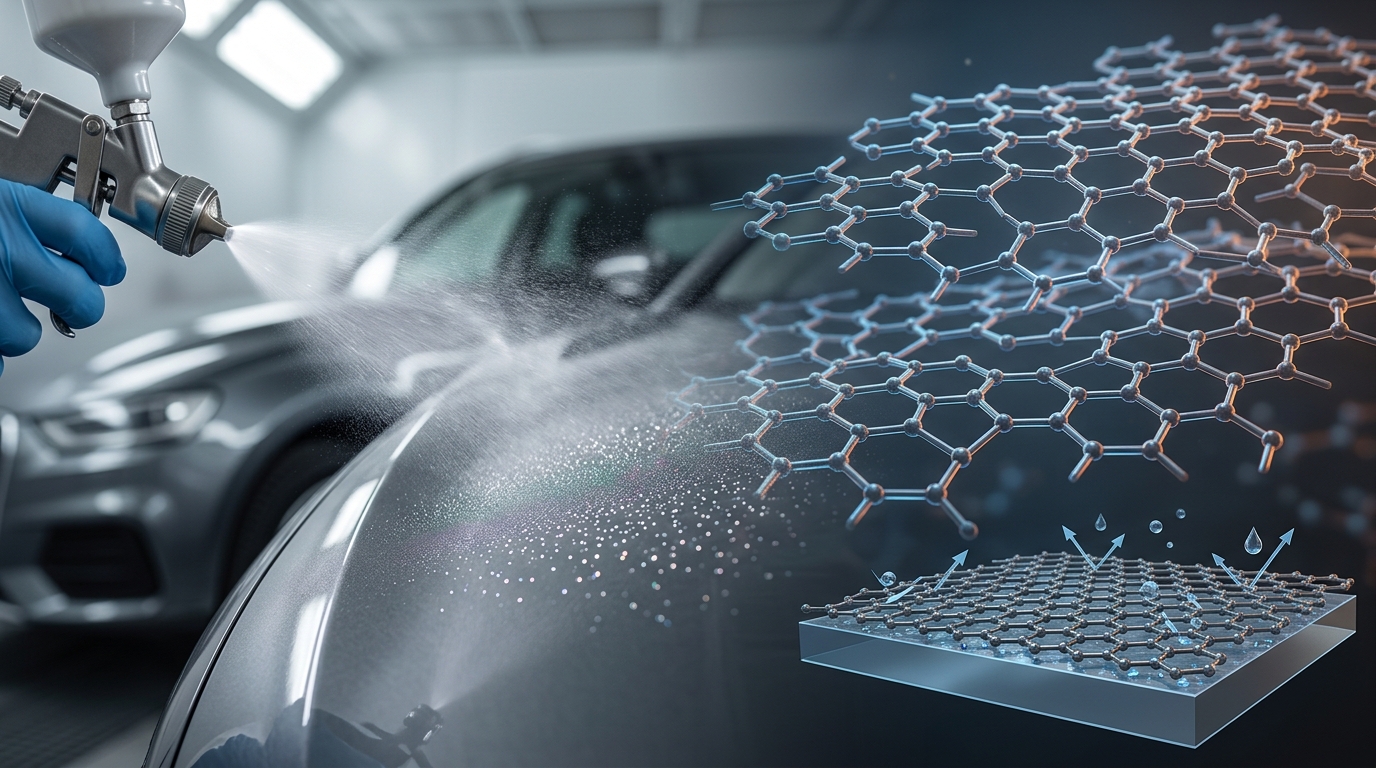
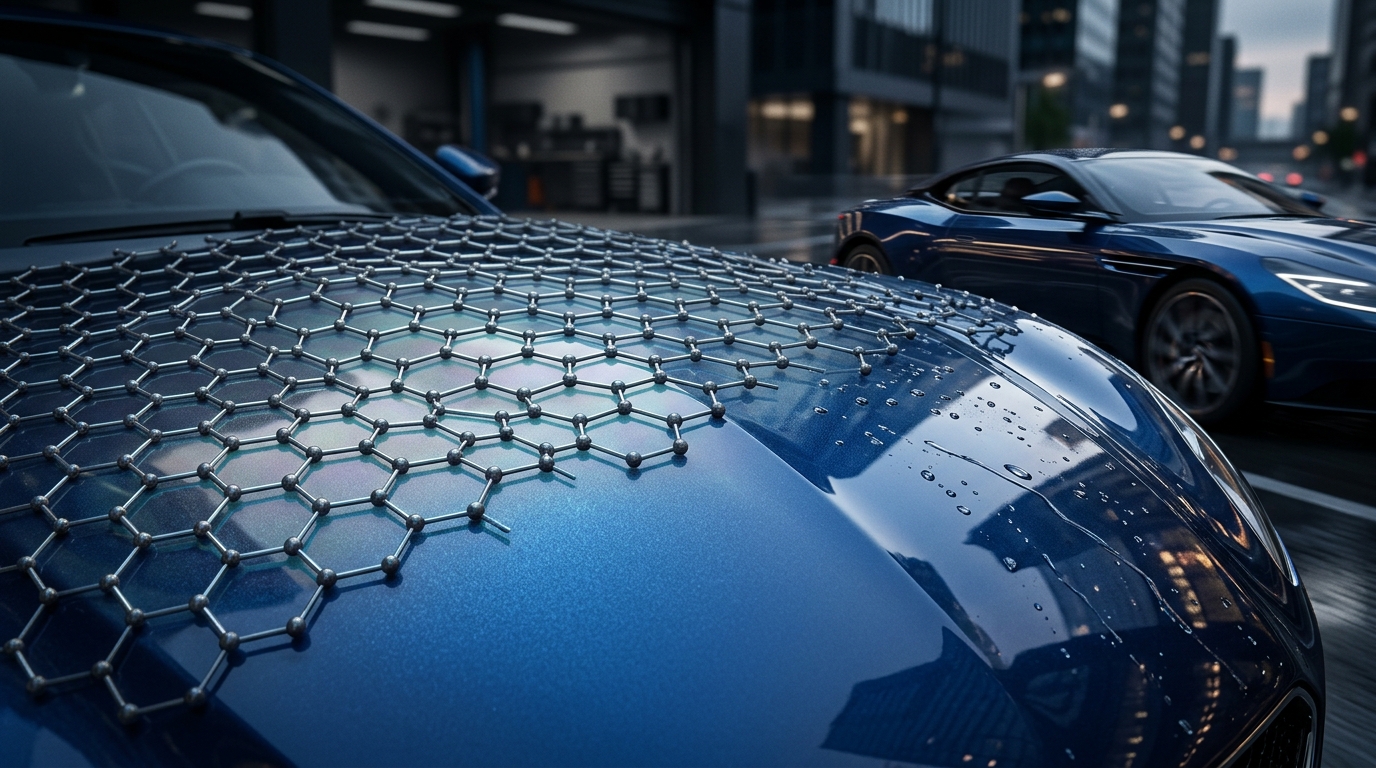
A graphene car coating is an advanced liquid polymer formulated with microscopic carbon nanomaterials designed to bond with automotive clear coat. While standard ceramic coatings rely purely on silicon dioxide (SiO2) or titanium dioxide (TiO2) matrices, graphene-infused formulations introduce functionalized carbon structures—most commonly reduced graphene oxide (rGO)—into the resin base. The result is a sacrificial protective layer engineered to improve chemical resistance, heat dissipation, and hydrophobicity beyond traditional paint sealants.
Understanding the actual capabilities of these coatings requires separating chemical mechanics from detailing industry hyperbole. A vehicle treated with a graphene coating does not receive an impenetrable sheet of pure atomic carbon; rather, it benefits from a hybrid ceramic-nanomaterial network that addresses specific weaknesses inherent in conventional glass-based coatings.
The Chemistry: What Is in a Graphene Coating?
Pure graphene is a two-dimensional allotrope of carbon arranged in a single-layer hexagonal lattice. In isolation, a pure monolayer sheet cannot be bottled as a liquid and wiped onto a car panel. Automotive coatings utilize chemically modified derivatives suspended within a carrier solvent and a polymer binder.
The Role of Graphene Oxide and rGO
Manufacturing liquid surface treatments requires graphene to stay evenly dispersed without clumping. Pure graphene is hydrophobic and aggregates rapidly in liquid solutions. Formulators therefore use graphene oxide (GO) or reduced graphene oxide, which possess oxygen-bearing functional groups such as carboxyl, hydroxyl, and epoxy groups. These functional groups allow the nanomaterial to disperse evenly into liquid polymers such as polysilazanes, polysiloxanes, or polyurethane resin systems.
The Curing and Cross-Linking Process
Once applied to paint, the carrier solvents evaporate, triggering a cross-linking reaction between the polymer base and the vehicle clear coat. As the siloxane or polysilazane chains cross-link into a rigid three-dimensional matrix, the embedded graphene nanosheets interweave throughout the film. This composite structure functions like microscopic rebar within concrete, reinforcing the cured polymer matrix.
Core Performance Mechanisms
Integrating carbon nanomaterials alters how an applied coating interacts with environmental hazards, light, and surface moisture. The distinct physical properties of graphene translate directly into observable automotive benefits.
1. Thermal Dissipation and Water Spot Mitigation
Traditional ceramic coatings are prone to water spotting (calcium and mineral etching). Glass-based SiO2 is a thermal insulator, meaning water droplets sitting on a hot vehicle panel heat up rapidly. As the droplet evaporates under solar radiation, the concentrated minerals bake into the clear coat, etching the finish.
Graphene has exceptionally high thermal conductivity. When dispersed within a coating matrix, it helps distribute surface heat more evenly across the panel rather than allowing localized hot spots beneath stationary water beads. Lower localized surface temperatures reduce the rate at which standing water evaporates violently, significantly lowering the likelihood of severe mineral etching.
2. Hydrophobic Surface Dynamics
Water behavior on a coated panel is defined by two primary measurements: contact angle and sliding angle.
- Water Contact Angle: High-end graphene coatings achieve contact angles between 110° and 118°, causing water to pull itself into spherical beads with minimal surface contact.
- Low Sliding Angle: Graphene surfaces reduce water roll-off resistance (contact angle hysteresis). Water beads roll off panels at shallower tilt angles—often under 10 to 15 degrees—allowing vehicle motion or light airflow to blow standing water off the paint, an effect known as high water sheeting.
3. Broad-Spectrum Chemical Resistance
Clear coats degrade when exposed to harsh environmental contaminants such as acidic bird droppings, tree sap, alkaline road detergents, and insect remains. High-grade graphene formulations resist a broad pH spectrum, typically between pH 2 and pH 12. The close-packed hexagonal carbon ring structure acts as a physical diffusion barrier, preventing reactive chemical compounds from penetrating through to the underlying paint.
4. Reduced Static Charge Accumulation
Friction caused by air passing over dry paint creates static electricity, which actively attracts airborne dust and road particulate. Because graphene is an electrical conductor, graphene-infused coatings reduce the build-up of static surface charges, helping dry treated panels stay cleaner for longer intervals compared to purely dielectric ceramic layers.
Graphene vs. Ceramic Coatings: A Technical Comparison
While both product categories provide durable clear coat protection, their physical and functional attributes differ in several practical metrics.
| Feature / Metric | Standard Ceramic (SiO2/TiO2) | Graphene-Infused Coating (rGO) |
|---|---|---|
| Primary Structure | Silicon dioxide / Polysilazane matrix | Hybrid polymer reinforced with rGO platelets |
| Water Spot Resistance | Moderate (prone to localized heat etching) | High (improved heat distribution) |
| Flexibility | Rigid, glass-like (brittle under flex) | Higher tensile flexibility on flexible panels |
| Sliding Angle | Moderate (requires higher tilt to roll) | Very Low (beads roll off readily) |
| Dust Attraction | Moderate (higher static accumulation) | Low (enhanced antistatic properties) |
| Visual Appearance | Glassy, sharp reflective gloss | Deep, warm gloss with rich color saturation |
The Application Protocol
Applying a true graphene coating requires rigorous preparation because the coating relies on covalent chemical bonding with the bare polyurethane clear coat. Any barrier between the resin and the paint impairs durability.
Surface Decontamination and Correction
- Chemical Decontamination: The vehicle is washed with a dedicated strip shampoo, followed by an iron fallout remover and a tar dissolver to clear embedded metallic and organic debris.
- Mechanical Decontamination: A detailing clay bar or clay mitt removes remaining bonded contaminants from the pores of the paint.
- Paint Correction: Machine polishing is performed to remove swirl marks, scratches, and oxidation. The coating locks in the paint condition permanently; defects must be eliminated before application.
- Panel Prep Wipe: The surface is thoroughly wiped down with an isopropyl alcohol (IPA) solution or dedicated solvent wipe to eliminate residual polishing oils.
Coating Application and Leveling
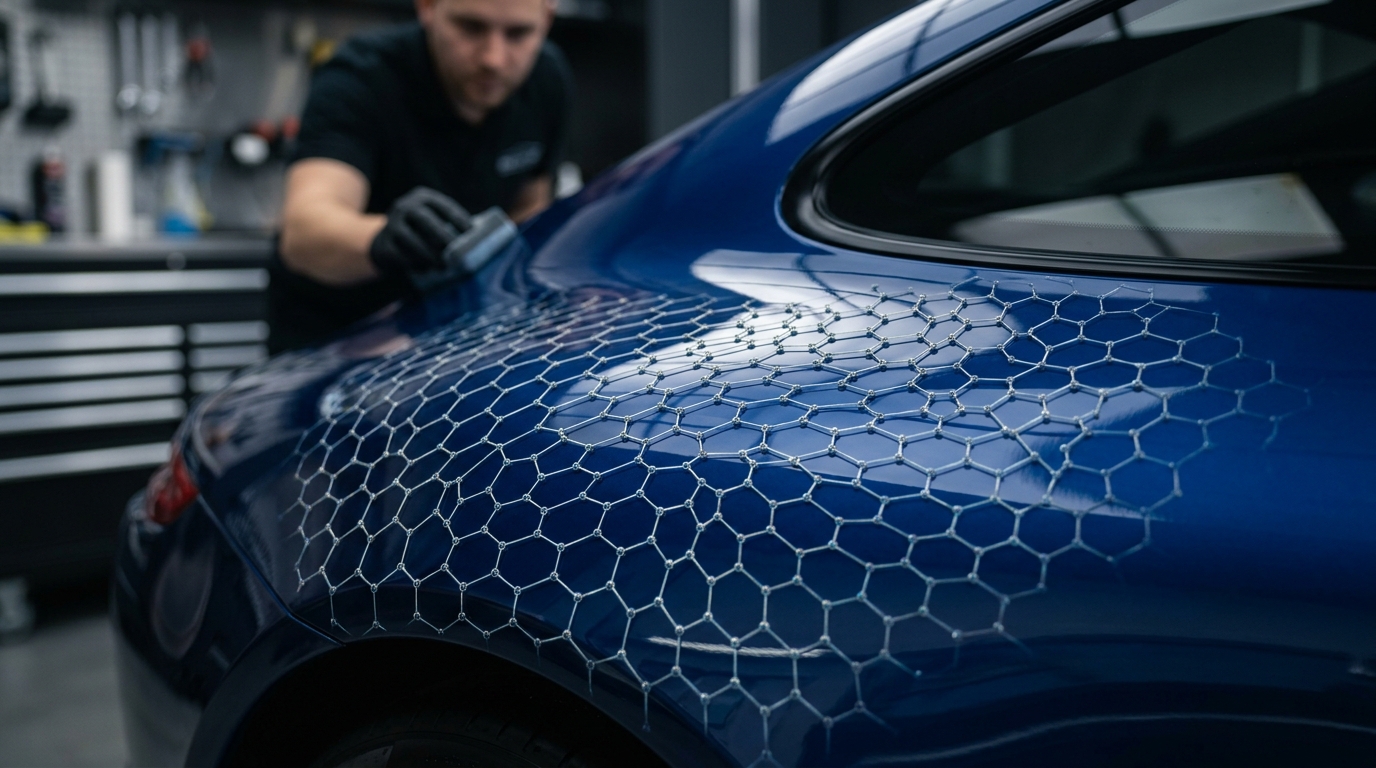
The coating is applied using a micro-suede applicator wrapped around a dense foam block. Working in small sections (typically 2 feet by 2 feet), the liquid is spread in a tight cross-hatch pattern to ensure uniform coverage.
As the carrier solvent evaporates, the film undergoes a phase called flash time, visible as a rainbow or sweating effect on the panel. The installer must buff the section with a clean, low-pile microfiber towel to level high spots, followed by a second plush towel to ensure an even, streak-free finish.
Proper cross-linking requires an initial dry curing window of 24 hours out of the rain, followed by a complete chemical cure that generally spans 7 to 14 days. During this period, harsh chemical washes should be avoided.
Separating Reality from Marketing Hype
The rise of graphene in consumer detailing has led to several exaggerated claims that misrepresent what the material can physically achieve on automotive bodywork.
The “10H Hardness” Claim
Marketing often cites 9H or 10H ratings to imply the coating makes the vehicle scratch-proof or diamond-hard. In detailing, this number refers to the Wolff-Wilborn pencil hardness scale, not the geological Mohs hardness scale. A 9H pencil hardness test measures resistance to being scratched by a 9H graphite pencil lead under a specific calibrated weight. It does not mean the car is impervious to rock chips, key scratches, or improper wash mitt pressure.
Concentration Limits in Formulations
Adding more graphene to a formula does not automatically yield superior performance. Graphene and its oxides are naturally dark gray or black. Exceeding a small fraction of a percent by weight causes suspensions to turn murky, risking discoloration on white or light-colored vehicles, or causing the nanomaterials to agglomerate into non-functional clusters. Effective formulations use precisely engineered, low-concentration dispersions optimized for optical clarity and matrix stability.
Maintenance for Long-Term Durability
While graphene coatings provide resilient protection, they are not maintenance-free. Regular maintenance preserves the hydrophobic self-cleaning properties and prevents contamination from clogging the microscopic surface texture.
- Two-Bucket Washing: Use a pH-neutral automotive shampoo free of added waxes or silicone gloss enhancers, which can mask the coating’s natural hydrophobicity.
- Avoid Abrasive Washes: Automatic tunnel car washes with spinning abrasive brushes cause mechanical scratching that physically abrades the sacrificial coating layer over time.
- Periodic Decontamination: Use mild iron removers every few months to dissolve embedded brake dust and industrial fallout that settles on top of the coating.
- Top-Up Sealants: Applying a dedicated water-based graphene detail spray every few months refreshes the sacrificial top layer and rejuvenates water contact angles.
When formulated accurately and applied to properly prepared paint, a graphene car coating represents an effective evolution in automotive surface care, combining the rigid protective bond of ceramic matrices with the thermal, electrical, and hydrophobic advantages of carbon nanotechnology.