Graphene Car Wash
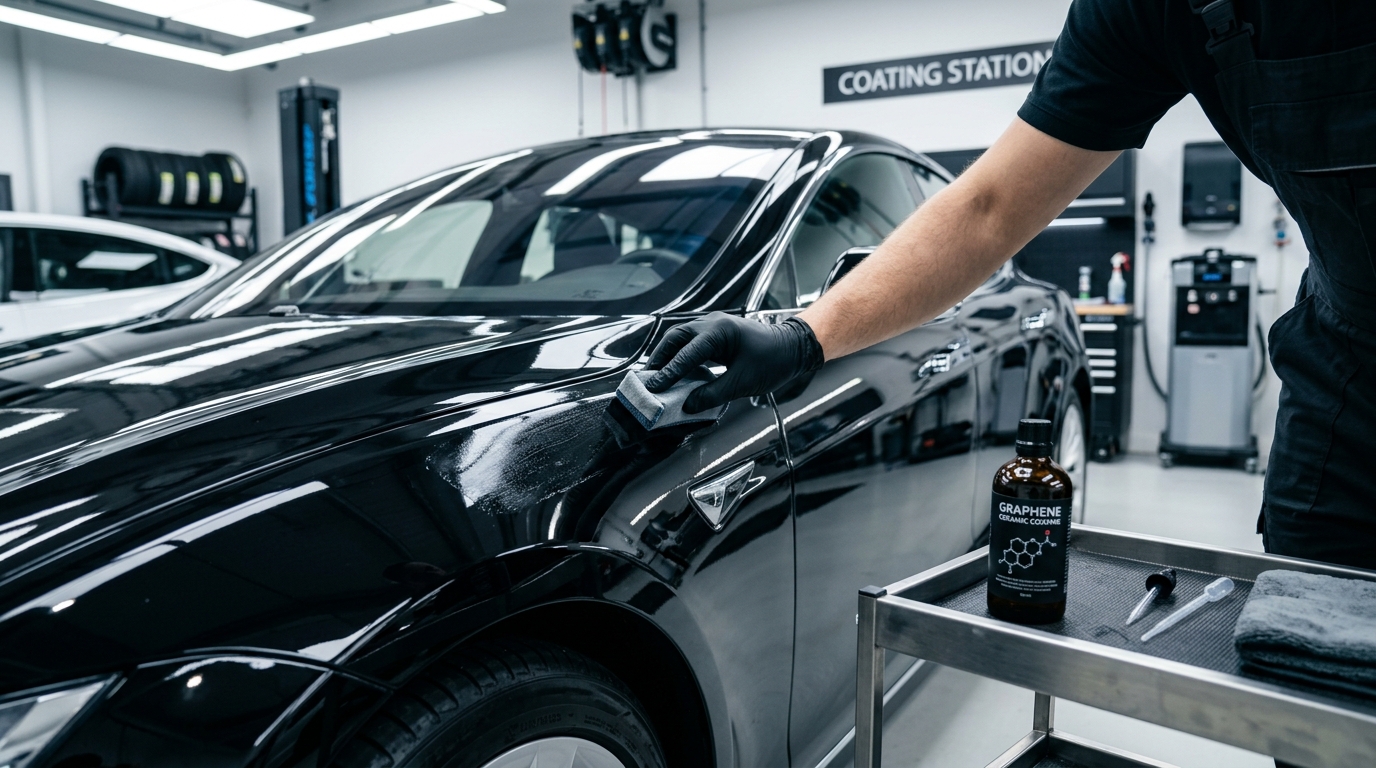
A graphene car wash is an automotive detailing shampoo engineered with suspended carbon nanomaterials—typically functionalized reduced graphene oxide or multi-layer graphene nanoplatelets—blended into a pH-neutral surfactant matrix. Unlike conventional wash soaps designed strictly for lifting surface dirt, graphene-infused wash formulas deliver dual-action performance: they encapsulate abrasive debris while simultaneously depositing a microscopically thin, sacrificial barrier of graphene-derivative structures across clear coats, glass, and automotive plastics.
This hybrid cleaning chemistry addresses the central challenge of automotive detailing: minimizing friction-induced swirl marks during the contact wash while reinforcing gloss, surface slickness, and water-repellent hydrophobicity.
The Chemistry Behind Graphene Wash Formulations
Standard automotive shampoos rely on anionic and non-ionic surfactants to lower water surface tension, emulsify road oils, and encapsulate grit particles inside microscopic molecular structures called micelles. Graphene wash formulas build upon this foundation by introducing carbon nanomaterials stabilized in a surfactant suspension matrix.
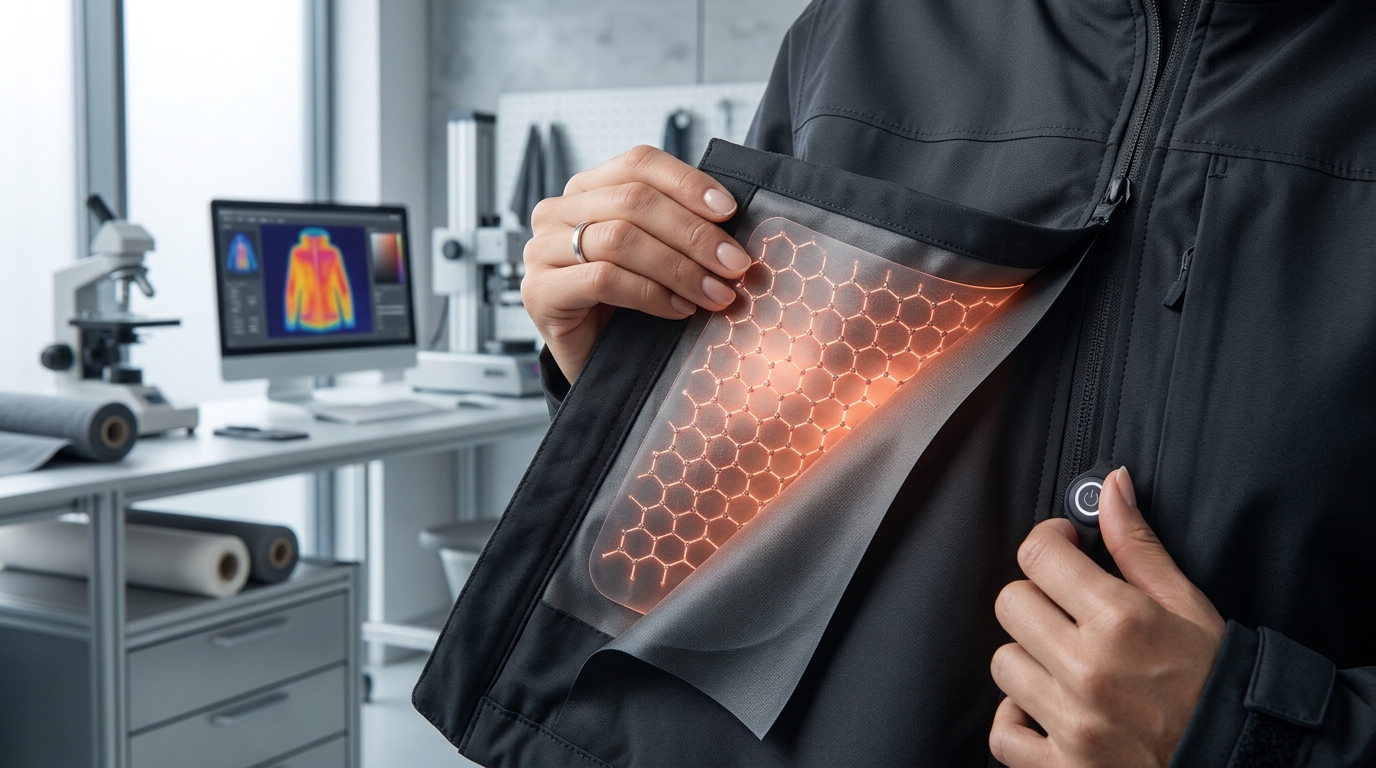
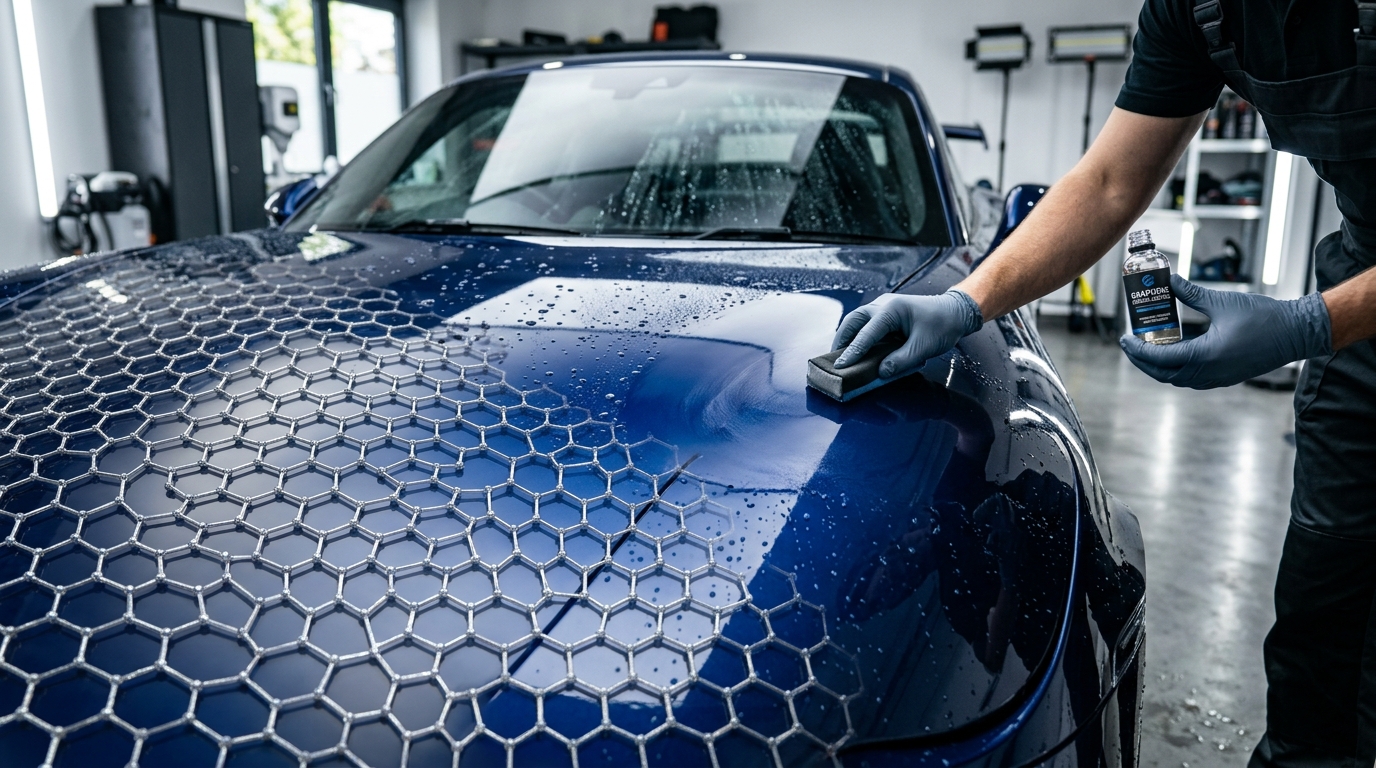
Graphene in its raw, pristine form is a single two-dimensional layer of carbon atoms arranged in a hexagonal honeycomb lattice. However, pure pristine graphene is naturally hydrophobic and insoluble in water, tending to agglomerate into useless graphite clusters if added directly to a liquid solution. To solve this, chemists use water-dispersible derivatives:
- Graphene Oxide (GO): Carbon nanosheets decorated with oxygen functional groups (such as epoxy, hydroxyl, and carboxyl groups) that allow stable chemical dispersion in water-based surfactant mixtures.
- Reduced Graphene Oxide (rGO): Graphene oxide treated to remove the majority of its oxygen groups, partially restoring the honeycomb electrical conductivity, thermal stability, and mechanical strength while maintaining suspension viability in detailing chemicals.
- Functionalized Graphene Nanoplatelets (GNPs): Microscopic stacks of graphene sheets modified with chemical stabilizers to prevent fallout and maintain consistent dispersion throughout the bottle.
When mixed with foaming agents and water conditioners, these nano-scale carbon structures remain suspended until mechanical agitation and surface rinsing spread them evenly across the clear coat.
Key Performance Mechanisms
Integrating graphene derivatives into an automotive wash alters how water, light, and mechanical wash media interact with vehicle surfaces. Several distinct mechanisms explain why these formulations behave differently than traditional car soaps.
1. Enhanced Boundary Lubrication
Most surface marring and micro-scratches occur during the contact wash phase when wash mitts drag trapped particulates across painted surfaces. Graphene sheets exhibit an ultra-low coefficient of friction and high shear strength. In solution, they establish a temporary layer of boundary lubrication between the wash mitt fibers and the vehicle clear coat, enabling wash pads to glide across the paint with reduced dragging friction.
2. Thermal Dissipation and Water Spot Mitigation
One of the primary weaknesses of traditional silica-based (SiO2) ceramic washes is water spotting. Concentrated SiO2 beads water into high, bead-shaped convex lenses. In direct sunlight, these droplets magnify radiant heat and leave mineral etchings as they evaporate. Graphene possesses an exceptionally high in-plane thermal conductivity. When deposited on paint, the carbon network aids in thermal dissipation, spreading localized heat across the panel and promoting a wider water sheeting action that reduces the harsh mineral concentration typical of spherical bead evaporation.
3. Antistatic Charge Dissipation
Driving and wiping generate triboelectric charges across vehicle clear coats, turning the exterior into an electrostatic magnet for airborne dust, pollen, and industrial fallout. Because reduced graphene oxide retains electrical conductivity, it facilitates antistatic surface charge dissipation. Discharging static build-up on the clear coat discourages dry particulate adhesion after the vehicle dries.
4. Reinforcing Existing Protective Coatings
Graphene wash soap leaves behind a light sacrificial protection layer that bonds electrostatically to bare paint or chemically integrates with underlying ceramic coatings, paint sealants, or dedicated graphene coatings. It restores degraded hydrophobic properties by elevating the dynamic water contact angle, causing moisture to roll off the surface and carry loose surface dirt with it.
Comparison of Automotive Wash Chemistries
Understanding where graphene car wash soap fits requires comparing it with established alternatives across mechanical, protective, and longevity metrics.
| Property | Standard Car Shampoo | SiO2 Ceramic Wash | Graphene Car Wash |
|---|---|---|---|
| Primary Purpose | Dirt removal and foam generation | Cleaning and silica gloss deposition | Cleaning, ultra-slickness, and anti-static protection |
| Lubricity Mechanism | Surfactant and polymer glide | Synthetic siloxane polymers | Surfactants reinforced with low-friction carbon nanosheets |
| Water Spot Susceptibility | Moderate (depends on local water hardness) | Higher (due to bead lensing effects) | Lower (due to thermal distribution and sheeting dynamics) |
| Surface Dust Attraction | Standard | Prone to static dust accumulation | Reduced via static charge dissipation |
| Stand-Alone Durability | None (washes clean off) | 2 to 6 weeks | 3 to 8 weeks |
| Coating Compatibility | All waxes, sealants, and coatings | Best for ceramic/SiO2 coatings | Universal (waxes, sealants, ceramic, and graphene) |
Application Techniques and Best Practices
To maximize the performance of a graphene wash formula, users should apply it using methods that avoid premature drying and ensure proper nano-platelet distribution.
Foam Cannon Pre-Wash
Using a pressurized foam cannon allows the graphene surfactants to dwell on dry paint for several minutes. The dense foam encapsulates heavier road dirt and begins laying down the initial lubricating film before any physical mitt contacts the paint. Rinsing this initial layer away carries off the bulk of abrasive grit.
Two-Bucket Contact Wash
For the contact phase, two buckets equipped with grit guards provide optimal paint safety. One bucket holds the diluted graphene shampoo, while the other contains clean water to rinse the wash mitt after every panel. Working from the top of the vehicle downward ensures that lower panels—which collect the highest concentration of abrasive road sand—are cleaned last.
Rinsing and Drying
A thorough rinse with clean, demineralized, or filtered water initiates the hydrophobic sheeting action. Drying with a clean, high-pile microfiber towel or a touchless filtered warm-air blower prevents the formation of drying marks and allows the deposited graphene film to settle cleanly over the finish.
Realistic Expectations vs. Marketing Claims
While graphene-infused wash products provide measurable benefits in lubricity, gloss retention, and dust resistance, separating engineering reality from commercial hyperbole is essential.
- Wash soap is not a 10H ceramic coating: A car wash cannot build a permanent, covalent-bonded 3D crystalline structure. The mechanical wear of driving, road salts, and sun exposure will wear away the deposited film within a few weeks unless routinely refreshed.
- Graphene content is measured in fractional percentages: True graphene derivatives are potent dark powders; high concentrations would stain light paintwork and destabilize liquid soap formulas. The amount of active graphene in wash solutions is tiny—often under one percent by weight—acting as a targeted surface additive rather than a thick armor plate.
- It does not eliminate rock chips or heavy scratches: The mechanical hardness of single-sheet graphene does not transfer as bulletproof paint protection when applied via wash soap. It protects primarily against fine wash-induced marring, not road debris impacts.
Product Selection and Evaluation Criteria
When selecting a graphene car wash, prioritize chemical balance over exaggerated marketing specifications:
- pH Neutrality: Ensure the product is rated near pH 7.0 to 8.5 to prevent stripping existing waxes or specialized coatings.
- Dispersion Stability: High-quality formulations keep nanomaterials in a clear or evenly tinted homogeneous liquid suspension without heavy black sludge settling permanently at the base of the container.
- Free-Rinsing Chemistry: The shampoo should rinse away without leaving thick surfactant streaks, chalky residues, or rainbow-like optical distortions on vehicle glass.
Used as a regular maintenance shampoo or an active booster for sealed paintwork, a graphene car wash offers a measurable upgrade in wash lubricity, dust resistance, and water evacuation over traditional wash methods.