303 Marine Graphene Nano Spray Coating
Marine vessels operate in one of the most chemically aggressive environments on Earth. Constant exposure to ultraviolet radiation, airborne saltwater, mineral-rich spray, and extreme thermal cycling causes rapid oxidation and surface degradation on gelcoats, clearcoats, and polished metals. The introduction of 303 marine graphene nano spray coating represents a specialized evolution in marine surface care, combining the ease of a spray-and-wipe application with the enhanced physical properties of graphene-infused polymer chemistry.
Rather than relying solely on traditional carnauba waxes or standard silicon dioxide (SiO2) sealants, this formulation incorporates engineered carbon nanomaterials to improve chemical resistance, heat dissipation, and hydrophobic durability on marine substrates.
The Chemistry Behind Graphene Marine Spray Formulations
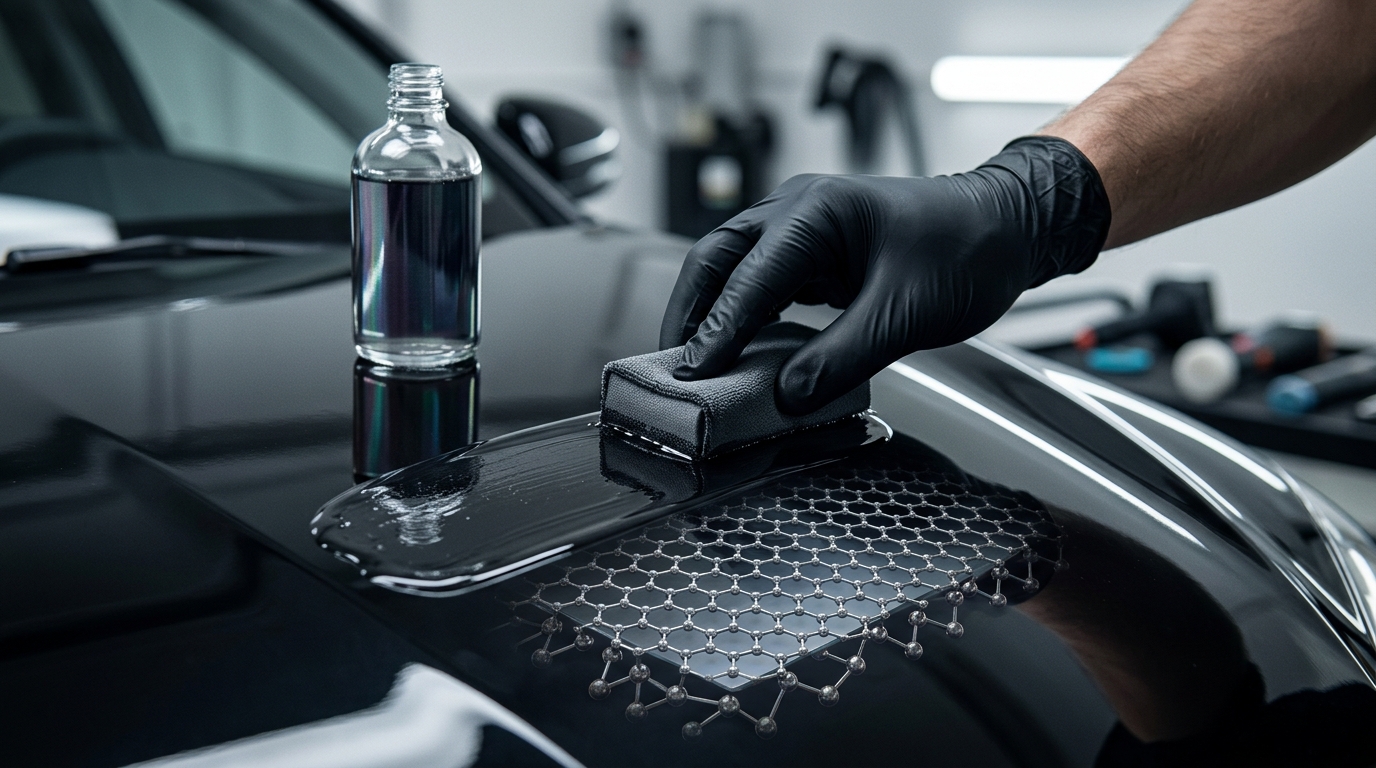
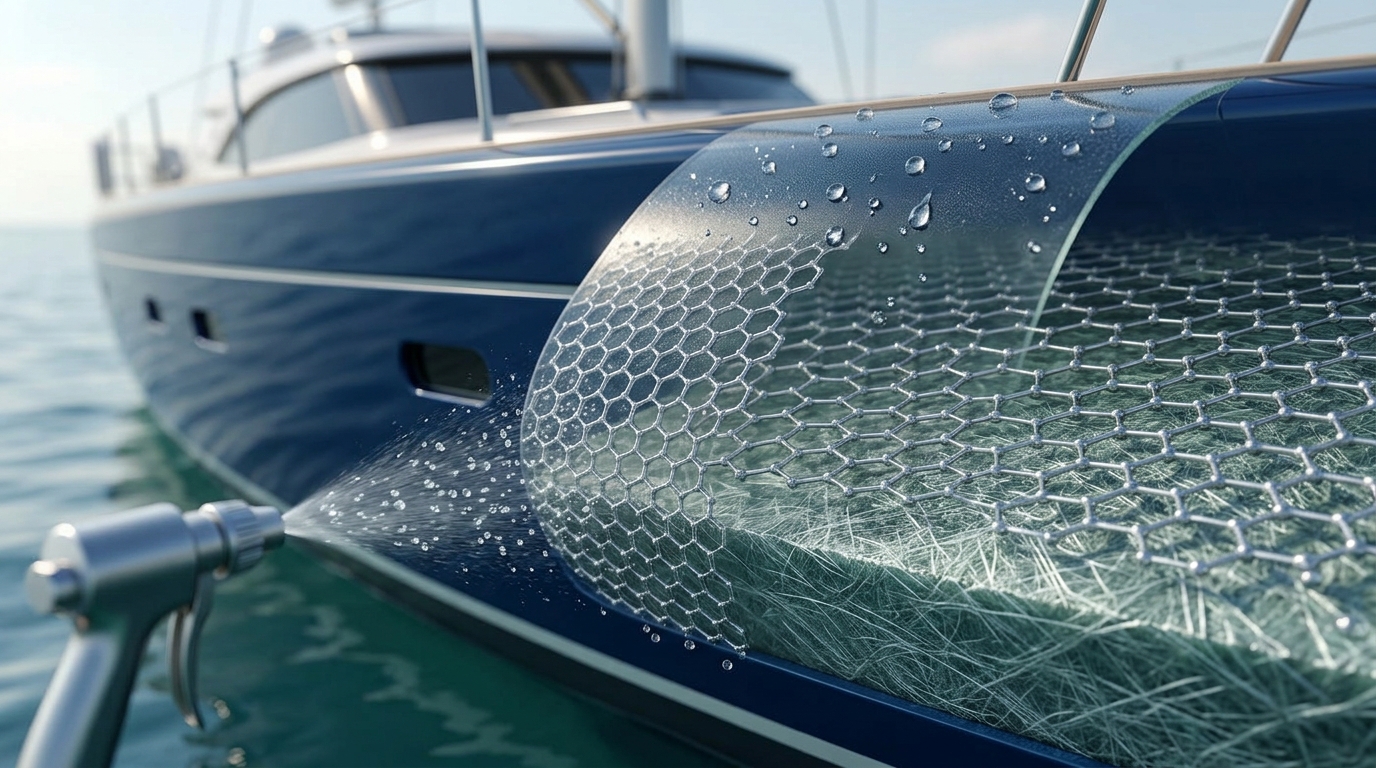
To understand how this coating functions, it is necessary to examine how graphene behaves within a liquid carrier matrix. Pure graphene is a single-atom-thick sheet of carbon atoms arranged in a two-dimensional hexagonal lattice. Because pristine graphene is insoluble and difficult to stabilize in liquid formulas, consumer-ready coatings utilize functionalized derivatives, primarily graphene oxide nanoplatelets or reduced graphene oxide, dispersed within a liquid resin suspension.
When applied to a vessel exterior, the liquid carrier evaporates, leaving behind a tightly packed matrix of ceramic polymers cross-linked with carbon nanosheets. The nanoscale platelet structure fills microscopic surface pores and creates an overlapping physical barrier across the substrate.
High Contact Angle and Hydrophobic Behavior
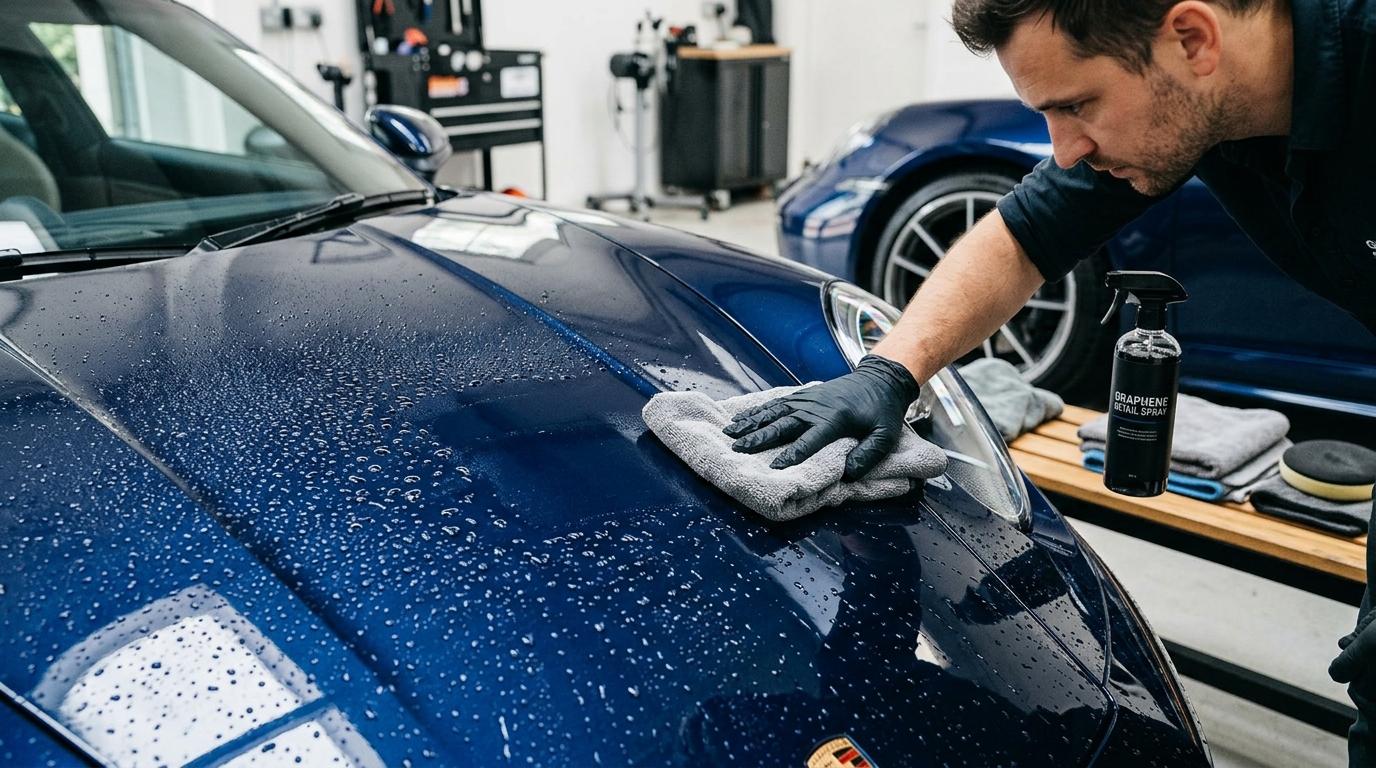
Water repellency is governed by surface energy. The addition of carbon structures to a hydrophobic polymer system significantly alters the hydrophobic surface energy of the treated surface. Water droplets form a high water contact angle, often exceeding 105 degrees, causing them to bead tightly and roll off the hull during movement or washdowns.
This beading action does more than create aesthetic appeal; it facilitates self-cleaning. As water droplets roll across the inclined planes of a boat hull or superstructure, they capture loose salt crystals, industrial fallout, and soot, carrying them away before they can bond to the gelcoat.
Thermal Dissipation and Water Spot Mitigation
One primary drawback of conventional SiO2 ceramic coatings in marine settings is their susceptibility to water spotting. Concentrated sunlight passing through spherical water droplets creates a magnifying effect, while the underlying surface absorbs heat. On dark gelcoats, surface temperatures can exceed 65 degrees Celsius. This intense localized heat bakes dissolved minerals—such as calcium carbonate and sea salts—deep into the pores of the finish.
Graphene exhibits remarkable thermal dissipation properties. Within the coating matrix, the conductive carbon network helps conduct and spread thermal energy more evenly across the surface rather than allowing localized hot spots beneath drying water droplets. By moderating peak surface temperatures, the coating reduces the severity of mineral spot etching, making dried mineral deposits easier to wipe away during routine maintenance.
Gelcoat Versus Automotive Clearcoat: Why Marine Formulations Differ
A common misconception is that automotive ceramic sealants perform identically on marine vessels. However, marine gelcoat and automotive paint possess fundamentally different physical characteristics that require tailored chemical approaches.
- Porosity: Marine gelcoat is a thermoset polyester resin that is significantly more porous than polyurethane automotive clearcoat. These microscopic voids trap moisture, salt, and oxygen, accelerating subsurface degradation.
- Thickness: Gelcoat layers are much thicker than automotive finishes, meaning they expand and contract substantially under severe thermal cycles.
- Chemical Exposure: Saltwater accelerates electrochemical oxidation, while alkaline wash-down chemicals strip weak protective layers rapidly.
Formulations engineered for marine use, such as the 303 graphene marine spray, are formulated to penetrate and anchor securely within the wider pore structure of polyester and vinyl ester resins without causing hazing or uneven curing. The resulting bond helps seal the porous gelcoat surface against the oxygen-moisture interaction responsible for chalky gelcoat oxidation.
Key Protection Mechanisms in Marine Environments
Applying an engineered graphene nano spray coating introduces a multifunctional sacrificial protective layer over topside surfaces, hulls, and marine hardware.
Ultraviolet Degradation Defense
Marine gelcoat degrades primarily through photo-oxidation caused by solar UV-A and UV-B wavelengths. Over time, UV radiation breaks the molecular bonds of the polyester resin, leading to discoloration, loss of gloss, and a brittle, chalking surface. The carbon nanomaterial network in the coating acts as an effective UV absorber, scattering and attenuating harmful radiation before it reaches the vulnerable resin substrate.
Corrosion and Salt Resistance
Saltwater accelerates the degradation of metals and oxidized gelcoats through electrolyte-driven chemical breakdown. The dense overlapping platelet alignment creates an effective barrier protection mechanism that impedes the penetration of chloride ions. This shields polished stainless steel, anodized aluminum t-tops, and bare metal accents from pitting and corrosion.
Surfaces Compatible with Graphene Spray Coatings
The versatility of a water- or mild solvent-based nano spray coating allows it to be used across diverse marine substrates above the waterline:
- Gelcoat and Painted Hulls: Restores deep gloss and adds durable protection on smooth, non-chalking surfaces.
- Clear and Tinted Enclosures: Can be applied to glass windows and rigid optical plastics like acrylic (Plexiglas) and polycarbonate (Lexan) to improve rain clearing and visibility.
- Brightwork and Metal Hardware: Protects stainless steel railings, cleats, aluminum towers, and outriggers against saltwater pitting.
- Smooth Vinyl and Rub Rails: Leaves a dry, non-greasy protective film that does not attract airborne dust or grime.
Surface Preparation and Application Protocol
The longevity and hydrophobic performance of any nano-ceramic coating depend directly on surface preparation. While spray-applied coatings are far easier to apply than professional multi-layer liquid ceramics, proper substrate decontamination remains essential.
Step 1: Thorough Decontamination and Washing
Wash the boat thoroughly with a dedicated marine wash to remove surface dirt, dried salt, and oils. If the gelcoat has existing organic stains or water lines, use specialized hull cleaners prior to coating application. Rinse the entire vessel with clean, soft water and dry it completely.
Step 2: Oxidation Removal and Correction
Graphene spray coatings enhance the existing condition of the surface; they do not remove heavy oxidation. If the gelcoat feels rough, looks milky, or exhibits chalking, the surface must be compounded and polished with appropriate marine pads and compounds. Attempting to coat oxidized gelcoat results in premature product failure and uneven bonding.
Step 3: Surface Wipe-Down
Wipe the polished surfaces with a diluted isopropyl alcohol solution or a dedicated surface prep spray. This step strips away residual polishing oils, silicones, and lubricants, exposing the clean resin matrix for maximum chemical adhesion.
Step 4: Application and Leveling
Work in shaded conditions on a cool surface:
- Shake the product bottle thoroughly to ensure uniform suspension of graphene nanoplatelets throughout the liquid carrier.
- Mist the coating directly onto a dense microfiber applicator pad or a clean microfiber towel, rather than spraying excessively onto large hull sections where overspray could dry prematurely.
- Apply the product across a manageable section (approximately 3 feet by 3 feet) using a cross-hatch pattern (horizontal passes followed by vertical passes) to ensure complete, uniform coverage.
- Allow the coating to flash. As the carrier solvents evaporate, the product will begin to haze or exhibit a subtle sweating appearance, typically within 1 to 3 minutes depending on ambient temperature and humidity.
- Buff the section clear using a clean, plush microfiber towel. Flip the towel frequently to avoid redepositing leveled product.
Step 5: Curing Period
Keep the treated surfaces dry and out of direct rain or heavy dew for at least 1 to 2 hours after application. Full cross-linking and optimal chemical resistance develop over a 24-hour period.
Comparative Analysis: Graphene Spray vs. Marine Wax vs. Professional Ceramic
Understanding where a graphene nano spray fits within the broader ecosystem of marine protectants prevents mismatched expectations regarding durability and cost.
| Feature | Traditional Carnauba Marine Wax | 303 Marine Graphene Spray | Professional Marine Ceramic Coating |
|---|---|---|---|
| Primary Chemistry | Natural carnauba & paraffin waxes | Graphene oxide / Ceramic polymer resin | High-solids SiO2 / Polysilazane matrix |
| Durability Range | 3 to 8 weeks | 4 to 9 months | 18 to 36 months |
| Application Method | Wipe on, dry to haze, buff off | Spray, spread, flash, buff clean | Precision leveling, multi-step liquid application |
| Thermal Resistance | Low (melts at high ambient heat) | High (disperses localized surface heat) | Very High (rigid thermal stability) |
| Water Spot Resistance | Moderate | High | Moderate to Low (prone to mineral baking) |
| Application Skill Level | Beginner | Beginner to Intermediate | Professional / Advanced DIY |
Technical Limitations and Common Misconceptions
To accurately evaluate graphene spray technology, several widespread industry misconceptions must be addressed.
It Is Not an Antifouling Bottom Paint
A graphene spray coating cannot replace true antifouling bottom paint. Antifouling paints contain biocides (such as cuprous oxide) or specialized foul-release silicones formulated to prevent the adhesion of barnacles, tubeworms, and macro-algae on submerged hulls. Spray coatings applied below the waterline on boats kept continuously in slips will succumb to biofouling within weeks.
Film Build and Thickness Considerations
Spray-applied graphene products deliver a very thin protective layer measured in nanometers, unlike professional liquid ceramics that leave a measurable micrometer-thick sacrificial crust. While the spray format offers convenience and frequent reapplication potential, it does not provide heavy scratch resistance against severe mechanical abrasion from fenders, dock lines, or sandy shoes.
Graphene Dispersion Stability
Because carbon nanomaterials are naturally inclined to agglomerate due to van der Waals forces, the product must be formulated with stabilizing surfactants. If left sitting for prolonged periods, natural settling may occur. Vigorous shaking before every use is strictly necessary to resuspend the active carbon particles throughout the carrier liquid.
Maintenance and Longevity Optimization
Maximizing the lifespan of a marine graphene coating requires consistent maintenance practices that avoid degrading the cross-linked polymer layer.
- Wash with pH-Neutral Boat Soaps: Avoid using high-pH degreasers or harsh industrial detergents for regular maintenance washes, as strong caustic agents slowly strip polymer coatings.
- Rinse After Salt Exposure: Regular freshwater rinses after offshore outings prevent dense salt crusts from drying across topside surfaces.
- Periodic Top-Up Applications: Because the spray application is fast, applying a booster coat every few months maintains peak hydrophobic action and robust UV protection throughout the boating season.
By understanding the material mechanics and chemical advantages of graphene-infused sealants, boat owners can achieve durable surface protection, simplified washdowns, and extended finish clarity across demanding marine environments.