Graphene Spray
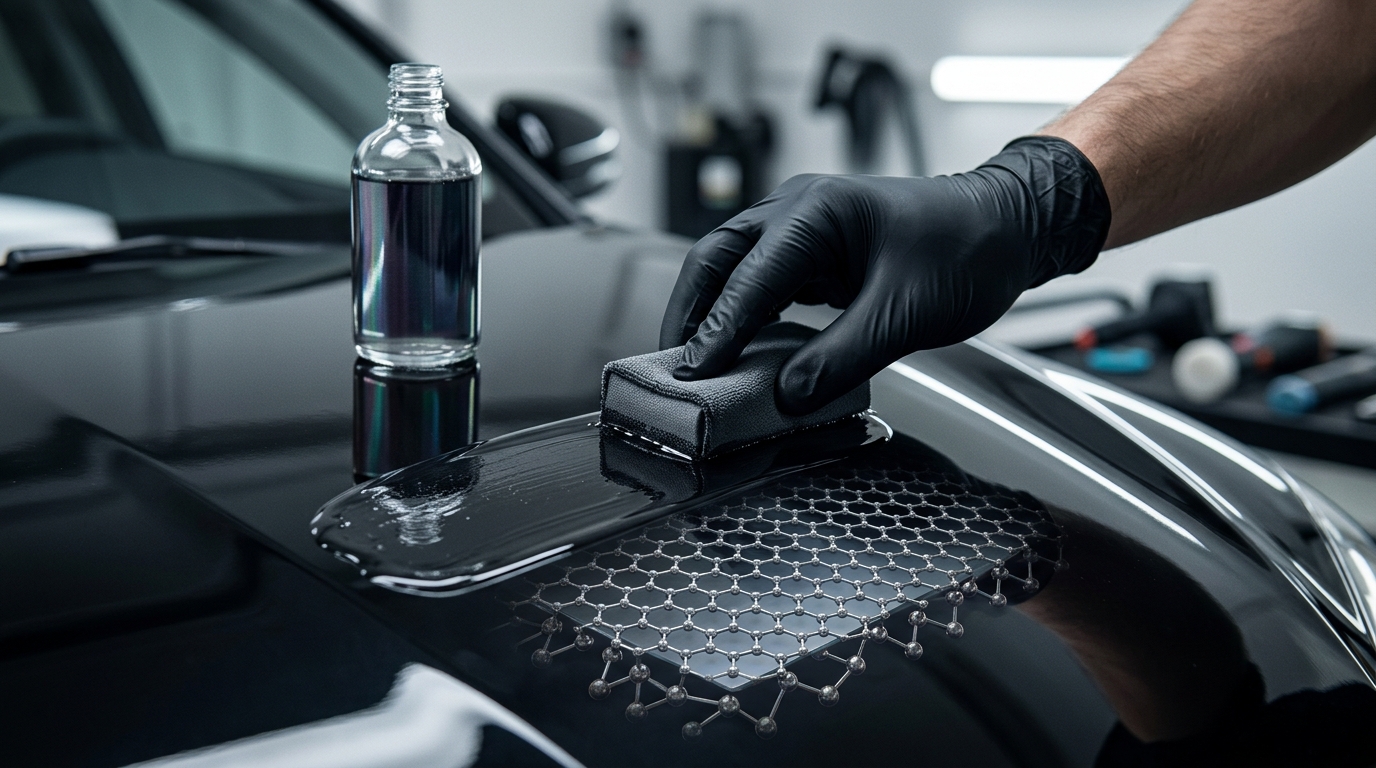
A graphene spray is an aerosolized or liquid-dispensed suspension containing microscopic graphene particles—typically graphene nanoplatelets or reduced graphene oxide—blended into a liquid carrier and polymer binder system. Rather than depositing a continuous single-atom-thick sheet across a surface, these sprays apply a composite thin film where graphene flakes interlock within a resin matrix. When the carrier evaporates and the binder cures, the dispersed nanomaterial imparts enhanced mechanical hardness, electrical conductivity, corrosion resistance, and thermal dissipation to the underlying substrate.
While popular consumer interest centers heavily on automotive surface protection, graphene spray formulations serve diverse engineering sectors ranging from aerospace electromagnetic shielding to industrial anti-corrosion primers. Understanding how these formulations function requires examining the underlying material physics, the formulation chemistry, and the performance differences between decorative consumer coatings and heavy-duty functional thin films.
The Chemistry and Formulation of Graphene Sprays
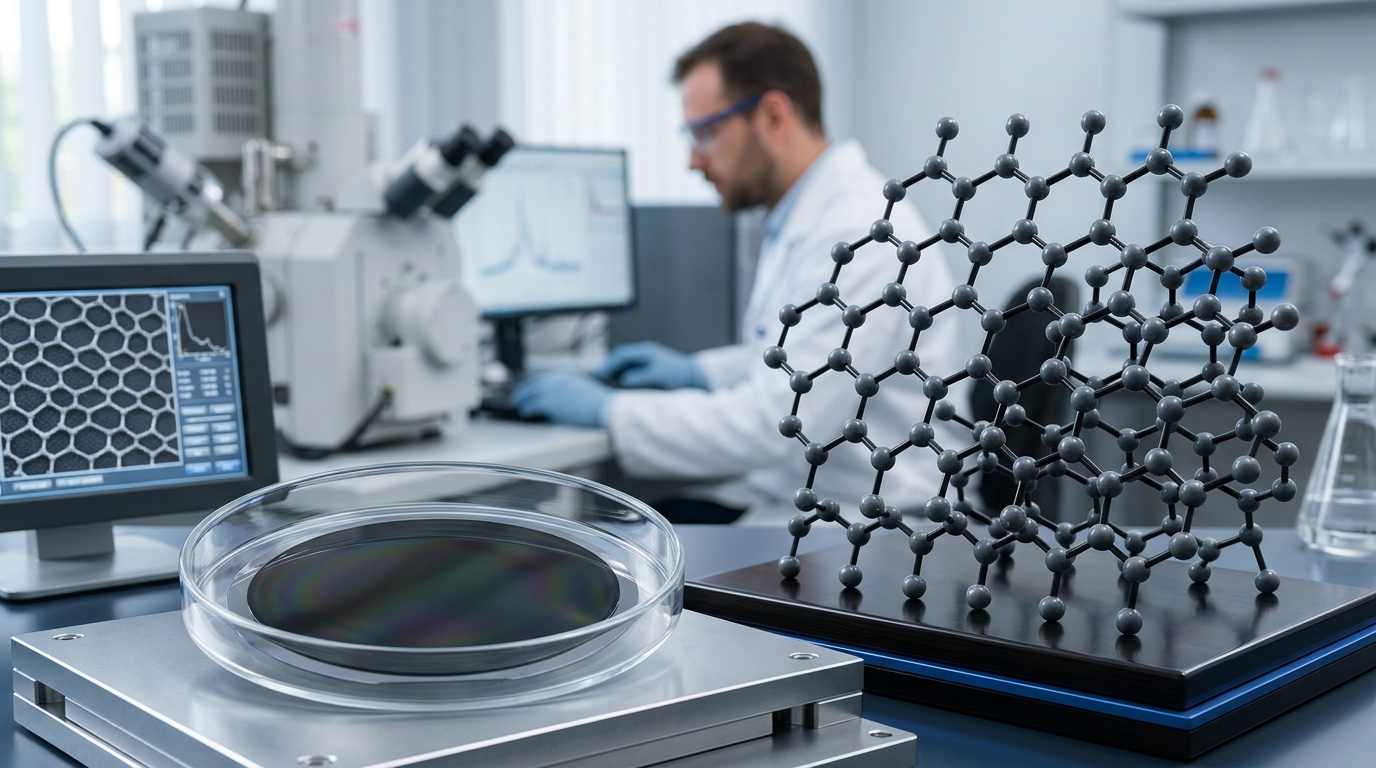
Pristine monolayer graphene consists of a two-dimensional honeycomb lattice of sp²-bonded carbon atoms. In isolation, pure pristine graphene is notoriously difficult to suspend in stable liquid carriers due to strong van der Waals attractions that cause the sheets to re-stack into graphite flakes. Consequently, commercial and industrial spray formulations utilize functionalized carbon derivatives engineered for chemical compatibility with solvents and resins.
Primary Material Additives
- Reduced Graphene Oxide (rGO): Created by chemically or thermally stripping oxygen groups from oxidized graphite flakes, rGO retains residual oxygen-containing functional groups (hydroxyl, epoxy, and carboxyl). These groups allow stable dispersion in water or organic solvents while recovering substantial electrical conductivity and barrier performance.
- Graphene Nanoplatelets (GNPs): Multilayer stacks of carbon sheets (typically ranging from 2 to 30 layers) with lateral dimensions between 1 and 50 micrometers. GNPs provide structural reinforcement, mechanical stiffness, and thermal pathways at a lower material cost than pristine single-layer graphene.
- Functionalized Pristine Graphene: Chemically modified graphene sheets coated with non-covalent dispersants that prevent agglomeration while preserving intact hexagonal carbon networks.
Carrier Fluids and Binder Matrices
The performance of a sprayable coating depends heavily on its carrier vehicle. In consumer detailing sprays, the carrier is typically an aqueous emulsion or volatile siloxane fluid carrying polydimethylsiloxane (PDMS) and amino-functional silanes. As the solvent evaporates, the silanes cross-link with surface hydroxyl groups on clear coats or metals, anchoring the graphene flakes within a flexible silicone-resin network.
Industrial-grade sprays employ high-performance thermoset resins, such as two-part epoxies, polyurethanes, or fluoropolymers. In conductive and electromagnetic shielding applications, the binder is engineered to permit close physical contact between adjacent flakes, facilitating electrical transport across the network.
How Graphene Sprays Work: Key Functional Mechanisms
Integrating two-dimensional carbon nanomaterials into a sprayable medium alters the surface physics through several distinct mechanisms.
1. The Tortuous Path Barrier
Corrosion and oxidation require water, oxygen, and corrosive ions (such as chloride) to migrate through a coating down to the underlying metal. In standard polymer paints, small gas molecules diffuse through the intermolecular spaces of the polymer matrix with relatively little resistance.
When impermeable, high-aspect-ratio graphene platelets are aligned parallel to the surface during spray application, they form an overlapping physical barrier. Corrosive agents cannot penetrate the crystalline carbon lattice; instead, they must travel around the edges of each platelet. This extended migration route—known as the tortuous path mechanism—dramatically slows the permeation rate of moisture and oxidizing agents, extending the protective life of the underlying substrate.
2. Electrical and Antistatic Percolation
Pure polymers are electrical insulators. By introducing conductive carbon flakes above a specific concentration threshold—known as the percolation threshold—the flakes establish a continuous conductive pathway throughout the cured film. Graphene spray coatings designed for electronics dissipate static charge buildup, prevent sparking in flammable environments, and provide lightweight electromagnetic interference shielding without the weight penalties of solid metal enclosures.
3. Thermal Dissipation
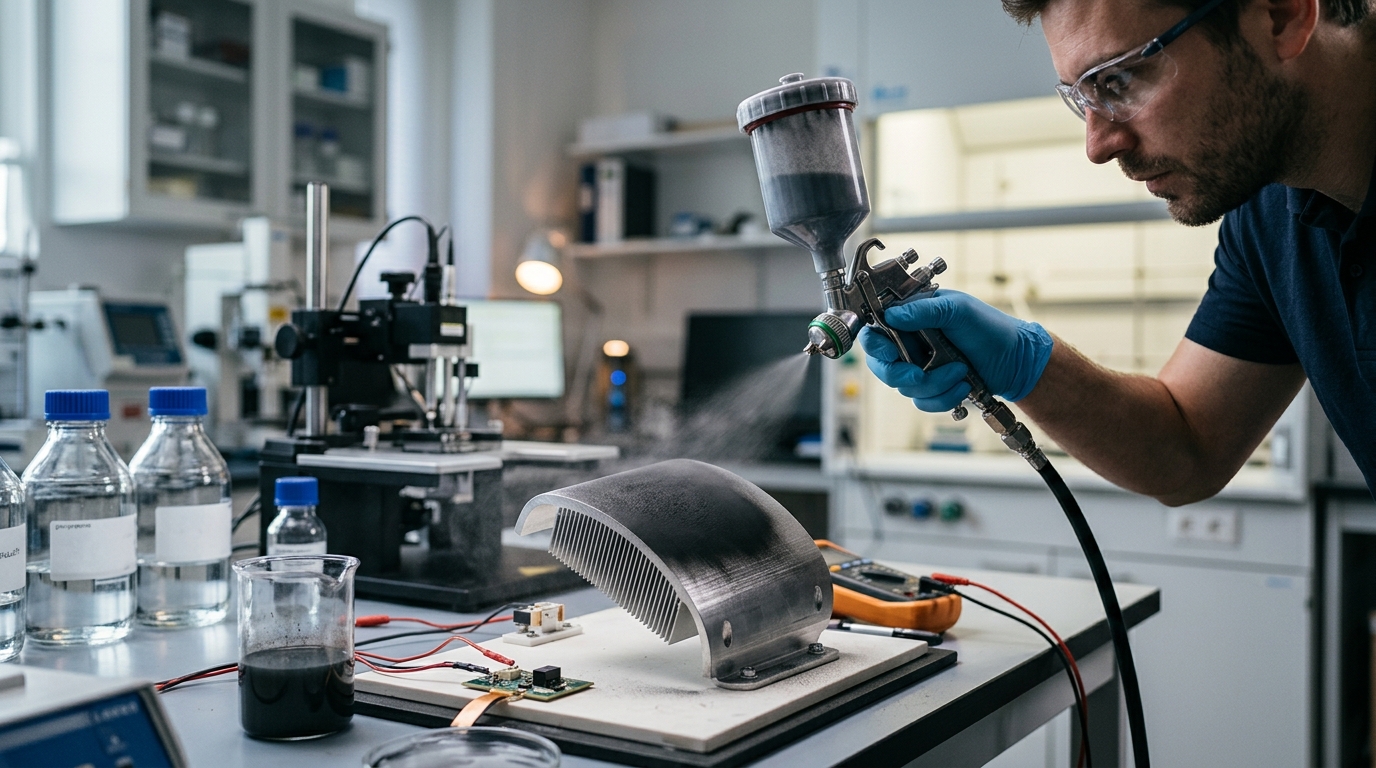
Crystalline carbon exhibits exceptionally high in-plane thermal conductivity. When applied to heat sinks, LED housings, or high-power electronics, a specialized graphene coating facilitates rapid lateral heat spreading. This eliminates localized hot spots and improves radiative thermal dissipation into the surrounding air, optimizing the passive cooling of compact hardware.
4. Hydrophobicity and Water Spot Mitigation
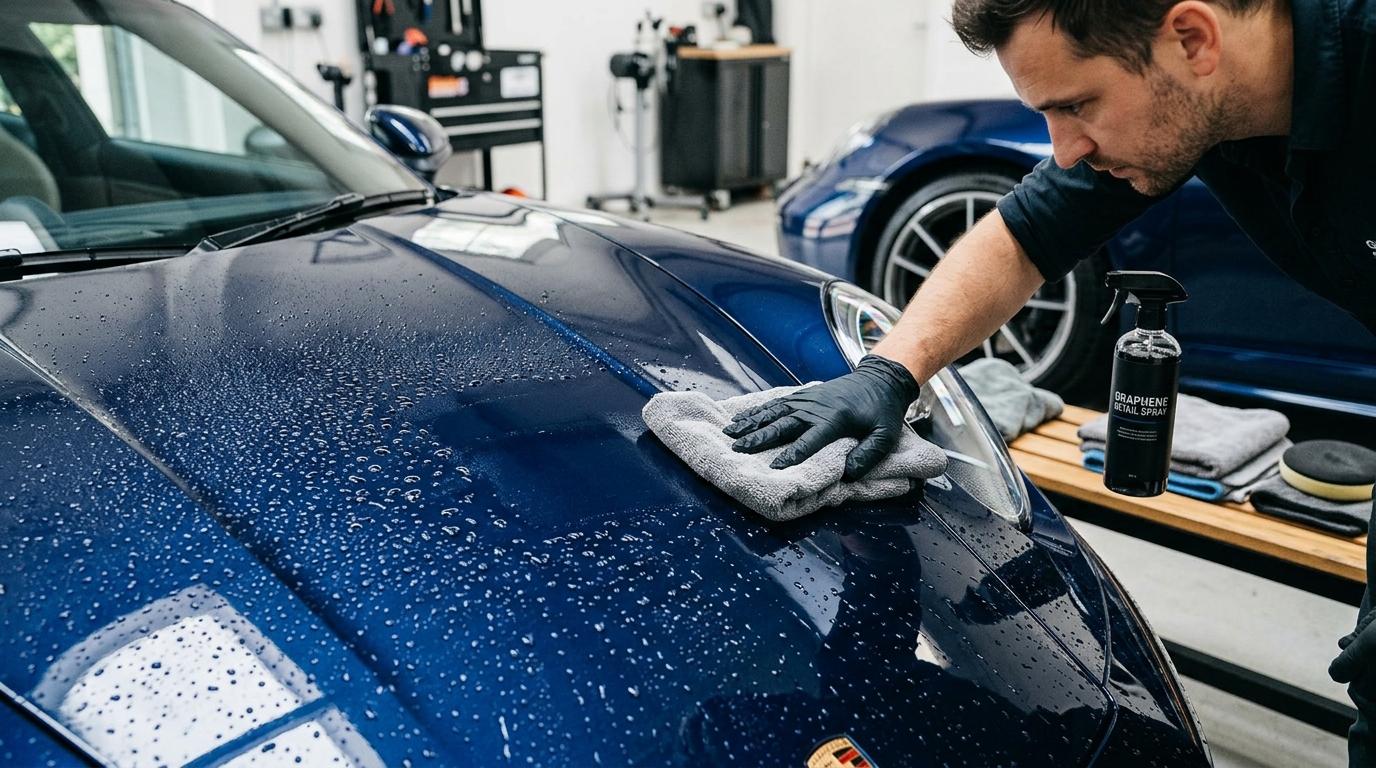
In consumer and exterior coatings, graphene sprays are engineered to produce a hydrophobic or superhydrophobic surface. The micro-roughness created by the protruding edges of platelets, combined with low-surface-energy silanes, increases the water droplet contact angle (often exceeding 100 degrees). More importantly, it lowers the water sliding angle, allowing droplets to roll off surfaces at minimal angles of tilt. Because graphene-infused films retain less localized surface heat than traditional silicone dioxide coatings, water droplets evaporate more evenly, significantly reducing mineral-deposit etching (water spotting).
Core Applications Across Industries
Graphene spray formulations have moved from laboratory demonstrations into practical use across multiple sectors, each targeting specific functional properties.
| Sector / Application | Primary Mechanism | Dominant Formulation Base | Performance Objective |
|---|---|---|---|
| Automotive Detailing | Hydrophobicity & low sliding angle | Silane / Polysilazane / PDMS hybrid | Water spot reduction, gloss, scratch resistance |
| Industrial Anti-Corrosion | Tortuous diffusion barrier | Epoxy or Polyurethane resin | Salt spray resistance, rust prevention on steel |
| Electronics Enclosures | Electrical percolation network | Acrylic / Thermoset conductive binder | EMI / RFI attenuation, electrostatic discharge |
| Thermal Management | High in-plane thermal transfer | High-temperature ceramic/silicate matrix | Radiative cooling for heatsinks and lighting |
| Marine Anti-Fouling | Low surface energy & lubricity | Fluoropolymer / Silicone matrix | Reduction of biological adhesion without biocides |
Automotive and Marine Surface Protection
Automotive spray coatings represent the largest consumer market for graphene technology. Traditional ceramic coatings rely on silicon dioxide (SiO2) or titanium dioxide (TiO2) precursors to build a hard glass-like layer. While highly hydrophobic, standard ceramic coatings can absorb solar infrared radiation, creating warm surface zones that rapidly bake hard-water mineral deposits into the clear coat.
Graphene-modified spray sealants mitigate this behavior by combining the chemical resistance of ceramic resins with the thermal distribution and slickness of graphene platelets. The resulting finish resists acidic bird droppings, road salts, and road grime while facilitating easier maintenance washes.
Heavy Industrial Anti-Corrosion
Industrial maintenance teams utilize high-build graphene spray primers on structural steel, pipelines, offshore platforms, and heavy machinery. In these environments, graphene acts as an active barrier against cathodic delamination—the process where an electrolyte penetrates a paint scratch and spreads laterally beneath the film, detaching the coating from the steel. The high aspect ratio of graphene platelets arrests lateral underfilm corrosion, substantially outlasting conventional zinc-phosphate primers in salt-fog chamber testing.
Electromagnetic and Antistatic Coatings
Plastic enclosures for medical devices, telecommunications gear, and aerospace avionics require shielding to prevent stray radiofrequency signals from disrupting sensitive microelectronics. Applying a conductive graphene spray directly to injection-molded plastics provides an effective, lightweight alternative to heavy copper plating or vacuum metallization processes.
Application Techniques and Deposition Methods
The performance of any graphene spray film depends directly on surface preparation and deposition mechanics. Because two-dimensional flakes tend to align along fluid shear lines, the application method influences the structural orientation of the cured film.
Surface Preparation
Graphene sprays require chemically active surfaces for maximum adhesion. Metallic substrates must undergo degreasing, abrasive blasting, or chemical etching to remove existing oxidation layers and establish mechanical anchoring profiles. Automotive clear coats require thorough decontamination, paint correction to remove swirl marks, and an alcohol-based panel wipe to strip residual polishing oils.
Deposition Methods
- Trigger Spray and Microfiber Leveling: Typical for consumer-grade protective sealants. The liquid is misted onto a panel, spread evenly using a cross-hatch pattern with a microfiber applicator, allowed to