Graphene Powder
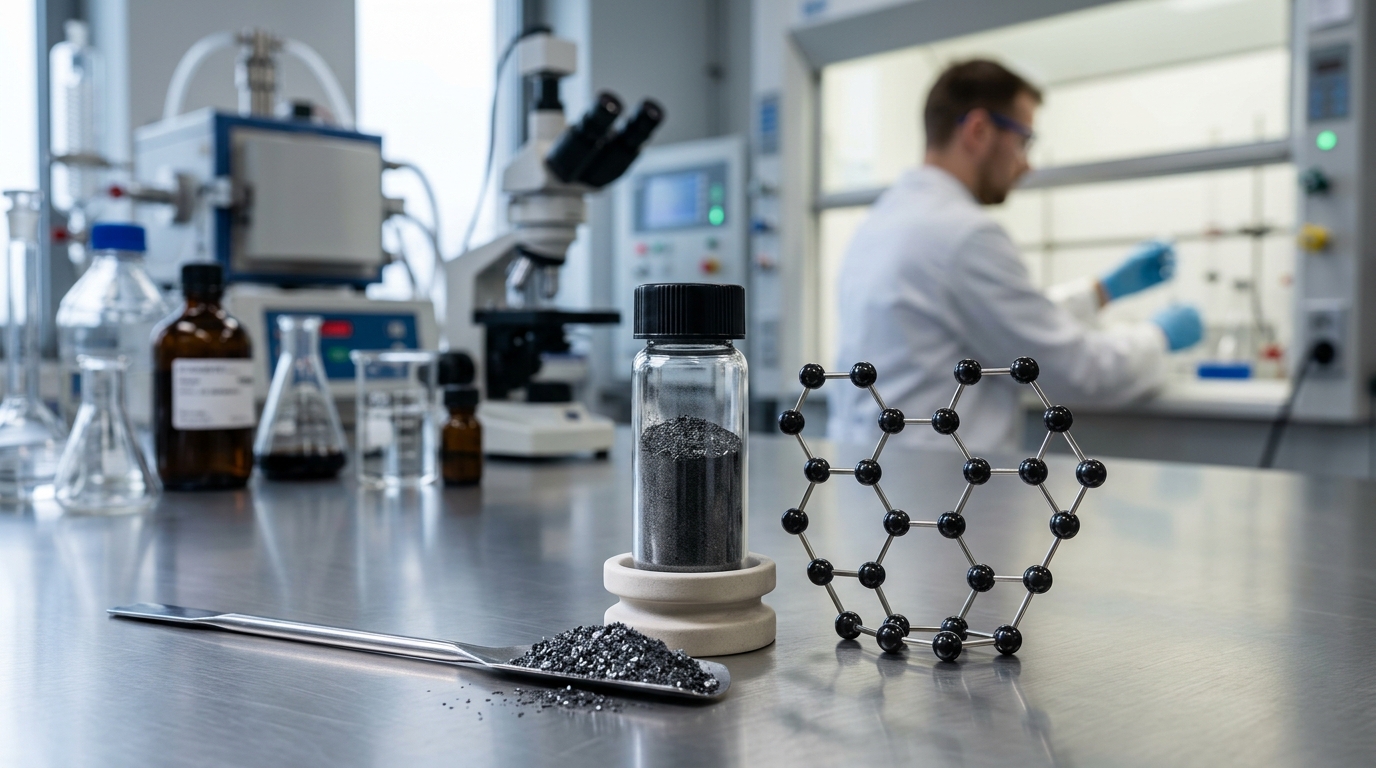
Graphene powder is a dry, bulk nanomaterial composed of microscopic, platelet-like flakes of carbon, typically ranging from single-layer sheets to stacks containing up to ten layers. While theoretical graphene is a single-atom-thick continuous sheet, bulk graphene powder translates these atomic-scale properties into a measurable, commercially processable raw material. In powder form, the material retains high aspect ratios, exceptional mechanical resilience, and strong electrical and thermal conductivity, allowing it to function as a high-performance additive across diverse host matrices.
Understanding Graphene Powder: Forms and Classifications
Commercial graphene powder is not a single uniform substance. Instead, it encompasses a family of distinct carbon nanomaterials that differ in layer count, lateral flake dimension, defect density, and surface chemistry. International standards classify these materials based on their physical and chemical architecture:
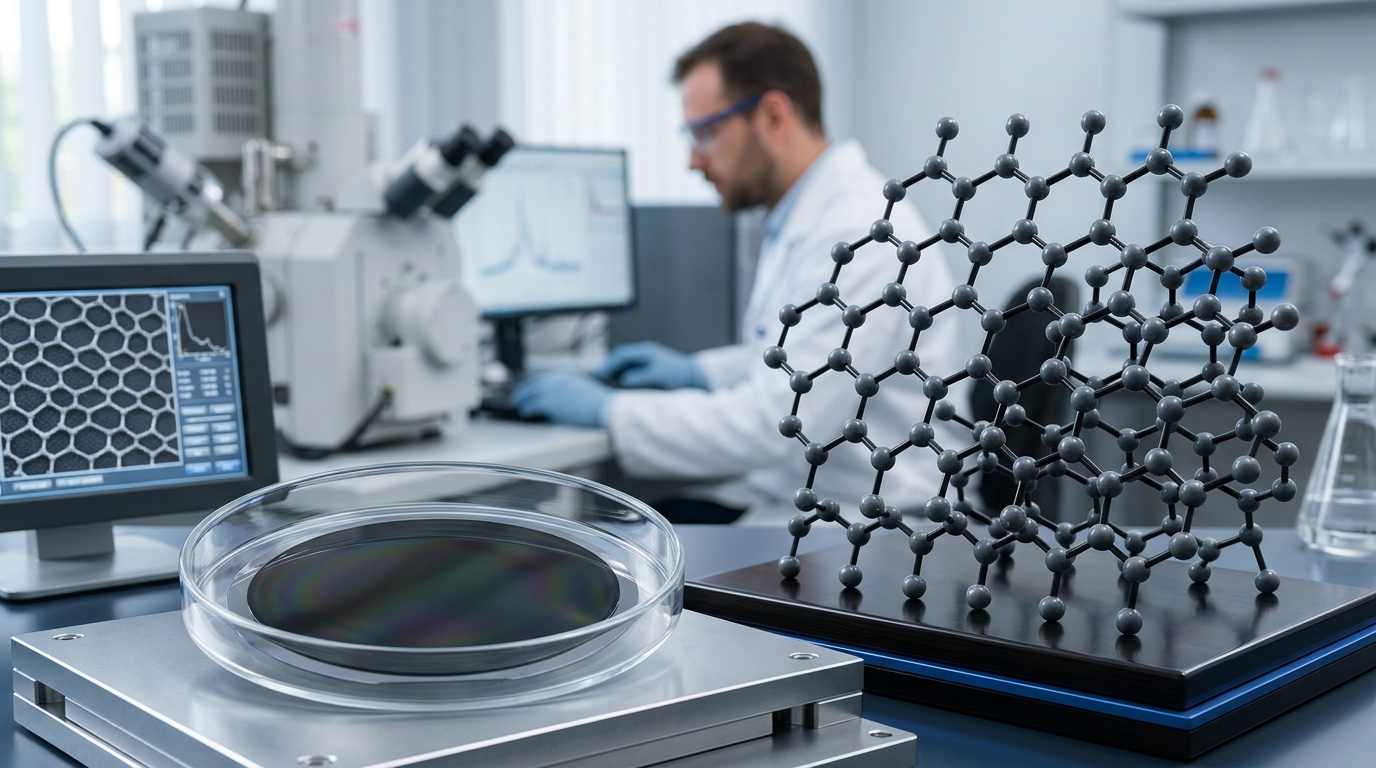
- Pristine few-layer graphene (FLG): Consisting of 2 to 10 stacked $sp^2$-hybridized carbon layers, FLG retains high electrical and thermal conductivity with minimal structural defects.
- Graphene nanoplatelets (GNPs): Thicker stacks generally spanning 10 to several dozen carbon layers (typically up to 100 nm in total thickness). GNPs provide structural reinforcement and moderate conductivity at lower production costs.
- Reduced graphene oxide (rGO) powder: Produced by chemically or thermally stripping oxygen functional groups from oxidized graphite flakes. While rGO contains residual defects and oxygen groups, it is readily scalable and dispersible.
When graphene is processed into a dry state, individual sheets naturally tend to agglomerate. Consequently, graphene powder consists of loosely bound clusters or granules of flat or crinkled flakes that must be properly separated and exfoliated during downstream integration.
How Graphene Powder Is Manufactured
Manufacturing techniques determine the structural integrity, surface area, and purity of the resulting powder. The primary industrial pathways fall into top-down exfoliation and bottom-up synthesis routes.
Liquid-Phase Exfoliation (LPE)
Liquid-phase exfoliation subjects natural graphite suspended in a solvent or aqueous surfactant solution to high-energy shear forces, cavitation, or microfluidization. Ultrasonic waves or rotating blades overcome the interlayer van der Waals forces holding the graphite layers together.
The resulting dispersion is separated by centrifugation to isolate thin flakes, then spray-dried or freeze-dried into a dry powder. Liquid-phase exfoliation preserves the pristine, unoxidized $sp^2$ carbon lattice, resulting in powders with high electrical and thermal performance, though production yields of ultra-thin single layers are lower than chemical routes.
Oxidation and Reduction (The rGO Route)
The most common high-volume route begins with the harsh oxidation of graphite using strong mineral acids and oxidizing agents, converting natural graphite into graphite oxide. Water molecules intercalate the lattice, separating the functionalized layers into individual graphene oxide sheets.
The material undergoes thermal, chemical, or hydrothermal reduction to remove oxygen-containing groups (such as epoxides, hydroxyls, and carboxyls). The resulting powder is dried to yield reduced graphene oxide. Although the reduction process restores electrical conductivity, residual crystallographic defect density and oxygen remnants remain within the carbon framework.
Plasma and Gas-Phase Synthesis
Bottom-up methods, such as microwave plasma cracking of hydrocarbon gases (like methane or ethanol), generate graphene flakes directly in the gas phase without a substrate. Carbon radicals nucleate and assemble into multi-layer or few-layer graphene sheets as they exit the plasma zone. This continuous, dry process eliminates the need for post-synthesis drying stages and avoids chemical contamination from solvents or strong acids.
Key Properties and Performance Metrics
Evaluating graphene powder requires analyzing physical, structural, and chemical metrics that dictate how the material behaves when blended into liquids, resins, or solid compounds.
| Parameter | Typical Range | Practical Significance |
|---|---|---|
| Specific Surface Area (BET) | 50 – 800 m²/g | Determines interfacial contact with host matrices and active site availability for electrochemical reactions. |
| Bulk Density | 0.02 – 0.20 g/cm³ | Indicates fluffiness; lower density powders present handling challenges but offer high aspect ratios. |
| Raman $I_D/I_G$ Ratio | 0.05 (Pristine) – 1.5 (rGO) | Quantifies structural defects and degree of chemical alteration in the carbon plane. |
| Carbon-to-Oxygen (C/O) Ratio | 4:1 (rGO) to >100:1 (FLG) | Reflects surface purity and governs compatibility with polar versus nonpolar solvent systems. |
| Lateral Flake Size ($D_{50}$) | 0.5 – 50 µm | Controls the electrical percolation threshold and mechanical load-transfer efficiency. |
The Dispersion Challenge and Processing Methods
The primary barrier to realizing the full potential of graphene powder in manufacturing is re-stacking. Because individual graphene sheets possess large surface energies, dry powder naturally clumps together via cohesive attractive forces. Simply stirring graphene powder into a polymer resin, solvent, or cement slurry often results in macro-scale agglomerates that act as stress concentrators rather than reinforcements.
Achieving a uniform, stable dispersion requires tailored mechanical and chemical strategies:
- High-shear mixing and three-roll milling: Applies high shear stress directly to fluid suspensions, breaking up agglomerates and distributing flakes across viscous matrices such as epoxy resins or silicone oils.
- Surface functionalization: Attaching chemical groups (such as silanes, amines, or polymers) to flake edges or basal planes improves compatibility with specific host polymers and prevents re-aggregation.
- Masterbatch preparation: Pre-dispersing graphene powder into carrier polymers at high concentrations (e.g., 5% to 15% by weight) creates concentrated pellets. These pellets can then be diluted using conventional injection molding or extrusion equipment without dust generation.
Commercial and Practical Applications
Graphene powder serves as an enabling additive rather than a standalone component. Its use cases depend on balancing material loading, dispersion quality, and electrical or structural requirements.
Energy Storage Electrodes
In lithium-ion and sodium-ion batteries, graphene powder functions as a superior conductive additive in both cathodes and anodes. Replacing traditional carbon black with few-layer graphene establishes a continuous, flexible conductive network at lower weight percentages. This network reduces internal electrical resistance, facilitates faster ion diffusion, and buffers the mechanical expansion and contraction of silicon-based anode particles during charge cycles.
Polymer Nanocomposites and Lightweighting
Incorporating small fractions (typically 0.1% to 2.0% by weight) of well-dispersed graphene powder into thermoplastics, rubbers, and thermoset resins significantly improves tensile strength, elastic modulus, and barrier resistance. In automotive and aerospace components, graphene-reinforced plastics provide structural rigidity while reducing overall component thickness and weight. In elastomeric compounds, such as tire treads and conveyor belts, it enhances abrasion resistance and reduces rolling resistance.
Thermal Management and Conductive Inks
Because the in-plane thermal conductivity of unoxidized carbon sheets exceeds that of copper, graphene powder is formulated into thermal interface materials (TIMs), including thermal greases, phase-change pads, and heat-dissipating coatings for electronics. In printed electronics, micronized graphene powders are formulated into conductive screen-printing and inkjet formulations, providing flexible, oxidation-resistant circuit traces and electromagnetic interference (EMI) shielding layers.
Protective Coatings and Anti-Corrosion
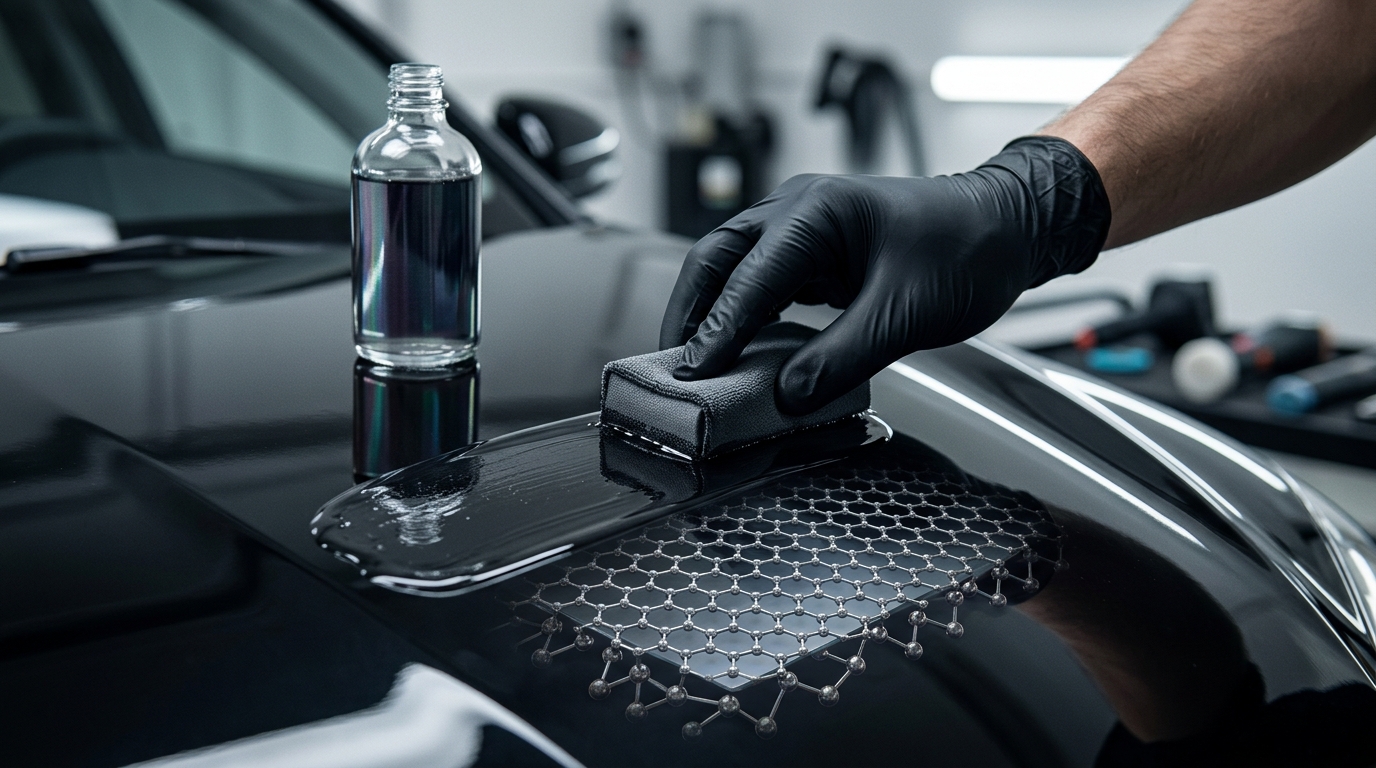
Graphene’s impermeable hexagonal lattice forms a physical barrier against moisture, oxygen, and corrosive ions when integrated into epoxy or polyurethane coatings. The tortuous diffusion pathway created by overlapping flakes delays electrolyte penetration down to metal substrates, extending the service life of marine, industrial, and infrastructure coatings.
Quality Evaluation and Selection Criteria
Selecting the correct grade of graphene powder requires matching physical properties to the processing conditions of the target application:
- Thermal and Electrical Focus: Prioritize pristine few-layer graphene with a low $I_D/I_G$ ratio (under 0.2) and high C/O ratio to maximize electron and phonon transport across the lattice.
- Mechanical Reinforcement: Prioritize flakes with high aspect ratios (broad lateral size relative to thickness) and moderate surface functionalization to ensure strong mechanical shear transfer to the host polymer.
- Barrier and Anti-Corrosion Systems: Look for large lateral flake dimensions that maximize the physical tortuosity of the barrier film, combined with defect-free basal planes.
- Cost-Sensitive High-Volume Fillers: Graphene nanoplatelets with higher layer counts (20 to 50 layers) offer practical electrical antistatic properties and stiffness improvements while remaining economically viable for bulk manufacturing.
Safe Handling and Environmental Protocols
Due to its low bulk density and fine particle dimensions, dry graphene powder behaves as a respirable dust. Standard industrial hygiene practices are required during processing:
- Inhalation controls: Handling dry powders inside enclosed glove boxes, local exhaust ventilation (LEV) hoods, or clean rooms equipped with HEPA filtration prevents aerosolization. Operators should utilize appropriate particulate respirators (such as N95 or P100 standards).
- Static and ignition mitigation: Like many fine carbonaceous materials, high-surface-area powders can accumulate electrostatic charges during pouring or pneumatic transfer. Processing equipment should be properly grounded to minimize dust explosion risks.
- Liquid masterbatching: Transitioning dry powders into wet pastes, liquid concentrates, or solid masterbatches early in the manufacturing sequence minimizes free-dust exposure and simplifies plant-scale integration.