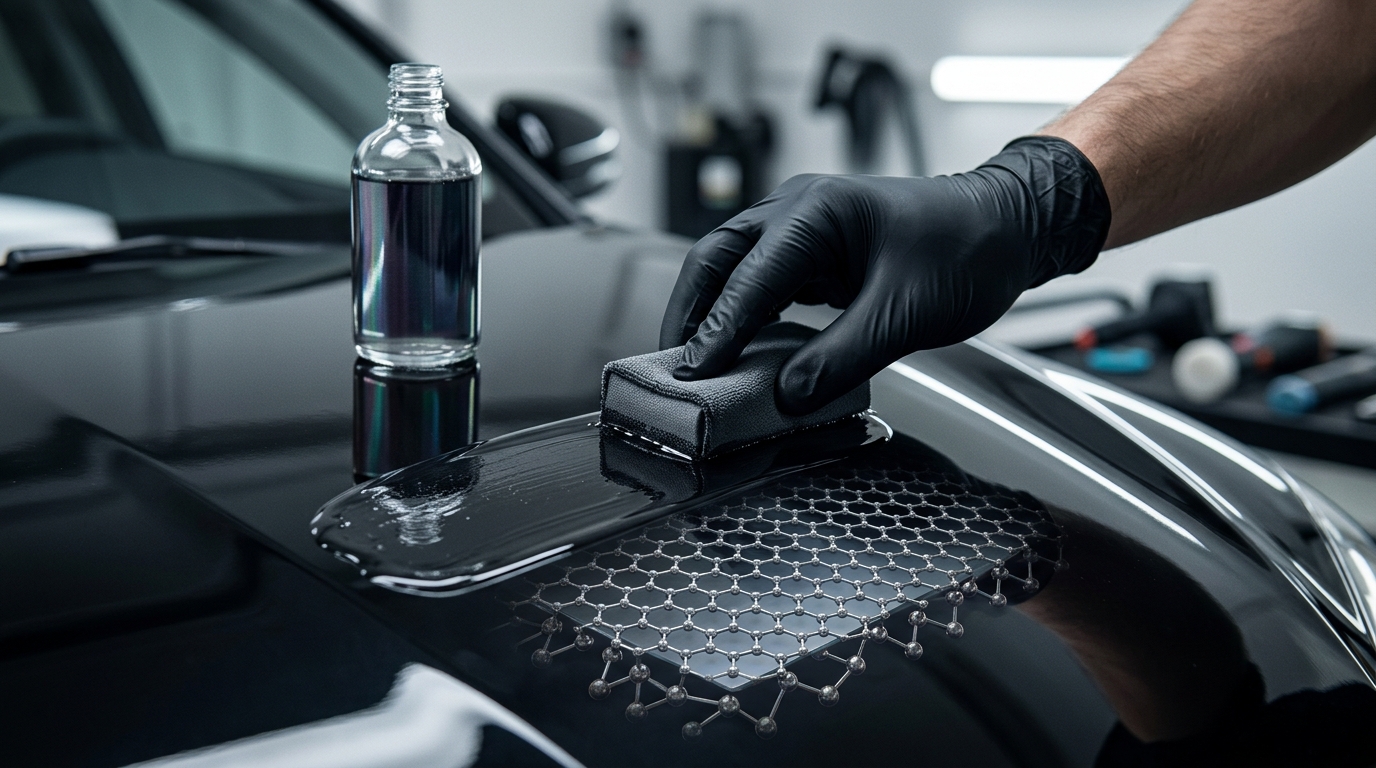

Reduced Graphene Oxide
Reduced graphene oxide (rGO) is a chemically or thermally modified carbon nanomaterial produced by stripping most of the oxygen-containing functional groups from graphene oxide. While pristine graphene consists of an unbroken, single-atom-thick lattice of carbon atoms arranged in a honeycomb structure, true single-layer pristine graphene remains difficult and expensive to manufacture in industrial volumes. Reduced graphene oxide serves as the practical bridge between large-scale chemical synthesis and the exceptional electronic, thermal, and mechanical properties associated with two-dimensional carbon.
By intentionally introducing oxygen to graphite to separate its layers, and subsequently removing those oxygen atoms through targeted reduction reactions, materials scientists can produce bulk quantities of conductive, dispersible, two-dimensional carbon sheets. The resulting material does not possess the flawless crystalline perfection of pristine graphene, but its unique balance of electrical conductivity, solution processability, high surface area, and chemical reactivity makes it one of the most widely deployed forms of graphene in industrial engineering.
The Synthesis Pathway: From Graphite to rGO
Understanding reduced graphene oxide requires tracing the chemical journey that begins with natural or synthetic graphite. The production of rGO is essentially a multi-step chemical sequence engineered to overcome the strong van der Waals forces that hold bulk graphite layers together.
Oxidation and Exfoliation
Graphite is first treated with powerful oxidizing agents and concentrated acids—typically via modifications of the method developed in 1958 by William S. Hummers. This aggressive oxidation inserts oxygen-bearing chemical groups into the carbon matrix, transforming graphite into graphite oxide. These functional groups include:
- Epoxide (–O–) and hydroxyl (–OH) groups located predominantly on the basal plane of each carbon sheet.
- Carboxyl (–COOH) and carbonyl (–C=O) groups concentrated along the edges of the sheets and at internal defect sites.
The introduction of these oxygen species increases the interlayer spacing of the graphite crystal from roughly 0.34 nanometers to well over 0.7 nanometers. Furthermore, the oxygen groups disrupt the delocalized electron network, converting conductive sp² hybridized carbon atoms into insulating sp³ hybridized carbon. When this oxidized material is exposed to mechanical agitation, shear mixing, or mild ultrasonication in water, the expanded layers readily peel apart into single or few-layer sheets of graphene oxide (GO). Graphene oxide is electrically insulating but forms highly stable colloidal suspensions in water due to its strong hydrophilicity.
The Reduction Stage
Because graphene oxide is an electrical insulator, it cannot be used directly in conductive or electrochemically active devices. The reduction process removes the oxygen atoms and drives the structural rearrangement of carbon atoms back into a conjugated sp² network. As the oxygen leaves, the material transitions from a light brownish, water-soluble sheet (GO) to a dark brown or deep black material with partially restored electrical and thermal conductivity: reduced graphene oxide.
Primary Reduction Methods
The properties of the final rGO material depend heavily on the reduction pathway selected. Different methods remove distinct types of oxygen functional groups and introduce varying levels of structural healing.
Chemical Reduction
Chemical reduction relies on reducing agents in solution to break carbon-oxygen bonds. Historically, hydrazine monohydrate was the laboratory standard due to its high efficiency in reducing basal-plane epoxy and hydroxyl groups. However, hydrazine introduces nitrogen impurities into the lattice and poses significant toxicity and environmental hazards.
Industrial and academic development has shifted toward safer, more sustainable chemical reductants. These include sodium borohydride, hydriodic acid with acetic acid, and biologically derived reducing agents such as L-ascorbic acid (vitamin C), polyphenols, and amino acids. Chemical reduction is typically carried out at moderate temperatures (room temperature up to 100°C), making it compatible with wet-chemical manufacturing, though it often leaves behind residual functional groups and chemical byproducts.
Thermal Reduction
Thermal reduction, also known as thermal annealing or thermal exfoliation, exposes dry graphene oxide powder or films to high temperatures (typically ranging from 300°C to well above 1,000°C) under an inert atmosphere (such as argon or nitrogen), a reducing atmosphere (such as hydrogen), or a vacuum. Rapid heating causes oxygen functional groups to decompose suddenly into gaseous carbon dioxide (CO₂) and steam (H₂O).
The rapid expansion of these evolved gases creates immense internal pressure that forcibly exfoliates remaining stacked layers while stripping oxygen. High-temperature thermal annealing generally yields higher electrical conductivity than chemical routes because intense heat provides the thermal energy required to heal some lattice vacancies and drive carbon atom rearrangement. However, the release of CO₂ inevitably removes carbon atoms from the sheet itself, creating permanent sub-nanometer vacancies and topological defects.
Electrochemical Reduction
Electrochemical reduction is an environmentally benign, chemical-free technique in which graphene oxide is deposited onto a conductive substrate and subjected to a negative electrical potential in an electrolyte bath. The applied voltage provides the electrons needed to drive oxygen reduction without toxic reagents or high temperatures. This method is especially valuable for fabricating thin-film electrodes, sensors, and micro-supercapacitors directly on functional substrates, although it cannot easily process bulk dry powders.
Structural Characteristics: rGO vs. Pristine Graphene
A common misconception is that reduced graphene oxide is identical to pristine graphene once processed. In practice, rGO is a distinct material with its own unique crystallography, defect landscape, and surface chemistry.
| Property / Feature | Pristine Graphene | Graphene Oxide (GO) | Reduced Graphene Oxide (rGO) |
|---|---|---|---|
| Predominant Carbon Hybridization | 100% sp² | Mixed sp² / sp³ (heavy sp³) | Predominantly restored sp² with residual sp³ |
| Carbon-to-Oxygen (C:O) Ratio | > 100:1 | 1.5:1 to 3:1 | 8:1 to 50:1+ (method dependent) |
| Electrical Character | Zero-bandgap semi-metal (ballistic transport) | Electrical insulator | Semiconducting to moderately conductive |
| Water Dispersibility | Hydrophobic; aggregates without surfactants | Highly hydrophilic; stable colloids | Partially hydrophobic; requires stabilization or shear |
| Lattice Integrity | Continuous, defect-free | Severely disrupted, heavily oxidized | Perforated with nanoscale vacancies and wrinkles |
During reduction, only a fraction of the carbon lattice fully re-forms. The resulting sheet consists of conductive sp² carbon domains surrounded by disordered regions containing residual oxygen functional groups and permanent topological defects, such as Stone-Wales rearrangements and atomic vacancies. Consequently, charge transport across rGO occurs through variable-range hopping between isolated sp² conductive islands rather than the frictionless, ballistic electron transport seen in defect-free monolayer graphene.
Material Properties and Performance Characteristics
Despite its structural defects relative to theoretical graphene, rGO delivers an impressive suite of physical and chemical properties that make it well-suited for industrial deployment:
- Tunable Electrical Conductivity: Depending on the reduction technique and temperature, the electrical conductivity of rGO films ranges from a few Siemens per meter (S/m) up to tens of thousands of S/m. While lower than pristine monolayer graphene (which exceeds 10⁶ S/m), this conductivity easily satisfies the requirements for antistatic dissipation, electromagnetic shielding, and conductive composite networks.
- High Specific Surface Area: Individual rGO sheets feature theoretical surface areas up to 2,630 m²/g. In real-world powders, sheet aggregation reduces this value, but well-exfoliated, wrinkled rGO routinely delivers measured BET surface areas between 400 and 1,000 m²/g, providing an expansive interface for electrochemical reactions and physical adsorption.
- Chemical Reactivity and Functionalization: The residual oxygen sites and edge defects that lower electronic conductivity serve as anchor points for secondary chemical reactions. Polymers, catalytic nanoparticles, biomolecules, and metal ions can be covalently grafted onto rGO sheets far more readily than onto inert pristine graphene.
- Mechanical Reinforcement: When dispersed within polymer matrices, the high aspect ratio and wrinkled surface topology of rGO create strong mechanical interlocking with the polymer chains, significantly boosting tensile strength, elastic modulus, and wear resistance.
Key Practical and Industrial Applications
Because reduced graphene oxide can be produced by the kilogram or ton in dry powder, paste, or liquid dispersion formats, it has become the standard material platform for many real-world graphene applications.
Energy Storage: Batteries and Supercapacitors
In electrochemical energy storage, rGO provides a lightweight, highly conductive structural framework. In lithium-ion and sodium-ion batteries, rGO is blended into cathode and anode formulations as a conductive additive. Its flexible, two-dimensional geometry wraps around active electrode particles (such as silicon or lithium iron phosphate), maintaining electrical contact even as active materials expand and contract during charge cycles.
In supercapacitors, rGO forms the basis of electric double-layer capacitor (EDLC) electrodes. The corrugated, wrinkled topography of thermally reduced rGO prevents sheets from stacking completely flat, creating accessible mesopores and micropores that allow electrolyte ions to migrate freely and accumulate charge rapidly.
Conductive Coatings, Inks, and Printed Electronics
Formulations of rGO dispersed in solvents or water-based binder systems can be deposited via screen printing, inkjet printing, spray coating, or doctor-blade casting. Once dried and cured, these coatings produce conductive thin films suitable for:
- Electromagnetic interference (EMI) shielding in aerospace and consumer electronics housings.
- Antistatic packaging for sensitive semiconductor components.
- Flexible heating elements and defogging circuits.
- Wearable, flexible electrodes for health monitoring.
Polymer Composites and Structural Materials
Incorporating small weight percentages (often 0.1% to 2.0%) of rGO into engineering thermoplastics (such as polyamide, polypropylene, and PEEK) or thermoset resins (such as epoxy) produces significant functional improvements. Beyond increasing stiffness and impact resistance, rGO establishes a percolation threshold that converts electrically insulating plastics into conductive or antistatic materials capable of dissipating electrostatic discharge without adding the heavy weight associated with metallic fillers or carbon black.
Environmental Remediation and Water Purification
The combination of high surface area, porous assembly, and active surface chemistry makes rGO an exceptional adsorbent for environmental engineering. 3D porous rGO hydrogels and aerogels extract heavy metal ions (such as lead, cadmium, and arsenic), organic solvents, industrial dyes, and pharmaceutical residues from wastewater streams. In membrane filtration, laminar rGO membranes provide controlled nanochannels that allow rapid water permeation while blocking dissolved pollutants and salt ions.
Sensors and Diagnostics
Because the electrical conductivity of rGO is governed by charge transfer across its surface, any molecular binding event on its surface produces a detectable change in electrical resistance. rGO-based chemiresistors and field-effect transistors detect trace concentrations of gases (such as nitrogen dioxide, ammonia, and volatile organic compounds) at room temperature. In biosensing, functionalized rGO platforms detect glucose, specific protein markers, and viral antigens with high sensitivity.
Characterization and Quality Evaluation
Engineers and material scientists evaluate the quality, consistency, and degree of reduction in rGO using three standard analytical techniques:
- X-ray Photoelectron Spectroscopy (XPS): XPS quantifies the exact carbon-to-oxygen (C:O) ratio and determines the specific distribution of remaining chemical bonds (C–C/C=C at ~284.8 eV, C–O at ~286.5 eV, C=O at ~288.0 eV, and O–C=O at ~289.0 eV). A successful reduction shows a dramatic collapse of the oxygen-related peaks.
- Raman Spectroscopy: Raman reveals the structural disorder of the carbon lattice. The D-band to G-band intensity ratio (I_D / I_G) is used to track the formation of smaller, newly formed sp² domains and assess defect density across the carbon backbone.
- Thermogravimetric Analysis (TGA): TGA measures weight loss as the material is heated under nitrogen. Graphene oxide loses significant mass below 200°C due to the thermal decomposition of unstable oxygen groups, whereas well-reduced rGO exhibits superior thermal stability with minimal mass loss until much higher temperatures.
Engineering Challenges and Tradeoffs
While reduced graphene oxide offers unmatched scalability among 2D materials, working with it involves distinct engineering tradeoffs:
The Restacking Problem
As oxygen functional groups are removed during reduction, rGO sheets lose their electrostatic repulsion and hydrophilic character. Driven by strong thermodynamic π–π interactions, the sheets naturally tend to agglomerate and restack into graphite-like clumps during drying or solvent removal. Preventing this irreversible restacking requires specialized processing strategies, such as freeze-drying, chemical spacer insertion, or surfactant stabilization.
Conductivity Ceiling
Because chemical and thermal reduction processes tear atomic-scale holes in the carbon sheet as oxygen leaves, rGO cannot match the carrier mobility or thermal conductivity of pristine, single-crystal graphene grown by chemical vapor deposition (CVD). Designers must treat rGO as a high-performance defective carbon rather than an ideal crystalline monolayer.
Batch-to-Batch Variability
The final properties of rGO depend on the starting graphite flake size, the precise oxidation level achieved in the precursor GO, the choice of reducing chemistry, and washing efficiency. Without tight process controls, commercial batches can exhibit variable C:O ratios, defect densities, and dispersion behaviors, making thorough analytical qualification essential for reliable manufacturing.
The Core Balance of Reduced Graphene Oxide
Reduced graphene oxide remains one of the most commercially versatile nanomaterials because it strikes a pragmatic balance. It compromises on structural perfection to deliver solution-phase processability, cost-effective scaling, and customizable surface chemistry. By understanding its reduction pathways, defect mechanics, and structural constraints, materials engineers can tailor rGO formulations to deliver high electrical, thermal, and mechanical performance across energy, composite, coating, and environmental technologies.