Graphene Detail Spray
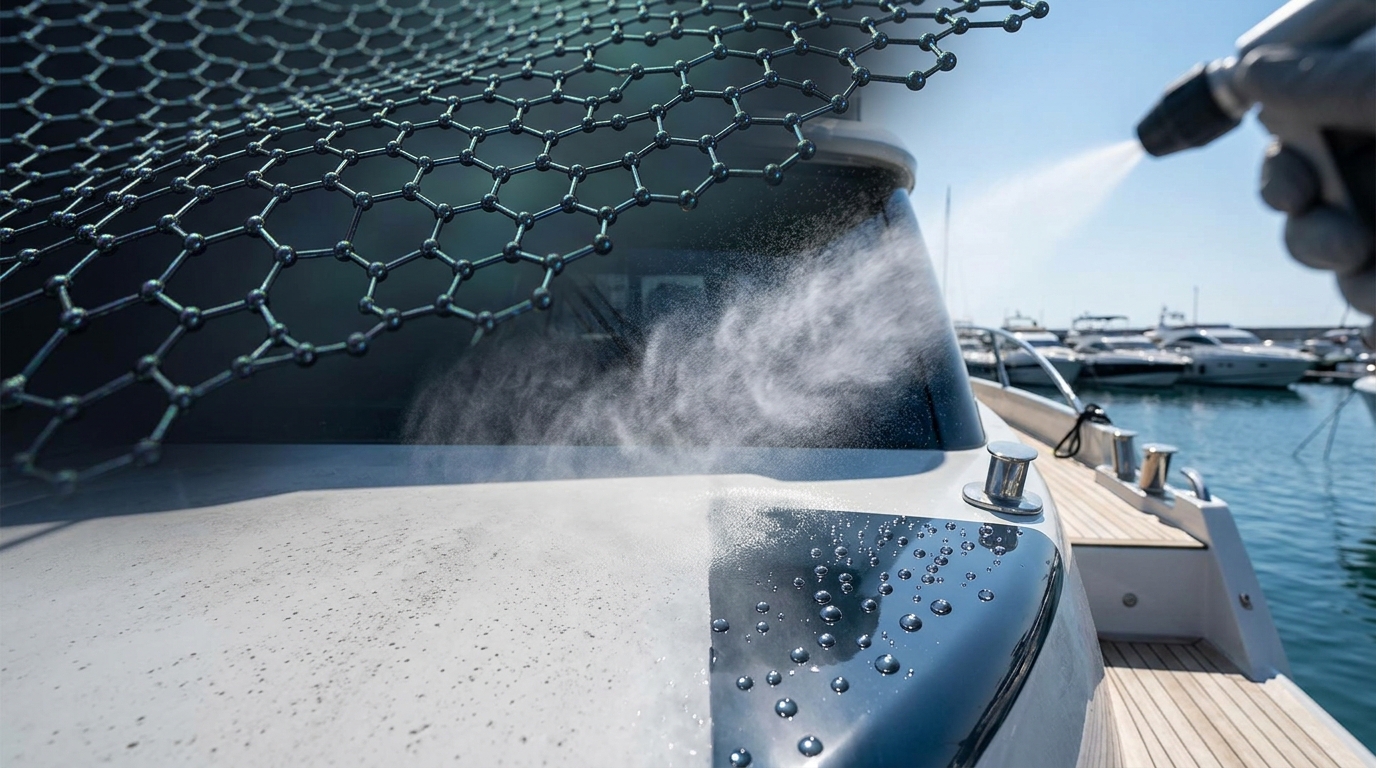
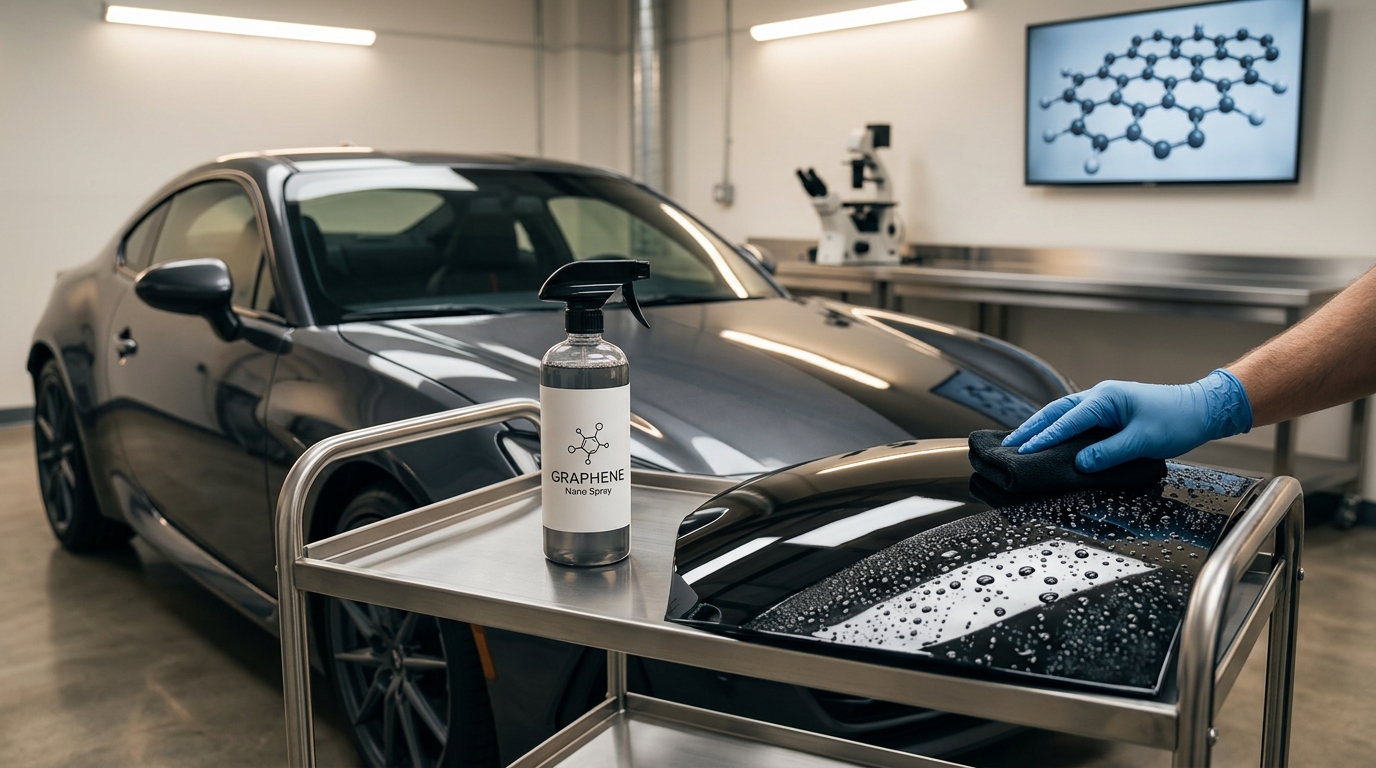
In modern automotive surface care, graphene detail spray has emerged as one of the most versatile maintenance products for enthusiasts and professional detailers alike. Formulated to provide instant gloss, exceptional slickness, and rapid hydrophobicity, these sprays bridge the gap between routine maintenance washes and intensive paint protection routines.
While traditional quick detailers were originally developed simply to remove light dust and lubricate clay bars, modern graphene-infused formulations serve as multifunctional detailing tools: post-wash drying aids, sacrificial coating toppers, gloss enhancers, and light contamination removers. Understanding the underlying chemistry, realistic performance envelope, and correct application techniques ensures you get the most out of these carbon-infused formulations without falling for exaggerated marketing claims.
What Is a Graphene Detail Spray?
A graphene detail spray is a water-based, quick-detailer formulation engineered with functionalized carbon nanomaterials—primarily reduced graphene oxide (rGO) or graphene nanoplatelets—dispersed within a matrix of siloxanes, polydimethylsiloxane (PDMS), surfactant packages, and specialty carrier polymers.
Unlike high-solid ceramic coatings that require extensive surface preparation, isopropyl alcohol wipes, and 24-hour indoor cure times, detail sprays feature a low solid content. This allows them to be applied and buffed off in seconds across paintwork, glass, plastic trim, chrome, and wheels. Their primary purpose is to refresh surface protection, restore high water contact angles, dissipate static electricity, and impart a smooth, slick feel to clear coats.
Chemical Reality Check: rGO Suspensions vs. Raw Graphene
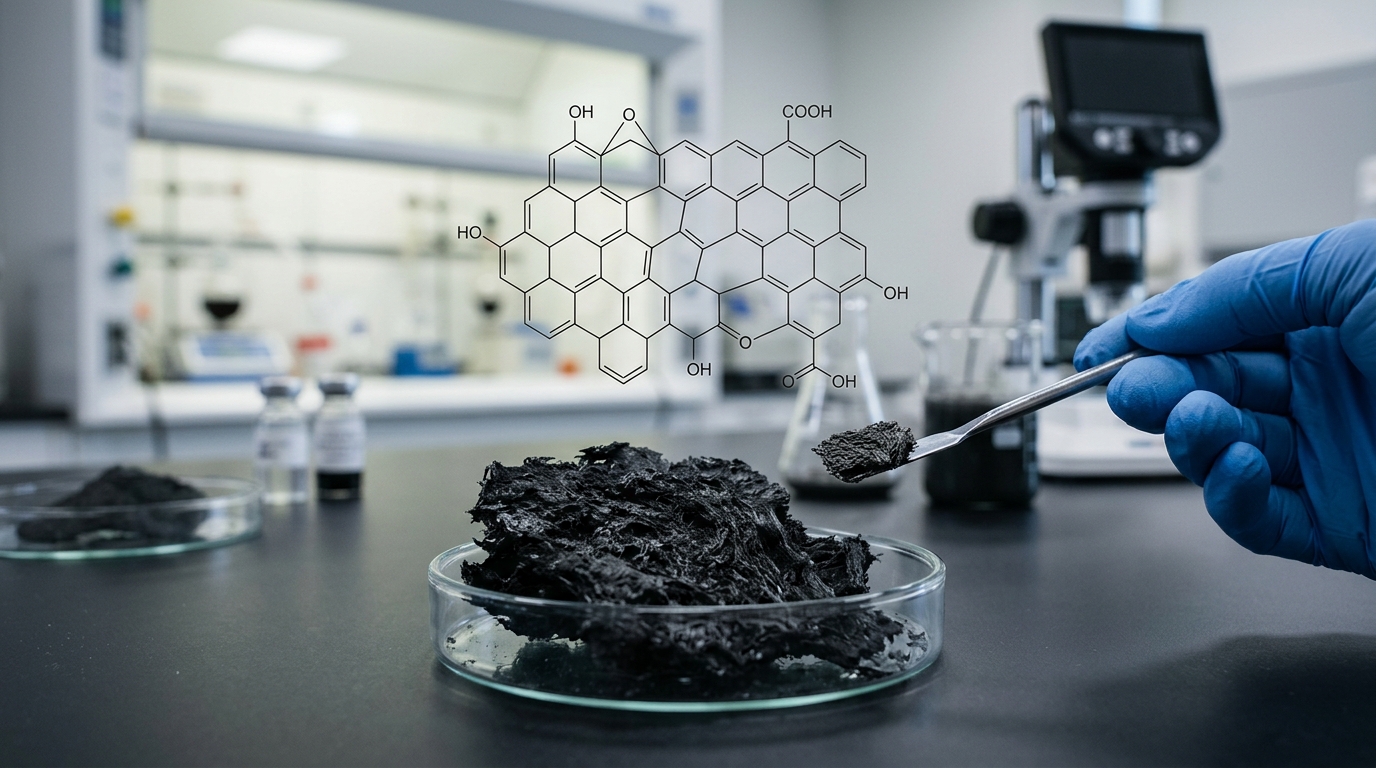
Much of the marketing surrounding automotive graphene suggests that bottles contain pure, single-atom-thick sheets of pristine carbon. In chemical reality, liquid detailing sprays utilize reduced graphene oxide (rGO) or functionalized graphene oxide flakes suspended within an emulsion.
- Pristine Graphene vs. rGO: Pure, unfunctionalized graphene is hydrophobic, non-polar, insoluble in water, and black. Attempting to suspend pure monolayer graphene in a spray bottle would result in immediate agglomeration and nozzle clogging. Manufacturers use rGO because its oxygen-containing functional groups allow it to bond with polymer backbones and remain stable in aqueous solutions.
- The Polymer Backbone: The graphene additive does not bond to paint in isolation. Durability, chemical resistance, and surface adhesion are driven fundamentally by the underlying organosilane, ceramic resin, or polymer carrier. The rGO acts as a structural dopant and surface modifier that enhances the physical properties of the protective polymer film.
- Color and Clarity: True rGO formulations typically carry a grey, amber, or slightly dark tint in the bottle, though they buff completely clear and streak-free on all paint colors, including pure white and metallic finishes.
Graphene Detail Sprays vs. Traditional SiO2 Ceramic Detailers
Before the introduction of graphene-doped additives, silicon dioxide ($ ext{SiO}_2$) quick detailers were the standard for ceramic maintenance. While $ ext{SiO}_2$ sprays deliver impressive gloss and tight water beading, graphene-infused formulations address several notable drawbacks of ceramic chemistry.
| Performance Metric | Traditional $ ext{SiO}_2$ Ceramic Detailers | Graphene-Infused Detail Sprays |
|---|---|---|
| Active Chemistry | $ ext{SiO}_2$ silane emulsions / PDMS polymers | Reduced graphene oxide (rGO) + siloxane matrix |
| Water Spot Resistance | Moderate; high beading can cause mineral baking under direct sunlight | Superior; lower sliding angle accelerates water evacuation, reducing mineral rings |
| Dust & Static Attraction | Moderate to high; triboelectric static buildup attracts dry dust | Low; electrical conductivity helps dissipate static charges |
| Visual Finish | High reflectivity, sharp "hard candy" glass sheen | Deep, warm, reflective "wet-look" gloss |
| Application Tolerance | Prone to streaking or high spots if applied on warm panels | Wider application window; less sensitive to humidity and ambient heat |
| Tactile Feel | Smooth, but occasionally grabby on microfiber | Exceptionally slick clear coat lubricity |
Demonstrated Benefits of Graphene Additives
Integrating reduced graphene oxide into quick detailing chemistry delivers distinct, demonstrable improvements in surface mechanics and vehicle maintenance:
1. Enhanced Tactile Slickness
Graphene nanoplatelets possess an inherently low coefficient of friction. When dispersed across a clear coat or existing coating, the microscopic valleys of the surface are filled, creating an ultra-smooth finish. This lubricity reduces surface drag, meaning wash mitts and drying towels glide more easily during subsequent maintenance cycles, lowering the risk of wash-induced swirl marks.
2. Anti-Static Behavior and Reduced Dust Accumulation
One of the most persistent issues with traditional synthetic sealants and ceramic detailers is electrostatic attraction. The friction generated by driving or buffing with microfiber creates a triboelectric charge on the paint, pulling dry atmospheric dust and pollen onto the surface. Graphene’s electrical conductivity helps dissipate this surface charge, noticeably slowing down dry dust accumulation between washes.
3. Mitigation of Water Spotting
Ceramic coatings produce high water contact angles (often exceeding $110^ ext{o}$), forming spherical beads. On flat horizontal panels under hot sun, these droplets act as miniature lenses while water evaporates, baking concentrated calcium and mineral deposits into the clear coat. Graphene detail sprays reduce the roll-off angle (sliding angle). Water beads slide off horizontal panels at much lower vehicle speeds or slight inclinations, preventing mineral-laden water from resting and evaporating on hot paint.
4. Localized Heat and UV Dispersion
While marketing claims that a detail spray can drop vehicle panel temperatures by dozens of degrees are physically unfounded, rGO within the micro-film does promote localized thermal dissipation. Rather than trapping concentrated heat at the perimeter of water droplets or isolated hot spots, the graphene-doped resin distributes thermal energy more evenly across the micro-layer, decreasing the likelihood of clear coat etching.
Durability and Longevity Expectations
Setting proper expectations requires distinguishing between quick detail sprays, spray coatings, and professional glass-vial coatings:
- Graphene Detail Sprays (2 to 8 Weeks): Low-solid maintenance formulations designed for frequent use. They act as sacrificial layers, enhancing gloss and slickness during routine washes.
- Graphene Spray Coatings (6 to 12 Months): Medium-solid, resin-heavy formulations that require a brief flash time and curing window. They serve as primary stand-alone paint protection.
- True Graphene Ceramic Coatings (3 to 9+ Years): High-solid, professional-grade liquid coatings supplied in glass bottles. These require thorough paint correction, chemical panel wipe decontamination, and an intensive application and curing protocol to cross-link permanently with the clear coat.
A graphene detail spray is not intended to replace a multi-year ceramic coating; rather, it is designed to maintain, rejuvenate, and extend the functional lifespan of existing protection.
Step-by-Step Application Instructions
Graphene detail sprays are engineered for versatility. Depending on your current detailing workflow, use one of the three proven application methods below.
Method A: Use as a Drying Aid (Recommended for Routine Washes)
Using the spray as a drying aid minimizes towel drag, adds instant gloss, and prevents water spots during the drying stage.
- Wash and Rinse: Thoroughly wash the vehicle using a two-bucket method or foam cannon, then perform a final rinse. Leave the vehicle wet.
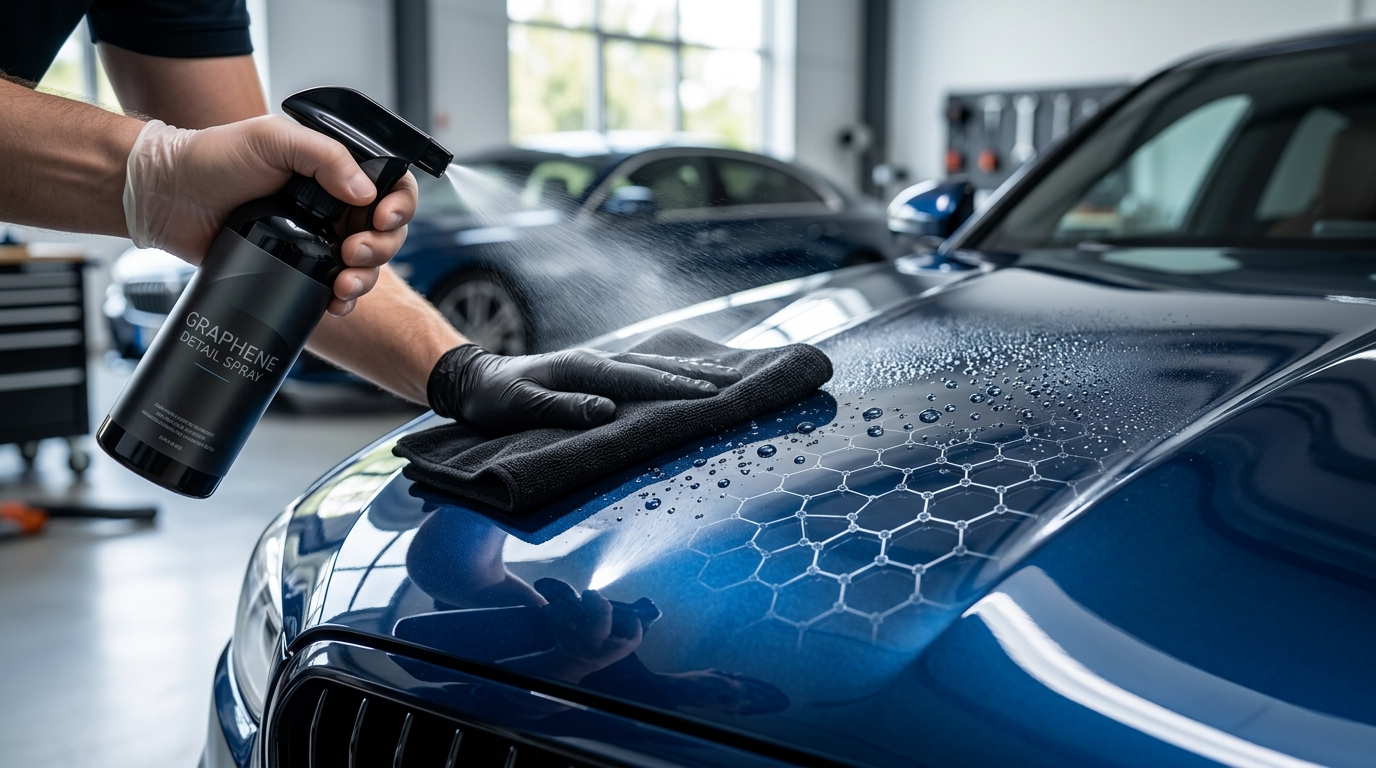
- Mist the Panel: Shake the bottle thoroughly to ensure rGO particles are evenly suspended. Mist 1 to 2 sprays per panel directly onto the wet paint, or spray directly onto a plush microfiber drying towel.
- Dry the Surface: Glide the drying towel across the panel in straight, overlapping lines. The detail spray breaks surface tension, causing water to absorb rapidly into the towel.
- Final Buff: Use a secondary dry, plush microfiber towel to lightly buff the surface, removing any remaining damp residue and leaving a streak-free shine.
Method B: Light Dust, Smudge, and Fingerprint Removal
Use this method only on vehicles with light, non-abrasive dust, fresh fingerprints, or light pollen. Never use a detail spray on heavy dirt or grit, as wiping dry dirt will cause clear coat scratches.
- Prep the Towel: Fold a clean, high-pile microfiber towel into fourths. Lightly mist the detail spray onto both the vehicle panel and the working face of the towel.
- Wipe Gently: Wipe the panel in a single, straight direction without applying downward pressure. Roll the towel as you wipe to lift dust away from the clear coat rather than dragging it across the finish.
- Flip and Buff: Flip the towel to a clean, dry side and buff the area to a deep gloss. Repeat across the vehicle, switching to fresh towels as soon as one becomes soiled.
Method C: Sacrificial Topper for Base Coatings
To refresh an existing ceramic or graphene base coating after a maintenance wash:
- Ensure Surface Cleanliness: Ensure the vehicle is fully washed, decontaminated, and completely dry.
- Apply Sparingly: Mist 1 spray onto an applicator pad or folded short-pile microfiber towel and 1 spray directly onto the panel (roughly a 3×3 foot section).
- Level and Spread: Spread the product evenly across the panel using a cross-hatch pattern (horizontal passes followed by vertical passes).
- Immediate Leveling: Unlike ceramic coatings, detail sprays do not need extended dwell times. Immediately buff off the residue with a clean, high-GSM microfiber towel to reveal a uniform, high-gloss finish.
Troubleshooting and Best Practices
While graphene detail sprays are far more forgiving than full ceramic coatings, improper technique can lead to minor cosmetic issues:
- Preventing Streaks on Dark Paint: Streaking typically occurs due to over-application or working on a hot surface. If streaking or "ghosting" appears, mist a clean microfiber towel with distilled water or a light spray of the product, wipe the affected area, and immediately buff dry with a fresh towel.
- Working in Direct Sunlight: If you must detail outdoors, work panel-by-panel on smaller sections (e.g., half a door or hood at a time) to prevent the carrier polymers from evaporating before they are leveled.
- Substrate Compatibility: Quality graphene detail sprays are fully compatible with bare clear coat, paint protection film (PPF), vinyl wraps, traditional carnauba waxes, synthetic polymer sealants, and ceramic coatings. They will not degrade underlying wax or sealant layers.