Graphene Heated Jacket
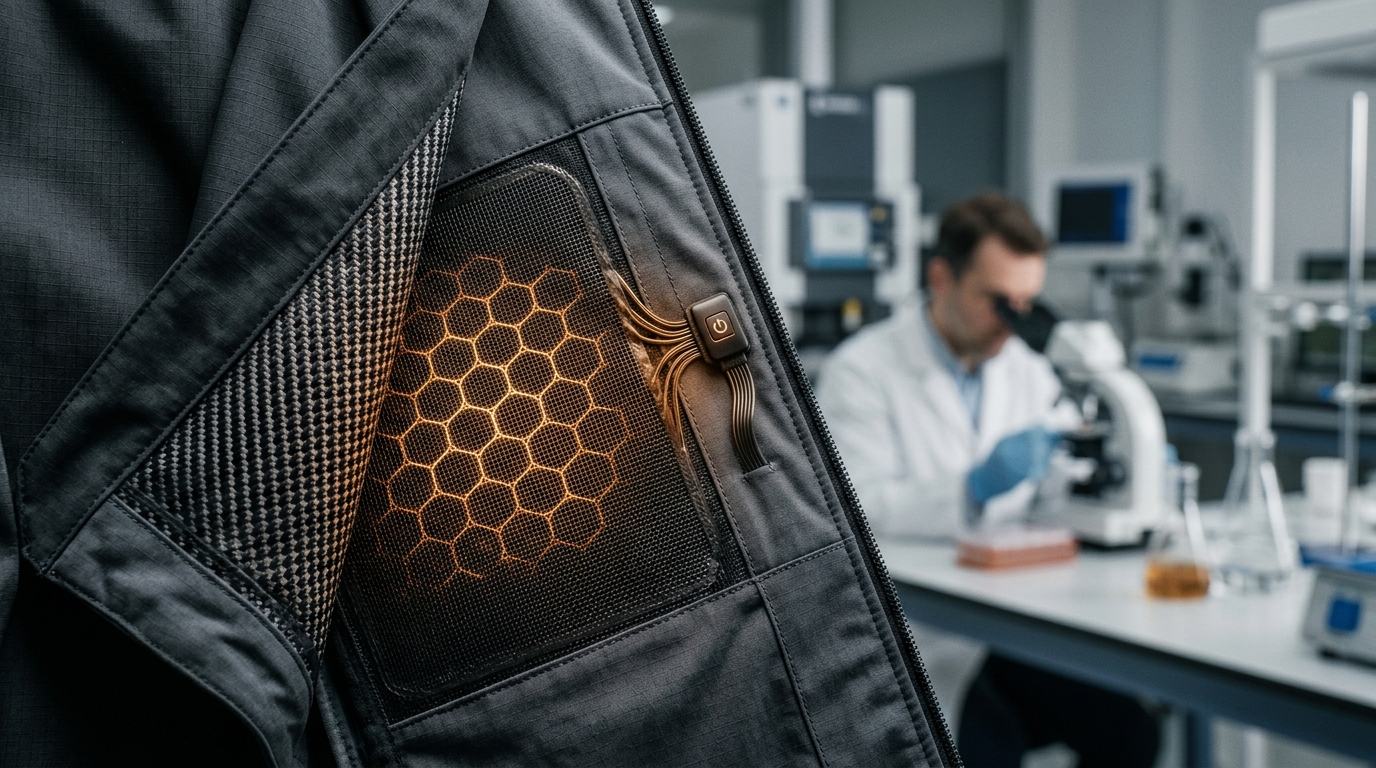
A graphene heated jacket is an active thermal garment that integrates electrically conductive carbon nanomaterials into textile systems to generate and distribute heat. Unlike conventional heated outerwear that relies on rigid metal wire coils or thick carbon fiber bundles, graphene-based outerwear utilizes the ultra-thin profile, high electrical conductivity, and exceptional thermal properties of two-dimensional carbon structures. When connected to a portable low-voltage direct-current power bank, these heating elements convert electrical energy into warmth across broad surface areas with minimal weight and bulk.
How Graphene Heating Works in Active Wearables
The heating mechanism within a graphene jacket relies on Joule heating, also referred to as resistive heating. When an electric current passes through a conductor with a controlled level of electrical resistance, moving electrons continuously collide with atoms in the material lattice, transferring kinetic energy and releasing thermal energy.
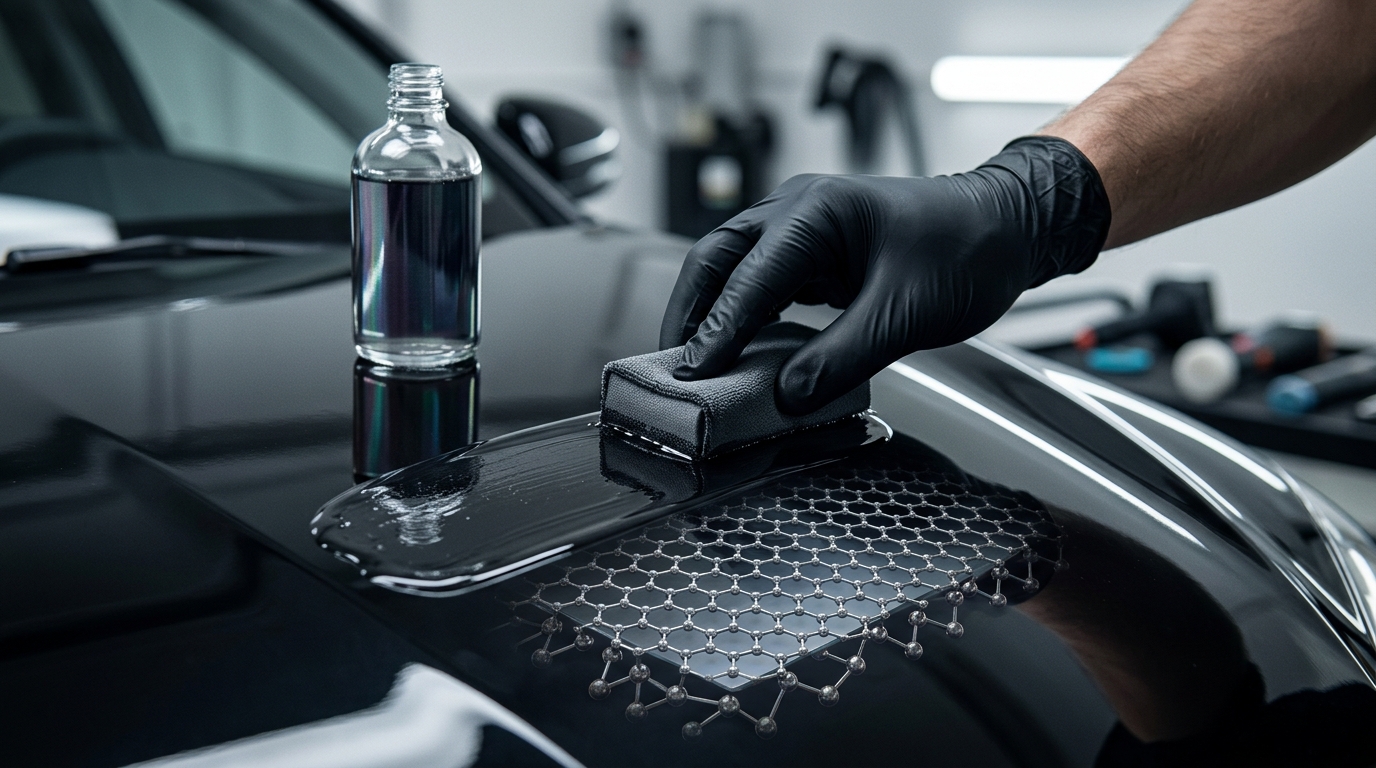
Graphene exhibits a distinctive two-dimensional honeycomb lattice of sp2-hybridized carbon atoms. In its pure, pristine state, single-layer graphene possesses exceptionally low electrical resistivity and a theoretical in-plane thermal conductivity exceeding 3,000 W/m·K. In wearable heating modules, engineers tune the resistance of graphene-based formulations—such as graphene nanoplatelet dispersions or reduced graphene oxide composites—so that standard portable battery outputs (typically 5V USB outputs or 7.4V to 12V specialized lithium-ion packs) generate comfortable, stable surface temperatures between 38°C and 55°C (100°F to 131°F).
Far-Infrared Emission Mechanics
Beyond standard conduction and convection, graphene heating films are efficient emitters of far-infrared radiation (FIR), generally spanning the 6 to 14 micrometer wavelength spectrum. Because human skin and tissue have high water content, they absorb electromagnetic radiation in this specific infrared window exceptionally well.
Rather than simply warming the ambient air trapped inside the jacket lining, FIR radiation transfers thermal energy directly to the wearer’s body and inner clothing layers. This radiative transfer helps the wearer feel warm quickly without requiring the heating element to reach uncomfortably high contact temperatures.
Material Forms: How Graphene Is Integrated into Outerwear
Outerwear does not use large, single-crystal sheets of pristine monolayer graphene. Instead, textile manufacturers utilize engineered graphene derivatives and composite architectures suited to mass production, flexural fatigue resistance, and environmental durability.
1. Printed Graphene Inks and Pastes
The most widespread commercial approach involves screen printing or slot-die coating graphene nanoplatelet inks onto flexible substrates such as thermoplastic polyurethane (TPU), polyimide (PI), or polyester taffeta. Graphene nanoplatelets (GNPs) consist of multi-layer graphene stacks formulated with binders, surfactants, and conductive additives. Once cured, these printed paths form continuous conductive traces that function as thin, planar heating pads.
2. Graphene-Coated Fibers and Yarns
In more advanced textile architectures, individual yarn filaments (such as nylon, polyester, or cotton) are immersed in graphene oxide solutions and thermally or chemically reduced. The resulting conductive yarns can be woven or knitted directly into the fabric matrix. This method produces heating zones that mimic the natural drape, breathability, and feel of standard apparel fabrics.
3. Graphene-Polymer Composite Films
In this construction, graphene platelets are compounded into an elastomeric polymer matrix, which is then cast or extruded into thin elastomeric sheets. These composite membranes are laminated between the garment’s face fabric and inner lining, providing water resistance along with electrothermal capability.
Graphene vs. Traditional Heated Jacket Technologies
Heated jackets historically relied on metal resistance wires (such as nichrome or copper alloys) or carbon fiber heating panels. Graphene introduces measurable structural and thermal differences compared to these legacy approaches.
| Performance Attribute | Traditional Metal Wires | Carbon Fiber Bundles | Graphene Membrane / Inks |
|---|---|---|---|
| Thickness and Bulk | High (noticeable wire ridges) | Moderate (flexible braided pads) | Ultra-thin (< 0.5 mm profile) |
| Heat Distribution | Linear (concentrated along wires) | Segmented (small panel zones) | Planar (broad, uniform coverage) |
| Hot-Spot Risk | Elevated at bends/kinks | Moderate | Low (fast lateral heat spreading) |
| Bending & Flex Life | Prone to work-hardening fatigue | Good flexural tolerance | Exceptional flexural fatigue life |
| Thermal Response | Moderate warm-up (30–60 s) | Fast warm-up (10–20 s) | Near-instantaneous (< 5–10 s) |
| Wash Durability | Sensitive to wire kinking | Requires delicate handling | Robust when properly encapsulated |
Eliminating Hot Spots
A primary failure mode of wire-based garments is localized overheating caused by wire bending, pinching, or localized electrical resistance spikes. Graphene’s rapid in-plane thermal diffusivity enables effective hot-spot mitigation. As heat is generated resistively, the material spreads thermal energy laterally across the entire surface of the heating pad, delivering uniform warmth without localized scorching.
Flexibility and Weight Reduction
Because graphene heating elements can be applied as micro-thin coatings or flexible membranes, they maintain the jacket’s natural drape. The wearer experiences full range of motion without the stiffness or mechanical resistance associated with heavy metallic wiring harnesses.
Engineering and Manufacturing Considerations
Designing a reliable graphene heated jacket requires balancing electrical performance, human ergonomics, and harsh laundering requirements.
Power Delivery and Electrical Interconnects
The heat output ($P$) of a resistive element is dictated by the formula $P = V^2 / R$, where $V$ is voltage and $R$ is electrical resistance. Garment engineers must precisely control the sheet resistance of the graphene layer to match standard battery outputs. A typical 5V / 2A (10W) USB power bank requires a total system resistance of approximately 2.5 ohms to draw maximum safe power.
The transition point between rigid electrical components (wires, USB connectors, controllers) and flexible graphene heating zones represents the primary mechanical vulnerability. Manufacturers use silver-plated busbars, conductive epoxies, and ultrasonic welding to ensure robust, low-resistance connections that do not delaminate under cyclic stress.
Encapsulation and Washability
Raw graphene is chemically stable, but electrical circuits in apparel are exposed to sweat, humidity, detergents, and the mechanical agitation of washing machines. To achieve machine-washable certification, heating elements are sealed inside waterproof encapsulation layers, typically using hot-melt TPU or silicone films. These barriers prevent water ingress, protect the printed tracks from abrasion, and isolate the electrical circuit from the user.
Safety Controls and Temperature Regulation
Modern graphene heating systems integrate microcontrollers paired with negative temperature coefficient (NTC) thermistors or use self-limiting resistive formulations. These safety mechanisms constantly monitor surface temperatures, automatically modulating power via pulse-width modulation (PWM) to prevent overheating and maximize battery runtime.
Active Electrothermal vs. Passive Graphene Apparel
It is important to differentiate between active graphene heated jackets and passive graphene-enhanced garments, as both appear in the technical outerwear market under similar terminology:
- Active Graphene Jackets: Feature integrated battery packs, switches, wiring harnesses, and electrothermal graphene heating elements. They consume electrical power to actively generate new thermal energy.
- Passive Graphene Apparel: Incorporates graphene flakes or coatings into the lining fabrics or insulation batts without batteries or wiring. These garments rely on passive thermal spreading to capture radiant body heat, distribute it evenly across the torso, and reduce cold spots purely through conduction and natural thermal management.
Key Criteria for Evaluating Graphene Heated Jackets
When assessing a graphene-powered heated garment for technical performance or consumer use, several objective engineering factors determine overall quality:
- Heating Zone Configuration: High-performance designs position heating elements over high-vascularity areas, such as the upper back, chest, and kidney regions, maximizing systemic heat distribution via blood circulation.
- Substrate Breathability: Fully solid film laminates can restrict moisture vapor transmission. Advanced jackets utilize perforated graphene membranes or printed mesh patterns to allow sweat vapor to escape while maintaining thermal output.
- Power Protocol Compatibility: Standardized 5V USB-A or USB-C inputs allow users to power the jacket with universal power banks, whereas proprietary 7.4V or 12V barrel-jack systems provide higher peak temperatures at the expense of battery interchangeability.
- Cycle Durability Ratings: Reliable garments undergo standardized flex-testing (often exceeding tens of thousands of bend cycles) and documented laundry cycle tests to verify that sheet resistance remains stable over time.