Graphene Battery Market
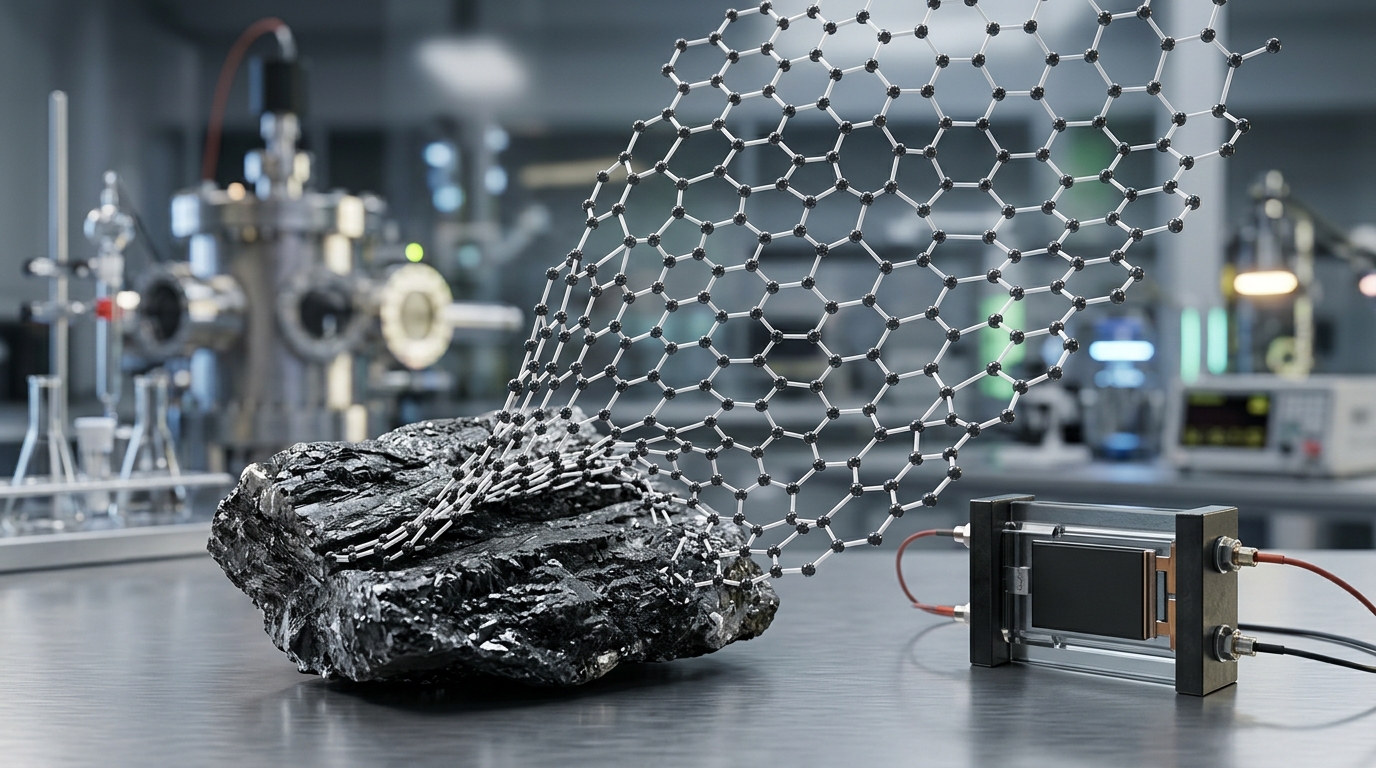
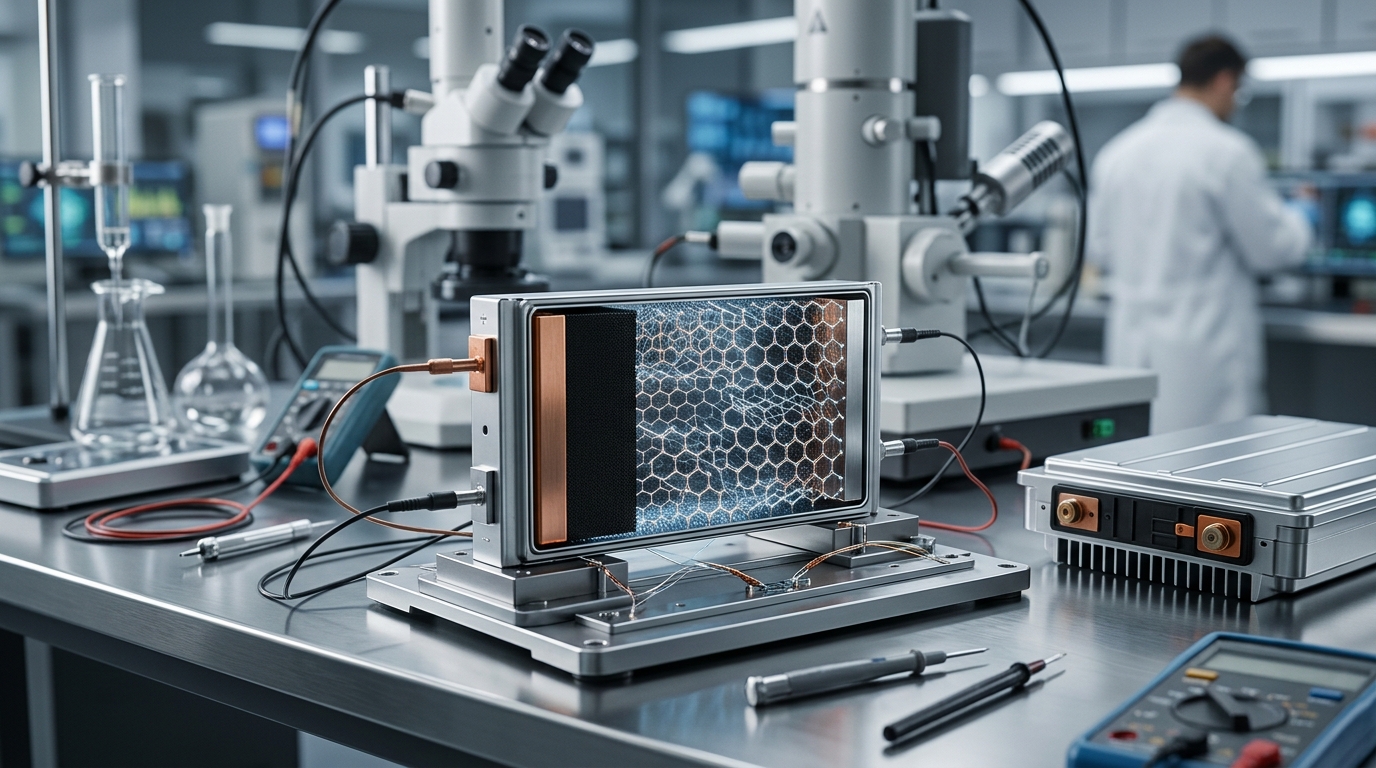
The term graphene-enhanced battery technologies accurately describes the commercial landscape often broadly labeled as the graphene battery market. Rather than constructing energy storage cells entirely out of pure carbon monolayers, commercial manufacturers integrate graphene derivatives into established electrochemical systems. In these configurations, graphene acts as a conductive additive, structural scaffold, or thermal regulator within lithium-ion, sodium-ion, lead-acid, and supercapacitor platforms.
Industrial interest in graphene centers on its combination of extreme electrical conductivity, high mechanical strength, and exceptional heat dissipation. When blended into active electrode formulations, graphene overcomes fundamental kinetic bottlenecks that limit conventional batteries, particularly sluggish electron transport, localized thermal buildup during fast charging, and mechanical degradation caused by electrode expansion.
Deconstructing the Market: Pure Graphene vs. Graphene Additives
A persistent misconception is that a graphene battery consists purely of graphene electrodes absorbing and desorbing ions. In reality, a theoretical pure-graphene cell suffers from practical electrochemical drawbacks: poor volumetric energy density due to low tap density, significant initial capacity loss from continuous electrolyte breakdown over massive surface areas, and sloping discharge curves that complicate electronic voltage regulation.
Instead, the commercial market categorizes graphene energy storage into distinct structural implementations:
- Conductive Network Additives: Sub-micron flakes mixed into cathode active materials (such as lithium iron phosphate or high-nickel layered oxides) to replace conventional carbon black, achieving higher conductivity at lower additive weight percentages.
- Composite Active Materials: Hybrid structures where graphene wraps or encapsulates active materials like silicon, sulfur, or tin, buffering mechanical stress during volumetric changes.
- Conductive Current Collector Primers: Ultra-thin graphene coatings applied to aluminum or copper foils to reduce contact resistance, prevent chemical corrosion, and improve active mass adhesion.
- Electrochemical Double-Layer Supercapacitors: High-surface-area electrodes where electrostatic charge accumulation occurs directly on graphene surfaces, delivering extreme power density.
Electrochemical Mechanisms: How Graphene Adds Value
The economic viability of graphene in battery production depends directly on distinct physical mechanisms operating at the nanoscale.
Overcoming Electrical Percolation Limits
Conventional batteries rely on zero-dimensional carbon black particles to form conductive bridges between active material grains. Because these particles make point-to-point contacts, manufacturers must add between two and five percent by weight to reach the electrical percolation threshold—the point where continuous conductive pathways span the entire electrode.
Two-dimensional graphene sheets establish planar, surface-to-point contacts across multiple active material particles simultaneously. This geometry lowers the required percolation threshold to less than one percent by weight. Reducing passive conductive additives frees up internal volume and weight for energy-storing active materials, directly increasing gravimetric and volumetric energy density.
Thermal Dissipation and Fast-Charging Kinetics
Fast charging forces high lithium-ion fluxes through the electrolyte and electrode matrices. The resulting overpotentials generate significant resistive heat. If unmanaged, this heat accelerates electrolyte degradation, triggers lithium plating, and risks thermal runaway.
Graphene possesses ballistic thermal transport characteristics, with an in-plane thermal conductivity exceeding 3,000 W/m·K in pristine samples. Within an electrode, a dispersed graphene matrix acts as an internal heat sink, spreading localized thermal spikes evenly across the entire surface of the cell. This uniform temperature profile prevents localized hotspot degradation and allows cells to sustain higher charge currents without entering dangerous thermal regimes.
Mechanical Buffering in Next-Generation Anodes
Silicon represents the premier candidate to replace graphite anodes because its theoretical specific capacity exceeds 3,500 mAh/g, compared to graphite’s 372 mAh/g. However, silicon particles expand by more than 300% when fully lithiated, leading to pulverization, loss of electrical contact, and continuous destruction of the protective solid electrolyte interphase (SEI) layer.
To solve this, advanced materials developers formulate silicon-graphene composite anodes. The high tensile strength and elasticity of few-layer graphene allow it to flex around expanding silicon particles. Graphene forms a resilient cage that preserves electrical connectivity while shielding the silicon core from direct electrolyte exposure, stabilizing the SEI layer over hundreds of charge-discharge cycles.
Material Grades and Manufacturing Methods
Not all graphene used in energy storage is identical. The performance and economics of a graphene-enhanced battery depend entirely on the material grade and manufacturing pathway.
| Material Form | Typical Synthesis Route | Primary Battery Function | Key Tradeoff |
|---|---|---|---|
| Graphene Nanoplatelets (GNPs) | Mechanical or shear exfoliation | Cathode conductive additive; thermal dissipation | Thicker stacks (5–30 layers); moderate surface area |
| Reduced Graphene Oxide (rGO) | Modified Hummers method followed by thermal/chemical reduction | Silicon encapsulation; sulfur immobilization in Li-S | Residual oxygen defects reduce intrinsic conductivity |
| Few-Layer Graphene (FLG) | Liquid-phase exfoliation or plasma synthesis | High-rate anodes; current collector protective layers | Higher production cost; difficult de-agglomeration |
| CVD Monolayer Graphene | Chemical Vapor Deposition | Model interfaces; ultra-thin barrier coatings | Prohibitive cost for bulk energy storage systems |
For bulk battery production, graphene nanoplatelets (GNPs) and rGO dominate industrial demand. Monolayer graphene produced via chemical vapor deposition remains economically impractical for bulk battery slurries due to low throughput and high capital expense.
Commercial Applications Across Battery Chemistries
Different segments of the energy storage industry apply graphene to address distinct performance constraints.
Lithium-Ion Systems
In high-power consumer electronics, cordless power tools, and electric mobility, the primary limitation is balancing high energy density with rapid recharge capabilities. By optimizing intercalation kinetics through graphene-assisted conductive networks, cells can accept charging rates of 4C to 10C (full recharges in 6 to 15 minutes) while maintaining structural integrity over standard lifecycle requirements.
Lithium-Sulfur (Li-S) Batteries
Lithium-sulfur chemistry offers exceptionally high theoretical energy density but suffers from the “polysulfide shuttle effect,” where intermediate sulfur compounds dissolve into the liquid electrolyte and corrode the lithium anode. Conductive rGO matrix architectures physically entrap polysulfides within porous frameworks while providing the direct electrical contact required to convert insulating sulfur into lithium sulfide during discharge.
Sodium-Ion Systems
Sodium ions possess a larger ionic radius than lithium ions, making them difficult to intercalate into standard graphite anodes. Graphene sheets with engineered interlayer spacing (expanded graphene) allow larger sodium ions to insert reversibly, providing a scalable anode solution for low-cost, grid-scale energy storage.
Advanced Lead-Acid Batteries
In heavy transport and backup power, adding small fractions of functionalized graphene to the negative active mass of lead-acid batteries reduces progressive sulfation during partial-state-of-charge operation, doubling dynamic charge acceptance and extending operational lifespans in start-stop vehicle applications.
Technical Limitations and Manufacturing Challenges
Despite clear electrochemical benefits, several engineering obstacles regulate the pace of industrial integration.
Agglomeration and Dispersion Inconsistencies
Graphene sheets exhibit strong van der Waals attractions, naturally driving exfoliated layers to restack into graphitic clusters. When agglomeration occurs within an electrode slurry, graphene loses its high surface area and acts as a localized structural defect rather than a conductive network. Maintaining uniform dispersion in standard battery solvents, such as N-Methyl-2-pyrrolidone (NMP) or aqueous binder solutions, requires precise surfactant chemistry and high-shear mixing parameters.
First-Cycle Coulombic Efficiency Loss
Materials with high specific surface areas consume significant quantities of electrolyte during the first charge cycle to form the SEI layer. Unfunctionalized or poorly prepared graphene can lead to high irreversible capacity loss on the initial cycle, reducing the net usable capacity of the cell unless pre-lithiation techniques are incorporated into the assembly line.
Electrode Density and Calendering Limits
Battery manufacturing lines run slurry-coated foils through heavy calendering rollers to compress the active layer, maximizing volumetric energy density. Graphene’s high springback effect and low bulk density make electrodes resistant to tight compaction, occasionally lowering volumetric performance even when gravimetric (per-weight) performance rises.
Evaluating Graphene Against Competing Carbon Additives
Graphene does not compete in a vacuum; it competes against carbon black and carbon nanotubes (CNTs).
- Carbon Black vs. Graphene: Carbon black is inexpensive, mature, and easy to process, but requires loadings of 2–5 wt% and offers modest thermal transport. Graphene provides superior thermal dissipation and lower percolation thresholds, but at a higher raw-material cost.
- Carbon Nanotubes (CNTs) vs. Graphene: Single-walled and multi-walled CNTs form one-dimensional conductive highways that excel at bridging large distances across thick electrodes. Graphene forms two-dimensional planar interfaces that offer superior particle contact area and higher thermal conductivity. Many tier-one battery developers increasingly deploy hybrid blends—combining 1D CNTs and 2D graphene—to create an optimized three-dimensional conductive grid.
Quality Standards and Market Integration Factors
For a battery manufacturer, adopting graphene requires passing rigorous qualification protocols. The material is evaluated not merely on purity, but on measurable physical parameters defined by international standardization bodies:
- Layer Count and Lateral Dimension: True few-layer materials (typically 1 to 5 layers) command different pricing and performance profiles compared to multi-layer nanoplatelets (10 to 30 layers).
- Oxygen and Defect Ratios: Analyzed via Raman spectroscopy ($I_D/I_G$ ratio) and X-ray photoelectron spectroscopy (XPS) to guarantee predictable electrical conductivity and surface wetting behavior.
- Purity and Metallic Impurities: Trace transition metals (such as iron or copper remnants from catalyst or exfoliation processes) must remain in the low parts-per-million range to prevent internal micro-shorting.
- Drop-in Processing Compatibility: Slurry preparations must integrate seamlessly with existing slot-die coating, drying, and calendering equipment without altering established line speeds or requiring retooling of gigafactories.
The graphene battery sector continues to mature through integration as an enabling additive rather than a standalone chemistry. As scalable exfoliation methods refine structural control and lower production costs, graphene solidifies its position as a standard high-performance component in next-generation energy storage architectures.