
Graphene Oxide in COVID Vaccines Fact Check
A rigorous examination of chemical formulations, manufacturing processes, and independent laboratory analyses confirms that graphene oxide is not present in any authorized COVID-19 vaccine. The active delivery systems in mRNA vaccines rely entirely on biodegradable lipid nanoparticles, while viral vector and protein subunit vaccines use well-established biological carriers, stabilizing salts, and sterile water. The belief that vaccines contain carbon nanomaterials stems from misinterpreted microscopy images, conflation with early-stage laboratory research, and misunderstandings of how mRNA delivery vehicles are constructed.
To understand why graphene oxide is absent from these formulations, it is helpful to examine the material properties of graphene derivatives, the exact chemical anatomy of lipid nanoparticles, and the analytical testing methods used to verify injectable pharmaceutical products.
What Is Graphene Oxide?
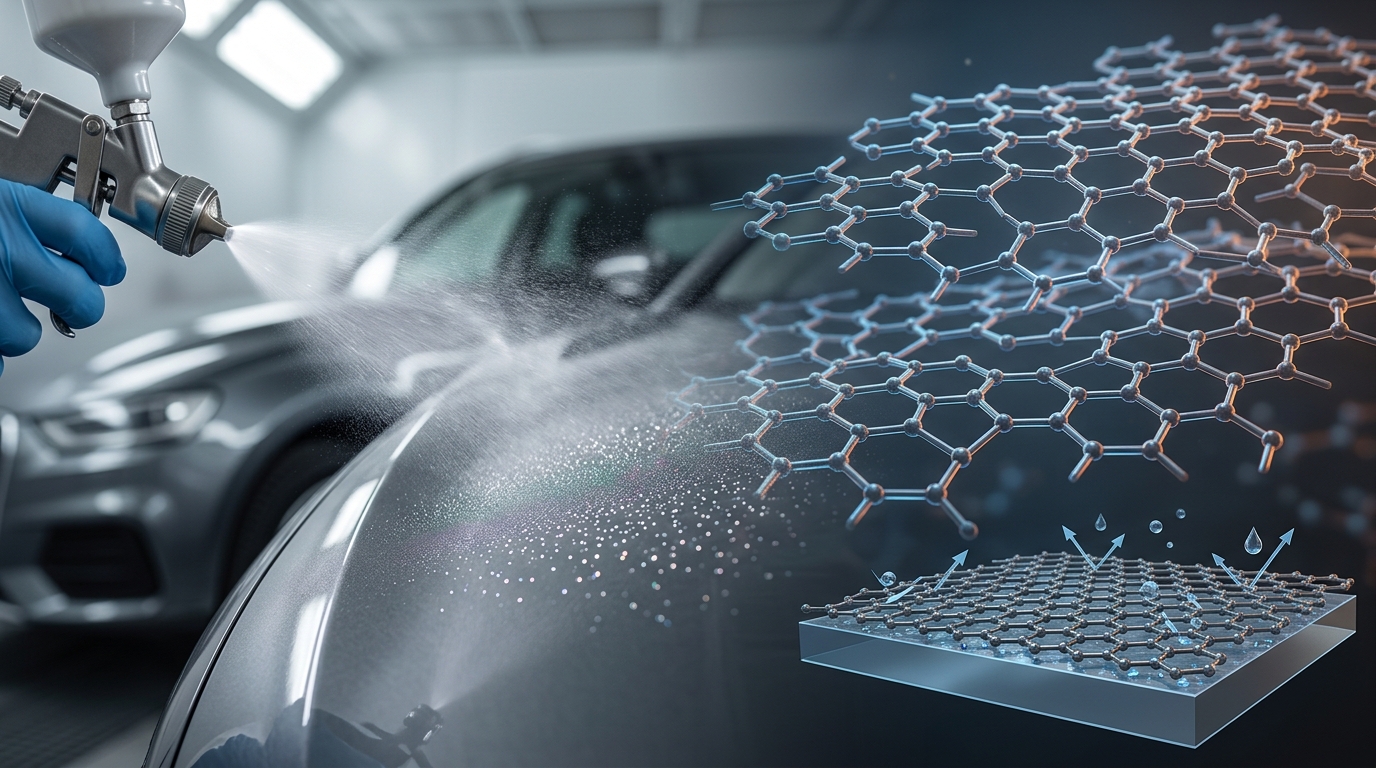
Graphene oxide (GO) is a heavily oxidized form of graphene, consisting of a single-atom-thick sheet of carbon atoms decorated with oxygen-bearing functional groups. While pristine graphene consists exclusively of sp2-hybridized carbon arranged in a planar hexagonal lattice, graphene oxide disrupts this continuous network with epoxide and hydroxyl groups on the basal planes and carboxyl groups along the sheet edges.
These oxygen functionalities fundamentally alter the material’s properties compared to pure graphene:
- Hydrophilicity: The oxygen groups allow graphene oxide to disperse readily in water, forming colloidal suspensions without requiring chemical surfactants.
- Visual Appearance: In aqueous solution, graphene oxide exhibits a distinct dark brown to pitch-black color depending on its concentration, strongly absorbing light across the ultraviolet and visible spectrum.
- Electrical Insulation: The disruption of the delocalized carbon pi-network turns graphene oxide into an electrical insulator, unless it undergoes chemical reduction to restore the conductive carbon lattice.
- Chemical Heterogeneity: Graphene oxide is inherently polydisperse; synthesized batches vary widely in lateral flake dimensions (from nanometers to tens of micrometers), oxidation degree, and edge-group chemistry.
The Actual Chemistry of COVID-19 Vaccine Formulations
The mRNA vaccines that gained widespread authorization do not rely on carbon nanomaterials to deliver genetic material into human cells. Instead, they use synthetic lipid nanoparticles (LNPs)—spherical capsules made of organic fats designed to encapsulate and protect fragile mRNA strands.
The Four Essential Lipids
An mRNA lipid nanoparticle relies on a precise four-component lipid matrix:
- Ionizable Cationic Lipids: These specialized synthetic lipids carry a positive charge at acidic pH levels during manufacturing, which binds the negatively charged mRNA backbone. In the neutral pH of the bloodstream, they become neutral, minimizing systemic toxicity before shifting charge again inside cellular endosomes to release the mRNA.
- Helper Phospholipids: Neutral structural lipids, such as distearoylphosphatidylcholine (DSPC), form the bilayer structure of the outer lipid shell, mimicking natural cell membranes.
- Cholesterol: Natural or plant-derived cholesterol molecules fill the gaps between phospholipid chains, modulating the rigidity and fluidity of the nanoparticle envelope.
- PEGylated Lipids: Lipids linked to polyethylene glycol (PEG) chains form a hydrophilic outer brush layer. This coating prevents particles from clumping together during storage and prevents premature clearance by the immune system.
Buffers, Salts, and Cryoprotectants
The remainder of the vaccine vial consists of an aqueous buffer designed to maintain physiological pH and prevent damage during cold storage:
- Sucrose: A simple sugar acting as a cryoprotectant to keep lipid nanoparticles intact and prevent ice crystal formation during freezing.
- Inorganic Buffers: Sodium chloride, potassium chloride, disodium phosphate, and monopotassium phosphate (or tromethamine buffers) maintain an osmotic balance matching human tissue fluids.
- Sterile Water for Injection: The carrier fluid, producing an opalescent, translucent-to-white liquid entirely distinct from the brown or black appearance of carbon suspensions.
Analytical Verification: Proving the Absence of Carbon Nanomaterials
Pharmaceutical quality control involves spectroscopic and chromatographic techniques capable of detecting trace contaminants at parts-per-billion levels. Multiple analytical methods conclusively distinguish lipid nanoparticles from graphene oxide.
Raman Spectroscopy
Raman spectroscopy is the primary analytical tool for identifying carbon allotropes. Any sample containing graphene or graphene oxide produces two unmistakable, high-intensity spectral signals:
- The G-band (near 1580 cm-1), representing the in-plane stretching vibration of sp2 carbon atoms.
- The D-band (near 1350 cm-1), representing structural defects and symmetry disruption caused by oxygen attachments.
Independent spectroscopic testing of vaccine vials demonstrates the characteristic vibrational modes of lipids, phosphate groups, and sucrose, with a complete absence of the G and D carbon signatures.
Electron Microscopy and Particle Sizing
Under cryogenic transmission electron microscopy (cryo-TEM), lipid nanoparticles appear as smooth, spherical vesicles ranging between 60 and 140 nanometers in diameter. Graphene oxide, by contrast, appears as sharp-edged, crumpled, 2D sheet-like flakes with high electron density. Regulatory batch testing and structural imaging studies consistently reveal uniform spherical vesicles with no two-dimensional crystalline sheets.
| Evaluation Metric | Graphene Oxide (GO) | Lipid Nanoparticle Formulations |
|---|---|---|
| Primary Composition | Oxidized carbon sheets with functional oxygen groups | Synthetic ionizable lipids, DSPC, cholesterol, and PEG-lipids |
| Physical Structure | Planar, irregular 2D sheets (often 200 nm to 10+ µm) | Spherical 3D micellar vesicles (60 to 140 nm) |
| Appearance in Solution | Yellowish-brown (low conc.) to black (high conc.) | Clear to white, opalescent liquid |
| Raman Signature | Distinct G-band (~1580 cm-1) and D-band (~1350 cm-1) | Lipid-ester and carbohydrate vibrational bands |
| Biodegradation Route | Slow enzymatic oxidation (e.g., myeloperoxidase) | Hydrolysis and normal cellular lipid metabolic pathways |
| Regulatory Status in Vaccines | Investigational only (adjuvant research models) | Approved for human clinical injectable formulations |
Why Graphene Oxide Is Incompatible with Current Injectable Vaccines
Beyond the empirical testing that confirms its absence, there are clear biological and pharmacological reasons why graphene oxide is not suitable for authorized mRNA vaccines.
First, graphene oxide exhibits significant batch-to-batch structural variance. Regulatory approval for injectable biologicals requires absolute uniformity in molecular weight, surface charge, and degradation kinetics. Graphene oxide flakes vary widely in size and oxidation levels, making reproducible industrial scale-up exceptionally difficult under Good Manufacturing Practice (GMP) standards.
Second, graphene oxide presents complex toxicological considerations. While surface-functionalized graphene materials are actively studied in academic settings for targeted cancer therapies and biosensors, unfunctionalized graphene oxide sheets can damage cellular membranes, trigger non-specific platelet aggregation, and persist in liver and spleen tissues for prolonged periods. In contrast, synthetic lipids degrade into standard fatty acids and sterols that normal metabolic processes break down and eliminate within days.
Finally, lipid nanoparticles provide an electrostatic encapsulation mechanism tailored specifically to nucleic acids. The ionizable lipids entrap the polyanionic mRNA during microfluidic mixing. Graphene oxide lacks this reversible charge-switching mechanism, making it far less efficient at releasing intact, translatable mRNA inside the cytoplasm.
How the Graphene Oxide Misconception Started
The persistence of the rumor that vaccines contain graphene oxide can be traced to several distinct sources of confusion:
1. Misinterpreted Laboratory Microscopy
Several early viral claims relied on low-magnification optical and uncalibrated transmission electron microscopy of dried vaccine residue. When liquid saline dries on a microscope slide, the evaporating buffer leaves behind crystalline salt lattices, cholesterol aggregates, and microscopic debris from glass cover slips. Untrained observers misidentified these ordinary salt crystals and lipid clusters as two-dimensional graphene sheets.
2. Conflation with Preclinical Research Literature
Graphene derivatives have been investigated for years in university labs as experimental vaccine adjuvants to boost immune responses in animal models. When researchers publish exploratory studies on novel nanomaterial platforms, the titles frequently pair terms like “graphene oxide” and “vaccine delivery.” Non-specialists reading academic abstracts often confuse speculative laboratory research with approved, commercially deployed vaccine ingredients.
3. Confusing Lipids with Nanotechnology
Because official ingredient sheets identify lipid nanoparticles as “nanotechnology” (defined scientifically as engineered structures measuring between 1 and 100 nanometers), many people equated the term exclusively with inorganic materials like carbon nanotubes, graphene, or microchips. In pharmaceutical science, “nanoparticle” describes any nanoscale carrier, including soft, organic lipid droplets.
Evaluating Ingredient Claims with Material Science
When assessing claims regarding the composition of commercial pharmaceuticals, material properties provide reliable physical boundaries. Graphene oxide cannot be rendered transparent in active concentrations, cannot evade Raman spectroscopic detection, and cannot match the chemical composition of lipid emulsions. Every authorized COVID-19 vaccine relies on documented biological and lipid formulations, and graphene oxide in covid vaccines fact check assessments across global laboratories and regulatory bodies confirm its complete absence.