303 Graphene Nano Spray Coating
303 Graphene Nano Spray Coating is a consumer-accessible surface protectant engineered to deliver the benefits of carbon nanotechnology to automotive paint, glass, trim, and metal. By suspending graphene oxide nano-platelets within a cross-linking polymer matrix, the formulation creates a hydrophobic, chemically resilient barrier designed to outlast conventional waxes and reduce the vulnerability to water spotting that often plagues standard silicon dioxide ceramic coatings.
Understanding how this coating works requires looking beyond marketing claims to examine the chemical interactions, material properties, and practical application techniques that define its performance on modern vehicle clear coats.
The Chemistry Behind Graphene Spray Coatings
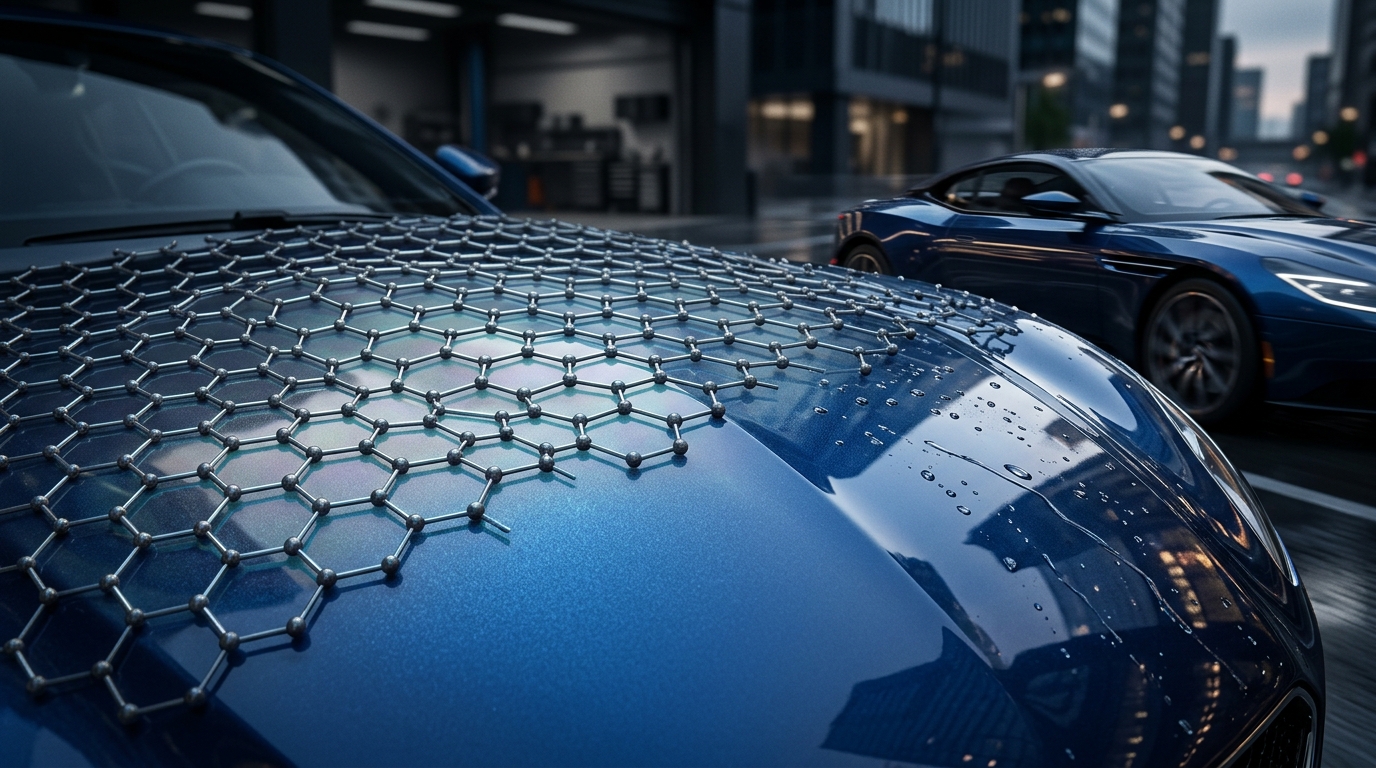
To understand the function of 303 Graphene Nano Spray Coating, one must distinguish between pure monolayer graphene and engineered graphene derivatives. Pure graphene consists of a single layer of carbon atoms arranged in a two-dimensional hexagonal lattice. In surface care formulations, incorporating raw pristine graphene is impractical because it does not disperse stably in liquid carriers.
Instead, the formulation utilizes functionalized graphene derivatives—predominantly reduced graphene oxide. These micro- and nanoscale platelets possess oxygen-bearing functional groups (such as hydroxyl, carboxyl, and epoxy groups) that allow them to disperse evenly throughout a liquid polysiloxane polymer backbone without agglomerating into unusable sediment.
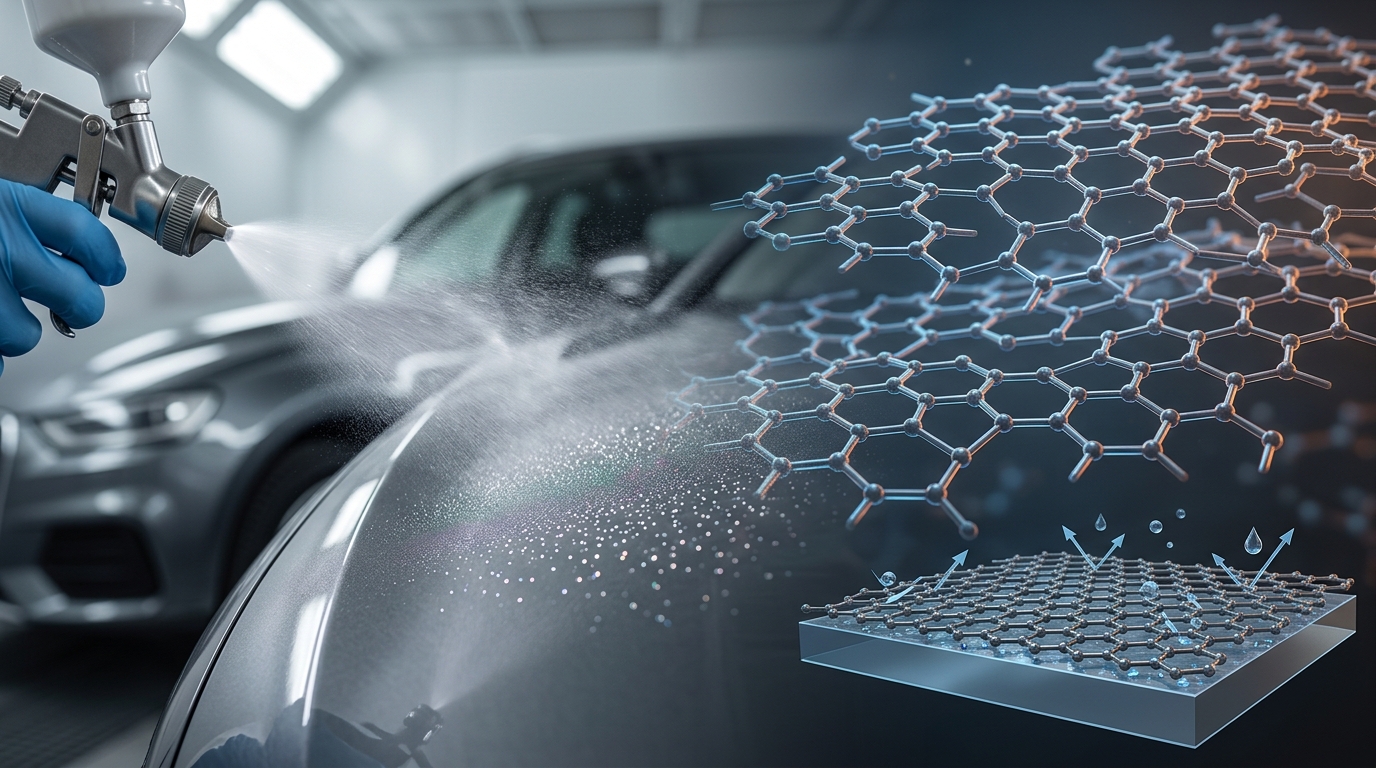
When sprayed onto a substrate and buffed, the liquid carriers evaporate, prompting the polysiloxane polymers to form a dense, three-dimensional networked matrix. The graphene platelets nest within and across this polymer web, reinforcing the physical film much like rebar reinforces poured concrete. The dark grey coloration of the liquid product in the bottle directly reflects this suspension of carbon nanomaterials, although the film cures completely transparent once leveled to its microscopic final thickness.
How Graphene Modifies Surface Dynamics
Graphene spray protectants alter how exterior vehicle panels interact with liquids, environmental contaminants, and electromagnetic radiation. The addition of carbon structures imparts several measurable physical advantages over traditional polymer sealants.
Hydrophobic Performance and Roll-Off Mechanics
Water behavior on a treated panel is governed by surface energy. The coating lowers surface free energy, forcing water droplets to bead tightly rather than sheet across the surface. While a high water contact angle (typically exceeding 100 degrees) creates visually impressive water beads, it also carries a risk: standing water beads act as optical lenses under intense sunlight, concentrating heat and baking dissolved minerals into the clear coat.
The integration of graphene platelets contributes to a remarkably low sliding angle (the angle of tilt required for a bead to roll off). Because droplets begin moving across the vehicle panel at shallower angles, water rolls away during driving or rain events before it has time to evaporate and leave alkaline deposits.
Thermal Dissipation and Water Spotting Mitigation
Traditional silicon dioxide coatings form insulating, glass-like quartz layers. Under direct solar radiation, dark automotive paint beneath a standard ceramic layer can reach high temperatures, accelerating the evaporation of mineral-laden water. Graphene possesses exceptional intrinsic thermal conductivity.
Within a spray coating, the dispersion of graphene platelets helps facilitate uniform surface heat dissipation across the panel. By moderating localized hot spots on the surface, the coating slows down the flash-evaporation of water droplets, substantially lowering the likelihood of severe mineral etching.
Chemical and Environmental Resistance
Road salt, bird droppings, bug splatter, and industrial fallout represent aggressive chemical hazards. Clear coats are susceptible to acidic and alkaline degradation that breaks chemical bonds in the urethane matrix.
The graphene-reinforced network acts as a robust chemical etch resistance barrier across a broad pH spectrum, typically between pH 3 and pH 12. The dense carbon-polymer layer prevents corrosive compounds from directly contacting and penetrating the underlying clear coat.
Practical Application and Processing Characteristics
One distinct functional advantage of 303 Graphene Nano Spray Coating relative to traditional glass-vial ceramic coatings is its forgiving application window. Traditional ceramic coatings rely on fast-evaporating solvents that require strict climate control, ambient humidity monitoring, and total shade to prevent the coating from flashing too rapidly and creating high spots.
Application Under Direct Sunlight
The carrier system in this formulation allows it to be applied in direct sunlight without flash-curing instantaneously onto the panel. This tolerance stems from the thermal stability of the graphene platelets and the formulation of the carrier solvents, which remain workable long enough for the user to spread and level the product across large sections.
The Sweating and Hazing Mechanism
When the product is misted onto a microfiber applicator and spread across a panel, the carrier solvents begin to separate from the active solids. This produces a visible phenomenon known in detailing as "sweating" or "hazing," where the product appears to form micro-droplets or a light white-to-grey film across the finish. This visual cue signals that the solvents have evaporated and the active solids have completed initial covalent cross-linking with the substrate, indicating that the surface is ready for final leveling with a clean, dry microfiber towel.
Substrate Versatility
Unlike pure solvent-heavy ceramic formulas that may whiten or dry out porous materials, the formulation is engineered for broad substrate compatibility:
- Clear Coat: Restores depth and gloss while providing UV protection against clear-coat oxidation.
- Exterior Trim and Plastics: Binds to textured plastics without leaving chalky residues, darkening faded trim.
- Glass: Hydrophobizes windshields and side glass to improve wet-weather driving visibility without causing wiper chatter when applied correctly.
- Wheels: High thermal resistance helps prevent hot metallic brake dust particles from embedding into alloy wheel finishes.
- Chrome and Polished Metal: Forms an anti-corrosion barrier that prevents pitting and oxidation.
Comparing Protective Coating Technologies
To accurately evaluate where 303 Graphene Nano Spray Coating fits into a surface care regimen, it is helpful to contrast it against alternative protective chemistries across key operational categories.
| Property / Technology | Natural Carnauba Wax | SiO2 Ceramic Spray | 303 Graphene Nano Spray | Pro-Grade Ceramic Coating |
|---|---|---|---|---|
| Primary Chemistry | Natural esters & hydrocarbons | Silicon dioxide polymers | Reduced graphene oxide & polysiloxane | Concentrated polysilazane / quartz solids |
| Durability Range | 4 to 8 weeks | 3 to 6 months | 6 to 12 months | 2 to 5 years |
| Water Spot Resistance | Moderate | Low (prone to mineral rings) | High | Moderate (requires regular maintenance) |
| Sunlight Application | Poor (bakes immediately) | Poor to moderate | Excellent | Very poor (must be applied in shade) |
| Layer Thickness | Microscopic (soft film) | Sub-micron (semi-rigid) | Sub-micron (flexible matrix) | 1 to 3 microns (hard glass) |
| Installation Complexity | Low | Low | Low to moderate | High (requires paint correction & training) |
Tradeoffs, Limitations, and Misconceptions
While graphene-infused detailing products offer distinct operational benefits, setting realistic expectations requires separating verified material physics from marketing exaggeration.
The Hardness Misconception
Graphene is famous in materials science for being one of the strongest materials known to physics at the atomic level. However, a thin spray-applied liquid coating that contains suspended graphene platelets will not turn an automotive clear coat scratch-proof. Claims citing extreme mineral hardness (such as 9H or 10H) on a pencil hardness scale often reflect the hardness of the underlying substrate rather than the flexible, sub-micron protective film.
The coating serves primarily as a sacrificial barrier layer. It protects against light wash-marring, micro-abrasions, and chemical staining, but it will not stop heavy stone chips or aggressive physical scratches.
Spray Coating vs. High-Solids Vial Coatings
A spray-applied graphene coating is not a direct chemical equivalent to a concentrated, professional-grade ceramic or graphene coating supplied in a sealed glass dropper bottle. High-solids coatings contain a far higher concentration of cross-linking resin and form a significantly thicker protective layer (often measured in full microns rather than nanometers). 303 Graphene Spray trades ultimate longevity for ease of application, affordability, and rapid maintenance capability.
Surface Preparation and Maintenance Strategy
The longevity and hydrophobic behavior of any protective coating depend heavily on the mechanical and chemical state of the surface prior to application.
Preparation Steps
- Decontamination Wash: Remove surface dirt and road grime using a dedicated automotive shampoo free of gloss-enhancing oils or waxes.
- Chemical Iron Removal: Apply a pH-neutral iron fallout remover to dissolve embedded metallic particles from brake dust and industrial pollution.
- Mechanical Decontamination: Use an automotive clay bar or clay mitt with appropriate lubricant to pull embedded particulate matter from the microscopic valleys of the clear coat.
- Solvent Panel Wipe: Wipe down all surfaces with an isopropyl alcohol (IPA) solution or dedicated panel prep spray to strip away any polishing oils, residues, or leftover sealants. This step ensures direct chemical contact between the clear coat and the polysiloxane-graphene polymers.
Post-Application Curing and Care
After buffing the product off the panels, the protective film requires an initial curing window. It is advisable to keep the vehicle dry and away from precipitation or washing for at least one hour to allow the polymeric network to lock into place. Maximum chemical bond strength develops over the subsequent 12 to 24 hours.
Ongoing maintenance should be performed with pH-neutral car soaps. Abrasive polishes, aggressive degreasers, or harsh automated brush washes will abrade the coating mechanically and degrade the graphene polymer network prematurely. When hydrophobic roll-off begins to diminish, the coating can easily be layered or refreshed with a quick secondary application to maintain uninterrupted surface protection.