Graphene Contact Lenses
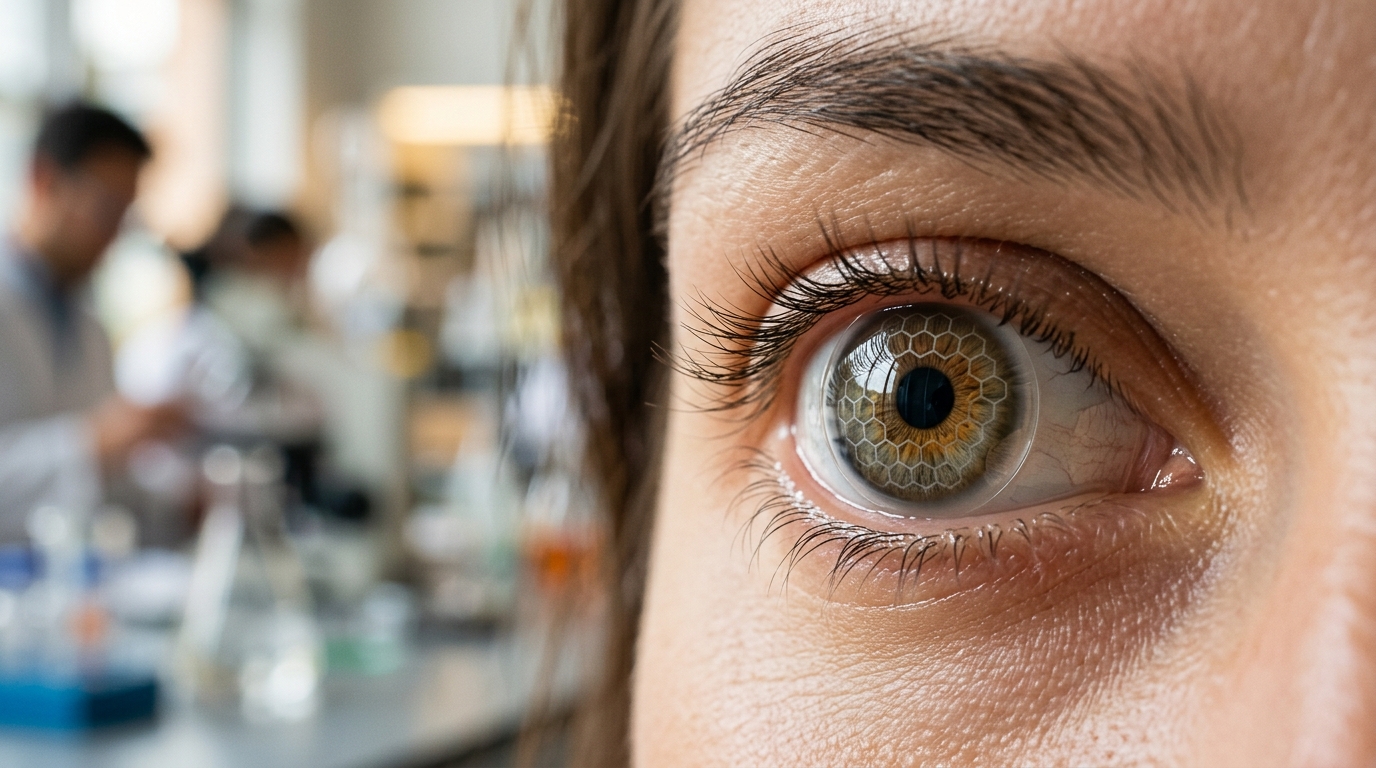
Graphene contact lenses integrate single- or multi-layer carbon lattices into ocular polymers to transform standard vision-correcting hydrogels into multifunctional, bio-interactive platforms. By leveraging the optical transparency, electrical conductivity, and impermeability of atomic carbon, researchers have engineered contact lenses capable of mitigating eye dehydration, shielding ocular tissue from electromagnetic radiation, and continuously tracking physiological biomarkers in tear fluid.
The Ocular Interface: Why Graphene Fits the Eye
Contact lenses must satisfy strict physiological criteria: they must maintain continuous corneal oxygenation, preserve a stable pre-lens tear film, conform to ocular curvature, and remain completely transparent across the visible light spectrum. Conventional materials—principally poly-2-hydroxyethyl methacrylate (pHEMA) and silicone hydrogels—excel at optical clarity and gas permeability, but they are passive insulators susceptible to dehydration, protein deposition, and mechanical wear.
Graphene introduces active physical and electrical properties to these polymer systems without compromising fundamental visual requirements. Pristine single-layer graphene absorbs only approximately 2.3% of incident white light, offering an optical transmittance exceeding 97%. This leaves the wearer’s vision unobstructed while providing functional material properties that conventional polymers lack.
Key Functional Mechanisms in Graphene-Enhanced Lenses
1. Dehydration Resistance and Tear Film Preservation
Dry eye syndrome represents the primary cause of contact lens discomfort and discontinuation. Standard hydrogels lose water through surface evaporation during the inter-blink interval, drawing moisture away from the post-lens tear film and the corneal epithelium. Graphene moisture barriers address this issue by exploiting the material’s atomic impermeability.
When a continuous or semi-continuous graphene layer is embedded within or coated onto a hydrogel matrix, it creates a tortuous diffusion path for water molecules. This barrier slows the rate of water evaporation into the ambient environment. Consequently, the hydrogel retains its equilibrium water content longer, stabilizing the pre-corneal tear film and reducing the friction generated when the eyelid sweeps across the lens surface during blinking.
2. Electromagnetic and Thermal Radiation Shielding
Electronic devices emit low-level electromagnetic radiation, and prolonged exposure to thermal and microwave fields has raised concerns regarding delicate ocular structures, particularly the lens protein crystalline matrix and corneal nerve endings. Standard polymers offer zero attenuation against electromagnetic interference.
Because of its delocalized pi-electron network, graphene exhibits high electrical conductivity and mobile carrier density, enabling it to absorb and dissipate electromagnetic waves. A graphene layer integrated into a contact lens acts as a transparent, ultra-thin electromagnetic shield. It absorbs incident radiation energy and dissipates it laterally across the lens surface as low-grade thermal energy, preventing localized heat buildup on the corneal surface.
3. Continuous Tear-Fluid Biosensing
The tear film contains an array of metabolic biomarkers that correlate with systemic physiological states. Graphene provides an ideal transducer material for non-invasive ocular diagnostic devices through graphene field-effect transistors (GFETs).
- Glucose Monitoring: Functionalizing graphene surfaces with the enzyme glucose oxidase allows the system to detect minute variations in tear glucose levels. The chemical reaction alters carrier mobility in the graphene channel, generating a measurable electrical signal corresponding to blood glucose fluctuations.
- Intraocular Pressure (IOP) Sensing: Piezoresistive graphene networks deform under the mechanical strain caused by changes in ocular pressure. By correlating resistance shifts with corneal curvature fluctuations, graphene-embedded lenses can monitor conditions associated with glaucoma around the clock.
- Lactate and Electrolyte Tracking: Surface-modified graphene channels can selectively measure electrolytes (sodium, potassium) and lactate, offering real-time data for metabolic stress and athletic performance monitoring.
4. Anti-Fouling and Antimicrobial Properties
Biofouling—the non-specific accumulation of proteins (such as lysozyme and albumin) and bacterial colonization on lens surfaces—leads to microbial keratitis and contact lens-induced papillary conjunctivitis. The surface charge, low friction coefficient, and hydrophobic-hydrophilic balance of functionalized graphene surfaces hinder bacterial adhesion. Graphene nanosheets can also generate localized physical stress on bacterial membranes, disrupting cell integrity and inhibiting microbial biofilm formation without leaching cytotoxic chemical agents into the eye.
Material Properties Comparison
| Property / Feature | Standard pHEMA Hydrogel | Silicone Hydrogel | Graphene-Coated Hydrogel |
|---|---|---|---|
| Visible Light Transmittance | > 98% | > 95–97% | > 92–95% (functional stack) |
| Water Evaporation Rate | High | Moderate to High | Significantly Reduced |
| Electrical Conductivity | Insulator (~0 S/m) | Insulator (~0 S/m) | High (10² to 10⁴ S/m depending on form) |
| Biosensing Capability | None (passive) | None (passive) | Active (amperometric, potentiometric, FET) |
| Electromagnetic Shielding | None | None | Broadband attenuation |
| Oxygen Permeability ($Dk$) | Low (8–30 Barrer) | High (60–140+ Barrer) | Controlled by matrix and coating porosity |
Integration and Manufacturing Methods
Incorporating a two-dimensional carbon nanomaterial into a flexible, curved, hydrous polymer requires distinct chemical and physical approaches:
Chemical Vapor Deposition (CVD) Transfer
High-quality, continuous monolayer graphene is synthesized on metallic catalytic foils (such as copper) via chemical vapor deposition. The monolayer is subsequently transferred onto the curved lens matrix using a sacrificial polymer support layer, such as polymethyl methacrylate (PMMA). This technique maintains maximum electrical conductivity and optical transparency, making it suitable for active electronic circuits, wireless antennas, and transparent interconnects. However, scaling transfer processes over non-planar, curved geometries remains a primary engineering bottleneck.
Liquid-Phase Exfoliation and Matrix Blending
An alternative method involves producing exfoliated graphene flakes in liquid suspensions and blending them directly into the pre-polymer formulation before thermal or ultraviolet curing. While this approach is cost-effective and fully compatible with high-volume cast-molding equipment, random flake distribution can introduce light scattering and lower visible light transmittance if the flake concentration exceeds the percolation threshold.
Surface Functionalization and Layer-by-Layer Assembly
To preserve optical clarity while keeping active graphene at the ocular-tear interface, researchers employ layer-by-layer (LbL) electrostatic assembly. Chemically modified graphene oxide (GO) or reduced graphene oxide (rGO) nanosheets bearing functional carboxyl or hydroxyl groups are deposited alternately with biocompatible counter-polymers. This yields an ultrathin, conformal coating with tailored surface wettability and controlled drug-release capability.
Biocompatibility and Critical Physiological Constraints
Deploying nanomaterials on the ocular surface requires strict adherence to biocompatibility standards to prevent corneal hypoxia, epithelial erosion, and immunological reactions.
Oxygen Transmissibility ($Dk/t$)
The cornea is avascular; it derives its required oxygen directly from the surrounding atmosphere. Any coating or additive applied to a contact lens must not hermetically seal the lens surface against gas diffusion. While pristine monolayer graphene is theoretically impermeable to all gas molecules, engineered graphene coatings for contact lenses utilize micro-gaps, domain boundaries, and engineered nanopores within the carbon film to maintain an oxygen transmissibility rating sufficient to prevent corneal swelling and neovascularization.
Surface Wettability and Contact Angle
A pristine graphene sheet is inherently hydrophobic, exhibiting a water contact angle that can disrupt tear film stability and cause rapid dry spots. For contact lens use, the graphene surface must undergo chemical functionalization—such as plasma treatment, hydrophilic polymer grafting, or controlled oxidation—to reduce the water contact angle to below 60 degrees. This ensures compatibility with the natural mucin layer of the tear film.
Nanotoxicology and Mechanical Wear
Free-floating or particulate graphene oxide nanosheets can induce cytotoxicity via reactive oxygen species (ROS) generation if their sharp lateral edges pierce cellular membranes. In contact lenses, graphene must be irreversibly anchored to the bulk polymer substrate to prevent flake shedding during mechanical deformation, lens insertion, removal, and continuous eyelid friction.
Evaluation Criteria for Smart Ocular Systems
For graphene contact lenses to transition from laboratory demonstrations into clinical optometry, they are assessed against standardized performance benchmarks:
- Sheet Resistance vs. Transparency Trade-off: The transparent conducting film must achieve sufficiently low sheet resistance (typically under 100–500 $Omega/text{sq}$) for sensor operation while keeping total visible light transmittance above 90%.
- Biomechanical Modulus: The elastic modulus of the composite lens must match human corneal tissue elasticity (typically between 0.3 and 1.5 MPa) to avoid mechanical trauma during wear.
- Sterilization Resilience: Graphene-coated polymers must withstand standard autoclave conditions (elevated temperature and steam pressure) and multi-purpose chemical lens-care solutions without delamination, functional decay, or increased surface roughness.
By resolving the physical conflicts between electrical functionality, moisture management, and optical transmission, graphene-integrated lenses establish a foundation for multifunctional ocular platforms that go well beyond ordinary refractive vision correction.