
Adapt Graphene Xt
Advanced sporting equipment engineering relies on manipulating material stiffness, mass distribution, and vibration damping to maximize mechanical efficiency. When tennis racquet engineers sought to transcend the physical limitations of conventional carbon fiber composites, the integration of graphene nanoparticles offered a pathway to rethink how structural mass could be deployed. The concept behind the adapt graphene xt design pairs a high-strength graphene-reinforced composite chassis with modular tuning capabilities, allowing players and engineers to adapt frame parameters—such as static weight, swingweight, balance point, and string bed density—without compromising structural integrity.
Understanding this platform requires examining the underlying material physics, the mechanical mechanics of polarized mass distribution, and the practical compromises involved when tuning a high-performance composite frame.
The Material Mechanics of Graphene XT
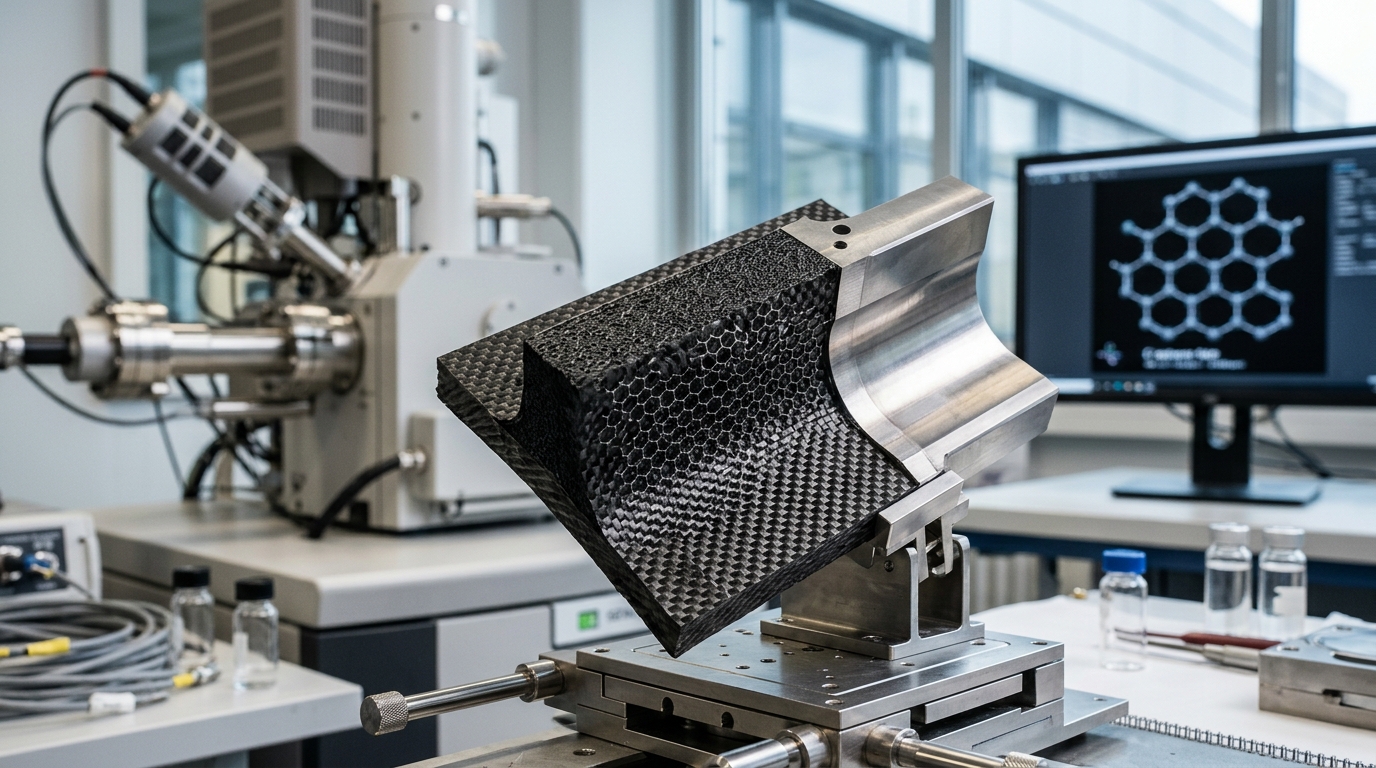
Graphene in its purest state is a single two-dimensional layer of carbon atoms arranged in a hexagonal honeycomb lattice. In structural sporting applications, however, racquet manufacturers do not build frames out of pure monolayer sheets. Instead, they incorporate functionalized graphene nanoplatelets into the thermoset epoxy resin matrix that binds interwoven carbon fibers.
The secondary generation of this technology, designated as Graphene XT, improved upon early iterations by utilizing larger, flatter platelet geometries with higher aspect ratios. These modifications produced critical physical advantages:
- Enhanced Interfacial Bonding: Larger surface contact areas between the carbon sheets and the polymer matrix enhance interfacial shear strength, allowing mechanical stress to transfer efficiently across the composite wall under extreme impact loads.
- Targeted Structural Thinning: Because the tensile strength of the reinforced composite in the shaft region is substantially higher, frame walls can be engineered significantly thinner while maintaining equivalent or superior fracture resistance.
- Weight Reduction in Neutral Zones: By reducing the amount of raw carbon fiber and resin needed in the central throat of the racquet, engineers free up discrete mass that can be relocated to the functional extremities of the frame.
The Physics of Polarized Weight Distribution
The primary engineering objective of using graphene in a racquet frame is not simply to make the racquet lighter or stiffer, but to shift mass away from the geometric center. In conventional composite frames, a substantial portion of the racquet’s mass is trapped in the throat bridge to provide the torsional rigidity required to prevent twisting on off-center hits.
By reinforcing the throat with graphene-infused resin, the structural requirements can be met with less material. This mass is then shifted to the two functional poles of the racquet: the tip of the hoop (12 o’clock position) and the base of the handle.
Moment of Inertia and Swing Dynamics
In rotational physics, the resistance of an object to angular acceleration is defined by its moment of inertia, calculated as the sum of each mass element multiplied by the square of its distance from the axis of rotation:
I = Σ mi ri2
Because distance from the hand pivot point is squared, relocating even a few grams of mass from the shaft to the tip drastically alters the dynamic swingweight. This polarized architecture yields distinct physical behaviors:
- Higher Kinetic Energy Transfer: Extra mass concentrated at the upper hoop delivers greater momentum to the ball during high-velocity swing paths without increasing the static holding weight.
- Recoil Dampening: Mass placed in the butt cap balances the top-heavy tip, preventing the racquet from feeling unwieldy while counteracting the upward torque generated at ball impact.
- Torsional Resistance: Distributing reinforcement along specific angular coordinates stabilizes the frame against rotational deflection during off-center impacts.
The Adaptive Tuning Mechanism
While standard polarized frames feature fixed weight distributions, the adaptive framework allows the mechanical properties of the racquet to be reconfigured by the user. Modular components interact directly with the rigid graphene chassis to alter playing characteristics on demand.
1. Variable Grommet Systems
Adaptive frames feature interchangeable grommet strips at the 3, 9, and 12 o’clock positions. Users can alternate between open string patterns (such as 16×16 or 16×19) and denser configurations. Open patterns allow greater string deflection and snapback for increased rotational spin and a higher launch angle, whereas dense patterns provide a flatter trajectory, shorter ball dwell time, and predictable directional control.
2. Perimeter and Tip Mass Inserts
Weighted grommet sets introduce localized mass directly into the upper hoop. Adding 3 to 5 grams at the hoop increases the swingweight and raises the sweet spot higher along the longitudinal axis of the string bed, favoring aggressive baseliners who strike the ball in the upper third of the frame.
3. Handle Spacers and Modular Butt Caps
The base of the adaptive handle accepts weighted butt cap inserts and modular length spacers. Extending the frame length increases the effective lever arm, generating higher tip speed on serves at the expense of maneuverability in rapid close-quarters exchanges at the net.
Engineering Trade-Offs and Performance Compromises
No structural material or mechanical configuration provides pure benefits without trade-offs. The high-stiffness, polarized design characteristic of the platform introduces several physical compromises that impact feel, joint stress, and durability.
Impact Shock vs. Energy Return
Reinforced composite shafts exhibit high flexural rigidity (measured in high RA ratings on mechanical testing benches). A stiffer frame loses less kinetic energy to deformation, returning more velocity to the ball. However, this rigidity reduces mechanical dampening. The high-frequency shock waves generated upon ball collision transmit directly through the shaft into the player’s wrist, elbow, and shoulder joints, potentially increasing the risk of repetitive strain injuries if the string setup is not optimized for shock absorption.
Sweet Spot Geometry and Dwell Time
Polarizing mass to the extremities widens the longitudinal sweet spot (along the length of the frame) but can narrow the lateral sweet spot if perimeter weighting at 3 and 9 o’clock is reduced. Off-center hits near the side rails may experience sharp torsional deflection unless the composite layup incorporates specific diagonal fiber orientations to preserve torsional stability.
Composite Architecture Comparison
The following table illustrates how standard composite construction compares against early graphene implementations and modular, adaptive graphene layouts:
| Architecture Type | Throat Mass Proportion | Mass Distribution Profile | Customization Capability | Primary Mechanical Advantage |
|---|---|---|---|---|
| Standard Carbon Fiber | High (structural requirement) | Even / Centered | Fixed (requires lead tape) | Predictable baseline flex and uniform dampening. |
| First-Gen Graphene | Moderate | Moderately Polarized | Fixed static spec | Increased swing speed relative to total static weight. |
| Graphene XT Adaptive | Low (nanoplatelet reinforcement) | Highly Polarized (Modular) | Dynamic (Grommets / Spacers / Caps) | High power-to-weight ratio with user-defined dynamic balance. |
Manufacturing and Integration Challenges
Incorporating nanoscale carbon additives into automated composite manufacturing presents severe chemical and mechanical hurdles. Producing consistent, void-free frames requires strict quality control during the prepreg manufacturing phase.
Nanoparticle Dispersion and Agglomeration
Graphene nanoplatelets naturally tend to agglomerate due to van der Waals forces. If platelets clump together during resin compounding, they create microstructural stress concentrators rather than reinforcing matrices. Compounding facilities must use specialized ultrasonic agitation, shear mixing, and chemical surfactant treatments to ensure homogenous dispersion throughout the liquid epoxy before it impregnates the structural carbon fabric.
Layup Precision
Racquet construction involves layering strips of unidirectional carbon fiber prepreg inside steel molds, followed by internal bladder inflation under heat and pressure. The thinner wall profiles made possible by graphene reinforcement leave less margin for error. A minor deviation in bladder pressure or prepreg alignment can result in local delamination or wall thickness variations that alter the target flex profile.
Common Misconceptions Clarified
Because marketing terminology often simplifies composite engineering concepts, several persistent misconceptions surround graphene-reinforced sporting goods:
- Misconception 1: The frame is made entirely of graphene.
Reality: Graphene represents a low single-digit percentage of the total frame weight. It acts as an additive in the resin binder system; the overarching structural framework remains continuous, high-modulus carbon fiber. - Misconception 2: High frame stiffness always equals more total power.
Reality: Frame stiffness increases the coefficient of restitution on short impact durations, but power is ultimately a function of swing speed, mass at the point of contact, and string bed rebound. A frame that is too stiff or poorly weighted can cause a player to decelerate their swing, resulting in a net loss of ball velocity. - Misconception 3: Modular weight additions do not alter vibration harmonics.
Reality: Changing grommet mass or inserting handle spacers shifts the nodal points (dead spots where minimal vibration occurs) along the racquet frame. Modifying the configuration alters how shock waves propagate into the grip.
Evaluating and Configuring an Adaptive Frame
To extract optimal performance from an adaptive composite chassis without introducing arm fatigue or erratic ball flight, players and technicians should follow a structured evaluation procedure:
- Establish Baseline Dynamics: Measure the unstrung frame on a diagnostic tuning center to record initial static weight, balance point (in centimeters from the butt cap), and swingweight (kg·cm2).
- Match String Pattern to Stroke Trajectory: Select an open pattern if the objective is steep topspin trajectories and enhanced string deflection, or a dense pattern if linear ball striking and string longevity are paramount.
- Adjust Tip Mass Incrementally: When configuring swingweight customization, add mass to the hoop in increments no larger than 2 grams at a time. Evaluate whether swing speed decreases during protracted physical sessions before committing to a final configuration.
- Counterbalance at the Handle: If mass is added to the hoop, evaluate whether handle weighting is necessary to preserve the desired balance point and keep the racquet maneuverable on defensive volleys and returns.
By systematically calibrating these variables against the ultra-rigid foundation of a graphene-reinforced composite chassis, players can achieve a bespoke mechanical profile that maximizes power transfer while matching their precise biomechanical requirements.