
Graphene Uses
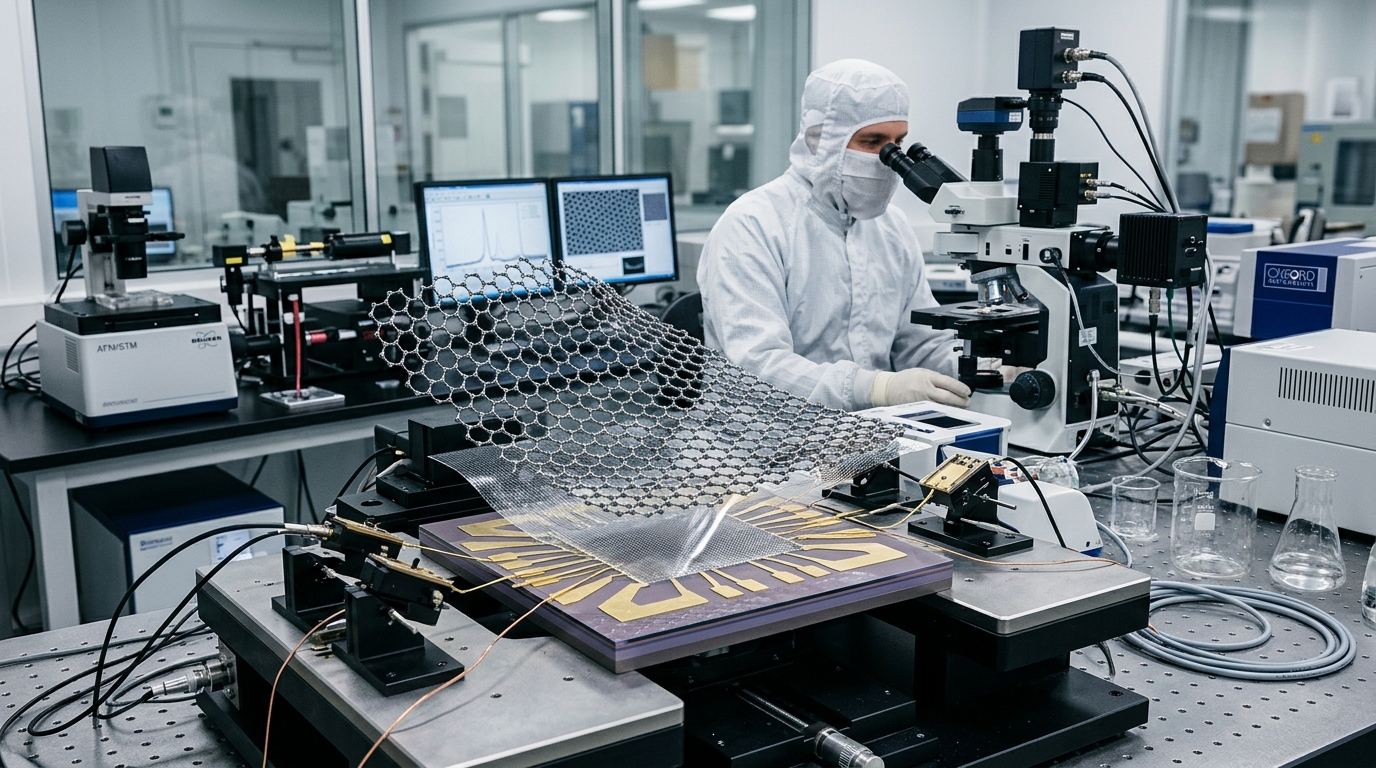
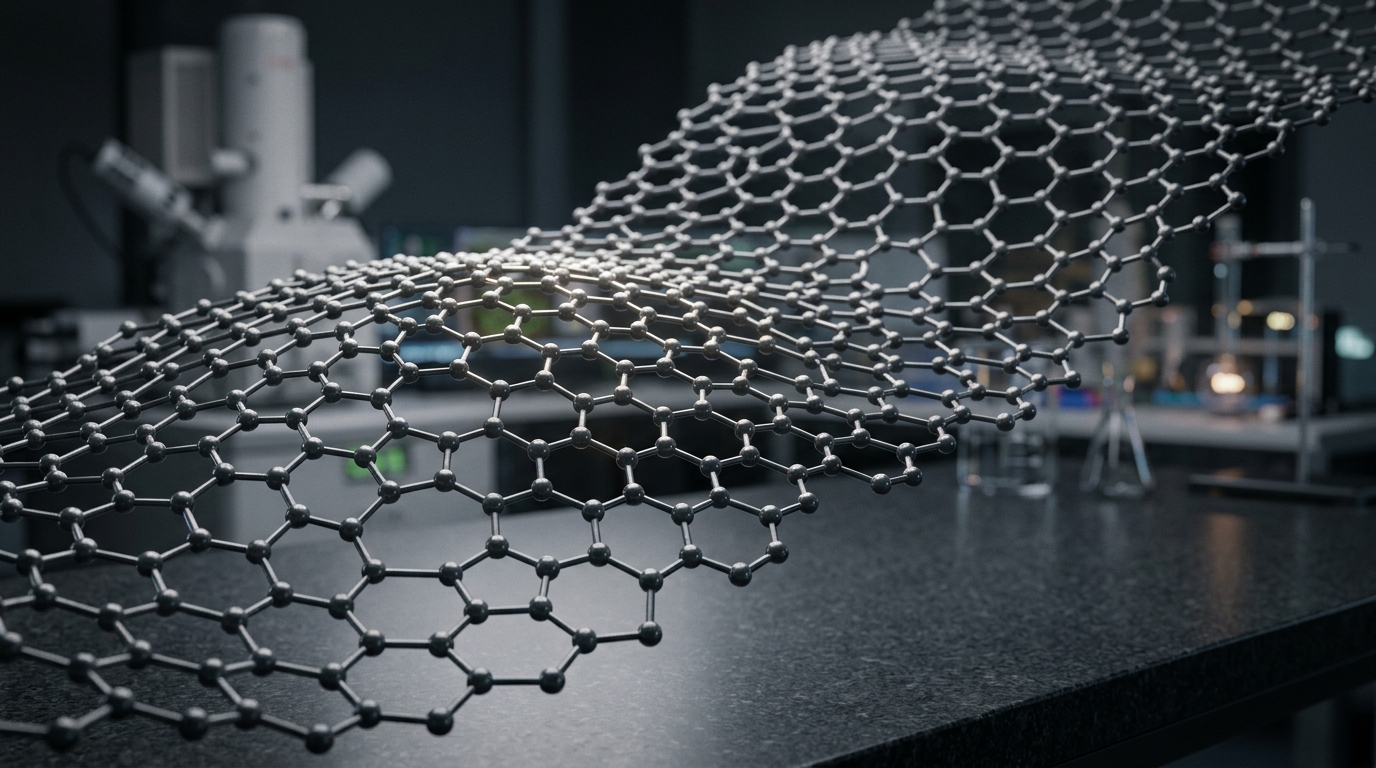
Graphene—a two-dimensional sheet of $sp^2$-hybridized carbon atoms arranged in a hexagonal honeycomb lattice—has transitioned from an academic discovery into practical industrial use. While early media speculation framed the material as an immediate solution for every engineering bottleneck, modern industrial adoption follows a more pragmatic trajectory. Today, commercial graphene uses depend heavily on the specific material grade, ranging from high-purity chemical vapor deposition (CVD) films for electronics to bulk graphene nanoplatelets (GNPs) and graphene oxide (GO) used as high-performance functional additives.
Core Material Properties Driving Graphene Applications
The commercial viability of graphene in any industrial process stems from five fundamental physical and mechanical characteristics. Rather than acting as a universal replacement material, graphene is typically deployed in small weight percentages to impart these specific properties into host matrices:
- Electrical Conductivity and Carrier Mobility: With intrinsic electron mobility reaching up to approximately $200{,}000text{ cm}^2/text{V}cdottext{s}$, graphene provides rapid electron transport channels. This makes it an effective conductive additive for battery electrodes, supercapacitors, antistatic coatings, and conductive inks.
- Extreme Mechanical Strength: Possessing an intrinsic tensile strength of roughly $130text{ GPa}$ and a Young’s modulus near $1text{ TPa}$, graphene provides reinforcement at low loading levels (typically 0.1 wt% to 3 wt%) in polymers, elastomers, and structural composites without adding dead weight.
- Thermal Conductivity: Single-layer graphene exhibits theoretical thermal conductivity between $3{,}000$ and $5{,}000text{ W/m}cdottext{K}$. When processed into multi-layer films or composite thermal interface materials (TIMs), it dissipates heat away from localized electronic hot spots.
- Atomic Impermeability: Pristine graphene sheets are impermeable to gases as small as helium. This barrier performance enables ultra-thin anti-corrosion primers, chemical-resistant linings, and gas-barrier packaging films.
- High Theoretical Surface Area: At approximately $2{,}630text{ m}^2/text{g}$, graphene provides an expansive surface-to-volume ratio, facilitating maximum charge storage at the electrode-electrolyte interface in supercapacitors and enhancing chemical adsorption in environmental filtration media.
Major Application Sectors for Graphene
Graphene applications span several core industrial verticals. The functional role, required morphology, and cost sensitivity vary significantly across these sectors.
1. Energy Storage and Battery Technology
Energy storage represents one of the largest commercial volume drivers for bulk graphene-related materials (GRMs). In lithium-ion batteries, graphene nanoplatelets (GNPs) and reduced graphene oxide (rGO) serve as conductive percolation networks within both cathode and anode slurries. Traditional formulations rely on carbon black or standard graphite, which require higher loadings to achieve electrical continuity. Replacing or augmenting these with graphene creates a continuous conductive web between active material particles.
This network lowers internal electrical resistance, mitigates heat generation during fast charging, and maintains structural integrity during repetitive charge-discharge cycles. In next-generation silicon-anode designs, graphene acts as a mechanical and electrical buffer, accommodating the significant volumetric expansion of silicon particles while preventing electrical isolation. In supercapacitors, graphene’s high accessible surface area maximizes electric double-layer capacitance (EDLC), enabling rapid charge-discharge cycles and extended operational lifespans.
2. Thermal Management and Electronics Cooling
As modern microprocessors, 5G modems, and power electronics pack higher power densities into smaller form factors, managing localized thermal hot spots has become critical. Compressed graphene films and multi-layer graphene heat-spreading sheets have emerged as alternatives and supplements to traditional copper foil and synthetic graphite sheets.
Graphene thermal dissipation films provide high in-plane thermal conductivity combined with structural flexibility and low density. These films facilitate rapid heat transfer away from high-power chipsets toward chassis heat sinks, reducing peak junction temperatures and preventing thermal throttling in sealed consumer electronics.
3. Advanced Composites and Structural Materials
In polymer and elastomer composites, incorporating low concentrations of functionalized graphene flakes enhances tensile strength, flexural modulus, and impact resistance. Because graphene sheets feature a high aspect ratio, stress is efficiently transferred across the polymer-filler interface.
This reinforcement enables lightweighting across automotive body components, industrial pipes, and sporting goods. In elastomer formulations—such as commercial tire treads and footwear outsoles—graphene additives improve abrasion resistance and grip without degrading elasticity or increasing rolling resistance.
4. Protective Coatings, Anti-Corrosion Paints, and Concrete
Graphene oxide and pristine nanoplatelets serve as active and passive barrier additives in industrial coatings. When dispersed in liquid primers, the overlapping, planar graphene flakes create a tortuous diffusion path that prevents corrosive agents—such as water, oxygen, and chloride ions—from reaching metallic substrates. This tortuous barrier significantly extends the service life of marine coatings, industrial infrastructure primers, and harsh-environment protective layers.
In the construction sector, water-dispersible graphene formulations are added to concrete and mortar mixes. Graphene accelerates hydration reactions and bridges microscopic voids within the cement matrix, increasing compressive strength and reducing micro-crack propagation while lowering the overall volume of cement required.
5. Environmental Remediation and Water Treatment
Graphene-based membranes leverage the material’s atomic thickness and tunable surface chemistry to separate contaminants at the molecular level. Graphene oxide (GO) membranes feature inter-layer nanochannels that allow rapid water permeation while physically sieving out divalent ions, organic pollutants, and heavy metals.
In addition to membrane filtration, high-surface-area graphene aerogels and functionalized powders are utilized as chemical adsorbents to extract organic solvents, microplastics, and dissolved toxins from wastewater streams prior to discharge.
6. Sensors and Biomedical Devices
Because every atom in a monolayer graphene sheet is exposed directly to its environment, the material’s electrical conductivity is sensitive to local electrostatic variations. This property enables Field-Effect Transistor (FET) biosensors capable of detecting minute concentrations of pathogens, proteins, and biochemical markers in diagnostic point-of-care devices.
In exploratory biomedical research, functionalized graphene derivatives are evaluated as substrates for neural interfacing electrodes, where chemical stability and electrical conductivity are paramount.
Commercial Maturity: Market-Ready Products vs. Lab Concepts
Understanding the current state of graphene requires separating applications that have achieved high Technology Readiness Levels (TRL 7–9) from those that remain active laboratory research concepts (TRL 2–5).
| Sector / Application | Maturity Level | Form Factor Utilized | Primary Functional Benefit |
|---|---|---|---|
| Li-ion Battery Additives | Commercial (TRL 8–9) | GNP / rGO Powders & Slurries | Lower internal resistance, faster charging |
| Consumer Electronics Thermal Sheets | Commercial (TRL 8–9) | Multi-layer Graphene Films | High in-plane thermal spreading, thin profile |
| Polymer & Rubber Masterbatches | Commercial (TRL 7–9) | GNP Pellets / Dispersions | Enhanced tensile strength, wear resistance |
| Anti-Corrosion Primers | Commercial (TRL 7–8) | Graphene Oxide / GNP Liquid | Tortuous diffusion barrier against rust |
| Concrete Additives | Commercial (TRL 7–8) | Aqueous GNP Dispersions | Micro-crack mitigation, higher compressive yield |
| Field-Effect Biosensors | Early Commercial / Pilot (TRL 6–7) | CVD Monolayer / Flakes | High-sensitivity molecular detection |
| Nanoporous Desalination Membranes | Lab / Pilot (TRL 3–5) | Porous CVD / GO Laminates | Ion rejection with high water flux |
| Digital Logic Transistors | Lab Stage (TRL 2–3) | Pristine CVD / Nanoribbons | Theoretical high-speed switching (bandgap limited) |
| In-Vivo Drug Delivery Vehicles | Lab Stage (TRL 2–4) | Functionalized GO Nanoparticles | Targeted molecular transport (toxicity testing) |
Real-World Commercial Deployments
Commercial graphene products are active across several consumer and industrial markets:
- Consumer Electronics: Smartphone manufacturers including Huawei (Mate series) and Xiaomi integrate multi-layer graphene thermal dissipation sheets to manage heat dissipation from primary processors.
- Automotive Engineering: Ford Motor Company incorporates graphene-reinforced polyurethane foams into under-hood engine and fuel pump covers, achieving mechanical dampening and noise reduction while lowering component weight. Specialized compounders such as Sixth Element and NanoXplore supply industrial-scale polymer masterbatches for automotive exterior and structural parts.
- Sporting Goods: Head integrates graphene into its commercial tennis racquet frames (Graphene 360 series) to optimize weight distribution and frame torsional stability. Inov-8 manufactures trail-running shoes featuring graphene-infused rubber outsoles (G-Grip) to improve grip and tread longevity. Callaway incorporates graphene into the dual-core design of its Chrome Soft golf balls to increase outer core resilience.
- Industrial Additives: Gerdau Graphene produces standardized commercial additives—such as NanoDUR for concrete and NanoLAV for industrial coatings—providing drop-in mechanical enhancement for existing industrial lines.
Laboratory-Stage Concepts and Bottlenecks
Certain high-profile concepts remain constrained by physical and technical barriers:
- Digital Logic Transistors: Pristine monolayer graphene lacks an intrinsic electronic bandgap, meaning graphene channels cannot be completely switched off in conventional field-effect configurations. While engineering artificial bandgaps through graphene nanoribbons or chemical functionalization is possible in laboratory environments, it reduces carrier mobility and introduces severe nanofabrication complexities that prevent immediate competition with silicon logic.
- Desalination and Nanofiltration: Producing defect-free, large-area single-layer nanoporous membranes or mechanically stable graphene oxide laminates at high volume remains an engineering hurdle. Scaling these materials to withstand continuous high-pressure industrial filtration systems is an ongoing area of development.
- In-Vivo Therapeutics: Using graphene for targeted drug delivery or internal biological scaffolds is constrained by long-term biocompatibility and bio-clearance uncertainties. Standardizing nano-toxicological safety profiles to meet regulatory oversight (such as FDA or European MDR frameworks) requires extensive longitudinal clinical studies.
Emerging Niche Applications
Beyond traditional bulk composites and thermal films, several mid-readiness applications are gaining industrial traction:
- Wearable E-Textiles: Graphene-coated synthetic fibers and elastomeric threads allow conductive traces to be integrated directly into fabrics. These e-textiles enable flexible, wash-resistant physiological monitoring sensors without requiring rigid copper wiring.
- Conductive Inks and Printed Electronics: Liquid dispersions of graphene nanoplatelets serve as screen-printable conductive inks. Used for printing RFID antennas, flexible heating elements, and membrane switches, graphene inks offer high oxidation resistance compared to copper and lower raw material costs than silver-based inks.
Industrial Adoption Challenges and Quality Standards
The transition from laboratory demonstration to large-scale industrial utilization has highlighted several practical manufacturing and supply chain constraints.
1. Standardization and Material Quality Verification
A persistent market challenge has been the mislabeling of low-grade graphite powder, carbon black, or multi-layer carbon debris as authentic graphene. Adding thick, unexfoliated graphite particles to composites fails to deliver the expected mechanical or electrical improvements.
To establish baseline quality frameworks, international bodies have released rigorous characterization protocols, including ISO/TS 80004-13:2024 (vocabulary and structural terminology for 2D carbon materials) and ISO/TS 21356-1 (structural characterization of graphene flakes and powders). These standards require suppliers to document flake thickness, lateral dimension distribution, defect density ($I_D/I_G$ Raman ratios), and residual oxygen content before classifying materials as single-layer graphene, few-layer graphene, or graphene nanoplatelets.
2. Dispersion and Sheet Aggregation
Due to strong inter-sheet attractive forces (van der Waals interactions), pristine graphene sheets tend to agglomerate and restack into graphite-like structures when mixed into liquid solvents, polymer melts, or water-based systems. Agglomeration negates the high aspect ratio and surface area of the nanomaterial.
Industrial processors must employ specialized chemical functionalization, compatibilizers, surfactant packages, or high-shear masterbatch compounding to ensure uniform dispersion within the final matrix.
3. Manufacturing Economics and Scaling Pathways
Production routes dictate cost, quality, and suitable end uses:
- CVD Synthesis: Produces high-purity single- or few-layer films suitable for optoelectronics and specialty sensors, but remains capital-intensive and slow for bulk markets.
- Liquid-Phase Exfoliation and Mechanical Shearing: Yields bulk graphene nanoplatelets (GNPs) at industrial scale. High-volume production has reduced GNP prices toward the sub-$100/kg range for select grades, making inclusion in volume-sensitive markets (such as automotive polymers and concrete) economically viable.
4. Environmental, Health, and Safety (EHS) Regulations
Handling dry, low-density nanomaterial powders introduces workplace safety concerns regarding aerosolization and inhalation. Industrial users must comply with chemical safety regulations, such as REACH within the European Union and the Toxic Substances Control Act (TSCA) in the United States.
To mitigate inhalation risks and avoid dedicated cleanroom powder-handling infrastructure, commercial suppliers increasingly provide graphene pre-dispersed in liquid concentrates, masterbatch pellets, or stabilized paste formulations.
The Trajectory of Graphene Commercialization
Commercial graphene uses have matured beyond early speculative projections. Current industrial utilization is dominated by bulk graphene nanoplatelets and engineered dispersions serving as functional additives in energy storage, thermal dissipation sheets, protective coatings, and mechanical composites. As international characterization standards gain traction and processing methods address dispersion and cost bottlenecks, graphene’s role continues to evolve from a specialty additive into a standardized, high-performance industrial material.