Ceramic Graphene Paste Wax
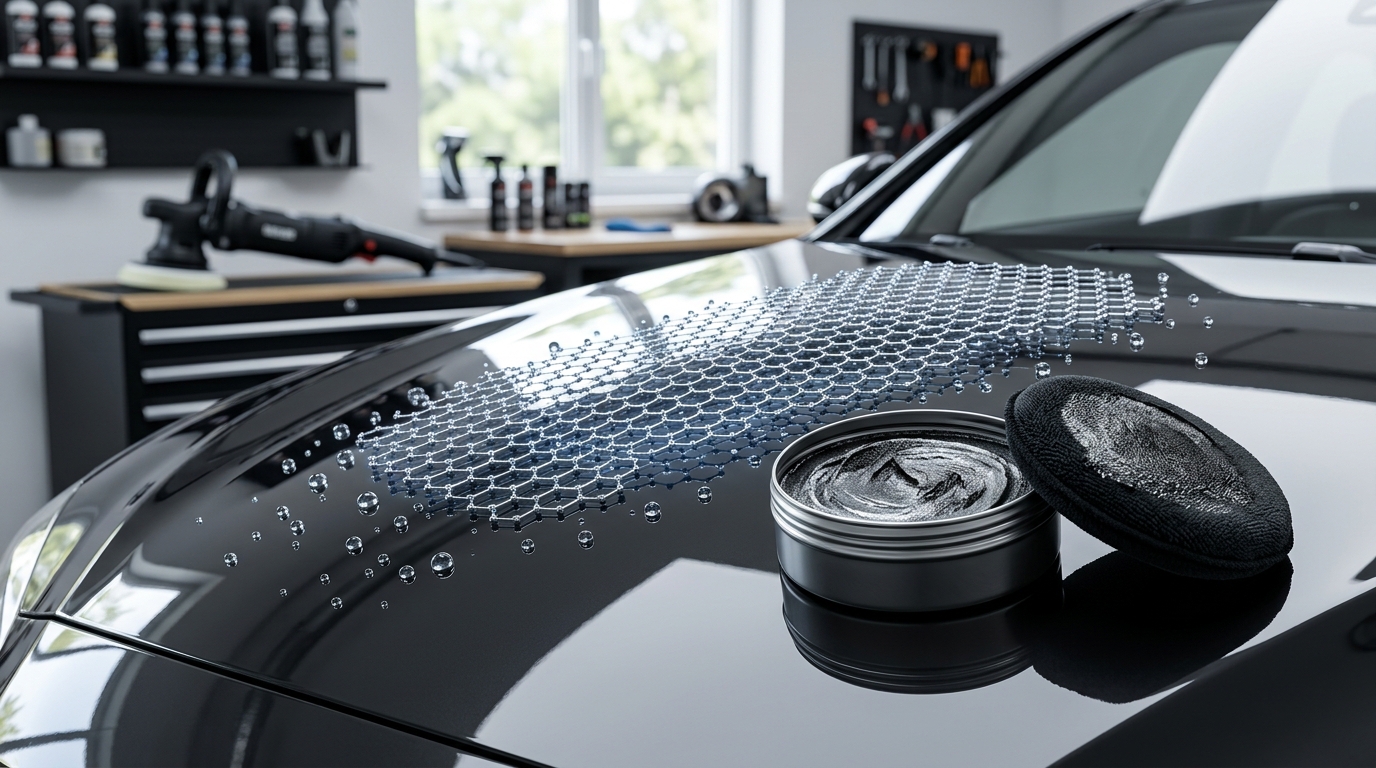
Ceramic graphene paste wax is a hybrid automotive surface protectant that integrates natural or synthetic wax carriers, silicon dioxide (SiO2) ceramic resins, and dispersed graphene nanomaterials. Designed to bridge the gap between traditional carnauba waxes and professional-grade liquid coatings, this formulation delivers the visual warmth and defect-filling capabilities of a conventional paste alongside the enhanced chemical resistance, slickness, and thermal stability provided by advanced inorganic additives.
While traditional waxes rely almost entirely on sacrificial organic compounds that degrade rapidly under heat and detergents, the inclusion of ceramic and graphene components fundamentally alters how the protective layer interacts with environmental stressors, ultraviolet radiation, and water droplets.
The Architecture of a Hybrid Paste Formulation
To understand how ceramic graphene paste wax functions, it is necessary to examine how its three primary constituents interact within a single blend:
- Wax Base (Natural Carnauba or Synthetic Hydrocarbons): Carnauba wax, derived from the leaves of the Copernicia prunifera palm, provides a dense crystalline matrix with a high melting point (around 82 to 86 degrees Celsius). Synthetic hydrocarbon waxes and polymers are often blended with carnauba to improve spreadability and create a pliable carrier for inorganic particles. This wax component fills microscopic clear-coat imperfections to produce visual depth.
- Ceramic Resins (SiO2 and Polysilazanes): Silicon dioxide nanoparticles form a semi-rigid, cross-linked network as the carrier solvents evaporate. This inorganic backbone significantly elevates the coating’s resistance to alkaline wash chemicals, acidic environmental fallout, and road salts compared to unfortified wax.
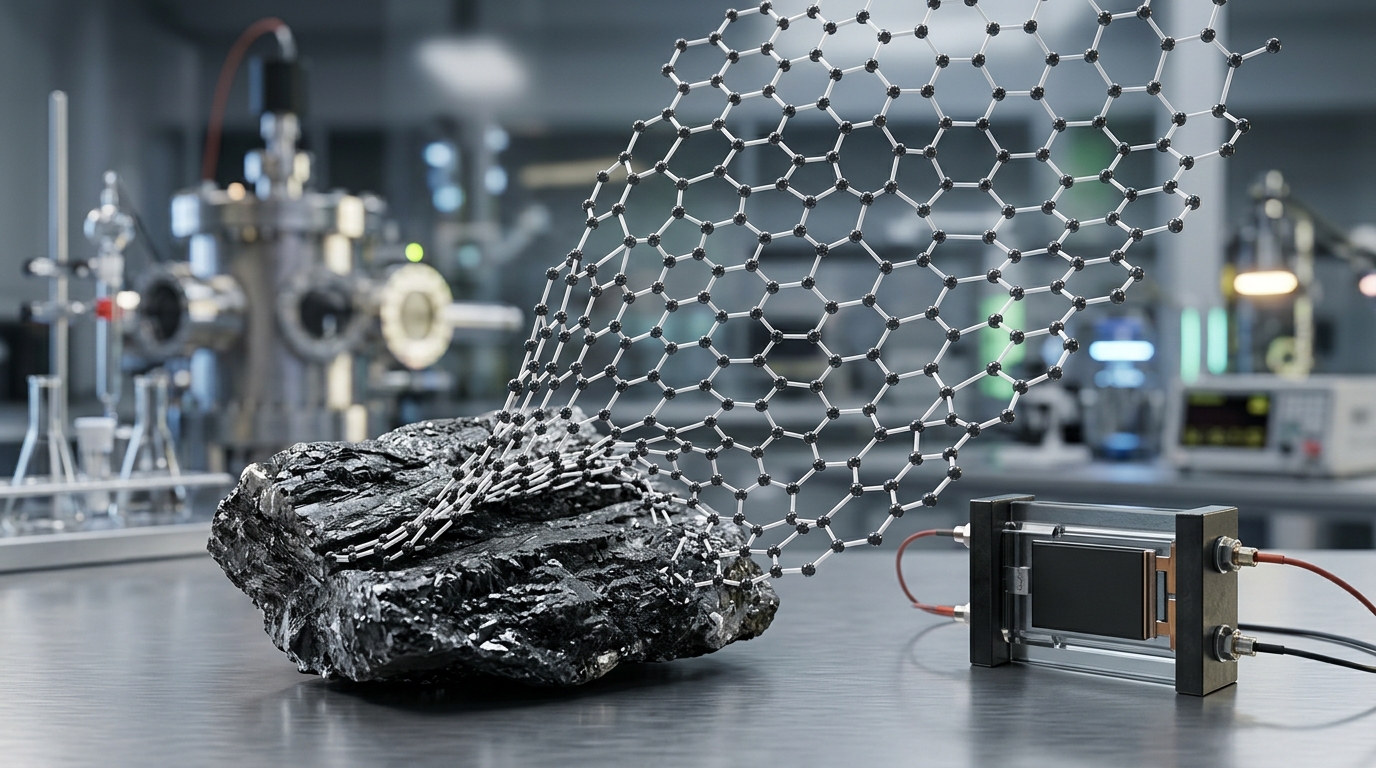
- Graphene Additives (rGO or Nanoplatelets): Automotive paste waxes do not contain single-atom pristine graphene sheets across the vehicle surface. Instead, they incorporate reduced graphene oxide (rGO) or graphene nanoplatelets (GNPs) suspended in solvent carriers. These carbon structures introduce high tensile strength, electrical antistatic properties, and superior thermal conductivity across the applied film.
Material-Property Relationships: How Graphene Alters Film Performance
The addition of graphene nanoplatelets to a ceramic wax system addresses several specific failure modes common to both standard carnauba and pure SiO2 ceramic products.
Mitigating Water Spot Etching
A frequent challenge with standard ceramic formulations is water spot etching. Pure ceramic coatings exhibit high contact angles, causing water to bead into tight, spherical droplets. On hot exterior panels exposed to sunlight, these beads act as miniature convex lenses that focus solar radiation while the water evaporates, baking concentrated mineral deposits (calcium and magnesium salts) directly into the surface.
Graphene possesses exceptional thermal conductivity, allowing localized heat generated by solar radiation to disperse evenly across the film rather than concentrating beneath individual water beads. Furthermore, graphene formulations often lower the droplet’s sliding angle (the tilt angle required for a droplet to roll off), enabling water to sheet off the vehicle before evaporative mineral deposit formation can occur.
Antistatic Surface Properties and Dust Repulsion
Friction from air displacement and standard microfiber buffing generates electrostatic charges on painted surfaces, which attract airborne particulate matter and ambient road dust. Graphene’s inherent electrical conductivity helps dissipate static charges across the clear coat, resulting in noticeably lower dry dust accumulation between washes.
Mechanical Shear and Chemical Resilience
The hexagonal honeycomb lattice of carbon atoms in graphene imparts exceptional mechanical toughness. When suspended within a ceramic resin matrix, these nanoplatelets act as structural reinforcement, increasing the film’s resistance to light abrasion from contact washing and shielding underlying clear coats from harsh detergents ranging from pH 3 to pH 11.
Performance Comparison: Wax, Ceramic, and Hybrid Graphene Paste
Choosing the correct surface protection requires balancing longevity, application difficulty, aesthetic preference, and maintenance demands. The following table contrasts ceramic graphene paste wax with traditional wax formulations and dedicated liquid ceramic coatings.
| Property / Feature | Traditional Carnauba Wax | Pure SiO2 Liquid Coating | Ceramic Graphene Paste Wax |
|---|---|---|---|
| Durability Range | 4 to 8 weeks | 2 to 5 years | 3 to 9 months |
| Defect Masking / Filling | High (fills fine swirls) | None (locks in surface defects) | Moderate to High |
| Application Tolerance | Very forgiving | Unforgiving (requires paint correction) | Forgiving |
| Water Behavior | Beading (moderate roll-off) | Tight beading (high water spot risk) | Hydrophobic beading and rapid sheeting |
| Heat / UV Resistance | Low (melts at high surface temps) | Extremely high | High (thermally stabilized) |
| Cure Mechanism | Solvent evaporation only | Covalent chemical bonding | Evaporation plus partial resin crosslinking |
Application Dynamics and Bonding Mechanics
Applying a ceramic graphene paste wax differs mechanically from installing a permanent ceramic coating. Liquid ceramic coatings rely on silane coupling agents that establish covalent chemical bonds directly with clear-coat polyurethane. This requires intensive decontamination, multi-stage machine polishing, and an isopropyl alcohol (IPA) solvent wipe to remove all residual oils.
In contrast, ceramic graphene paste wax adheres primarily via physical adsorption and mechanical adhesion, supported by partial crosslinking of its ceramic components. This allows it to be applied over imperfect surfaces, non-polished clear coats, or even as a visual rejuvenating topper over existing cured ceramic coatings.
Application Best Practices
- Surface Decontamination: Thoroughly wash the vehicle and utilize chemical iron removers and detailing clay to eliminate embedded surface contaminants. Although paste wax can mask micro-swirls, particulate contamination inhibits uniform bonding.
- Thin, Uniform Distribution: Using a foam or microfiber applicator, apply the paste in tight, overlapping circular or cross-hatch motions. Applying excess product does not enhance protection; it merely complicates the buffing process and wastes material.
- Monitoring Flash Time: Unlike pure carnauba wax, which is typically buffed immediately after turning to a white chalky haze, hybrid formulations require precise timing based on carrier solvent evaporation. When the oil-like film begins to spread into a fractured, translucent layer (often 3 to 10 minutes depending on ambient humidity and temperature), it is ready for removal.
- Microfiber Leveling: Use a high-density, edgeless microfiber towel (around 300 to 500 GSM) to level the high spots, followed by a secondary clean towel to complete the final buff to a streak-free finish.
Practical Limitations and Misconceptions
Marketing surrounding nanomaterials often obscures the true physical boundaries of consumer-grade detailing products. Clarifying these limitations ensures realistic performance expectations.
Misconception 1: It provides permanent, 10H scratch-proof protection.
No wax-based protectant can prevent rock chips, deep scratches, or heavy abrasive damage. While graphene nanoplatelets increase tensile strength within the micro-thin protective film, the overall layer remains a sacrificial barrier measured in fractions of a micrometer. It reduces micro-marring during gentle maintenance washes but does not replicate the structural hardness of cured quartz glass or paint protection film (PPF).
Misconception 2: The formulation consists of pure single-layer graphene.
True single-layer graphene synthesized via chemical vapor deposition (CVD) is chemically and economically incompatible with consumer paste waxes. Detailing products utilize functionalized graphene nanoplatelets or reduced graphene oxide powders dispersed within solvent carriers. These additives impart meaningful thermal and structural benefits to the wax matrix, but they function as particulate reinforcement rather than an unbroken, single-atom carbon shield.
Misconception 3: Ceramic graphene paste wax lasts as long as a liquid coating.
Because paste waxes rely on hydrocarbon carriers to maintain workability and gloss-enhancing filling properties, the matrix eventually breaks down under sustained environmental exposure and mechanical wash friction. A realistic lifespan for a well-maintained ceramic graphene paste wax ranges from 3 to 9 months, depending on climate, garaging conditions, and wash frequency.
Evaluating Formulation Quality
When selecting or formulating a ceramic graphene paste wax, several technical criteria dictate real-world success:
- Colloidal Dispersion Stability: Nanoparticles tend to agglomerate (clump together) in suspension. High-quality products use specialized surfactants and coupling agents to maintain uniform suspension of graphene flakes throughout the wax matrix, preventing streaking or uneven performance.
- Solvent Carrier Blend: The balance of fast-evaporating and slow-evaporating aliphatic solvents determines working time, spreadability, and the ease with which cured residues can be wiped off without marring the paint.
- Resin-to-Wax Ratio: A higher ceramic resin content increases longevity and chemical resistance but makes the product harder to buff. Formulations optimized for enthusiast use maintain a balance that preserves classic paste wax ergonomics while extending durability beyond that of unmodified carnauba.
By blending traditional wax aesthetics with modern nanomaterial engineering, ceramic graphene paste wax offers an accessible, high-performing alternative for detailers seeking enhanced durability and thermal performance without the exacting application requirements of semi-permanent liquid coatings.