First Graphene
First Graphene Limited is an Australian advanced materials manufacturing company focused on the large-scale commercial production and industrial supply of graphene nanoplatelets (GNPs). Established as a commercial entity rather than a research laboratory, the company operates bulk manufacturing infrastructure designed to deliver standardized, high-yield graphene additives to global supply chains.
Entity Disambiguation: Company vs. Historical Discovery
In technical and industrial literature, the phrase first graphene carries two distinct meanings that must be carefully distinguished:
- The Historical Milestone (2004): The initial isolation of single-layer graphene occurred in 2004 at the University of Manchester, where researchers Andre Geim and Kostya Novoselov utilized mechanical exfoliation (the “Scotch tape method”) to extract single-atom-thick carbon sheets from bulk graphite. This academic breakthrough demonstrated graphene’s extraordinary mechanical, electrical, and thermal properties and earned the researchers the 2010 Nobel Prize in Physics.
- The Corporate Entity: First Graphene Limited (formerly First Graphite Limited) is a publicly traded commercial manufacturing company founded to produce graphene materials at an industrial scale. The company focuses on bulk processing, material formulation, and commercial integration rather than the historical laboratory discovery of the material.
Corporate Overview and Manufacturing Footprint
First Graphene Limited is headquartered in Henderson, Western Australia (near Perth), where it operates its primary commercial manufacturing facility. To service European and international markets, the company maintains operating subsidiaries and an established technical and commercial development facility in Manchester, United Kingdom.
First Graphene has positioned itself as an early mover in high-volume graphene production, establishing an operational nameplate manufacturing capacity of approximately 100 tonnes per annum of graphene nanoplatelets. The organization operates on a business-to-business (B2B) commercial model, supplying bulk powders, specialized liquid dispersions, and formulated masterbatches directly to industrial compounders, material blenders, and tier-one manufacturers.
Public Listing and Regulatory Status
First Graphene Limited is publicly listed on several international exchanges, enabling capital formation for ongoing product qualification, research collaborations, and production expansion:
- Primary Listing: Australian Securities Exchange (ASX: FGR)
- United States Cross-Listing: OTC Markets (OTCQB: FGPHF)
- European Quotation: Frankfurt Stock Exchange (FRA: M11)
Regulatory & Financial Disclaimer: This overview is provided strictly for educational, descriptive, and technical reference purposes. It does not constitute financial advice, an investment recommendation, an endorsement, or a solicitation to buy, hold, or sell securities of First Graphene Limited or any associated financial instruments. Investors must conduct independent due diligence and consult licensed financial advisors before making investment decisions.
Feedstock Sourcing and Electrochemical Production
The performance and uniformity of graphene additives depend heavily on feedstock purity and the exfoliation methodology used during processing. First Graphene differentiates its production approach from traditional graphene oxide routes through a combination of high-grade raw materials and proprietary continuous processing.
High-Purity Sri Lankan Vein Graphite Feedstock
Unlike standard synthetic graphite or lower-grade natural flake graphite, First Graphene sources raw material primarily from vein graphite deposits in Sri Lanka. Natural vein graphite exhibits distinct physical properties that benefit bulk graphene production:
- Natural Carbon Purity: Run-of-mine vein graphite regularly exhibits natural carbon purities between 90% and 99%, minimizing the need for intensive post-extraction acid leaching or purification.
- Structural Crystallinity: The material features high structural crystallinity with minimal amorphous carbon inclusions, allowing for clean layer separation during processing.
- Trace Impurity Profile: Vein graphite deposits demonstrate lower baseline concentrations of abrasive silica and transition metal contaminants compared to standard flake deposits.
Proprietary Single-Step Electrochemical Exfoliation
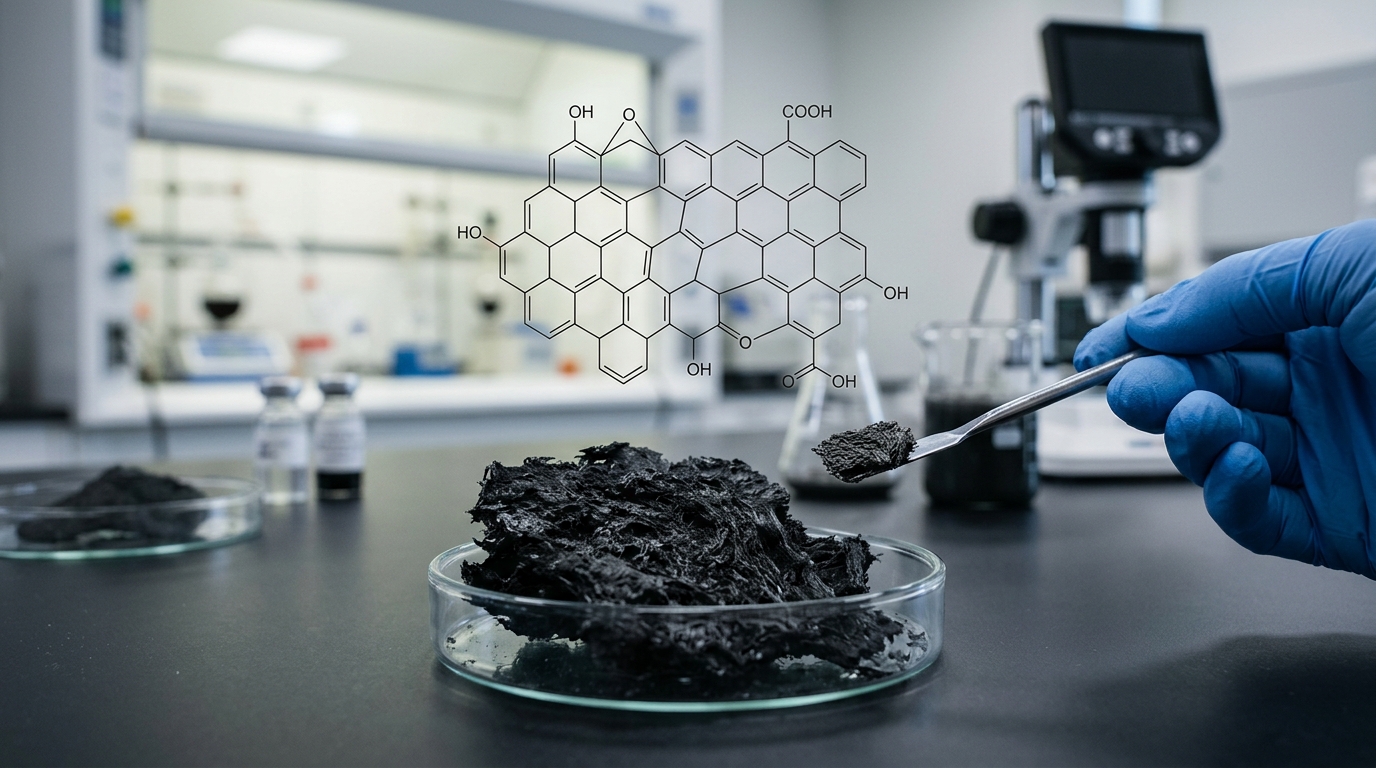
Most commercial graphene materials are manufactured via either intensive chemical oxidation (the classic Hummers’ method and its variants) or harsh mechanical wet-milling. First Graphene utilizes a proprietary electrochemical exfoliation process that bypasses the oxidative degradation common to graphene oxide (GO) production.
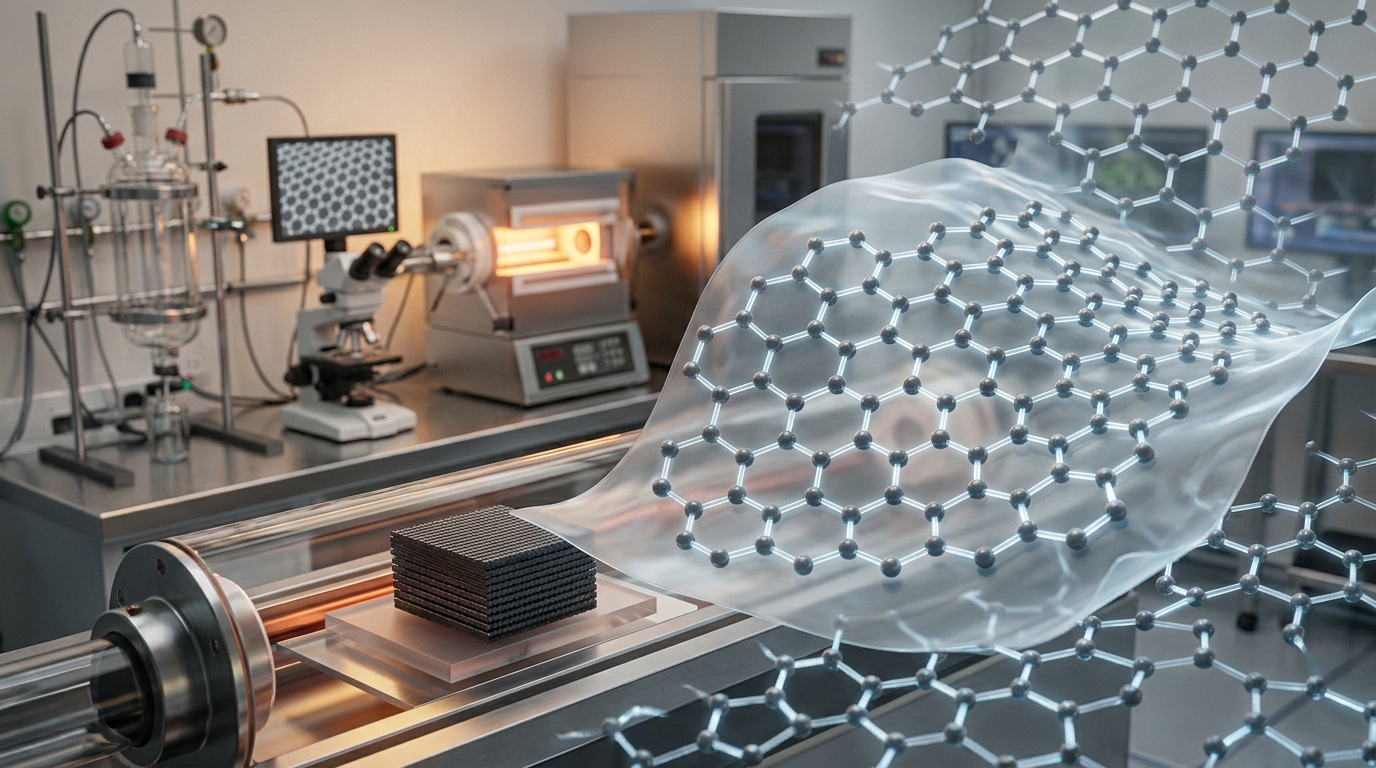
During electrochemical exfoliation, an electrical potential is applied across graphite electrodes immersed in a specialized electrolyte bath. Ions from the electrolyte intercalate between the individual carbon basal planes, forcing the crystal lattice to expand. The resulting volumetric expansion cleanly separates the graphene layers into multi-layer graphene nanoplatelets without introducing heavy structural defects or basal-plane oxygen functional groups.
This production pathway offers notable technical advantages:
- Low Defect Density: By avoiding strong oxidizing acids (such as sulfuric or nitric acid), the sp2 carbon framework remains largely intact, retaining high inherent electrical and mechanical performance.
- Purity and Consistency: The single-step conversion avoids persistent metallic and sulfur impurities often found in chemically reduced graphene oxide (rGO).
- Environmental Profile: The closed-loop electrochemical process reduces chemical waste, liquid effluent, and post-synthesis neutralization requirements.
The PureGRAPH® Product Family
First Graphene markets its material line under the PureGRAPH® brand. Because raw, dry graphene nanoplatelet powders are prone to agglomeration and require specialized handling to prevent inhalation hazards, the company provides materials across several physical formats engineered for seamless integration into industrial mixing equipment.
PureGRAPH® Powders
PureGRAPH dry powders consist of pristine, few-layer graphene nanoplatelets categorized by their median lateral platelet dimension (D50). Each grade is tailored to specific composite, coating, and matrix requirements:
| Product Grade | Median Particle Size (D50) | Typical Physical Form | Primary Application Focus |
|---|---|---|---|
| PureGRAPH 5 | 5 µm | Dry powder | Thin-film barrier coatings, inkjet inks, fine polymer films |
| PureGRAPH 10 | 10 µm | Dry powder | Resins, composites, standard coating formulations |
| PureGRAPH 20 | 20 µm | Dry powder | Thermoplastics, elastomers, conductive compounds |
| PureGRAPH 50 | 50 µm | Dry powder / Flakes | Thermal management, cementitious matrices, heavy wear liners |
PureGRAPH® AQUA Dispersions
PureGRAPH AQUA consists of stabilized, water-based graphene suspensions and hydro-gels. Liquid dispersions solve the critical industrial challenge of re-agglomeration during liquid blending. They are optimized for direct introduction into aqueous formulations such as concrete admixtures, latex compounds, and waterborne industrial protective coatings.
Pelletized Masterbatches and Formulated Additives
To eliminate airborne nanomaterial handling concerns in high-volume plastics extrusion and asphalt processing, First Graphene manufactures pre-dispersed masterbatch formulations:
- PureGRAPH MB-LDPE / MB-EVA: Pelletized masterbatches carrying high concentrations of graphene nanoplatelets homogeneously dispersed in low-density polyethylene (LDPE) or ethylene-vinyl acetate (EVA). These can be directly dosed into conventional injection molding and blow molding lines.
- PureGRAPH MB-EVA Bitumen: A specialized masterbatch engineered specifically for hot-mix asphalt and road surfacing, designed to improve rutting resistance and asphalt fatigue life.
- PureGRAPH CEM: Liquid and powder additives engineered as grinding aids and performance admixtures for dry cement manufacturing and wet-mix concrete batching.
- TPU Formulations: Customized thermoplastic polyurethane compounds formulated for dynamic flex fatigue and extreme abrasion environments.
Target Commercial Applications and Industrial Sectors
First Graphene targets established, high-tonnage industrial sectors where minor percentage additions (often between 0.01% and 1.0% by weight) deliver measurable improvements in structural, chemical, or electrical performance.
1. Cement, Concrete, and Decarbonization
The construction sector represents one of the largest potential volume consumers of graphene nanoplatelets. In cementitious systems, the addition of PureGRAPH additives serves multiple functional roles:
- Hydration Nucleation: High-aspect-ratio platelets serve as nucleation sites during the hydration reaction, accelerating the formation of calcium-silicate-hydrate (C-S-H) gel.
- Pore Refinement: The platelets bridge micro-capillaries within the concrete matrix, reducing total porosity, water permeability, and chloride ion ingress.
- Clinker Reduction: By improving 7-day and 28-day compressive and flexural strength, concrete mix designs can reduce overall Portland clinker content or increase supplementary cementitious materials (such as fly ash or slag), supporting lower carbon footprints for finished structures.
2. Thermoplastics, Resins, and Fiber Composites
In polymer compounding, inadequate dispersion often leads to stress concentration and material failure. By delivering graphene through pre-dispersed masterbatches, PureGRAPH reinforces the surrounding polymer matrix:
- Mechanical Toughness: Enhances yield strength, impact resistance, and flexural modulus without adding the substantial weight associated with traditional mineral fillers like talc or calcium carbonate.
- Wear and Abrasion Resistance: Significantly lowers wear rates and friction coefficients in high-wear components such as mining equipment liners, conveyor sleeves, and industrial footwear outsoles.
- Barrier Properties: Creates a tortuous path for gas and moisture molecules, lowering gas permeability in polymer piping and storage tanks.
3. Protective Coatings, Resins, and Inks
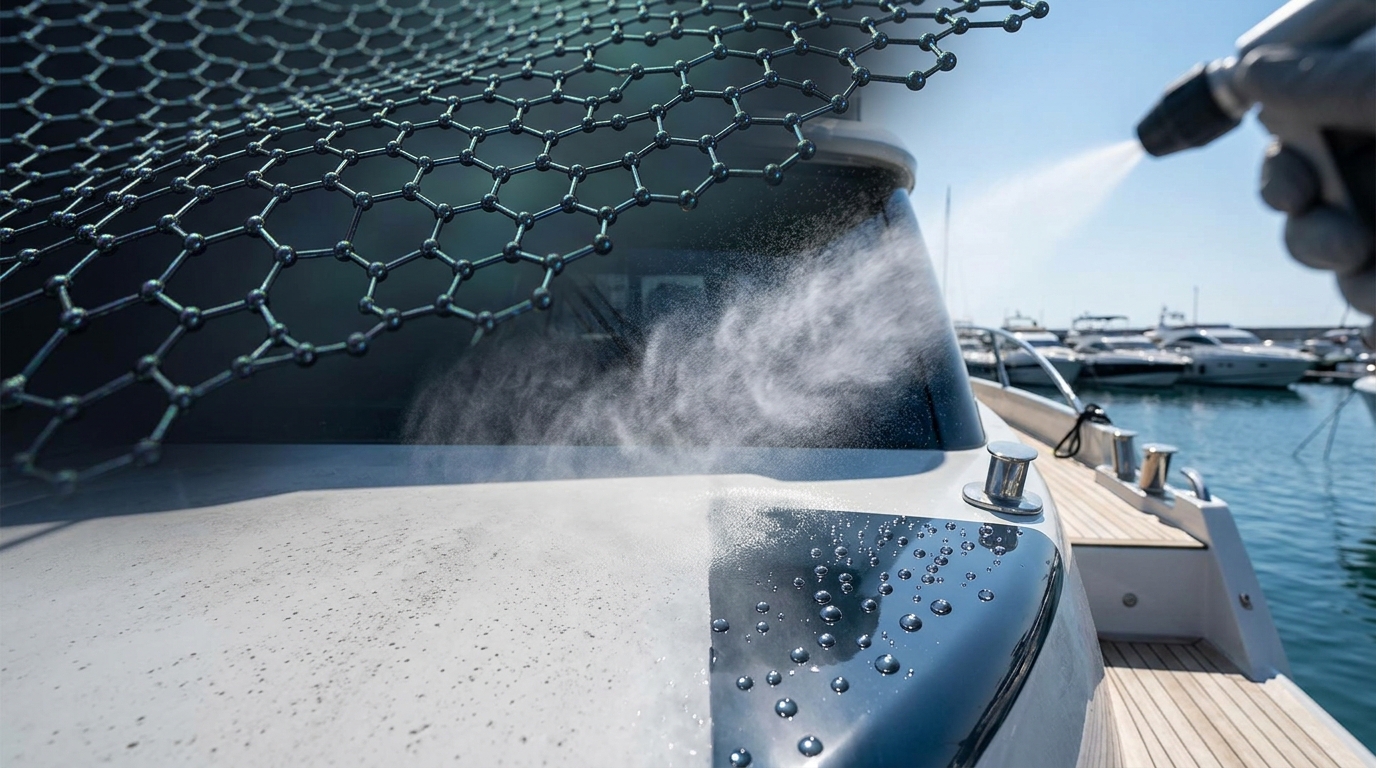
Liquid coatings infused with PureGRAPH nanoplatelets provide passive barrier protection against chemical and environmental degradation. The planar geometry of the platelets impedes corrosive electrolyte transport to underlying metallic substrates, improving anti-corrosion life cycles. Additionally, PureGRAPH imparts antistatic properties and passive fire retardancy to composite panels and structural coatings.
4. Elastomers and Dynamic Rubber Components
In industrial rubbers and thermoplastic elastomers (TPE/TPU), dynamic flex fatigue is a primary mode of failure. Incorporating low concentrations of graphene nanoplatelets into elastomer networks improves heat dissipation within the rubber matrix during cyclic loading, reducing thermal build-up, extending service life, and increasing tear strength.
Industrial Adoption and Integration Strategy
A persistent barrier to the commercialization of nanomaterials has been the difficulty of incorporating raw nanomaterials into legacy manufacturing equipment. Dry nanopowders often require high-shear mixing, specialized surface treatments, and closed-loop containment systems to ensure operator safety and uniform dispersion.
First Graphene addresses this integration challenge by shifting emphasis from raw powder delivery to drop-in masterbatches, concentrated liquid dispersions, and pre-formulated functional additives. This approach allows manufacturers in plastics compounding, concrete mixing, and protective coatings to incorporate graphene nanoplatelets into existing commercial workflows using standard industrial dosing and extrusion equipment.