Head Graphene Touch Speed Mp
The Head Graphene Touch Speed MP represents a pivotal milestone in the engineering of modern tennis equipment, blending high-tensile nanomaterials with advanced vibration-damping polymers. Built as the versatile, midplus counterpart in the Speed series, this frame was designed to offer intermediate and advanced players an optimal balance between swing speed, baseline stability, and arm comfort. By integrating functionalized graphene into the structural composite layup alongside a specialized viscoelastic elastomer, the frame tackles one of the central dilemmas in sports equipment design: how to maintain high torsional rigidity and dynamic energy return without transmitting harsh, fatiguing shock waves to the player’s arm.
The Evolution of Graphene in Tennis Composite Engineering
Tennis racket construction transitioned decades ago from traditional wood and aluminum to carbon fiber composites. While standard graphite layups provide structural integrity, modern player mechanics require frames that deliver higher ball speeds and heavier spin without ballooning static weight. In 2013, the introduction of graphene into commercial sporting goods fundamentally transformed structural weight distribution.
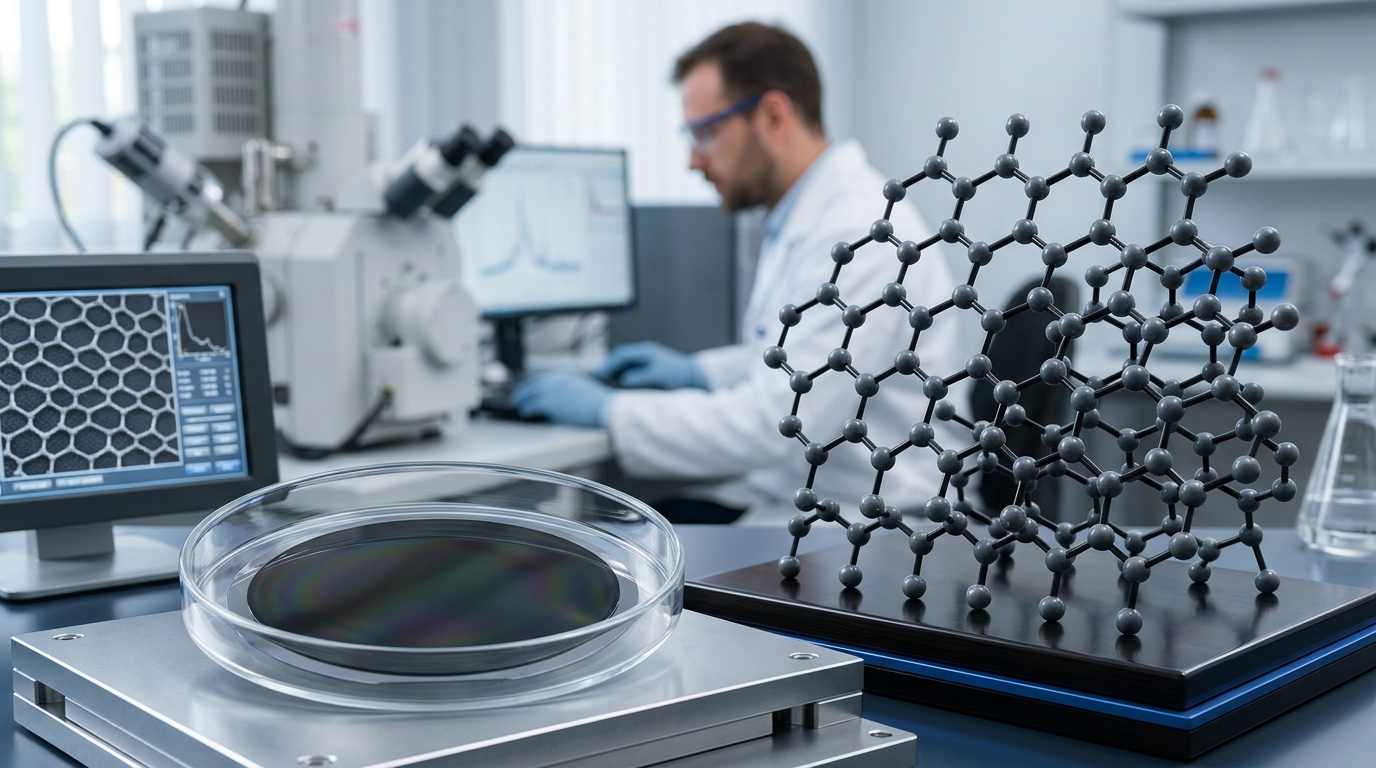
Graphene consists of a single layer of carbon atoms arranged in a two-dimensional hexagonal lattice. In industrial manufacturing, microscopic platelets or functionalized derivatives of this material are suspended within epoxy resins. When impregnated into continuous carbon fiber fabrics, these additives reinforce interlaminar shear strength and stiffen localized regions of the frame without adding measurable bulk.
Early iterations of graphene-enhanced frames focused predominantly on structural redistribution. While this produced explosive power, some players reported an overly crisp or stiff impact response. To address this, the Graphene Touch platform was formulated in 2016, engineered to soften frame vibrations while preserving the fundamental performance benefits of polarized weight distribution.
Material Architecture: Graphene Meets Viscoelastic Damping
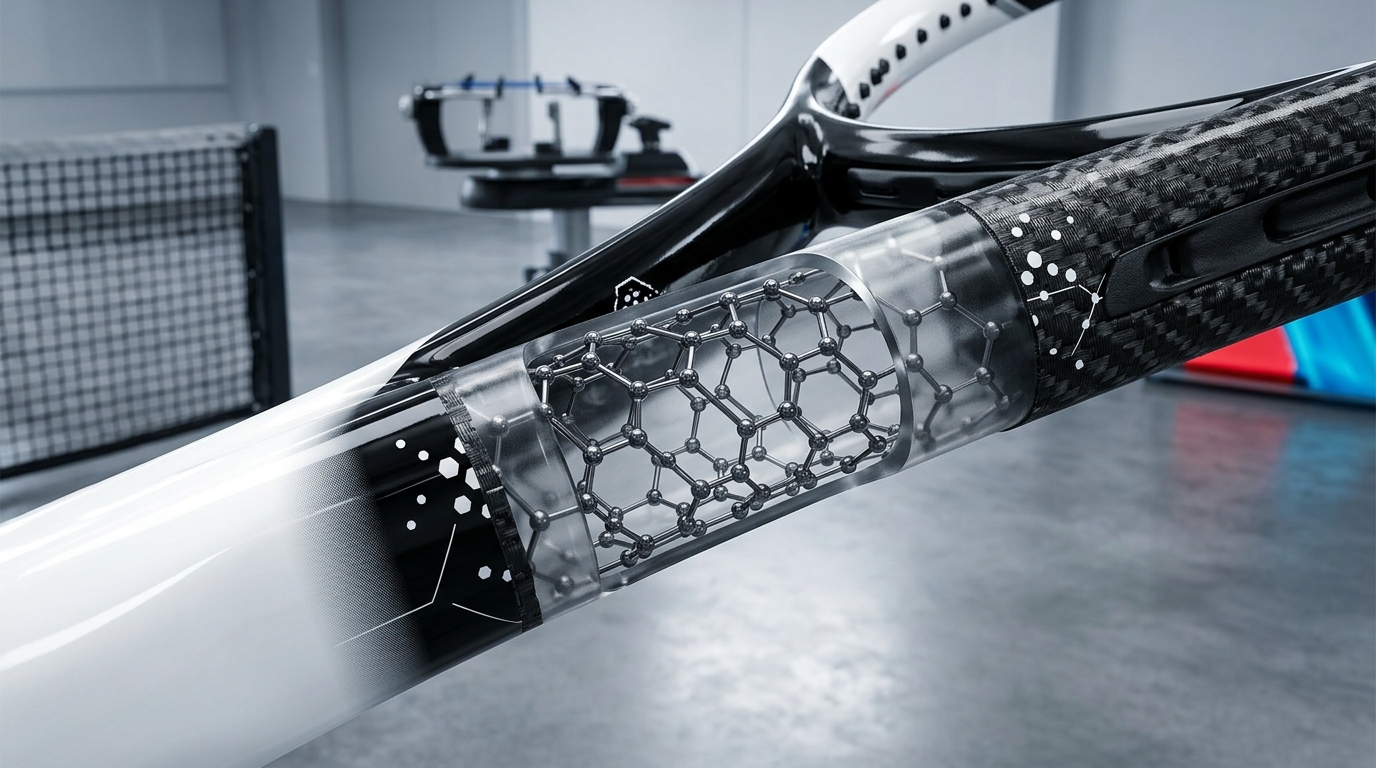
The defining innovation of the Graphene Touch Speed MP lies in the synergy between two contrasting materials within the composite matrix: exceptionally stiff graphene reinforcement and an integrated viscoelastic damping compound known commercially as Kraibon.
Carbon Matrix Reinforcement
In standard composite layups, cyclical impacts from off-center ball strikes cause micro-deformations and shear stress between fiber layers. By incorporating graphene nanoplatelets into the matrix resin at critical load points, the structural integrity of the frame is significantly enhanced. Graphene delivers exceptional tensile strength, which allows engineers to thin the composite walls in non-critical zones while reinforcing structural pivot areas such as the throat and the transition into the racket head.
The Role of Kraibon Dampening
While graphene optimizes stiffness-to-weight ratios, raw stiffness often leads to high-frequency string bed vibrations that travel down the handle. The Graphene Touch formulation incorporated Kraibon elastomer layers directly between the carbon plies. Kraibon is a specialized, unvulcanized synthetic rubber engineered to cross-link during the composite’s standard thermal curing cycle.
When the racket makes contact with the ball, the elastomer layers undergo cyclic shear strain, converting destructive impact energy into negligible thermal energy. This microscopic dampening mechanism significantly reduces the amplitude of peak shock frequencies without requiring bulky external dampeners or heavy handle inserts.
Polarized Weight Distribution and Swing Mechanics
Traditional racket design historically relied on a uniform balance point, which required substantial mass throughout the entire frame to prevent twisting on off-center hits. The inclusion of high-strength nanomaterials changed this structural paradigm through polarized mass tuning.
- Throat Lightening: By reinforcing the throat joint with graphene-infused resin, the shaft withstands high bending moments despite having reduced raw material mass.
- Hoop Mass Allocation: The saved weight is strategically relocated to the 12, 3, and 9 o’clock positions of the hoop, increasing the polar moment of inertia to resist twisting against heavy incoming pace.
- Handle Counter-Weighting: Additional mass placed in the grip lowers the balance point, giving the player swift maneuverability and rapid acceleration through the strike zone.
This polarized configuration elevates the racket’s swingweight relative to its static weight. As a result, players experience the maneuverability of a lighter frame during rapid swing preparation, combined with the solid plow-through and stability typically associated with heavier, traditional tournament frames.
Technical Specifications and Structural Geometry
The Head Graphene Touch Speed MP features a carefully balanced set of structural parameters designed to serve aggressive all-court players. Understanding these specifications reveals how the physical dimensions work alongside the material properties.
| Specification | Nominal Value | Functional Performance Significance |
|---|---|---|
| Head Size | 100 sq. in. (645 sq. cm) | Provides a forgiving sweet spot while maintaining precise directional control. |
| Unstrung Weight | 300 g (10.6 oz) | Standard benchmark weight for intermediate-to-advanced swing speeds. |
| Balance Point | 320 mm (Head Light) | Facilitates rapid head acceleration for topspin generation and quick net reactions. |
| Beam Width | 22 mm Constant Beam | Uniform aerodynamic profile delivering consistent flex and response across the hoop. |
| String Pattern | 16 Mains / 19 Crosses | Open pattern promoting string snapback, dynamic trajectory, and ball bite. |
| Flexibility Rating | ~65 RA (Strung) | Moderately firm flex profile calibrated to optimize energy return and arm protection. |
Court Dynamics and Playability Analysis
On court, the engineering choices behind the Graphene Touch Speed MP translate into distinct performance characteristics across different phases of play.
Baseline Exchange and Spin Production
From the baseline, the 22mm constant beam combined with an aerodynamic profile allows players to generate fast, modern semi-western swing paths. The 16×19 string pattern encourages lateral string movement, resulting in pronounced rotational spin mechanics upon ball release. Deep groundstrokes are easily accessible because the polarized hoop weight provides ample kinetic energy transfer on full swings.
Volleys and Net Play
At the net, the 320mm head-light balance shines. Quick reflex volleys and overhead smashes benefit from the low static resistance during preparation. The torsional stability granted by the graphene-reinforced hoop keeps the frame from fluttering during off-center contact against heavy baseline drives.
Serves and Overheads
The racket’s balanced mass distribution allows for explosive pronation on flat first serves, while the open string pattern gives second serves substantial kick and slice action. Because the frame absorbs peak impact spikes, serving through long matches produces less cumulative stress on the shoulder and elbow joints.
The Sensory Trade-off: The “Muted” Feedback Phenomenon
Every advanced material alteration involves engineering tradeoffs, and the introduction of Kraibon damping into a graphene frame produced a unique sensory response widely discussed among racket technicians. The frame delivers what is frequently termed a muted impact response.
Traditional stiff carbon frames generate sharp acoustic signatures and high-frequency tactile vibrations through the handle upon ball contact. Many players use these subtle sensory cues to judge where the ball struck the string bed. Because the Graphene Touch system absorbs these high-frequency vibrations so effectively, the sensation at impact feels exceptionally plush, smooth, and quiet.
For players suffering from medial or lateral epicondylitis (tennis elbow) or those seeking maximum arm comfort, this extreme vibration reduction is a major benefit. Conversely, traditionalists who rely on crisp, unfiltered vibration feedback may initially find the ball exit feel somewhat detached. Fine-touch drop shots and delicate angled volleys require an adjustment period as players adapt to judging ball depth through visual tracking and kinetic timing rather than handle vibration.
Optimizing Performance: Stringing and Setup Strategies
Because the Graphene Touch Speed MP possesses an inherent dampening system, matching the frame with the proper string type and tension is critical to maximizing its potential on court.
String Selection Guidelines
- Polyester Monofilaments: For aggressive players seeking maximum spin and control, a crisp, medium-stiff co-polyester balances the frame’s muted dampening, restoring clear tactile feedback.
- Multifilament and Natural Gut: Players prioritizing comfort, power, and depth should pair the frame with high-grade multifilament strings. The elastic nature of these strings complements the frame’s low-vibration construction, creating an exceptionally arm-friendly setup.
- Hybrid Configurations: Combining a durable co-poly in the main strings with a soft synthetic gut or multifilament in the crosses offers an ideal middle ground, yielding spin control without sacrificing pocketing feel.
Tension Recommendations
The open 16×19 pattern provides generous natural power. Stringing the racket in the mid-to-lower range (48 to 53 lbs or 21.7 to 24 kg) enhances dwell time and ball pocketing. Setting tensions in the upper range (54 to 58 lbs or 24.5 to 26.3 kg) tightens directional control for flatter hitters with naturally high swing speeds.
Evaluating the Engineering Legacy
The Head Graphene Touch Speed MP demonstrated that tennis frames could successfully combine raw structural stiffness with specialized chemical damping systems. By proving that advanced nanomaterials like graphene can work alongside viscoelastic elastomers within an integrated carbon matrix, it altered how manufacturers approach racket comfort, stability, and polarized weighting for modern, high-speed tennis.