
Graphene Motorola
When exploring graphene motorola, users generally encounter two fundamentally different topics: the use of advanced graphene nanomaterials inside Motorola (Lenovo) smartphone hardware, and the software compatibility of GrapheneOS—the hardened, security-focused open-source mobile operating system—on Motorola handsets. Because both subjects share the same primary naming convention, clarity regarding which technology is in play is essential before evaluating hardware specs or operating system upgrades.
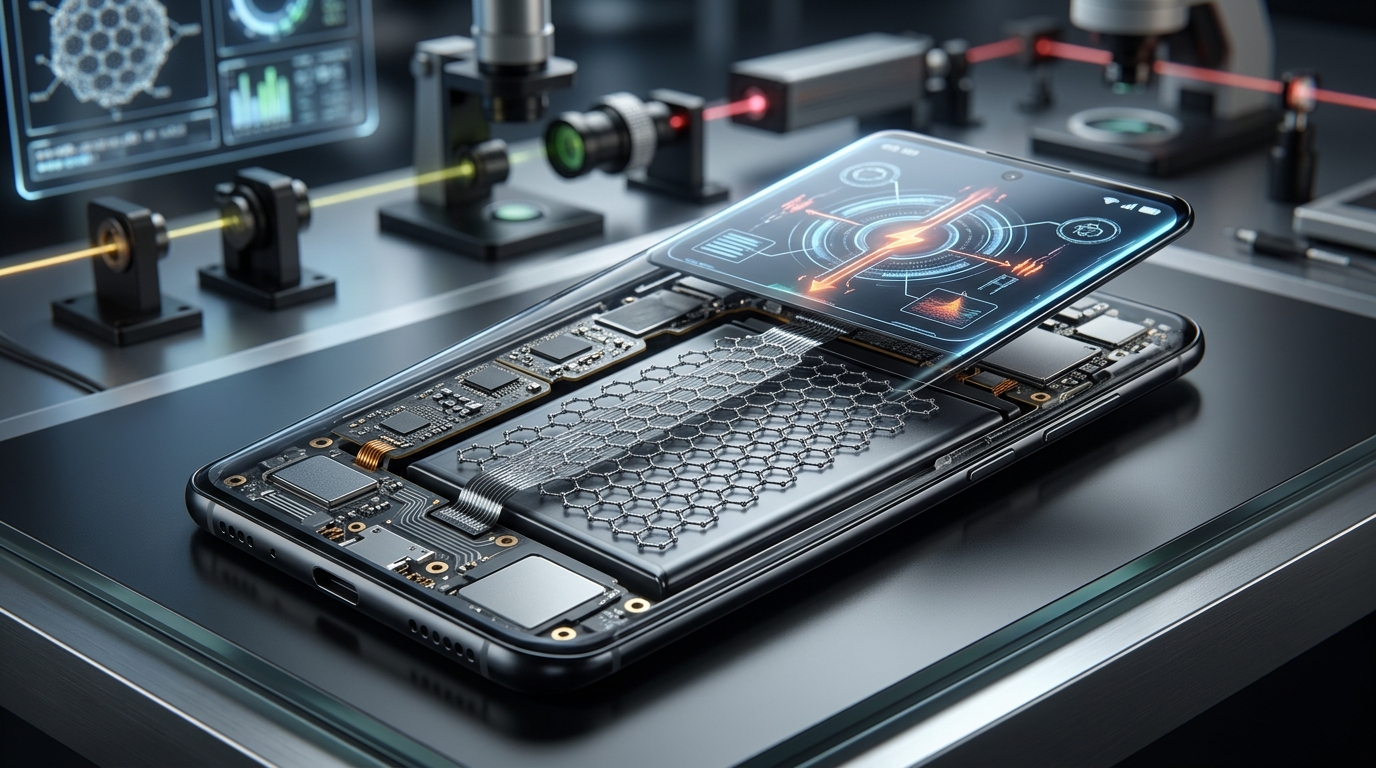
In hardware engineering, Motorola Mobility utilizes thin-film graphene thermal dissipation sheets and carbon composite matrices to manage the intense thermal loads of modern 5G modems, processors, and foldable displays. In software engineering, GrapheneOS is an independent privacy-focused operating system that has historically targeted Google Pixel hardware due to strict cryptographic and hardware security prerequisites. Below is an exhaustive technical breakdown of both dimensions, covering thermal systems, battery realities, software security constraints, alternative custom ROMs, and Lenovo’s ongoing R&D patents.
Disambiguation: Graphene Hardware vs. GrapheneOS Software
To avoid common procurement and flashing pitfalls, it is critical to separate material science from mobile operating system software:
- Graphene Nanomaterials in Motorola Hardware: Refers to microscopic sheets of single- to few-layer carbon atoms integrated as thermal heat spreaders, electromagnetic interference (EMI) shields, and structural reinforcements within Motorola smartphones, including the Edge and Razr foldable lineups.
- GrapheneOS Software Compatibility: Refers to an independent, non-commercial operating system based on the Android Open Source Project (AOSP). It enforces rigorous privacy hardening, sandbox isolation, and cryptographic attestation that depend strictly on underlying hardware components such as dedicated secure elements and verified boot chains.
Graphene Thermal Dissipation and Cooling Systems in Motorola Devices
Modern mobile system-on-chips (SoCs) and 5G radio frequency (RF) front-end modules generate substantial heat within compact, sealed chassis. Traditional cooling methods rely on copper foil, aluminum mid-frames, and pyrolytic graphite sheets. However, Motorola and parent company Lenovo have increasingly integrated multi-layer graphene heat-spreading films across performance-tier devices to mitigate thermal throttling.
How Graphene Thermal Films Function
Graphene possesses exceptional intrinsic in-plane thermal conductivity, typically ranging between 1,000 and 1,800+ W/m·K. In contrast, standard copper dissipates heat at roughly 385 W/m·K, while conventional pyrolytic graphite foils achieve around 400 to 600 W/m·K. Multi-layer graphene sheets—generally engineered at microscopic thicknesses of 10 to 50 micrometers—operate through directional thermal conduction:
- Lateral Heat Spreading: Instead of letting thermal energy concentrate directly behind the display or against the battery, the graphene film rapidly pulls localized thermal spikes horizontally away from the SoC and charging controllers.
- Interface with Vapor Chambers: Motorola architectures combine these graphene foils with copper vapor chambers (VC) and thermal interface materials (TIM). The vapor chamber handles two-phase liquid-to-vapor phase-change cooling directly over the processing unit, while wide-area graphene sheets conduct residual heat toward the device frame.
Foldable Architecture: The Motorola Razr Advantage
Thermal management is particularly difficult in clamshell foldables such as the Motorola Razr series. Standard thick-graphite foils are brittle and can develop microscopic cracks, delamination, and reduced conductivity after tens of thousands of flexes across a narrow hinge radius. Multi-layer graphene sheets and reduced graphene oxide (rGO) composites offer mechanical elasticity alongside high thermal transfer, enabling heat to traverse the central hinge mechanism from the primary processor housing down to the secondary battery housing without degrading under mechanical stress.
Battery Technology: Are There Commercial "Graphene Batteries" in Motorola Phones?
There is a persistent misconception that certain modern smartphones contain a standalone "pure graphene battery." In commercial consumer electronics, including Motorola handsets, pure graphene batteries do not exist. All commercial Motorola devices operate on lithium-ion or lithium-ion polymer chemical cells.
Graphene as a Conductive Additive
Where graphene does play a functional role in battery technology is at the nano-additive level. Battery manufacturers synthesize graphene nanoplatelets to serve as a conductive matrix within the electrode slurry (typically on the cathode or blended into silicon-graphene composite anodes):
- Impedance Reduction: The conductive network formed by graphene nanoplatelets lowers internal electrical resistance within the cell.
- Thermal Reduction During Fast Charging: Lower internal resistance decreases parasitic heat generation when current flows into the battery.
Motorola advertises proprietary fast-charging architectures under the TurboPower brand, scaling from 30W up to 125W on flagship hardware. These rapid charging speeds are achieved via split-cell (dual-cell) architectures, dual charge pump integrated circuits, and external graphene/graphite thermal dissipation wraps around the battery enclosure—not by replacing lithium-ion chemistry with a theoretical, pure graphene power cell.
GrapheneOS Support on Motorola Hardware
Many users searching for graphene on Motorola hardware want to know if they can flash GrapheneOS onto a Moto G, Edge, or Razr device. On legacy and currently deployed retail Motorola hardware, GrapheneOS is not supported.
Why GrapheneOS Has Excluded Most Non-Pixel Devices
GrapheneOS enforces uncompromising baseline security standards. Historically, only Google Pixel hardware has satisfied these requirements out of the box:
- Dedicated Secure Hardware Elements: GrapheneOS relies on a secure microcontroller (such as Google's Titan M2) running proprietary, auditable firmware isolated from the application processor. This chip handles the Weaver API, which strictly throttles passcode derivation to prevent offline brute-force attacks against encrypted storage, and StrongBox, which provides hardware-enforced cryptographic key generation and storage.
- Android Verified Boot (AVB) with Custom Root of Trust: GrapheneOS mandates that users be able to flash a custom operating system, register a custom cryptographic signing key into the bootloader, and then re-lock the bootloader. This guarantees that physical access to an unpowered device does not allow an attacker to modify the OS, flash malicious firmware, or bypass data encryption. Most commercial Android devices either do not allow bootloader re-locking with custom keys or break verified boot integrity when locked with third-party signatures.
- Hardware-Based Memory Tagging (MTE): Modern ARM architectures (ARMv9) incorporate Memory Tagging Extensions to detect and block memory-safety exploits (such as buffer overflows and use-after-free conditions). GrapheneOS leverages MTE at the operating system and base application layers, requiring hardware that fully exposes and supports this feature without proprietary restrictions.
- Upstream Patching Speed: The device manufacturer must supply regular, complete firmware updates (covering the modem, proprietary board support packages, and system-on-chip components) aligned with monthly Android Security Bulletins (ASB) without long OEM release delays.
Current Status and Partnership Outlook
While historically exclusive to Google Pixel, the GrapheneOS project has engaged in technical partnerships to evaluate and support third-party hardware platforms meeting these stringent criteria (specifically targeting advanced processors such as the Snapdragon 8 Elite and next-generation flagships). However, for existing consumer Motorola handsets on the market today, GrapheneOS cannot be installed.
Alternative Privacy-Hardened Custom ROMs for Motorola Handsets
Users who own a Motorola smartphone and wish to move away from stock Google services or factory firmware still have functional open-source alternatives. While these options do not incorporate the full hardware-level hardening of GrapheneOS, they provide meaningful privacy, telemetry reduction, and bloatware removal.
1. CalyxOS
CalyxOS delivers a privacy-conscious implementation of Android with microG integration, encrypted backup tools, and the Datura firewall. Notably, CalyxOS supports select mid-range Motorola devices (such as several models in the Moto G series). On officially supported Motorola models, CalyxOS is engineered to support re-locking the bootloader using custom verified boot keys, preserving core verified boot protections that are typically lost when flashing third-party software.
2. LineageOS
LineageOS provides the broadest hardware support across the Motorola portfolio, covering dozens of legacy and contemporary Moto G, Motorola Edge, and Motorola One models. LineageOS removes carrier bloatware and proprietary OEM telemetry, running a clean AOSP base. However, on most Motorola hardware, LineageOS requires operating with an unlocked bootloader, which disables Android Verified Boot and exposes the device to physical tampering if left unattended.
3. DivestOS
DivestOS is a security- and privacy-focused soft fork of LineageOS. It strips proprietary binary blobs where feasible, integrates hardened kernel compilation flags, removes extraneous diagnostic subsystems, and enforces automatic patch updates. DivestOS provides builds for select Motorola handsets, and on specific Qualcomm-based Motorola variants where device firmware permits, it allows users to re-lock the bootloader with custom hashes.
4. /e/OS (Murena)
/e/OS is an un-Googled operating system configured to eliminate data leakage to remote servers. It replaces Google Mobile Services with a tailored microG implementation and provides dedicated cloud services for contacts, calendars, and mail. Official and community /e/OS builds exist for a wide variety of mid-range Motorola phones, making it a viable daily-driver option for users prioritizing convenience alongside privacy.
Lenovo and Motorola R&D: Graphene Patents and Flexible Technologies
Beyond existing retail implementations, Lenovo’s central research labs and the Motorola Mobility division hold intellectual property covering advanced nanomaterials in structural and electronic smartphone components.
Flexible Display Backings and Mechanical Stress Relief
A primary failure point in foldable and rollable smartphones is the display module itself. Repeated dynamic mechanical deformation creates mechanical fatigue, microscopic fractures, and display creasing. Lenovo has patented display architectures utilizing flexible carbon networks—including carbon nanotubes and graphene sheets—as structural backing plates behind flexible OLED layers. These materials provide high tensile strength and elasticity, distributing mechanical stress across the radius of the hinge rather than focusing it along a single folding axis.
Hinge-Integrated Thermal Bridges
Traditional multi-part chassis designs insulate the primary motherboard half of a clamshell phone from the secondary half, causing uneven thermal distribution and accelerated localized throttling. Lenovo and Motorola patent filings detail specialized thermal conduits routed directly through the mechanical hinge assembly. By implementing flexible graphene-based thermal bridging strips that survive hundreds of thousands of bending cycles without cracking, these designs pull excess heat away from the upper display and processing housing into the cooler lower housing, maintaining equilibrium across the entire physical footprint of the phone.
Thermal Solutions: Motorola Flagships Compared
Motorola balances vapor chambers and graphene-enhanced thermal interfaces across its device tiers:
| Device Family | Form Factor | Thermal Management Architecture | Battery & Charging Structure |
|---|---|---|---|
| Motorola Razr Series | Clamshell Foldable | Multi-layer flexible graphene/graphite thermal bridging across the teardrop hinge; localized copper heat spreaders. | Split dual-cell lithium-ion; TurboPower fast charging with thermal throttling monitoring. |
| Motorola Edge Pro / Ultra | Standard Flagship | Multi-layer liquid-cooled copper vapor chamber (VC) paired with high-conductivity graphene thermal spreading sheets over SoC and RF amplifiers. | High-density lithium-ion; high-wattage TurboPower (up to 125W wired) utilizing dual charge pumps and thermal mitigation foils. |
| Moto G Series (Mid-Tier) | Standard Budget / Mid-Range | Standard graphite sheets, copper heat-dissipating tape, and structural aluminum frame conduction (minimal or no dedicated multi-layer graphene). | Single-cell lithium-ion; moderate-wattage TurboPower (15W–30W standard). |
Summary
The term graphene motorola links material hardware engineering with mobile software security:
- On the hardware side, Motorola uses graphene thermal films and carbon composites to disperse heat across its flagship and foldable devices, helping prevent thermal throttling and extending structural durability across dynamic hinges. However, these devices use standard lithium-ion batteries rather than true graphene power cells.
- On the software side, current retail Motorola phones do not support GrapheneOS due to rigorous hardware security prerequisites, including dedicated secure elements with Weaver and StrongBox support, memory tagging, and custom verified boot re-locking. Users seeking privacy-focused firmware on Motorola devices should instead look to alternatives such as CalyxOS, LineageOS, or DivestOS.