Graphene Detail Spray
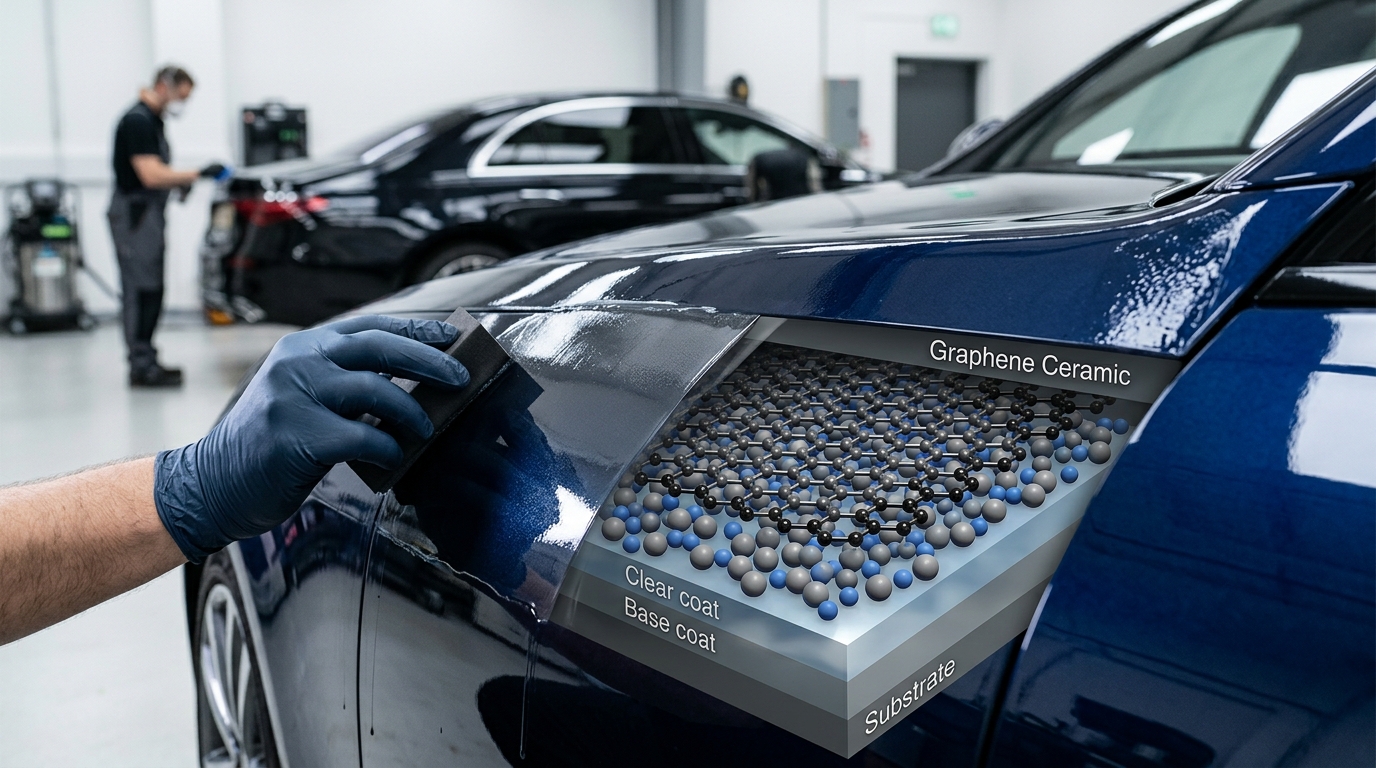
A graphene detail spray is an automotive maintenance formulation engineered to clean light surface contamination, boost gloss, and deposit a temporary protective layer infused with functionalized graphene derivatives. Unlike permanent professional coatings that require hours of surface preparation and controlled curing environments, detail sprays function as quick-application maintenance fluids. They bridge the gap between routine vehicle washes and dedicated paint protection by reinforcing the clear coat with a resilient, hydrophobic, and ultra-slick barrier.
The Chemical Formulation of Graphene Detailers
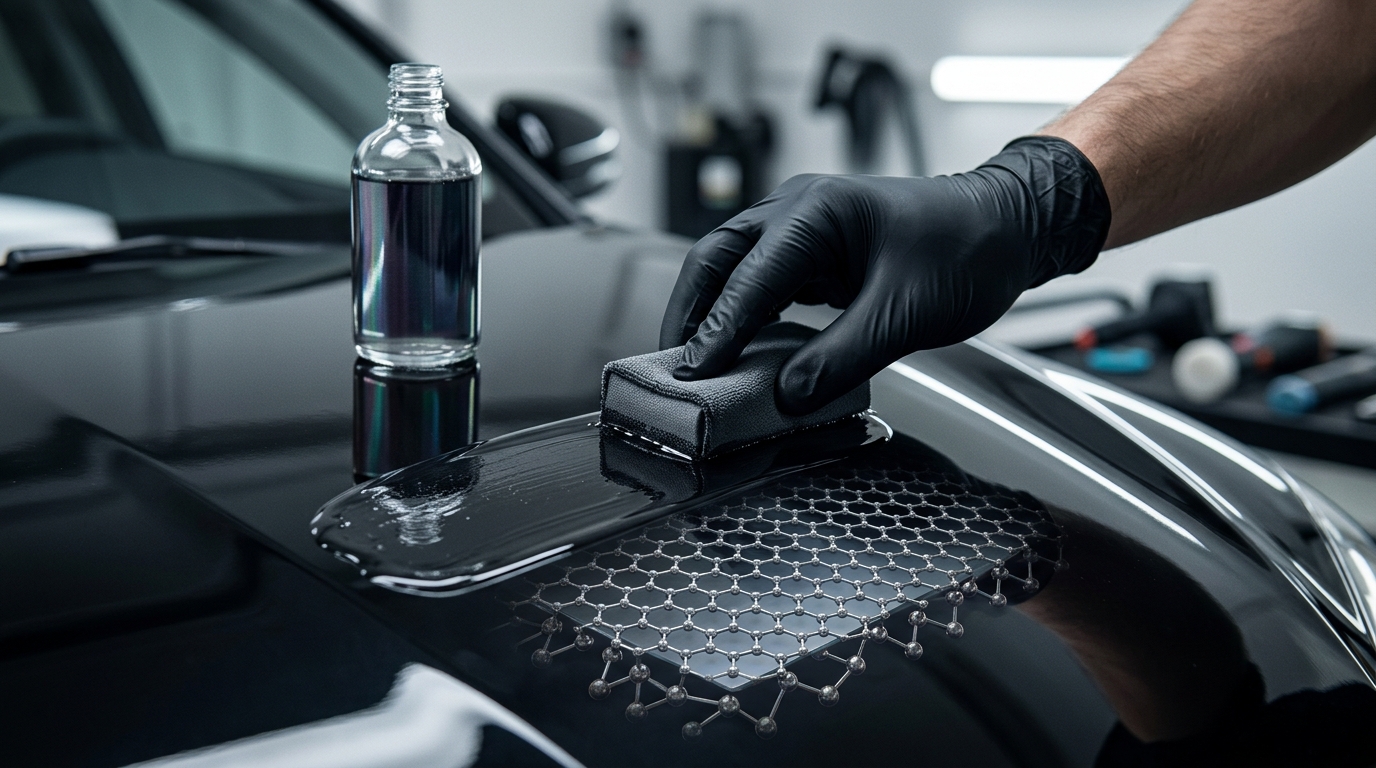
To understand how a graphene detail spray functions, one must look past marketing terms and examine the liquid chemistry inside the bottle. Pristine, single-layer graphene consists of an impermeable hexagonal lattice of carbon atoms. In its pure form, graphene is entirely insoluble in water and cannot naturally bond to automotive clear coat.
Automotive chemical formulators solve this limitation by utilizing chemically modified variants, most commonly reduced graphene oxide (rGO) or functionalized graphene nanoplatelets (GNPs). These carbon derivatives feature oxygen-bearing functional groups—such as carboxyl, hydroxyl, and epoxy groups—that allow the microscopic sheets to remain suspended in water-based emulsions alongside polysiloxane carriers, fluoropolymers, and synthetic gloss agents.
When sprayed onto a surface and buffed with a microfiber towel, the carrier solvent evaporates. This leaves behind an intertwined network of synthetic polymers reinforced by two-dimensional carbon platelets. The polymers chemically adhere to the vehicle clear coat or an existing base coating, while the suspended carbon platelets orient parallel to the surface, creating an exceptionally smooth, low-friction top layer.
Key Mechanisms and Material Properties
Integrating graphene derivatives into a liquid detailer modifies the surface characteristics of automotive paint in several distinct ways:
1. Elevated Water Contact and Low Sliding Angles
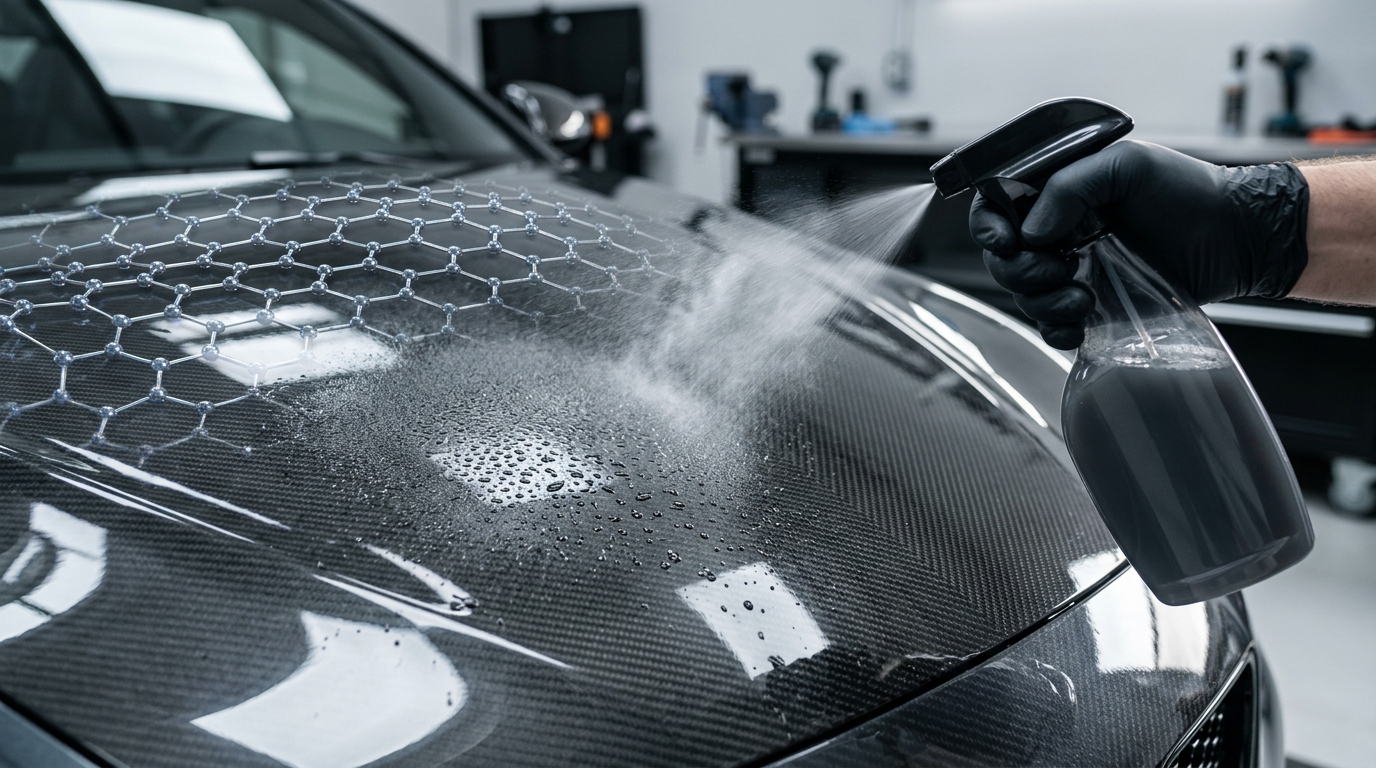
Surface hydrophobicity is governed by two measurements: the static water contact angle and the dynamic sliding (or roll-off) angle. Quality graphene detail sprays routinely achieve contact angles exceeding 105 degrees, causing water to bead into tight spheres.
More importantly, the ultra-low surface energy lowers the sliding angle. Water droplets roll off the vehicle body at lower speeds and shallower inclines compared to standard polymer sealants. This rapid shedding of water minimizes the opportunity for dissolved minerals, acid rain, and environmental contaminants to dry on the surface and create hard water spots.
2. Friction Reduction and Scratch Prevention
Graphene possesses exceptional intrinsic lubricity. When suspended in a quick detailer, these carbon sheets reduce the mechanical coefficient of friction across the clear coat. This slickness directly benefits the user during maintenance wipes. By reducing surface drag, the liquid provides safe lubrication that helps encapsulate stray dust particles, mitigating the formation of micro-marring and fine swirl marks caused by microfiber towels.
3. Anti-Static Behavior and Dust Mitigation
Standard silica (SiO2) detailers and organic carnauba waxes can retain static electrical charges generated during vigorous towel buffing. This static charge acts like a magnet for airborne dust and pollen. Graphene derivatives offer high electrical conductivity, which helps dissipate static surface charges and reduces electrostatic dust attraction on freshly detailed panels.
4. UV Resistance and Chemical Stability
The carbon-carbon bonds within graphene platelets are among the strongest chemical bonds in materials science. When incorporated into a synthetic polymer matrix, these platelets help shield the underlying resin and clear coat from photo-oxidative degradation caused by ultraviolet radiation, as well as light chemical attacks from road salts and alkaline wash soaps.
Graphene Detail Spray vs. Ceramic and Traditional Detailers
Understanding where a graphene detailer fits into a surface care regimen requires comparing it to existing automotive protection categories.
| Property | Traditional Quick Detailer | Ceramic (SiO2) Detailer | Graphene Detail Spray |
|---|---|---|---|
| Primary Active Chemistry | Organic waxes / surfactants | Silicon dioxide / silanes | Reduced graphene oxide / siloxanes |
| Durability Range | 3 to 7 days | 3 to 8 weeks | 1 to 3 months |
| Slickness / Tactile Feel | Moderate to high | Moderate (often grabby) | Extremely high |
| Water Spot Resistance | Low | Moderate | High (low roll-off angle) |
| Dust Attraction | Moderate | Moderate to high (static) | Low (anti-static dissipation) |
| Primary Function | Lubrication and dust removal | Gloss and mineral protection | Slickness, water shedding, topper |
Practical Applications in Automotive Maintenance
Graphene detail sprays are versatile fluids designed for multiple stages of the vehicle detailing process. They are primarily used in four practical scenarios:
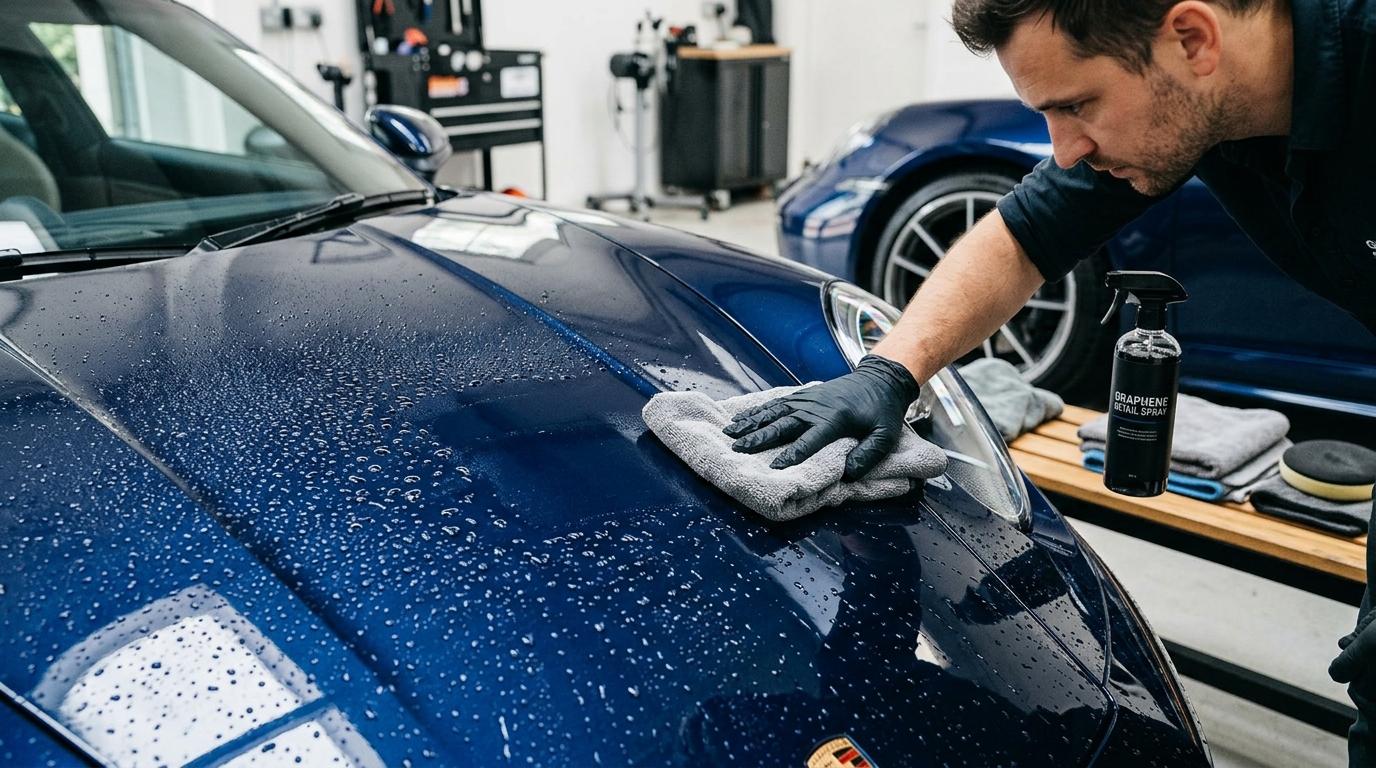
- Drying Aid: Applying a light mist over wet panels immediately after a final rinse lubricates the drying towel, accelerates water evacuation, and prevents water spotting in direct sunlight.
- Sacrificial Maintenance Layer: When used over a dedicated ceramic or graphene base coating, the detailer acts as a sacrificial maintenance layer. It absorbs daily environmental abuse, extending the service life of the semi-permanent base layer underneath.
- Light Spot Cleaner: The surfactants and lubricants in the spray encapsulate fresh bird droppings, fingerprint oils, and light road dust, allowing them to be wiped away safely without hauling out wash buckets.
- Stand-Alone Sealant: For vehicles without existing paint protection, repeated applications after every routine wash build a lightweight, functional hydrophobic self-cleaning effect that keeps the vehicle cleaner between washes.
Application Protocol and Best Practices
Achieving optimal performance and a streak-free finish from a graphene-infused spray requires proper technique, as carbon-loaded suspensions behave differently than light wax mists.
- Surface Temperature and Lighting: Work on a panel that is cool to the touch and out of direct, intense sunlight. High surface heat causes the carrier solvents to flash instantly, leaving concentrated polymer streaks that require extra effort to buff flat.
- Shake the Bottle Thoroughly: Graphene nanoplatelets and rGO particles can slowly settle out of suspension over extended storage periods. Agitate the bottle vigorously for ten to fifteen seconds before use to ensure a uniform distribution of active solids.
- Controlled Dispensing: Less is more with modern synthetic formulas. Two to three trigger pulls per panel are generally sufficient. Over-applying material does not increase durability; it merely creates excess product that must be buffed away.
- The Two-Towel Method: Use one plush microfiber towel folded into quarters to spread the product evenly across the panel, breaking down light dust or residual water. Immediately follow with a clean, dry, secondary microfiber towel to level high spots and buff the paint to high clarity.
Realistic Limitations and Misconceptions
The marketing surrounding graphene in the car care sector frequently exaggerates the material’s properties. A clear distinction must be made between theoretical physics and liquid detailing products.
First, a graphene detail spray will not make automotive paint scratch-proof or impervious to rock chips. While the carbon lattice itself possesses immense tensile strength at the atomic scale, a diluted liquid spray deposits an ultra-thin film measured in nanometers. It prevents wash marring by providing physical slickness, not by creating an impenetrable armor plate.
Second, claims regarding heat dissipation on car paint are widely misunderstood. While pure graphene is an exceptional thermal conductor, a micron-thin dispersed film over a non-conductive polyurethane clear coat does not substantially lower the surface temperature of a dark vehicle sitting in the sun. The reduction in water spotting attributed to graphene sprays is primarily due to chemical hydrophobicity and low sliding angles rather than thermal reduction.
Finally, active solid concentrations in detail sprays are deliberately kept low (typically under 2% total active resins, with graphene derivatives comprising a fraction of that total). This dilution is necessary to keep the product sprayable, transparent, and easy to buff off. High-solids formulations are reserved for professional-grade, bottled ceramic coatings that require wipe-on, flash-timed, manual leveling.
Evaluating Formula Quality
When selecting a graphene maintenance spray, look past marketing claims and evaluate performance based on three observable criteria: ease of wipe-off without oily hazing on dark paint, tactile slickness under a microfiber towel, and how cleanly water sheets off vertical panels during precipitation. A well-formulated graphene detailer delivers immediate tactile smoothness, sharp optical reflections, and dependable water roll-off without demanding complex application steps.