Ceramic Graphene Coating
A ceramic graphene coating is a hybrid surface protectant that blends conventional silicon dioxide (SiO2) or polysilazane matrices with functionalized carbon nanomaterials, typically reduced graphene oxide (rGO) or graphene nanoplatelets. Designed primarily for automotive, marine, and industrial finishes, these liquid formulations cross-link upon application to form a semi-permanent barrier. While traditional ceramic coatings rely entirely on a rigid silica lattice, incorporating graphene aims to improve flexibility, thermal dissipation, chemical resistance, and water-spotting defense.
The Chemistry of Hybrid Graphene-Ceramic Matrices
To understand how a ceramic graphene coating functions, it is essential to distinguish between standard ceramic formulations and carbon-infused hybrids. Conventional ceramic coatings utilize liquid silanes, siloxanes, or polysilazane resins suspended in volatile organic solvents. When exposed to ambient moisture, these compounds undergo a hydrolysis and condensation reaction, yielding a dense, crystalline silicon dioxide network bonded covalently to the substrate.
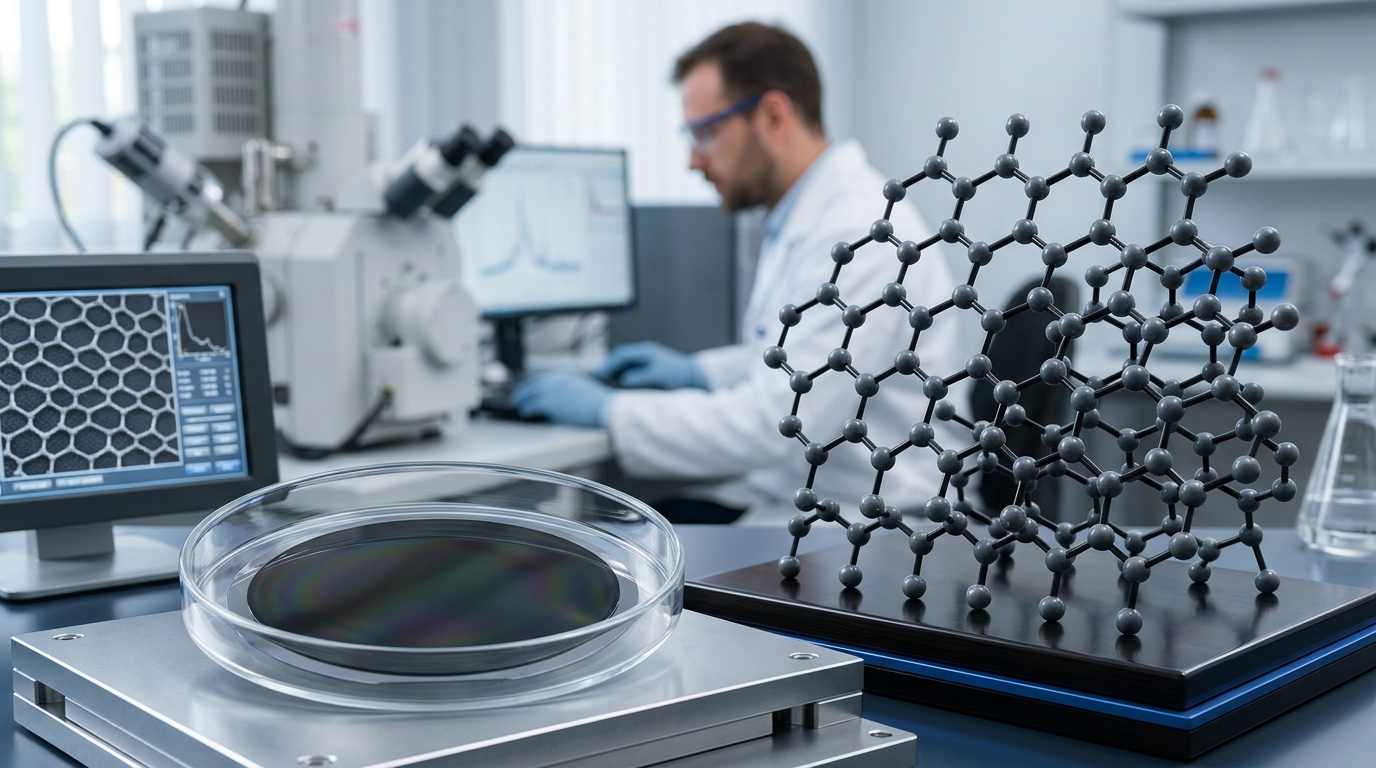
Pure graphene consists of a single layer of carbon atoms arranged in a two-dimensional hexagonal lattice. Because pristine graphene is chemically inert and insoluble, liquid coating manufacturers use modified derivatives such as graphene oxide (GO) or reduced graphene oxide. These derivatives possess functional oxygen groups (epoxy, hydroxyl, and carboxyl groups) that allow the carbon sheets to disperse uniformly within the liquid resin without agglomerating into useless graphite clusters.
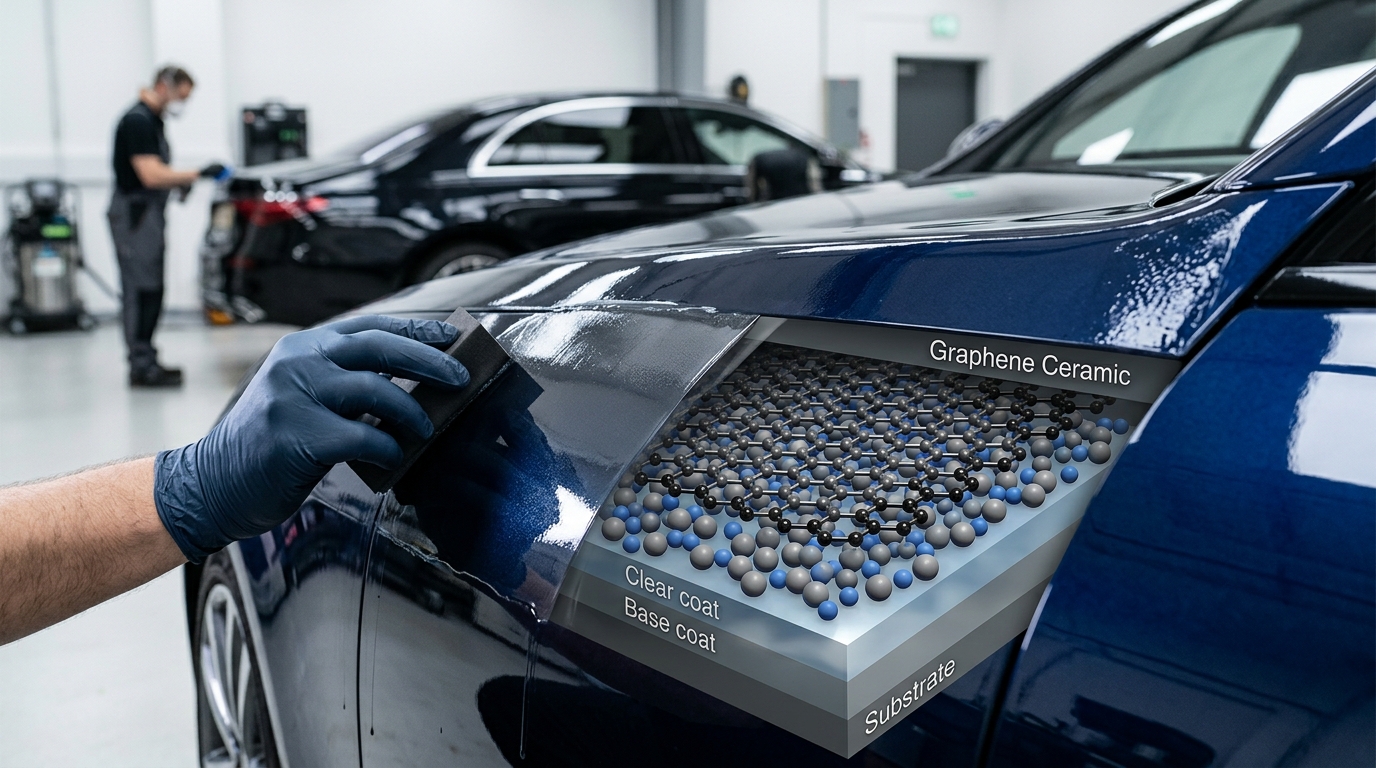
Once applied and cured, the graphene nanoplatelets sit intercalated throughout the silica backbone. This hybrid structure acts like rebar in reinforced concrete: the silica provides hardness and chemical anchoring, while the graphene sheets distribute mechanical stress, reduce micro-fissuring, and lower the electrical resistivity of the cured surface.
How Graphene Solves the Water Spotting Dilemma
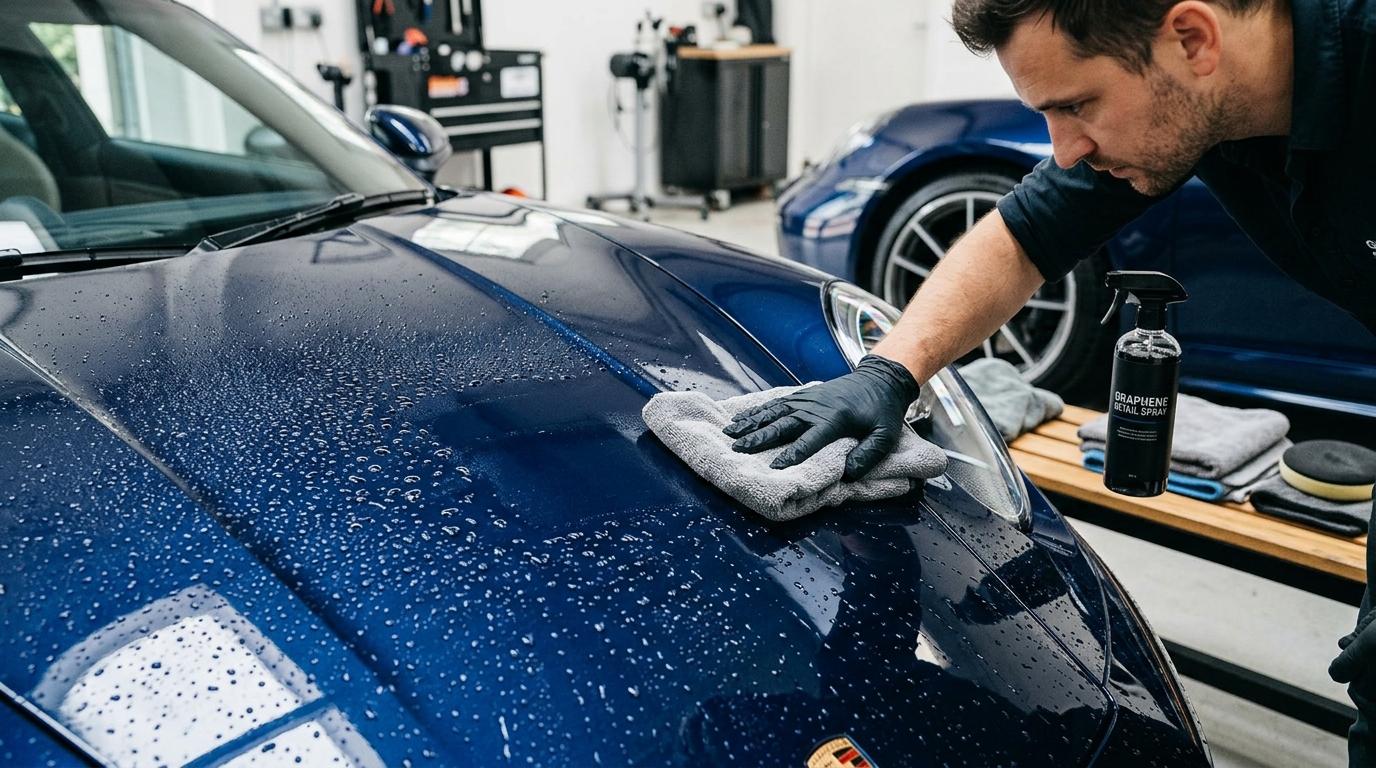
One of the primary engineering challenges with traditional SiO2 ceramic coatings is their susceptibility to mineral etching, commonly known as water spotting. High-contact-angle hydrophobic surfaces cause water to bead into tight spherical droplets. When these beads sit under direct sunlight on hot panels, they act as miniature magnifying lenses while the water evaporates, baking dissolved calcium and magnesium minerals deep into the coating layer.
Ceramic graphene coatings address this mechanism through two primary physical properties:
- Thermal Dissipation: Carbon nanomaterials possess exceptionally high thermal conductivity. By spreading localized surface heat more evenly across the treated panel, graphene reduces hot spots that accelerate rapid droplet evaporation.
- Reduced Sliding Angle: While contact angle measures how round a bead rests on a flat surface, the roll-off or sliding angle measures the tilt required to dislodge it. Graphene coatings typically lower the sliding angle, enabling water beads to roll off moving or slightly angled surfaces before mineral deposition occurs.
Technical Comparison: Traditional Ceramic vs. Ceramic Graphene
Evaluating performance differences requires looking at measurable surface metrics rather than marketing claims. The following table contrasts standard silica-based coatings with graphene-infused formulations under typical application conditions.
| Performance Attribute | Standard Ceramic Coating (SiO2) | Ceramic Graphene Coating |
|---|---|---|
| Primary Active Matrix | Silicon dioxide / Polysilazanes | Silica matrix with rGO nanoplatelets |
| Static Water Contact Angle | 100° – 110° | 110° – 118° |
| Water Sliding Angle | 20° – 30° tilt | 10° – 15° tilt |
| Thermal Heat Dissipation | Low (thermal insulator) | Moderate to high localized conduction |
| Mineral Spotting Resistance | Moderate; prone to hard water etching | High; reduced etching susceptibility |
| Surface Flexibility | Rigid, brittle under high deflection | Enhanced elasticity due to carbon lattice |
| Electrostatic Charge Retention | High (tends to attract fine dust) | Reduced (dissipates static charges) |
Key Functional Benefits and Mechanisms
Enhanced Chemical Tolerance
The chemical stability of the carbon-carbon bonds within graphene reinforces the cross-linked ceramic mesh against aggressive chemical attacks. High-quality formulations resist broad pH ranges, typically spanning from pH 2 (strong acids such as acid rain and bird droppings) to pH 12 or 13 (caustic alkaline detergents and road de-icers). The dense atomic structure of graphene reduces permeability, slowing the rate at which corrosive compounds reach the underlying clear coat.
Anti-Static Properties and Dust Repulsion
Traditional non-conductive silica coatings generate static electricity during routine maintenance washing and towel drying, which pulls airborne dust particles directly back onto the panel. The conductive pathways introduced by functionalized carbon nanomaterials help dissipate surface static charges, leading to noticeably less dry-dust accumulation between routine washes.
Mechanical Toughness vs. Scratch Myths
A frequent misconception in surface protection is the promise of total scratch resistance. Coatings are frequently marketed with ratings like “9H,” which refers to the pencil hardness scale (resistance to physical gouging by graded pencil leads), not the absolute Mohs hardness scale used for mineralogy. A cured ceramic graphene coating does not make a substrate impervious to rock chips, heavy keys, or aggressive wash-induced swirl marks. However, the added tensile strength from graphene sheets helps reduce fine micro-marring caused by light contact friction.
Surface Preparation and Application Dynamics
The durability of any ceramic graphene hybrid depends fundamentally on substrate preparation. Because the coating must form direct covalent bonds with the paint’s polyurethane clear coat, no contamination, oxidation, or residual waxes can remain on the surface.
Step-by-Step Installation Stages
- Decontamination: Chemical removal of iron fallout and industrial fallout using dedicated solvents, followed by mechanical clay bar treatment to clear bonded particulate matter.
- Paint Correction: Machine polishing using abrasives to level clear coat imperfections, scratches, and holograms. Coatings lock in the finish underneath; any pre-existing defect will remain visible beneath the transparent layer.
- Surface Stripping: Wiping panels with an isopropyl alcohol or panel-wipe solution to eliminate polishing oils, ensuring bare clear coat exposure.
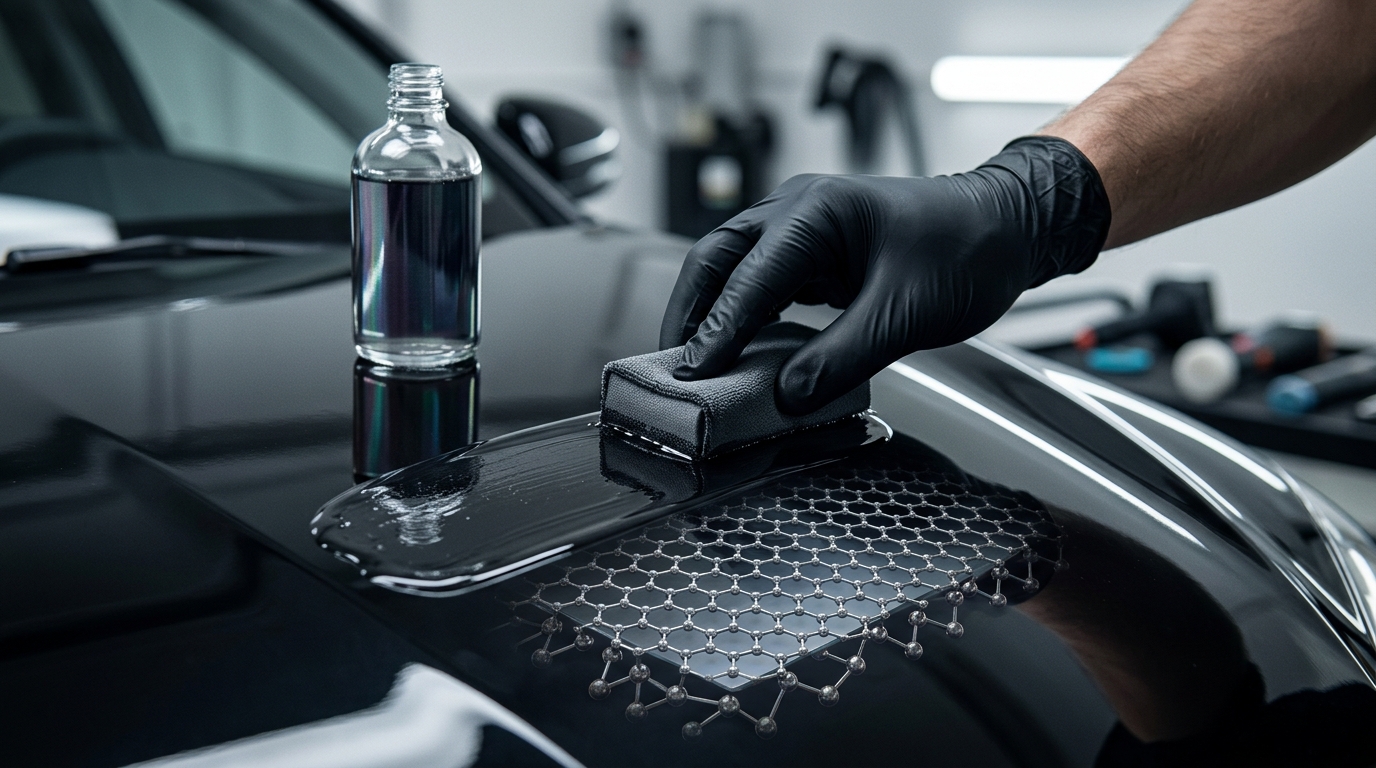
- Application: Spreading the liquid via a micro-suede applicator block in cross-hatch patterns to guarantee uniform thickness, typically between 0.5 and 1.5 microns per cured layer.
- Flashing and Leveling: As carrier solvents evaporate, the coating exhibits a visual “sweat” or “rainbow” effect (flash time). The installer must buff off excess carrier resin with microfiber towels within this specific window to prevent uneven high spots.
- Curing: Chemical cross-linking begins immediately upon ambient humidity exposure. While dry to the touch within a few hours, complete network crystallization requires between 24 hours and seven days, depending on environmental temperature and humidity.
Limitations, Trade-Offs, and Evaluation Criteria
Despite their distinct advantages, ceramic graphene coatings present specific engineering trade-offs that consumers and technicians should weigh objectively.
Dispersion Stability
The greatest manufacturing hurdle involves maintaining a stable suspension. Because carbon nanomaterials are naturally prone to aggregation, poorly formulated products suffer from phase separation, where graphene flakes settle at the bottom of the bottle. When this happens, the user applies standard solvent resin with no active carbon distribution.
Coating Thickness and Flexibility
Thicker coating layers do not automatically translate to superior protection. Excessive thickness can lead to internal stress concentrations during thermal expansion and contraction cycles, resulting in micro-cracking or premature flaking. A high-grade coating balances elasticity with hardness to expand safely alongside metal and composite substrates subjected to extreme outdoor temperature fluctuations.
Realistic Service Life Factors
Longevity claims ranging beyond several years depend heavily on exposure conditions, vehicle storage, and washing discipline. Physical abrasion from automated brush car washes, severe friction, and accumulated road grime will gradually degrade the top hydrophobic layer over time. Routine maintenance with pH-neutral soaps and periodic chemical decontamination is mandatory to preserve the low sliding angle and self-cleaning attributes of the graphene matrix.
Summary of Core Practical Value
A ceramic graphene coating represents a meaningful evolutionary step over standard silica-only surface protectants. By integrating nano-scale carbon structures into an established cross-linking resin system, these coatings deliver measurable gains in thermal management, static charge mitigation, and resistance to water spotting. When paired with proper surface prep and realistic performance expectations, they provide one of the most resilient protective finishes accessible for modern substrates.