Adams Graphene Spray Coating
Adams Graphene Spray Coating is an advanced consumer-accessible surface protectant that bridges the gap between traditional spray sealants and professional-grade liquid ceramic coatings. Formulated by infusing reduced graphene oxide (rGO) into a matrix of polysilazane and siloxane polymers, the spray creates a semi-permanent sacrificial barrier on automotive clear coats, glass, plastic trim, and wheels. Rather than applying a pure, freestanding sheet of carbon, the formulation leverages functionalized microscopic graphene platelets suspended in a solvent-borne carrier to improve the mechanical strength, chemical durability, and water-spotting resistance of standard ceramic polymer networks.
The Chemistry of Graphene-Infused Spray Coatings
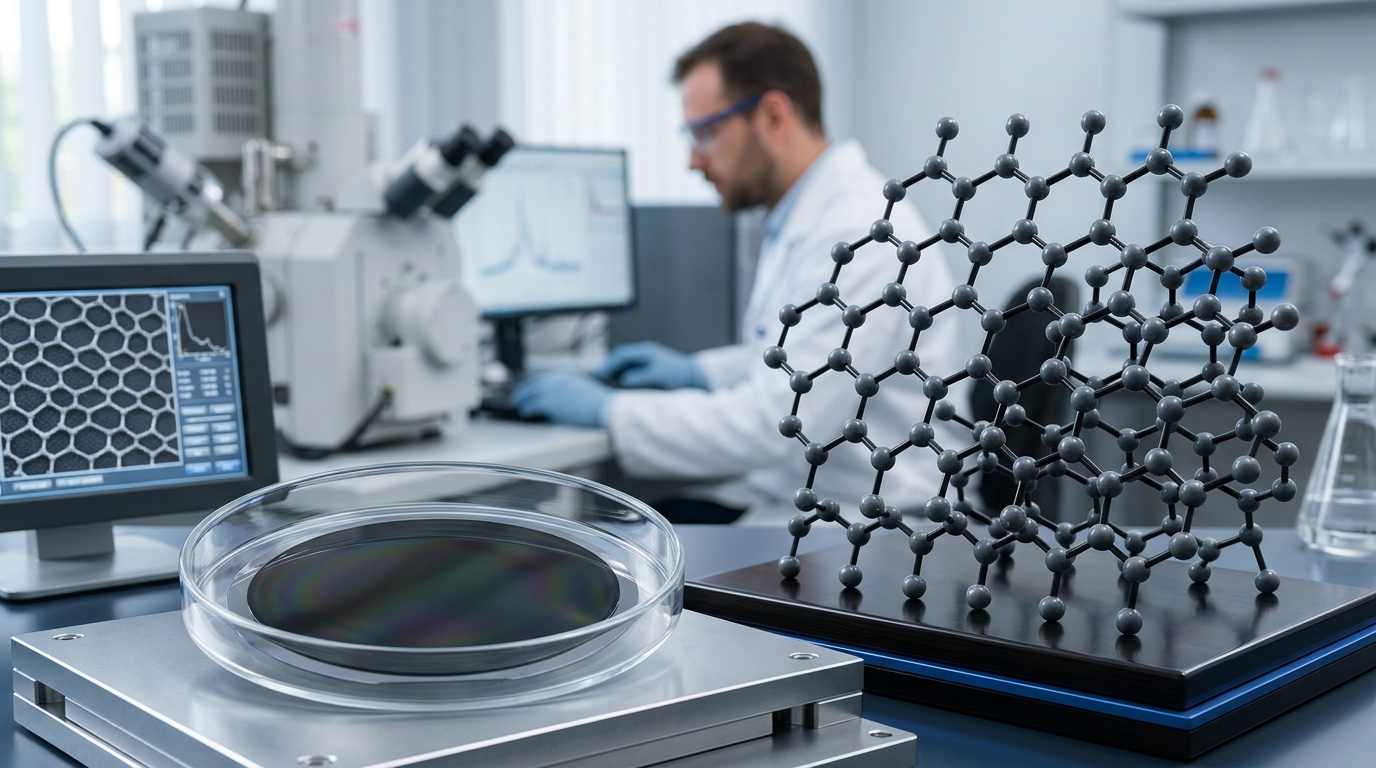
To understand how graphene spray coatings work, one must examine the molecular interaction between the protective carrier and the graphene additive. Pure graphene is a single-atom-thick layer of carbon arranged in a two-dimensional hexagonal lattice. Because pristine graphene is hydrophobic and naturally aggregates in liquid solutions, chemical functionalization is required to incorporate it into automotive formulations.
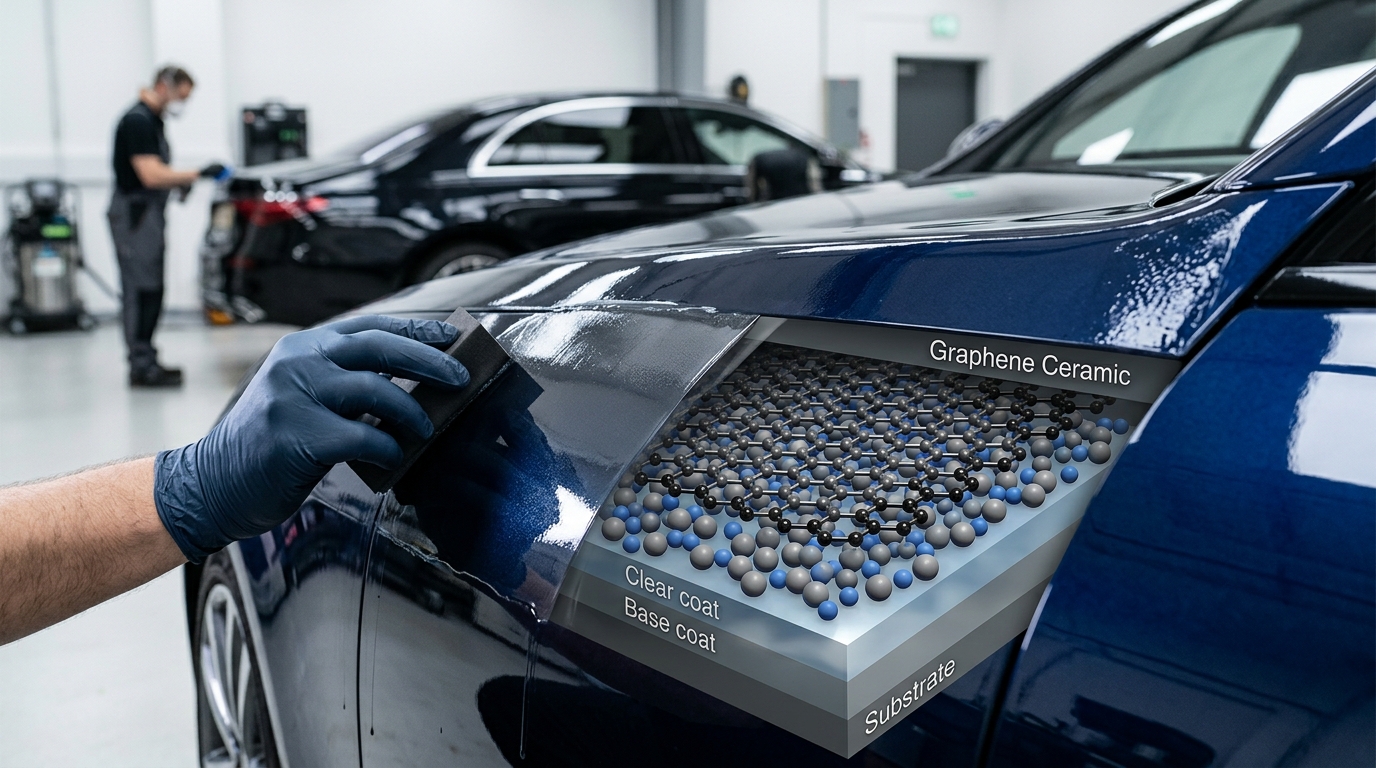
Manufacturers process natural graphite into graphene oxide, which is subsequently reduced to form graphene nanoplatelets. These nanoplatelets possess functional chemical groups on their edges, allowing them to disperse stably in liquid carrier solvents alongside organosilicon compounds. When sprayed onto a vehicle’s paint and leveled with a microfiber towel, the solvents evaporate, initiating a cross-linking reaction with atmospheric moisture.
As the silicon-oxygen bonds cure, the graphene platelets settle within the resin matrix. This creates a dense, honeycomb-reinforced cross-linked barrier that bonds directly to the micropores of the clear coat. The presence of the carbon platelets increases the tensile strength of the cured layer, preventing premature chemical erosion and environmental degradation.
Key Performance Properties
Graphene-enhanced spray formulas alter the physical and optical behavior of treated surfaces in several distinct ways:
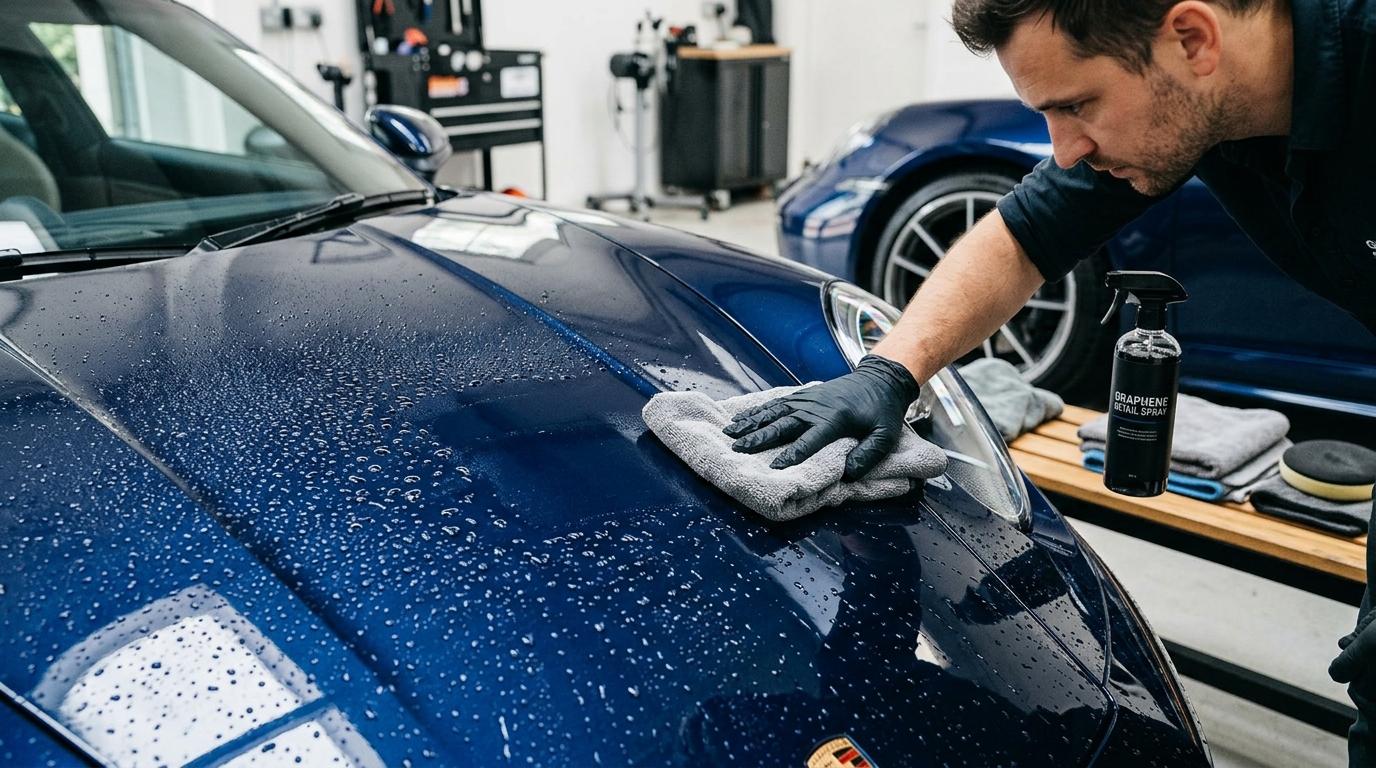
- High Water Contact Angle: The cured coating produces a hydrophobic water contact angle exceeding 110 degrees. This geometry causes water droplets to bead tightly rather than sheet flat, minimizing surface contact and facilitating rapid water shedding during vehicle movement.
- Reduced Water Spotting: Traditional silicon dioxide (SiO2) ceramic coatings can be prone to calcium and mineral spotting because their optical clarity and heat retention bake water beads onto the paint in direct sunlight. Graphene’s natural thermal conductivity helps dissipate surface heat faster, while its low sliding angle allows beads to roll off before evaporation leaves mineral deposits behind.
- Chemical Tolerance: The tight covalent network resists harsh detergents, road salt, acid rain, bird droppings, and industrial fallout across a broad pH range (typically pH 2 through pH 12).
- Anti-Static Characteristics: Graphene’s electrical conductivity helps reduce electrostatic charge accumulation on the vehicle surface, diminishing the attraction of dry airborne dust and pollen compared to traditional organic waxes.
- Optical Depth and Gloss: The high refractive index of the siloxane base combined with smooth surface planarization enhances the reflection of ambient light, deepening paint color and creating a reflective, wet-look finish.
Adams Graphene Spray Coating vs. Traditional Ceramic Coatings
Understanding where a graphene spray fits in vehicle maintenance requires comparing it to traditional SiO2 ceramic coatings and conventional carnauba waxes.
| Property | Carnauba Wax | Standard SiO2 Ceramic (Liquid) | Adams Graphene Spray Coating |
|---|---|---|---|
| Primary Matrix | Natural carnauba & paraffin | Silica (SiO2) resin solvent | Polysilazane / Siloxane + rGO |
| Durability Range | 4 to 8 weeks | 2 to 5 years | 8 to 18 months |
| Application Difficulty | Very Low (wipe on / wipe off) | High (requires strict leveling & indoor curing) | Moderate (spray, flash, wipe) |
| Water Spot Resistance | Moderate | Low to Moderate | High (improved thermal dissipation) |
| Chemical Resistance | Low (washes off with alkaline soaps) | Very High (resists pH 2–13) | High (resists pH 2–12) |
| Layer Thickness | Micro-thin organic layer | 1 to 3 microns per layer | Sub-micron to 1 micron |
Surface Preparation and Application Technique
The durability and bonding performance of any graphene spray rely heavily on surface preparation. Because the coating bonds covalently with the clear coat, any remaining contaminants or oils will prevent optimal cross-linking.
Step 1: Chemical and Mechanical Decontamination
The vehicle must be thoroughly washed with a clean-rinsing, wax-free car wash soap. Iron fallout removers dissolve embedded metallic particles from brake dust, while a clay bar treatment removes bonded environmental contamination, ensuring the clear coat is mechanically smooth.
Step 2: Paint Correction (Optional but Recommended)
Because the coating is semi-permanent and optically transparent, any existing swirl marks, scratches, or oxidation will be locked underneath the cured layer. Light polishing cleans the paint at a microscopic level and maximizes specular reflection.
Step 3: Surface Wipe-Down
Before applying the spray, an isopropyl alcohol (IPA) solution or dedicated panel prep spray must be used to dissolve and remove polishing oils, residue, and lingering surfactants. The surface must be completely bare and dry.
Step 4: Application and Leveling
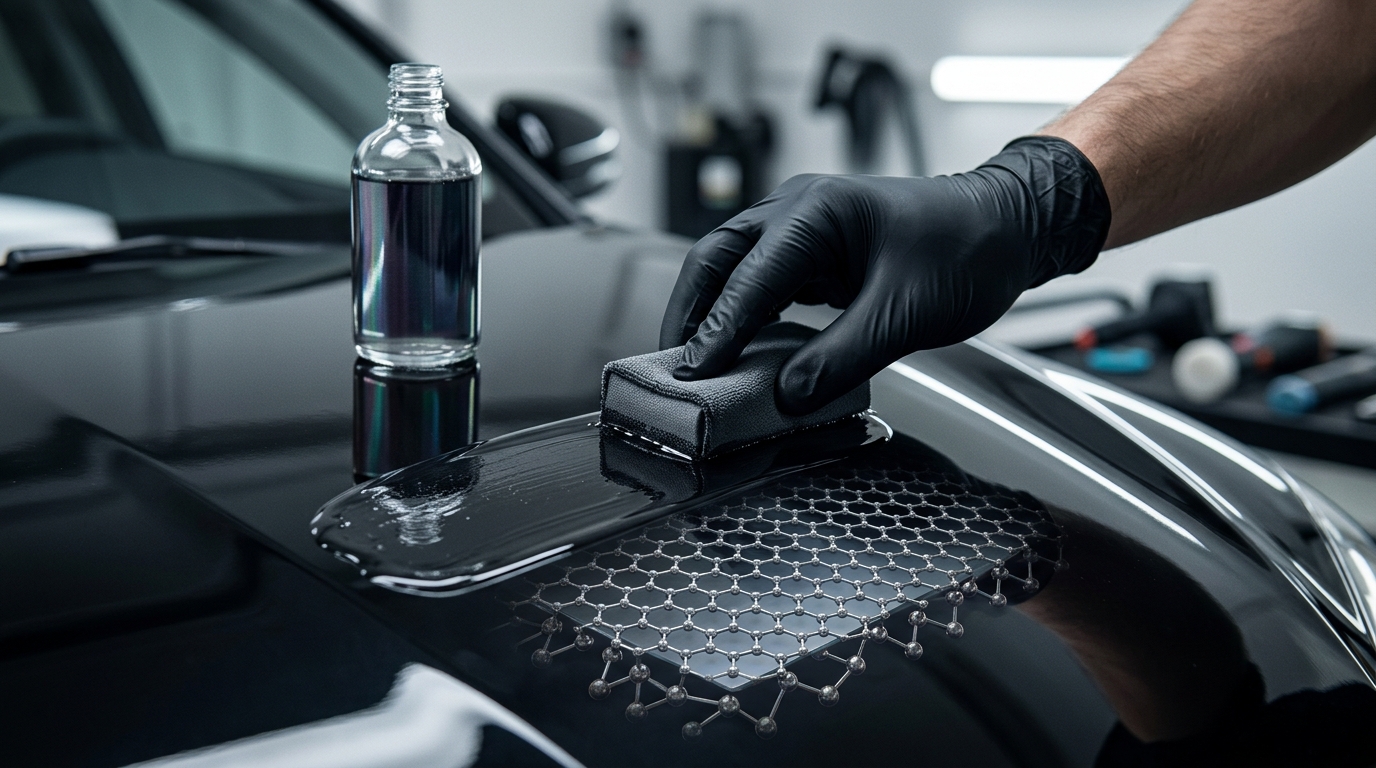
Working panel by panel, the product is sprayed directly onto a microfiber applicator pad or folded towel rather than directly onto wide body panels to avoid overspray. Spread the liquid in overlapping cross-hatch strokes (horizontal followed by vertical) to guarantee full coverage.
Within one to three minutes—depending on ambient temperature and relative humidity—the liquid will begin to “flash.” This process manifests as an oily, rainbow-like appearance or small bead-like sweat droplets. Once the flash occurs, immediately level the product using a plush, clean microfiber towel. A secondary dry microfiber cloth should follow to remove any remaining high spots or streaks.
Step 5: Curing Period
Although the surface is dry to the touch shortly after leveling, the siloxane matrix requires roughly four to twelve hours to achieve initial weather resistance. The vehicle should remain dry and protected from rain, moisture, and chemical washes for at least 24 hours to allow full polymerization.
Realistic Expectations and Material Limitations
Automotive surface protection contains several persistent marketing myths. Clear technical boundaries distinguish genuine material capabilities from unrealistic claims:
Not an Impervious Armor: No spray-applied coating can prevent stone chips, deep scratches, or high-impact road debris damage. While graphene adds mechanical tensile strength to the matrix, a cured sub-micron film cannot match the physical protection of a thick polyurethane paint protection film (PPF).
Not 100% Graphene: The product is not a pure graphene sheet. Liquid automotive protectants require polymeric carrier resins to wet out, adhere, and cross-link to painted surfaces. The graphene acts as an additive reinforcing the polymer, much like rebar reinforces concrete.
Maintenance is Still Necessary: Although graphene coatings exhibit a lower surface tension and superior hydrophobic sliding angle, road grime, traffic film, and environmental minerals will accumulate over time. If not washed periodically, this contamination layer covers the coating, temporarily suppressing its hydrophobic behavior until the vehicle is washed with a clean, pH-neutral soap.
Long-Term Maintenance and Coating Care
Preserving the performance of a graphene spray coating requires simple, non-abrasive washing routines. Avoid automated brush washes, which induce abrasive friction that degrades the coating prematurely.
Employ the two-bucket wash method with grit guards and microfiber wash mitts to minimize wash-induced marring. Every few months, applying a diluted graphene-infused detail spray or booster during the drying process rejuvenates the sacrificial top layer, replenishing any hydrophobic loss caused by weathering and chemical degradation. With disciplined maintenance, graphene spray coatings provide durable, glossy, and reliable protection for daily-driven vehicles.