303 Graphene Nano Spray Coating Reviews
When automotive care brands began infusing graphene into consumer detailing products, 303 Products released one of the most widely discussed spray formulas on the market. Evaluating 303 Graphene Nano Spray Coating reviews requires looking beyond marketing promises to understand how functionalized carbon nanomaterials behave when suspended in an ambient-cure liquid polymer matrix. In practical detailing environments, this product operates as a heavy-duty synthetic spray sealant modified with reduced graphene oxide (rGO), engineered to deliver enhanced thermal resistance, chemical durability, and multi-surface versatility compared to conventional quartz or silicone spray sealants.
The Chemistry Behind 303 Graphene Nano Spray Coating
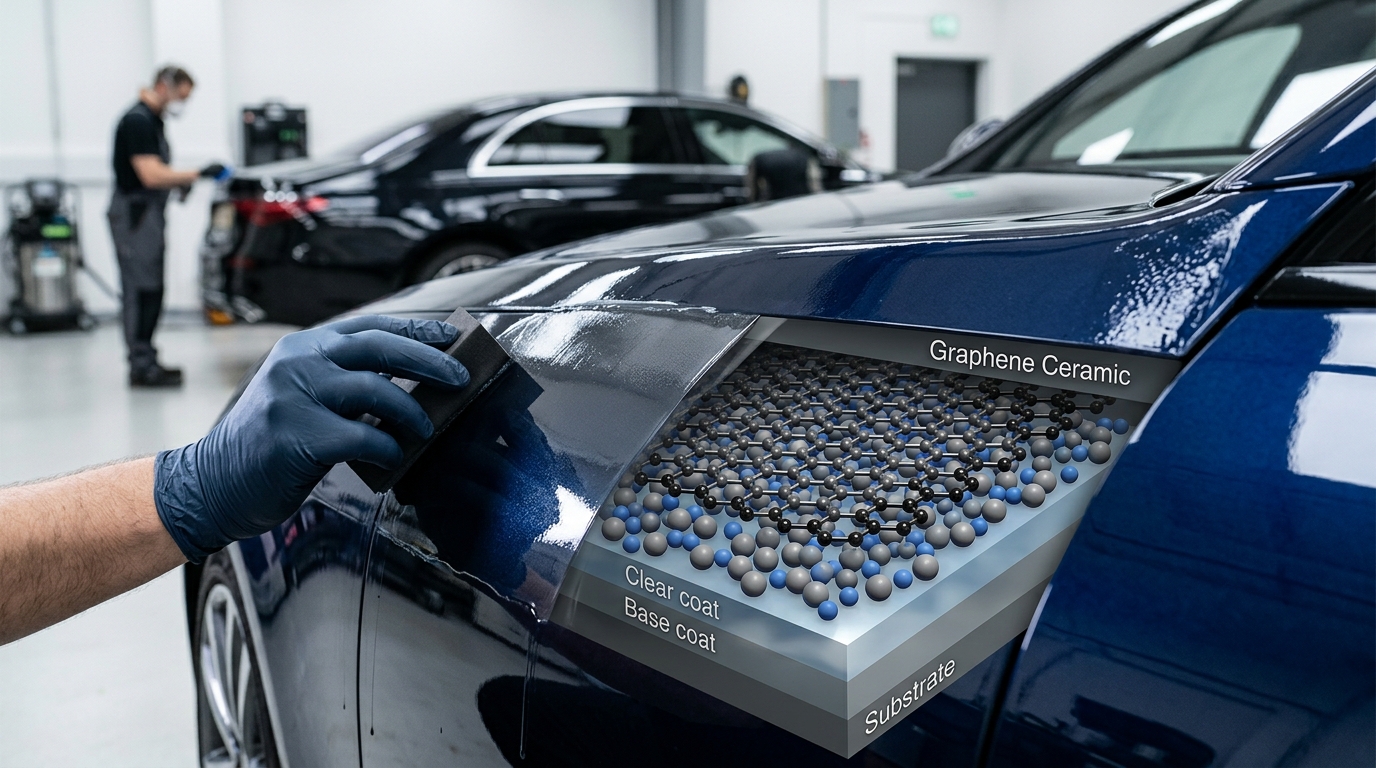
To understand how this coating functions, one must distinguish between continuous single-atom graphene sheets and functionalized graphene nanoplatelets suspended in liquid carriers. The 303 formulation does not create an impenetrable, continuous sheet of pure carbon over automotive clear coat. Instead, it utilizes microscopic platelets of reduced graphene oxide integrated into an engineered carrier of silicone resins and cross-linking polymers.
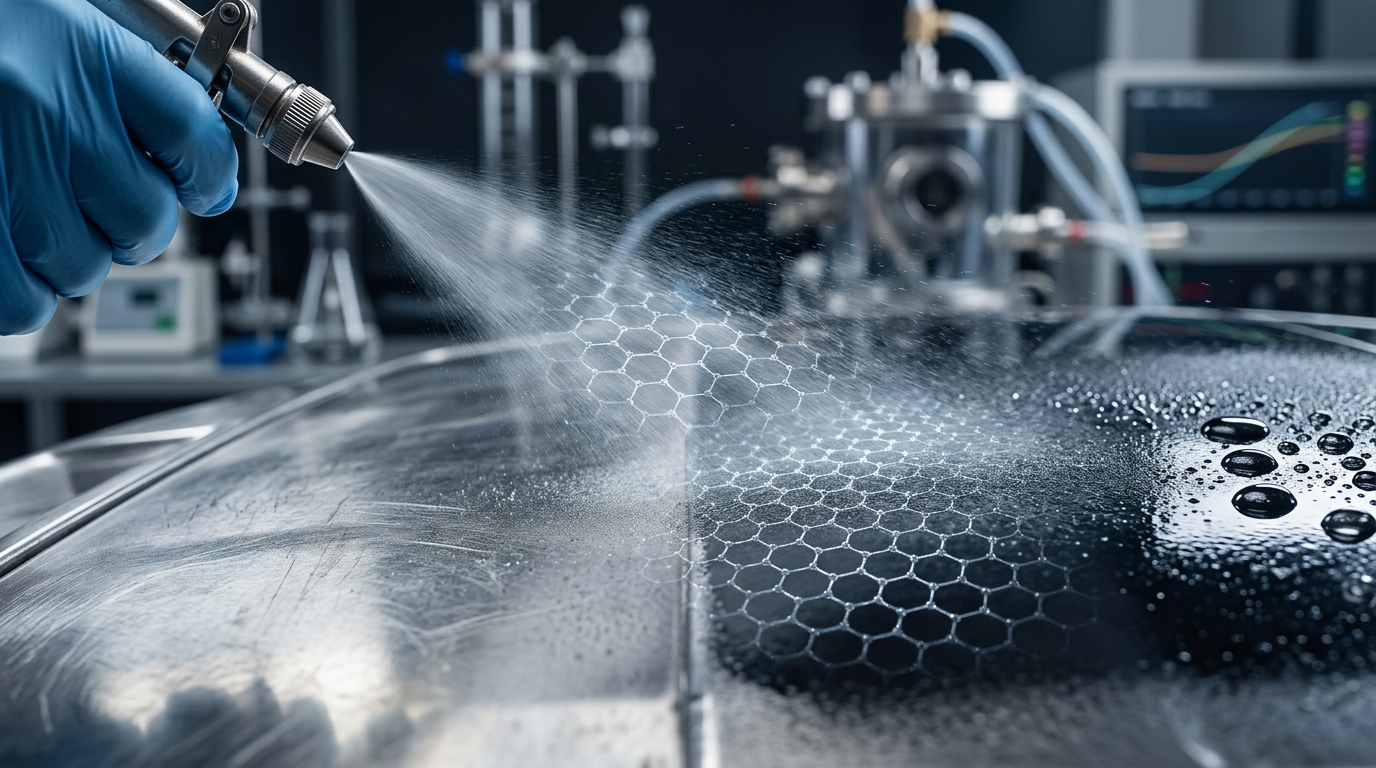
Pure graphene is naturally hydrophobic and insoluble in water, making it difficult to keep suspended in liquid form. Manufacturers chemically modify the material into graphene oxide, creating oxygen-bearing functional groups that allow uniform dispersion in solution. When applied and cured on a vehicle panel, the carrier solvents evaporate, allowing the functionalized platelets to interlock with the polymer backbone. This creates a dense, hydrophobic protective barrier that bonds electrostatically and chemically to clear coats, bare metal, exterior plastics, and glass.
Why Add Graphene to a Spray Polymer?
Traditional ceramic spray sealants rely primarily on silicon dioxide (SiO2) or titanium dioxide (TiO2). While these mineral compounds offer extreme hardness and high water contact angles, they carry distinct practical drawbacks. Pure SiO2 layers act as thermal insulators that trap surface heat and can produce high surface tension that beads water into tall, spherical droplets. On hot days, these beads act as miniature magnifying lenses, baking hard-water mineral deposits directly into the underlying clear coat.
Graphene nanoplatelets introduce three major material advantages into the polymer matrix:
- Thermal Dissipation: The exceptional thermal conductivity of carbon structures helps distribute localized surface heat across the panel, lowering peak surface temperatures on dark-colored paints and significantly reducing the severity of baked-on mineral etching.
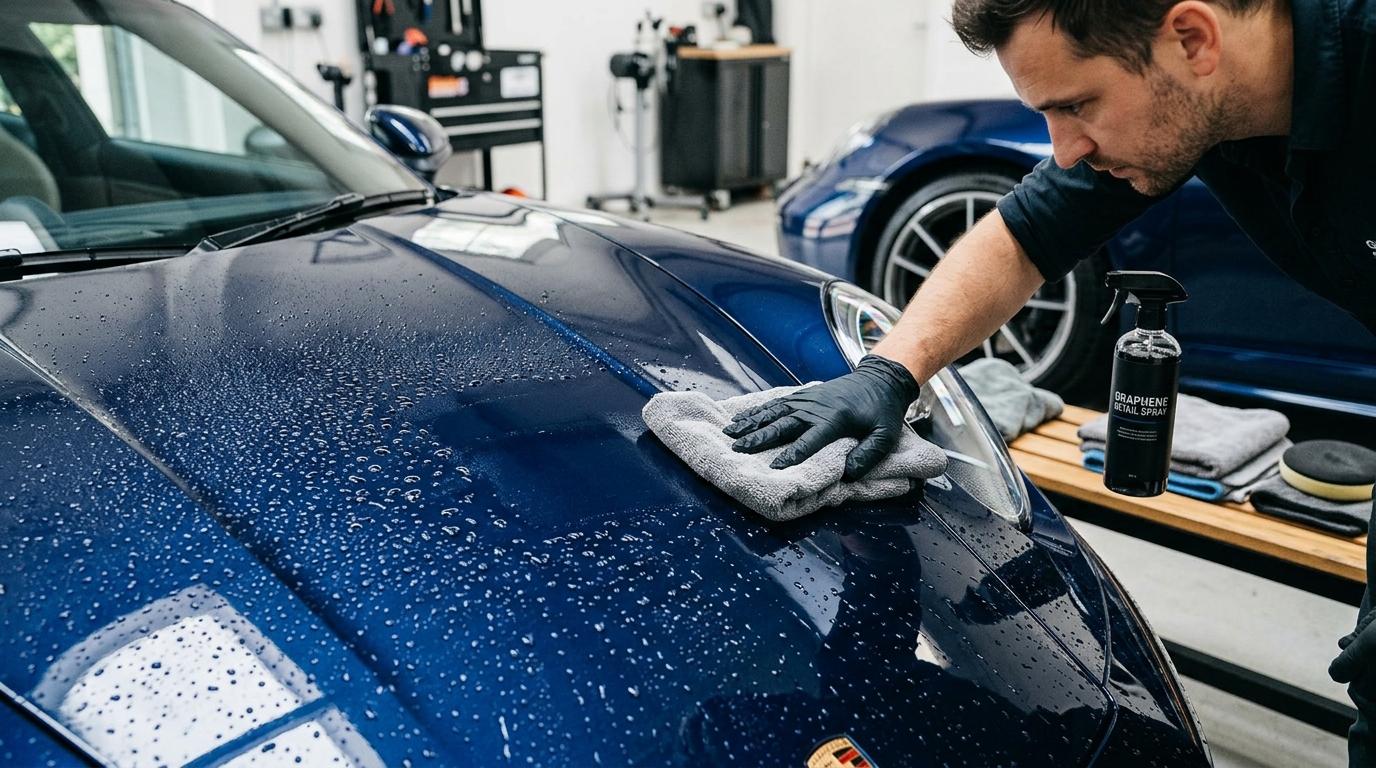
- Reduced Water Spotting: Graphene alters the behavior of water on the surface, promoting a lower sliding angle (water sheeting) rather than merely maximizing static water contact angle (tall standing beads).
- Mechanical and Chemical Resistance: Interlocking carbon platelets reinforce the flexible resin, increasing resilience against high-pH road salts, bug splatter, acidic bird droppings, and abrasive washing friction.
Real-World Performance Analysis
Consumer and professional detailing assessments consistently focus on three core areas: hydrophobic behavior, long-term durability under environmental stress, and the user experience during application.
Hydrophobicity and Water Sheeting Dynamics
Many traditional ceramic sprays highlight high static water contact angles, often exceeding 110 degrees, which create dramatic, tight water beads. While visually appealing, tight beads that remain stationary on horizontal panels (such as hoods and roofs) represent a primary cause of mineral etching.
303 Graphene Nano Spray Coating prioritizes a low hydrophobic sliding angle. Water beads quickly deform and roll off panels at gentle angles of inclination or under mild airflow. During precipitation or vehicle washing, water tends to sheet away in large sheets rather than leaving hundreds of micro-droplets behind. On vertical panels such as doors and fenders, road grime and muddy splash water struggle to anchor to the low-surface-energy film, facilitating the self-cleaning effect associated with advanced nanomaterial coatings.
Chemical Tolerance and Environmental Shielding
A frequent failure point for entry-level spray waxes is degradation from repeated washes with alkaline detergents or automated touchless car wash chemicals. The cross-linked polymer network in the 303 graphene formula exhibits high stability across a wide pH range (typically from pH 3 to pH 12). Reviews from severe-winter climates demonstrate that the coating resists road salt brine, industrial fallout, and corrosive road film far longer than carnauba-based waxes or standard polymer sealants.
Surface Versatility
Unlike traditional SiO2 ceramic coatings that can turn chalky, turn white, or leave stubborn streaks on textured plastics and matte rubber, 303 Graphene Nano Spray Coating is chemically safe for nearly all hard exterior automotive substrates:
- Clear-Coated and Single-Stage Paint: Enhances optical depth, darkens paint appearance, and smooths microscopic surface defects.
- Unpainted Textured Trim: Restores deep black color without leaving powdery white residue in porous plastic grains.
- Glass and Windshields: Provides rain-repellent properties without inducing excessive wiper blade chatter when properly buffed.
- Wheels and Brake Calipers: The high heat tolerance prevents the protective layer from breaking down under intense brake-friction temperatures, reducing stubborn brake dust adhesion.
- Chrome and Polished Aluminum: Protects against oxidation and environmental tarnishing without hazing mirror finishes.
Application Workflow and Unique Characteristics
The practical application of 303 Graphene Nano Spray Coating departs from standard clear-liquid detailers. The liquid itself is opaque black or dark grey due to the physical presence of carbon nanoparticles.
The Black Dispersion Indicator
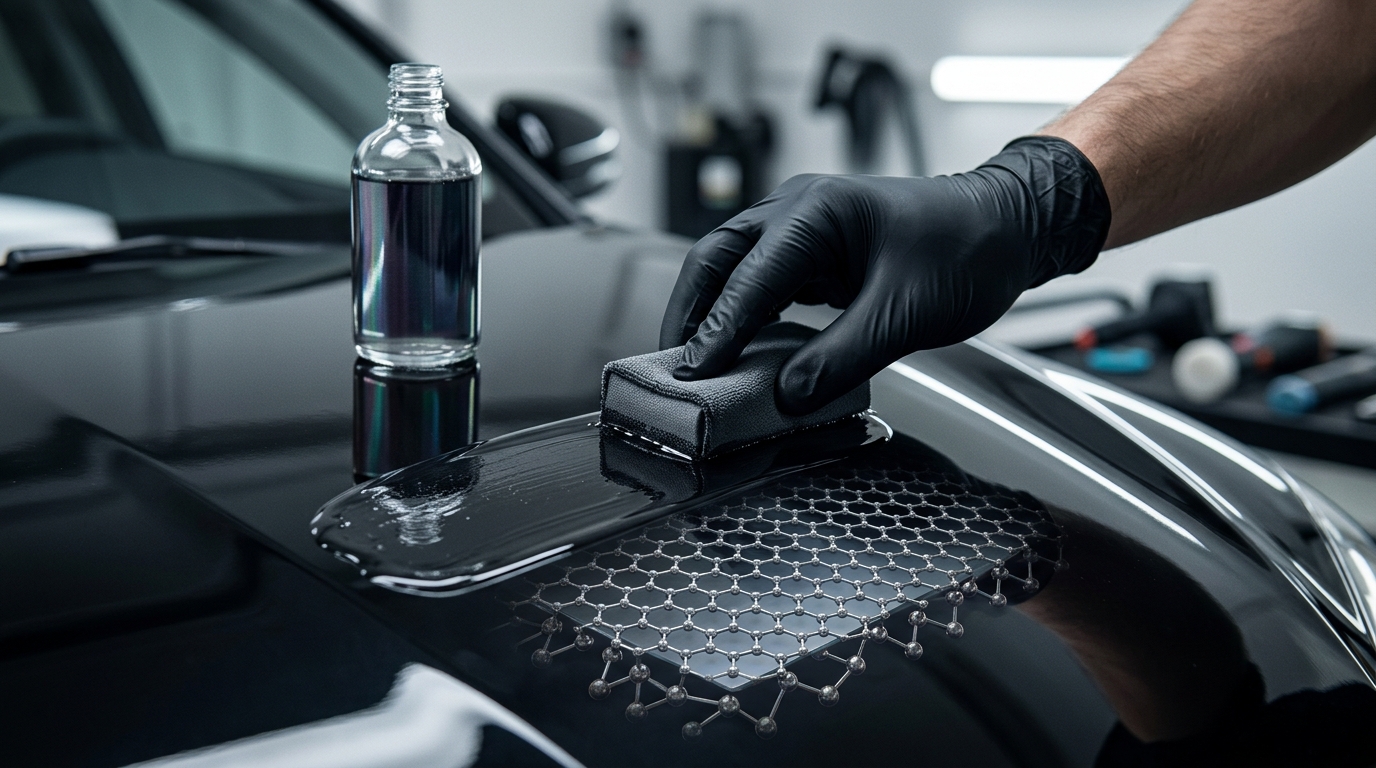
The distinctive dark coloration serves as an effective visual application indicator. When sprayed onto a microfiber applicator and spread across a panel, the product leaves a visible, smoky grey haze. This allows the user to see exact coverage, ensuring no thin spots or missed patches remain.
A unique capability validated across professional reviews is its performance in direct sunlight. While almost all SiO2-based ceramic coatings flash instantly and harden unevenly if applied to hot panels in direct sun, the 303 formula allows application on warm surfaces. Direct sunlight actually accelerates the carrier solvent evaporation without causing the underlying resins to bond prematurely in an unbuffable state.
Step-by-Step Application Best Practices
- Panel Preparation: Wash the vehicle thoroughly with a wax-free decontamination soap. Remove embedded iron deposits and clay the surface to ensure direct mechanical bonding to the clear coat.
- Product Agitation: Shake the bottle vigorously. Because carbon nanoplatelets have a higher density than the carrier solvent, they naturally settle to the bottom over time. Thorough shaking ensures a homogenous suspension.
- Application: Mist the product directly onto a dense microfiber applicator pad or folded microfiber towel rather than spraying the entire panel indiscriminately. Work in a cross-hatch pattern across manageable 3×3 foot sections.
- The Curing Window: Allow the product to haze into a dry, chalky, greyish-white film. The curing window typically ranges from two to five minutes depending on ambient temperature and relative humidity.
- Leveling and Buffing: Buff the panel using a plush, clean microfiber towel. Turn the towel frequently to reveal a clean side, eliminating all dark traces and residual haze until high optical clarity and slickness emerge.
Comparative Overview: 303 Graphene vs. Alternative Sealants
Understanding where this formula fits within the broader automotive protection spectrum requires comparing its properties against common alternative chemistries.
| Performance Metric | Carnauba / Synthetic Wax | SiO2 Ceramic Spray Sealant | 303 Graphene Nano Spray | Professional Hard Glass Ampoule |
|---|---|---|---|---|
| Typical Durability | 4–8 Weeks | 3–6 Months | 6–12 Months | 2–5+ Years |
| Water Spot Resistance | Moderate | Low to Moderate (High bead retention) | High (Thermal dissipation / Sheeting) | Moderate to High |
| Sunlight Application | Poor (Bakes on) | Very Poor (Streaks / Flashes instantly) | Excellent (Designed for sun/shade) | Strictly Indoors |
| Chemical Resistance | Low (Stripped by basic soaps) | Moderate to High | High (pH 3–12 tolerance) | Extreme (pH 2–13 tolerance) |
| Dark Plastic Compatibility | Leaves white chalky stains | Varies (Can streak porous plastic) | Excellent (Restores black finish) | Requires specific trim formula |
| Application Difficulty | Very Easy | Easy to Moderate | Easy (Requires thorough buffing) | High (Risk of permanent high spots) |
Tradeoffs, Limitations, and Misconceptions
While 303 Graphene Nano Spray Coating delivers genuine advantages over conventional spray waxes, accurate assessment requires noting its functional limits.
Microfiber Towel Staining
Because the liquid contains real carbon particles, the dark carrier can permanently stain light-colored microfiber towels and applicator pads. While this does not harm vehicle surfaces, detailers should dedicate specific dark towels for graphene application and wash them separately from standard detailing cloths to prevent cross-contamination.
Dust Attraction Nuances
Some users observe a mild static charge immediately following application and buffing, which can attract airborne dust particles during the first hour of final curing. Once the resin carrier fully stabilizes over a 12-to-24-hour period, surface slickness increases, mitigating static dust attraction during normal driving conditions.
Durability Expectations: Realistic vs. Exaggerated
Product labeling frequently cites durability spanning up to 12 months. In real-world environments, longevity is directly dictated by vehicle storage, mileage, wash frequency, and regional climate. For garaged vehicles washed with pH-neutral shampoos, durability reliably approaches the upper limit. For daily-driven vehicles exposed to continuous outdoor weathering, salt brine, and automated brush car washes, effective hydrophobic life generally ranges from four to eight months, requiring an occasional maintenance topper to preserve peak performance.
Maintenance and Coating Longevity
Maximizing the lifespan of 303 Graphene Nano Spray Coating involves proper mechanical and chemical wash techniques. Because abrasive mechanical friction gradually wears down any spray-applied barrier, adopting gentle wash procedures maintains the surface structure.
- Pre-Wash Rinsing: Use a foam cannon or high-pressure rinse to dislodge heavy grit before making physical contact with a wash mitt.
- pH-Balanced Maintenance Soaps: Clean the vehicle with dedicated automotive shampoos free from added gloss-enhancers, silicones, or heavy carnauba waxes that could clog the graphene micro-structure.
- Topping Regimen: Reapplying the product every three to four months as a dry-aid or light maintenance layer continually refreshes hydrophobic properties and fills microscopic abrasions in the base layer.
Verdict: Who Benefits Most from 303 Graphene?
303 Graphene Nano Spray Coating stands out as a high-performing DIY protective product for vehicle owners who want durability beyond standard waxes without the unforgiving application risks of permanent ceramic glass coatings. Its defining strengths lie in its exceptional resistance to water spotting, forgiving application characteristics in direct sunlight, and wide multi-surface utility across paint, dark plastic trim, and wheels.
While it does not replace the rock-hard physical barrier of a multi-layer professional ceramic ampoule coating, it bridges the gap between consumer convenience and advanced nanomaterial surface protection, making it a reliable, high-value option in modern vehicle care.