Rain-X Pro Graphene Headlight Restoration Kit
The rain-x pro graphene headlight restoration kit is a specialized automotive surface treatment designed to eliminate severe oxidation from weathered headlight lenses and seal the underlying polymer with a graphene-enhanced protective barrier. Modern vehicle headlights rely on optical-grade polycarbonate, a durable thermoplastic that inevitably degrades under continuous solar radiation, heat cycles, and environmental abrasion. While standard restoration kits rely on mechanical sanding followed by conventional wax or silicone-based clear coats, this system incorporates functionalized carbon nanomaterials to build a more resilient, hydrophobic, and ultraviolet-resistant outer layer.
The Chemistry of Headlight Degradation: Why Polycarbonate Yellows
Modern vehicle headlamps are manufactured from bisphenol A (BPA) polycarbonate due to its exceptional impact resistance, structural rigidity, and high optical clarity. However, the polymer backbone of polycarbonate is fundamentally susceptible to solar ultraviolet (UV) radiation, specifically within the UVB spectrum (280–315 nm). When exposed to sunlight and ambient oxygen, the molecular bonds within the polymer chain undergo a photo-oxidative degradation process known as photo-Fries rearrangement.
During this reaction, carbonate linkages along the polymer chains rupture, generating phenolic hydroxyl groups, quinoid structures, and cross-linked aromatic compounds. These new chemical groups absorb light in the blue-violet region of the visible spectrum, causing the lens to take on a characteristic cloudy, yellow appearance. In addition to optical discoloration, the degradation causes microscopic micro-cracking, crazing, and surface pitting that scatters headlight beams, dramatically reducing nighttime visibility and road illumination.
Factory headlights leave the assembly line coated with a sacrificial, UV-cured siloxane or acrylic clear hardcoat. Over years of road exposure, abrasive airborne debris, car wash chemicals, and UV exposure wear this protective factory layer away. Once the factory hardcoat is breached, underlying polycarbonate degradation accelerates rapidly. Effective restoration requires the total physical removal of this degraded surface layer before applying a robust synthetic replacement barrier.
Inside the Rain-X Pro Graphene Headlight Restoration Kit
The restoration workflow is structured into a multi-stage corrective and protective system. Rather than attempting to mask oxidation with oils or temporary fillers, the process systematically strips damaged polymer layers, refines the surface optical geometry, and cures a nano-engineered cross-linking sealant.
1. Surface Preparation and Mechanical Abrasion
The first phase requires chemical pre-cleaning and progressive wet mechanical abrasion. A targeted lubricant or prep solution helps soften degraded oxidized residues while wet-sanding media (typically ranging from medium to ultra-fine abrasive grits) shave down the damaged outer microns of polycarbonate. Wet sanding prevents localized frictional heat from melting the thermoplastic while continuously flushing away slurry that could gouge the surface.
2. Optical Clarification and Micro-Refining
Once the yellowed layer is completely leveled, a fine abrasive refining compound removes the uniform scratch pattern left by the sanding discs. This step brings the lens back to semi-transparency by reducing surface roughness below the wavelength of visible light. At this point, the raw polycarbonate is fully exposed, chemically active, and exceptionally vulnerable to re-oxidation if left unsealed.
3. The Graphene-Infused Barrier Sealant
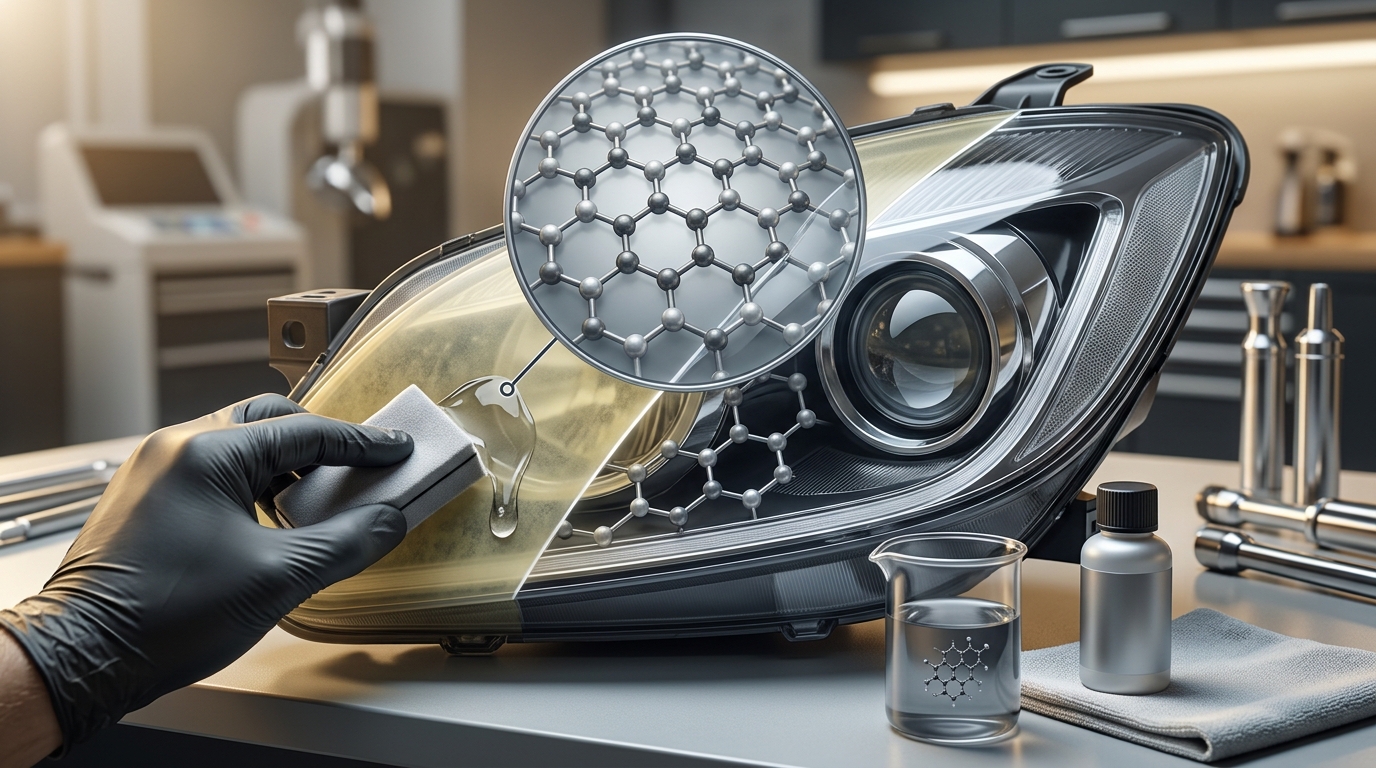
The definitive stage of the system is the application of a liquid sealant formulation containing suspended graphene nanoplatelets or functionalized graphene derivatives dispersed within a curable polymer carrier matrix. When wiped onto the dry lens, the coating flows into remaining microscopic surface pores, levels optically, and cross-links to form an impermeable, highly cohesive hard shell.
How Graphene Nanomaterials Protect Polycarbonate
Graphene consists of a single layer of carbon atoms arranged in a two-dimensional hexagonal lattice. In automotive protective coatings, chemists utilize microscopic stacks of these layers, often formulated as reduced graphene oxide or multi-layer graphene nanoplatelets, blended into synthetic resin carriers like polyorganosilazanes, silanes, or fluoropolymers.
Graphene integration enhances the protective shell through several distinct physical and chemical mechanisms:
- The Tortuous Path Mechanism: Graphene sheets possess an exceptionally high aspect ratio (width relative to thickness). When dispersed horizontally in a cured polymer matrix, these impenetrable 2D sheets create a complex physical maze—known as a tortuous path effect—that blocks and redirects diffusing water molecules, atmospheric oxygen, and environmental pollutants, drastically reducing the transmission rate of corrosive agents to the lens substrate.
- UV Attenuation and Photothermal Dissipation: The extended pi-electron conjugation in graphene sheets allows them to absorb broadband electromagnetic radiation. The coating absorbs high-energy ultraviolet photons and dissipates that energy laterally as low-grade thermal energy across the surface rather than transmitting the energy into the vulnerable polycarbonate chains below.
- Elevated Hydrophobic Contact Angle: The low surface energy of graphene-modified polymers creates a high hydrophobic contact angle, typically exceeding 100 degrees. Water forms tight beads and rolls off the lens, carrying away loose dust, road salts, and acidic contaminants before they can etch the surface.
- Thermal Dissipation: High-output halogen and LED headlamps generate substantial localized heat within the headlight housing. Graphene exhibits extraordinary in-plane thermal conductivity, helping spread hotspot heat evenly across the entire face of the lens to minimize thermal degradation stress.
Graphene vs. Traditional Protective Chemistries
Restoration products have historically relied on paste waxes, synthetic polymer sealants, or ceramic (silicon dioxide, SiO2) liquid coatings. Understanding how graphene compares against these chemistries clarifies its practical value and limitations.
| Feature / Metric | Conventional Polymer / Wax | Standard Ceramic (SiO2) | Graphene-Infused Resin |
|---|---|---|---|
| Primary Mechanism | Sacrificial organic film | Silica crystal lattice network | 2D Carbon lattice in hybrid resin matrix |
| Durability Profile | Short-term (weeks to months) | Extended (1 to 2 years) | Extended (multi-year durability) |
| Water Spot Resistance | Moderate to Poor | Prone to mineral etching | High (reduces heat-driven water spotting) |
| Thermal Conductivity | Low (thermal insulator) | Low to Moderate | Very High (aids surface heat dispersion) |
| Barrier Impermeability | Low (permeable to oxygen) | High (dense micro-structure) | Very High (tortuous path barrier) |
| Optical Application Window | Very forgiving | Demands precise flash timing | Balanced; requires uniform thin application |
Step-by-Step Restoration Protocol and Curing Kinetics
Proper application is critical to achieving both optical clarity and long-term durability when using the rain-x pro graphene headlight restoration kit. Skipping steps or rushing curing windows degrades the mechanical bond between the coating and the lens.
Phase 1: Masking and Surface Cleaning
Wash the headlight thoroughly to remove road grime, grease, and traffic film. Dry the area and apply multiple layers of protective automotive masking tape around the painted body panels and rubber trim adjacent to the headlight housing. This prevents aggressive sanding abrasives from accidentally scouring vehicle clear coat.
Phase 2: Progressive Sanding Steps
Equip the backing pad with the coarsest sandpaper provided in the kit. Lubricate the lens surface generously with water or the provided spray lubricant. Sand the lens using a consistent cross-hatch sanding pattern (horizontal passes followed by vertical passes) rather than circular motions. Continue until all yellowing, pitting, and cloudy factory clear coat are stripped away.
Rinse the lens, wipe it clean, and inspect the frosted, uniform matte finish. Transition sequentially through finer grit sandpapers, ensuring each subsequent grit completely replaces the scratch profile of the previous stage.
Phase 3: Polishing and Refining
Apply the liquid polishing compound to a micro-polishing pad or microfiber cloth. Buff the lens thoroughly using moderate pressure. The compound breaks down into microscopic polishing particulates, smoothing out sanding scratches and restoring near-complete optical transparency. Wipe away all compound residue and inspect for any residual haze or missed spots.
Phase 4: Degreasing and Sealant Application
The lens must be chemically clean and bone dry before applying the coating. Any remaining polishing oils, moisture, or dust will prevent the graphene resin from bonding directly to the polycarbonate substrate. Use an isopropyl alcohol (IPA) surface prep wipe to strip residual oils.
Apply the graphene coating to the lint-free applicator cloth or pad. Wipe the coating across the lens in smooth, overlapping horizontal strokes from top to bottom. Ensure full coverage without dry spots, and do not repeatedly drag the applicator over areas that have already begun to flash or evaporate.
Phase 5: Curing Kinetics
The carrier solvents in the graphene formulation evaporate quickly, leaving behind active reactive compounds that cross-link with atmospheric moisture. Keep the vehicle in a dry, sheltered environment during initial curing. Avoid water exposure, rain, or car washing for at least 24 hours to ensure the matrix achieves full chemical resistance and maximum surface hardness.
Technical Limitations and Performance Tradeoffs
While graphene provides structural and protective advantages, understanding the physics and material limitations of graphene-enhanced coatings prevents unrealistic expectations.
Optical Transparency Constraints
Pure pristine graphene absorbs approximately 2.3% of visible light per atomic layer. If raw graphene concentrations in a liquid formulation are too high, the cured coating will take on a dark grey or smoky tint, reducing optical clarity. Commercial formulations solve this by using ultra-dilute suspensions of transparent nanosheets or reduced graphene oxide flakes optimized specifically to preserve high light transmittance while still delivering barrier enhancement.
Internal Lens Degradation
No restoration kit can correct issues inside the sealed headlight assembly. If a headlamp has experienced moisture intrusion, inner condensation staining, or internal heat crazing directly caused by high-wattage bulbs, external mechanical sanding and coating will not restore total clarity. In such cases, housing replacement or internal disassembly is required.
Substrate Adhesion Dependability
Graphene itself does not naturally adhere to plastics; it relies entirely on the carrier polymers within the formulation (such as silanes or specialized hybrid resins) to anchor it to the polycarbonate substrate. If the sanding or surface degreasing phases are rushed, the resin will delaminate over time, regardless of how resilient the graphene structure is.
Long-Term Maintenance and Prevention of Recurrent Oxidation
After completing restoration with the rain-x pro graphene headlight restoration kit, simple maintenance habits help preserve the integrity of the cured coating and prevent premature failure.
- Avoid Harsh Caustic Chemicals: High-pH touchless car wash soaps and aggressive degreasers attack polymer bonds over time. Clean restored lenses with pH-neutral automotive shampoos.
- Prevent Dry Wiping: Never wipe dusty headlights with a dry cloth. Airborne road silt contains quartz particulates that will physically abrade the protective barrier, causing microscopic scratches that scatter light.
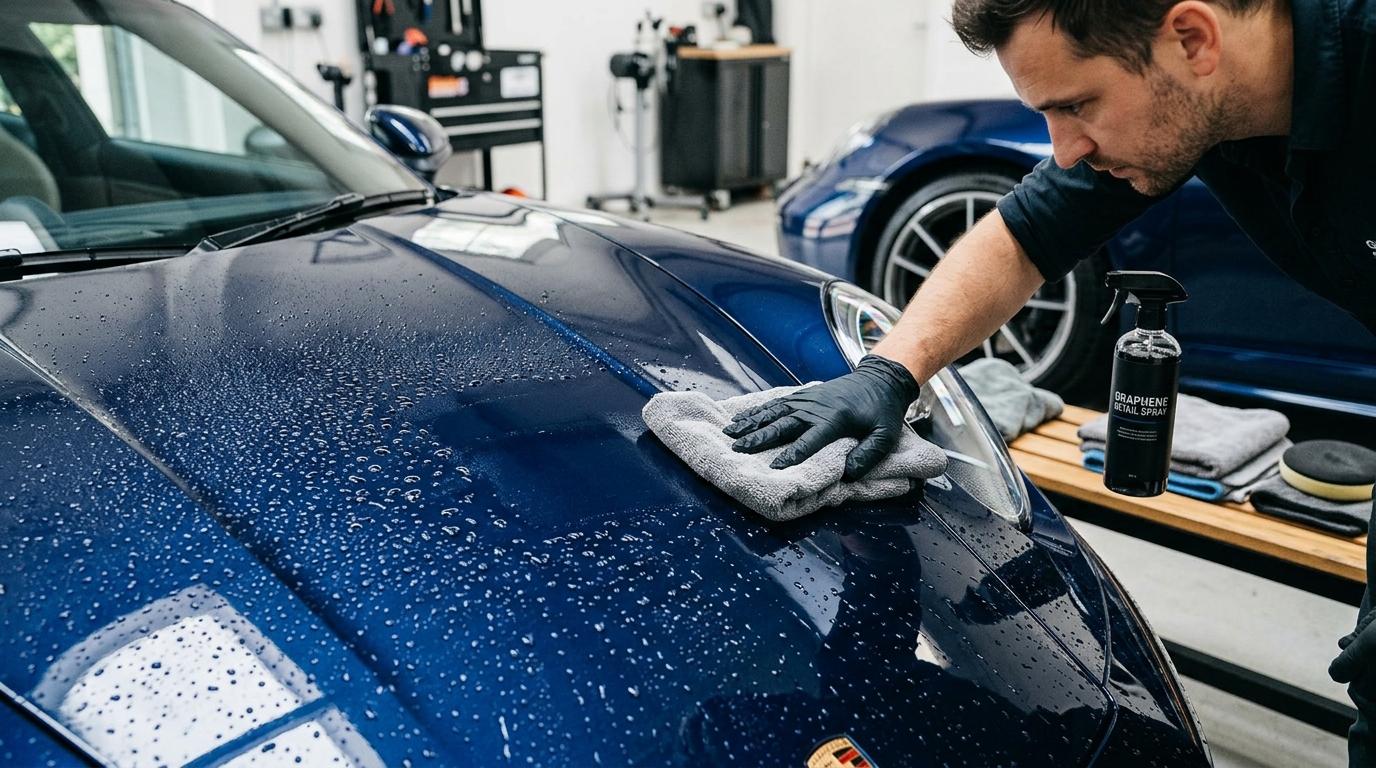
- Apply Periodic Sacrificial Protection: Applying a spray-on graphene detailer or silica-based topper every few months adds an extra sacrificial layer, shielding the primary cross-linked graphene hardcoat from direct environmental wear.
By pairing systematic mechanical removal of degraded polymer with the tortuous barrier dynamics of a graphene-infused protective coat, this restoration process successfully reverses severe UV damage and re-establishes the optical clarity required for safe night driving.