Graphene Nanoplatelets
What Are Graphene Nanoplatelets?
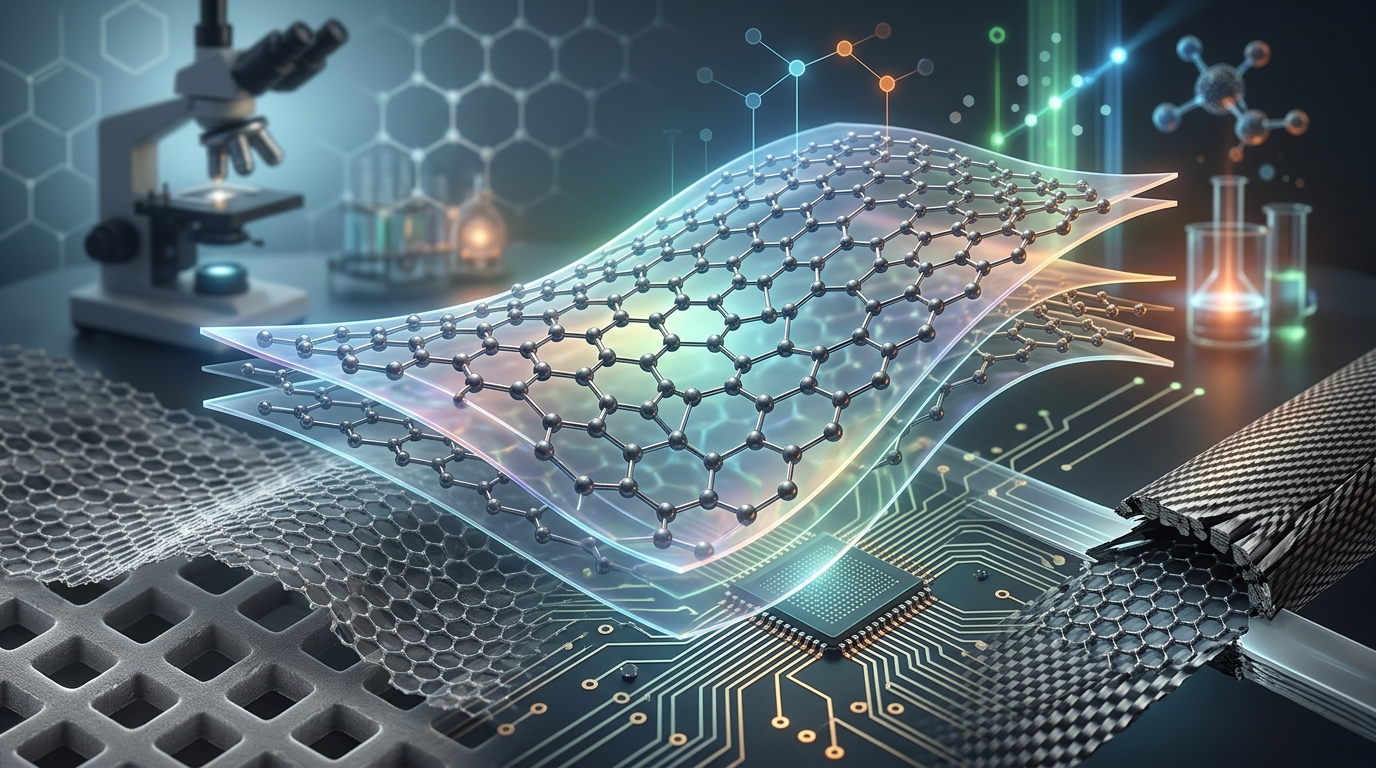
Graphene nanoplatelets (frequently abbreviated as GNPs or GnPs) are advanced two-dimensional carbon nanomaterials consisting of small stacks of multi-layer graphene sheets. They possess a disk- or flake-like morphology characterized by sub-nanometer to nanometer-scale thickness paired with lateral dimensions that typically span from hundreds of nanometers up to several tens of micrometers.
To accurately understand GNPs, it is essential to distinguish them from other forms of industrial carbon and 2D materials:
- Single-Layer Graphene: A single, atom-thick planar sheet of sp2-hybridized carbon atoms arranged in a honeycomb lattice. While possessing theoretical upper-bound electrical and thermal conductivity, pure single-layer graphene (typically produced via chemical vapor deposition) is difficult and expensive to manufacture at mass scale for bulk volumetric applications.
- Graphene Nanoplatelets (GNPs): Composed of several to dozens of stacked graphene layers. GNPs bridge the gap between single-layer sheets and bulk graphite. According to standards established under ISO/TS 80004-13, carbon particles containing between 1 and 10 layers are classified as multi-layer graphene, while thicker stacks up to 100 nm that retain high specific surface area and high 2D aspect ratios are widely classified commercially and industrially as graphene nanoplatelets or graphite nanoflakes.
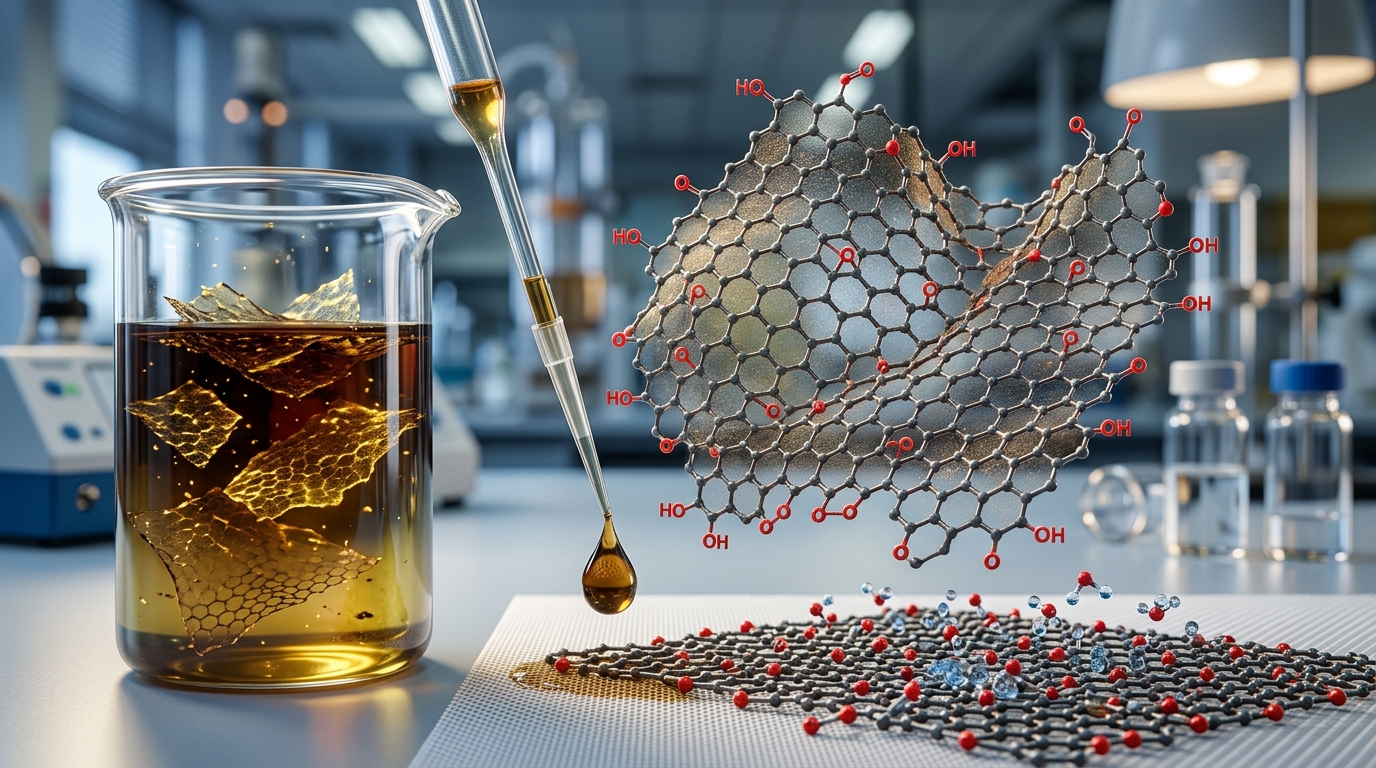
- Graphene Oxide (GO) and Reduced Graphene Oxide (rGO): Graphene oxide is produced via aggressive chemical oxidation of graphite (such as the Hummers’ method), disrupting the sp2 network with hydroxyl, epoxy, and carboxyl functional groups. This renders GO electrically insulating until chemical or thermal reduction restores partial conductivity as rGO. In contrast, pristine GNPs are prepared via physical or thermo-mechanical exfoliation routes that largely preserve the intact, unoxidized sp2 carbon lattice.
- Bulk Graphite: A macroscopic mineral composed of millions of tightly bound graphene sheets held together by van der Waals forces. Bulk graphite lacks the high specific surface area, aspect ratio, and nano-reinforcement capabilities of exfoliated nanoplatelets.
Morphology, Physical Dimensions, and Structural Metrics
The performance of graphene nanoplatelets in commercial formulations depends directly on four primary structural metrics: thickness, lateral flake dimension, aspect ratio, and specific surface area.
| Parameter | Typical Range | Significance in Processing and Performance |
|---|---|---|
| Thickness | 0.7 nm to 20 nm (approx. 2 to 50 layers) | Determines out-of-plane flexural rigidity and mechanical compliance within a host matrix. Thinner flakes behave closer to 2D membranes, whereas thicker flakes exhibit higher mechanical stiffness. |
| Lateral Dimension ($x-y$) | 0.5 μm to 50 μm | Governs the overlap between adjacent platelets in conductive networks and controls load transfer length in structural composites. |
| Aspect Ratio | 100:1 to >2,000:1 | Ratio of lateral size to thickness. Higher aspect ratios dramatically reduce the electrical and thermal percolation threshold required to impart functionality into insulating matrices. |
| Specific Surface Area (SSA) | 50 m2/g to 750 m2/g | Controls the interfacial contact area available for matrix bonding, barrier tortuosity, and resin wettability. |
Because GNPs are platelet-shaped rather than spherical (like carbon black) or cylindrical (like carbon nanotubes), they provide an anisotropic morphology. Their properties along the in-plane ($a-b$) axis differ substantially from their cross-plane ($c$-axis) direction, making spatial orientation and dispersion critical factors in final material performance.
Industrial Synthesis and Production Methods
Commercial viability requires synthesis methods that yield consistent flake dimensions, minimal structural defects, and cost-effective throughput. The primary industrial production routes utilize top-down exfoliation of naturally occurring or synthetic graphite precursors.
1. Thermal Expansion and Shock Exfoliation
The thermal expansion route starts with intercalated graphite (often graphite bisulfate or expandable graphite flakes). Chemical intercalants are inserted between the graphene basal planes. When subjected to rapid thermal shock (often exceeding 800°C to 1050°C within seconds), the intercalated volatile compounds vaporize explosively.
The resulting gas expansion forces the graphene layers apart along the $c$-axis, yielding a low-density, high-volume material known as “expanded graphite” or “graphite worm.” Subsequent mechanical milling, ultrasonication, or high-pressure air jet milling breaks these accordion-like structures down into discrete, high-purity graphene nanoplatelets.
2. Liquid-Phase Exfoliation (LPE) and High-Shear Mixing
Liquid-phase exfoliation relies on overcoming the interlaminar van der Waals attraction through fluid shear stress or cavitation. Graphite flakes are suspended in a liquid medium whose surface energy closely matches that of graphene (e.g., N-methyl-2-pyrrolidone, dimethylformamide, or water containing tailored surfactants).
- Cavitation (Ultrasonication): High-power acoustic waves generate microscopic cavitation bubbles that collapse against graphite surfaces, peeling away thin layers.
- High-Shear Rotor-Stator Systems: Industrial hydrodynamic shear devices generate high shear rates ($>10^4 ext{ s}^{-1}$) that gently slide adjacent graphene planes apart without generating excessive basal-plane fragmentation.
- Microfluidization: High-pressure fluid channels accelerate graphite suspensions through narrow micro-orifices, subjecting flakes to simultaneous shear, impact, and spatial compression to yield thin, uniform platelets.
3. Mechano-Chemical and Ball Milling Routes
Ball milling can be performed in either dry or wet states. In wet mechano-chemical exfoliation, mild chemical agents or dry ice (solid CO2) are added to the milling chamber. The shear action of the colliding milling media shears graphite along the basal plane, while chemical additives functionalize the freshly exposed edges, preventing immediate restacking.
While ball milling provides high production yields and low processing costs, careful control over rotational energy is necessary to avoid excessive lattice degradation and reduction of lateral flake dimensions.
Key Physical and Functional Properties
Graphene nanoplatelets inherit much of the exceptional intrinsic performance of the graphene lattice, provided that high structural crystallinity is maintained during production.
Electrical Properties
Pristine GNPs exhibit high in-plane electrical conductivity derived from the delocalized π-electron cloud of their sp2 carbon networks. When dispersed throughout an electrically insulating polymer, GNPs form an interconnected conductive network at a distinct percolation threshold (often between 0.5% and 5% by weight, depending on flake aspect ratio and dispersion quality).
Unlike spherical conductive additives such as carbon black, which require high loading levels to achieve continuous particle contact, the broad two-dimensional planar area of GNPs facilitates point-to-point and plane-to-plane electron hopping across larger inter-particle distances.
Thermal Conductivity
The in-plane thermal conductivity of individual graphene sheets can theoretically exceed 2,000 W/m·K, mediated by long mean-free-path acoustic phonons. In GNPs, the in-plane thermal conductivity remains exceptionally high (typically 500 to 1,500 W/m·K depending on layer thickness and defect density).
However, cross-plane thermal transport is governed by weak interlayer van der Waals bonding, resulting in lower perpendicular thermal conductivity (typically 5 to 20 W/m·K). Managing the spatial alignment of GNPs within a compound is therefore critical for thermal interface engineering.
Mechanical Reinforcement
With an in-plane Young’s modulus near 1 TPa and high intrinsic tensile strength, GNPs provide robust mechanical reinforcement when integrated into host matrices. They reinforce materials through three primary mechanisms:
- Effective Shear Stress Transfer: The high surface area provides extensive interfacial contact with the surrounding polymer chains.
- Crack Deflection and Pinning: Advancing microscopic cracks encounter rigid 2D platelets, forcing crack propagation pathways to deflect, bifurcate, or tilt, which dissipates fracture energy.
- Platelet Pull-Out Resistance: The broad planar geometry requires substantial interfacial work to dislodge embedded platelets from the polymer matrix during mechanical deformation.
Barrier and Permeation Resistance
The pristine basal plane of an intact graphene sheet is completely impermeable to all standard gas molecules and moisture. When aligned horizontally within a thin polymer film or protective coating, GNPs establish a tortuous path.
Diffusing gas or liquid molecules cannot travel in a straight path perpendicular to the substrate; instead, they must navigate around the impermeable platelets, substantially reducing the permeation rate of oxygen, moisture, solvents, and corrosive ions.
Primary Industrial and Commercial Applications
1. Polymer Matrix Composites and Lightweighting
GNPs are used as functional additives in thermoplastics (such as PA6, PEEK, polypropylene) and thermosetting resins (such as epoxy and vinyl esters). Primary industrial use cases include:
- Electrostatic Discharge (ESD) and EMI Shielding: Providing antistatic dissipation in electronic housings, automotive fuel components, and cleanroom equipment without relying on high loadings of metal powders.
- Structural Stiffening: Increasing flexural modulus, tensile strength, and heat deflection temperatures (HDT) in structural automotive parts and aerospace components.
- Wear and Tribological Resistance: Reducing the friction coefficient and mechanical wear rate in self-lubricating dry bushings, seals, and gear mechanisms.
2. Thermal Interface Materials (TIMs) and Heat Dissipation
Modern microelectronics require efficient heat dissipation from compact semiconductor packages. GNPs are formulated into thermal greases, phase-change materials, gap fillers, and flexible graphite-composite heat spreaders. Their planar structure allows them to bridge thermal contact resistance across microscopic surface roughness on heat sinks and semiconductor dies.
3. Conductive Inks, Pastes, and Printed Electronics
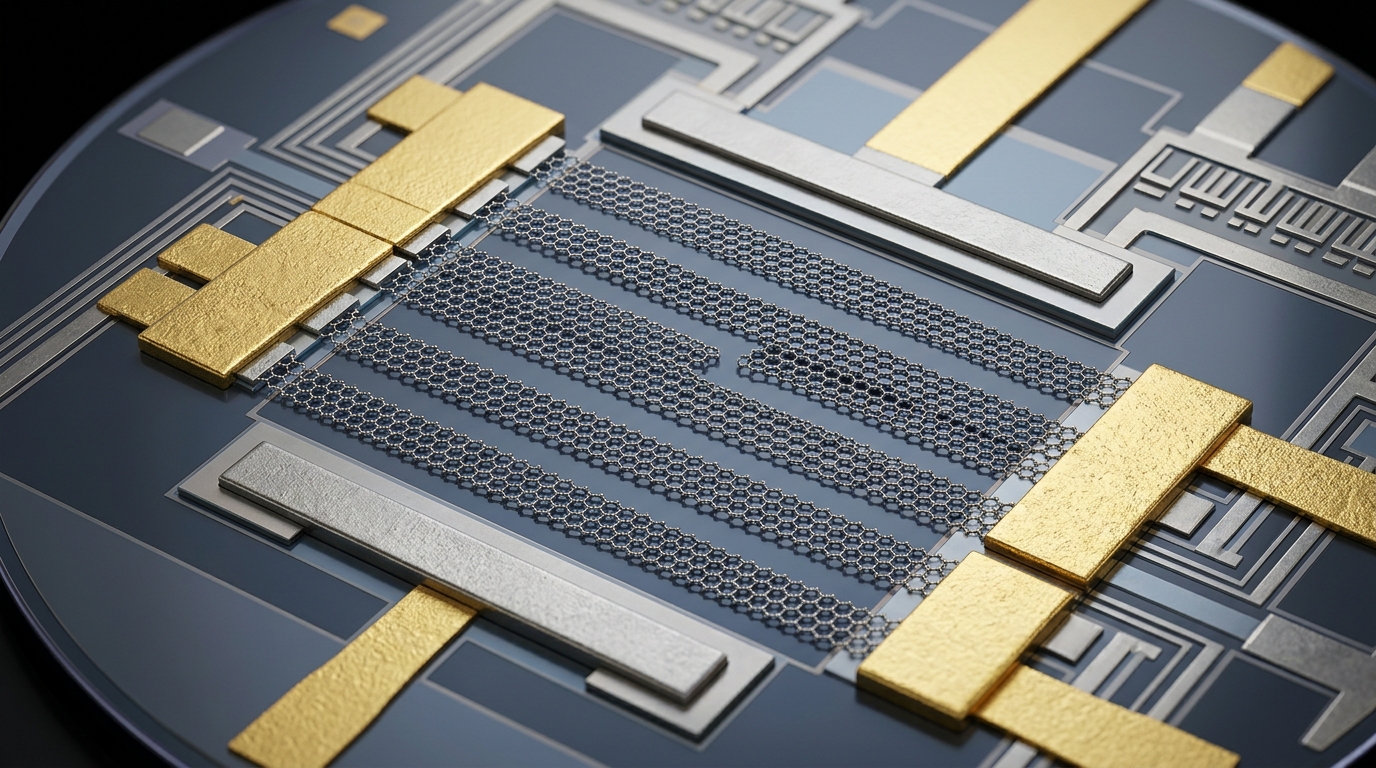
GNP-based formulations provide an alternative to expensive silver flake inks for printed electronic circuitry. They are utilized in:
- Screen-printed radio-frequency identification (RFID) antenna traces.
- Flexible printed heaters and wearable sensory patches.
- Electrochemical sensors and glucose monitoring test strips.
4. Protective, Anti-Corrosion, and Marine Coatings
Incorporating GNPs into epoxy or polyurethane primer coatings enhances long-term corrosion resistance for maritime, pipeline, and infrastructure steel. The tortuous barrier effect blocks electrolyte pathways (water, chloride ions, and oxygen), while the mechanical toughness of the platelets resists cavitation, abrasion, and micro-cracking.
5. Energy Storage Electrodes
In lithium-ion battery and supercapacitor manufacturing, GNPs serve as advanced conductive additives within cathode and anode slurries. Replacing or blending conventional carbon black with GNPs forms a 2D/0D hybrid conductive network that lowers internal cell impedance, accommodates volumetric expansion, and supports faster charge/discharge cycle rates.
Surface Functionalization and Matrix Compatibility
Because pristine graphene surfaces are chemically inert and non-polar, they can experience poor interfacial wetting and weak physical bonding with polar polymers such as epoxies or polyamides. To resolve this, specialized surface modification techniques are used:
Covalent Functionalization
Covalent modification introduces chemical functional groups directly to the flake edges or basal planes:
- Edge Carboxylation (-COOH): Imparts dispersibility in water and polar solvents while serving as reactive sites for crosslinking into epoxy networks.
- Silanization: Treating hydroxyl-bearing or mildly oxidized GNPs with organosilanes (e.g., APTES) improves chemical adhesion to glass, mineral fillers, and silica-rich resins.
- Amine Functionalization (-NH2): Facilitates direct covalent incorporation into curing epoxy resins, maximizing interfacial shear strength.
Non-Covalent Functionalization
Non-covalent modification relies on physical adsorption via π–π stacking, electrostatic interactions, or van der Waals attraction without disrupting the internal sp2 carbon lattice:
- Aromatic Surfactants: Pyrene derivatives, sodium dodecylbenzene sulfonate (SDBS), and lignin derivatives wrap around the platelet surfaces, imparting steric or electrostatic repulsion that prevents restacking in liquid suspensions.
- Block Copolymers: Amphiphilic polymers provide tailored steric stabilization for solvent-borne and water-borne coating systems.
Practical Challenges and Industrial Limitations
While graphene nanoplatelets offer significant performance capabilities, scaling them from laboratory formulations to high-volume manufacturing requires managing distinct processing challenges:
1. Re-Agglomeration and Dispersion Dynamics
Due to high specific surface areas and strong cohesive van der Waals forces, dry GNPs naturally tend to restack and agglomerate into graphite-like clusters. Poorly dispersed agglomerates act as stress concentrators rather than reinforcing elements, degrading impact resistance and mechanical performance. Achieving consistent dispersion requires high-shear industrial compounding, three-roll milling, or specialized masterbatch concentrates.
2. Rheological Viscosity Spikes
Because of their high aspect ratio, adding even low percentages of GNPs to liquid resins causes an increase in formulation viscosity. This rheological shift can complicate liquid resin infusion, vacuum-assisted resin transfer molding (VARTM), and spray application unless specialized solvent packages or viscosity-reducing dispersants are employed.
3. Flake Anisotropy and Flow-Induced Alignment
During injection molding or extrusion, shear flow fields orient the broad faces of GNPs parallel to the mold flow direction. While this maximizes in-plane electrical conductivity and tensile stiffness along the flow axis, it can result in anisotropic shrinkage, lower through-plane properties, and directional variations in the final part.
Handling, Safe Processing, and Industrial Hygiene
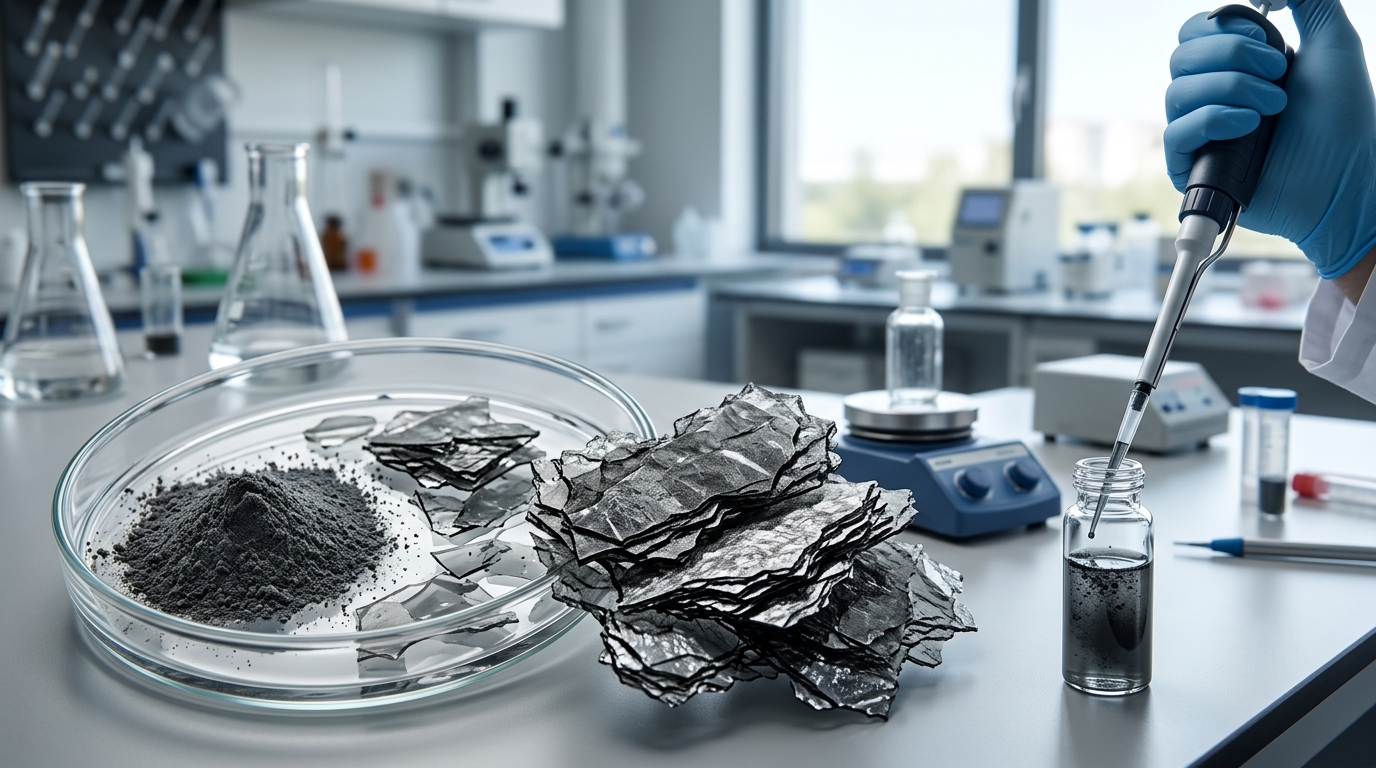
Dry, uncompacted graphene nanoplatelets are low-bulk-density, lightweight powders that can readily form airborne particulate clouds. Industrial facilities processing GNPs should implement standard nanomaterial hygiene practices:
- Engineering Controls: Enclosed powder transfer systems, local exhaust ventilation (LEV), and HEPA-filtered dust collection systems should be utilized at dumping, weighing, and compounding stations.
- Form Delivery: Whenever feasible, processors should source GNPs pre-dispersed in liquid masterbatches, pellets, or concentrated paste systems to eliminate dry powder handling.
- Personal Protective Equipment (PPE): When handling dry powders, operators should use appropriate particulate respirators (such as N95/N100 or FFP3 depending on regional occupational safety regulations), safety goggles, and nitrile gloves.
- Standard Characterization: Industrial quality control should verify batch-to-batch consistency by tracking lateral flake size distribution (via dynamic light scattering or SEM), layer thickness/defect levels (via Raman spectroscopy $I_D/I_G$ ratio), and ash/purity content (via thermogravimetric analysis, TGA).