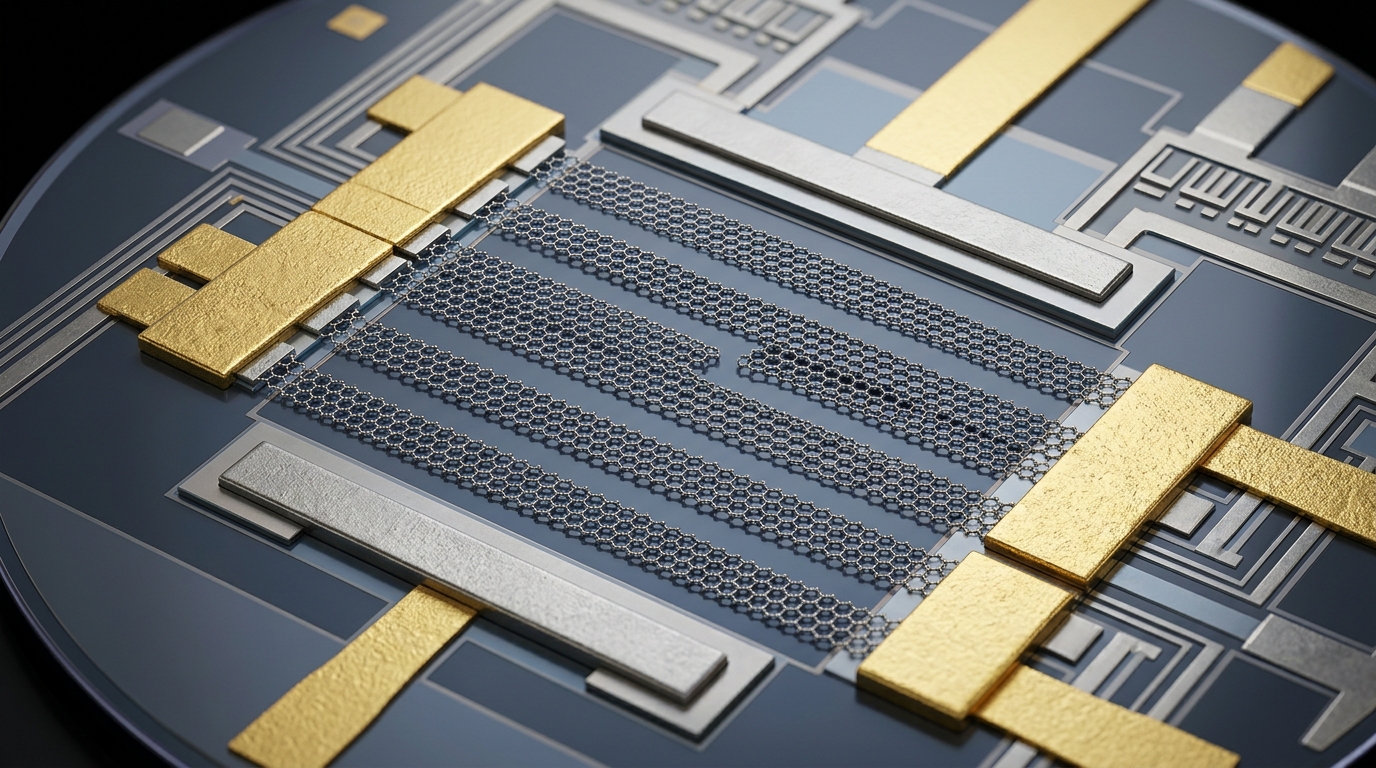

Graphene Battery Market
The global graphene battery market is transitioning from specialized material research into industrial and commercial deployment. Driven by surging demand for extreme fast charging (XFC), higher energy density, and superior thermal stability across electric vehicles (EVs), consumer electronics, and stationary energy storage systems (ESS), graphene is increasingly integrated into commercial electrochemical architectures. Rather than replacing lithium-ion outright, graphene functions primarily as an advanced conductive additive, composite anode/cathode matrix component, and supercapacitor electrode material designed to solve the thermal and kinetic bottlenecks of legacy battery chemistries.
Graphene Battery Market Size and Growth Forecasts
Market valuations for the graphene battery sector vary among major market research institutions depending on segmentation boundaries. Specifically, broader evaluations encompass graphene-enhanced lithium-ion batteries and conductive masterbatches, while narrower forecasts track pure graphene-specific architectures such as graphene ultracapacitors and novel lithium-sulfur (Li-S) cells.
Across independent market intelligence reports, the global market demonstrates strong double-digit compound annual growth rates (CAGRs) ranging from approximately 20% to 28% through the early 2030s:
| Research Institution | Base Year Valuation | Forecast Horizon | Projected Valuation | Projected CAGR |
|---|---|---|---|---|
| Market.us | $190.0 Million (2024) | 2025–2034 | $2.17 Billion | 27.6% |
| Global Market Insights | $303.9 Million (2025) | 2026–2034 | $1.80 Billion | 22.1% |
| Fortune Business Insights | $211.87 Million (2025) | 2026–2034 | $1.51 Billion | 24.37% |
| IMARC Group | $166.4 Million (2025) | 2026–2034 | $898.5 Million | 19.99% |
| Grand View Research | $170.9 Million (2023) | 2024–2030 | $848.3 Million | 26.3% |
The variance in base valuations reflects different analytical scopes. Research categorizing bulk conductive additives (such as graphene nanoplatelet slurries integrated into conventional automotive cathode formulations) reports higher revenue baselines, whereas studies isolating dedicated graphene pouch, cylindrical, and ultracapacitor cell sales report lower current baselines with steep growth curves tied to mass EV commercialization timelines.
Key Drivers Fueling Market Expansion
Commercial interest in the graphene battery market is anchored in four structural performance and industrial drivers:
1. Extreme Fast-Charging (XFC) Demands in E-Mobility
Widespread electric vehicle adoption requires rapid charging capabilities comparable to conventional internal combustion refueling. Standard lithium-ion batteries face severe physical limitations during 4C–6C fast charging, including lithium plating on graphite anodes, localized overheating, and accelerated capacity loss. Graphene provides exceptional electrical conductivity and electron mobility, facilitating rapid charge transfer kinetics without inducing internal dendritic short-circuits.
2. High-Performance Thermal Management and Safety
Thermal runaway remains a critical safety hazard in dense battery packs. Pristine graphene exhibits an in-plane thermal conductivity between 3,000 and 5,000 W/m·K. Incorporating graphene networks into electrode slurries or proprietary non-flammable electrolyte systems enables rapid internal heat dissipation, eliminating localized thermal hotspots and significantly widening the safe operational temperature window of high-drain cells.
3. Grid Modernization, ESS, and Hyperscale Data Centers
The rapid expansion of intermittent renewable energy (solar and wind) and continuous power requirements for AI hyperscale data centers require high-cycle-life stationary energy storage systems (BESS). Graphene-enhanced chemistries and hybrid supercapacitors deliver tens of thousands of continuous charge-discharge cycles with minimal degradation, making them suitable for frequency regulation, uninterruptible power supply (UPS) units, and dynamic grid stabilization.
4. Form-Factor Miniaturization in Consumer Electronics
High-drain consumer devices, including smart wearables, virtual and augmented reality (VR/AR) headsets, professional drones, and ultra-thin mobile electronics, require compact batteries capable of fast charging and prolonged cycle lifespans. Graphene-enhanced composite anodes (such as silicon-graphene) allow manufacturers to increase volumetric and gravimetric energy density without the severe mechanical swelling typical of pure silicon materials.
Market Segmentation by Technology and End-Use
The graphene battery ecosystem is segmented across distinct chemical architectures and target end-use verticals, each displaying different commercial maturity levels.
By Electrochemical Technology Type
- Graphene-Enhanced Lithium-ion Batteries (LIBs): Representing the dominant commercial segment (commanding roughly 55% to 85% of total market revenue), this technology utilizes graphene as a conductive additive in cathode and anode formulations. Graphene-silicon composite anodes utilize graphene scaffolds to buffer the 300% volumetric expansion of silicon during lithiation, boosting specific capacity while maintaining electrode integrity.
- Graphene Supercapacitors and Ultracapacitors: Featuring curved or highly porous graphene electrodes, these systems provide exceptional power density, sub-minute recharge times, and operating lives exceeding hundreds of thousands of cycles. They serve high-rate power applications including regenerative braking and grid frequency response.
- Lithium-Sulfur (Li-S) Graphene Architectures: Graphene structures act as physical and chemical barriers to trap polysulfide intermediates, mitigating the destructive "shuttle effect" that has historically limited Li-S commercialization. This architecture targets theoretical gravimetric energy densities above 500 Wh/kg for aerospace and defense applications.
- Graphene-Aluminum-Ion and Alternative Chemistries: Emerging non-lithium systems leverage graphene cathodes with aluminum anodes, offering sustainable raw material sourcing, non-flammability, and high charge rates for stationary storage.
- Graphene-Enhanced Lead-Acid Batteries: Adding graphene to the negative active material of traditional lead-acid batteries reduces sulfation and improves dynamic charge acceptance in micro-mobility and legacy industrial backup power systems.
By End-Use Vertical
- Automotive and E-Mobility: The largest revenue-generating application (representing roughly 35% to 56% of the market), encompassing passenger EVs, commercial e-buses, two-wheelers, and heavy industrial haulage.
- Consumer Electronics: High-end smartphones, wearable health monitors, power tools, and high-performance computing hardware requiring fast-charging cells.
- Industrial, Aerospace, and Defense: Unmanned aerial vehicles (UAVs), automated guided vehicles (AGVs), marine propulsion, and satellite systems where high gravimetric density, low weight, and wide operating temperature ranges are required.
- Energy Storage Systems (ESS) and Utilities: Grid-scale battery installations, telecom backup infrastructure, and industrial load-shifting systems.
Commercial Landscape and Key Market Innovators
The competitive landscape includes specialty advanced material startups, battery cell manufacturers, and global carbon additive suppliers operating in distinct stages of supply-chain integration.
| Company | Headquarters | Core Technology & Commercial Focus |
|---|---|---|
| Nanotech Energy | United States | Manufactures non-flammable graphene-enhanced lithium-ion cells (18650 and pouch form factors) combining graphene electrodes with proprietary fire-resistant electrolytes. |
| Skeleton Technologies | Estonia / Germany | Specializes in curved graphene ultracapacitors and hybrid "SuperBattery" technology for automotive, heavy transportation, grid stabilization, and AI data center power management. |
| Lyten | United States | Develops 3D Graphene™ material platforms targeting next-generation Lithium-Sulfur (Li-S) batteries for aerospace, defense, and EV applications. |
| Graphene Manufacturing Group (GMG) | Australia | Commercializing graphene-aluminum-ion battery cells ("G-Cell") developed alongside the University of Queensland, targeting rapid charging and non-lithium markets. |
| StoreDot | Israel | Engineers Extreme Fast Charging (XFC) battery architectures utilizing nanomaterials and graphene networks, backed by strategic partnerships with automotive OEMs such as Volvo, Polestar, and VinFast. |
| NanoXplore / Cabot Corporation | Canada / United States | Industrial-scale producers of graphene nanoplatelets (GNPs) and specialized conductive carbon additives for high-volume battery slurry formulations. |
Regional Market Breakdown
Asia-Pacific (APAC)
The Asia-Pacific region holds the largest share of the graphene battery market, capturing between 33% and over 50% of global market revenue depending on supply-chain segmentation. APAC maintains this leadership through its dominant position in raw graphite processing, refining, and lithium-ion cell manufacturing infrastructure across China, South Korea, and Japan. Robust domestic EV adoption targets and substantial state-backed funding for advanced battery materials continue to accelerate regional production scale.
North America
North America commands a substantial revenue share (approximately 32% to 42%), supported by robust venture capital ecosystems, significant defense and aerospace demand, and policy initiatives like the U.S. Inflation Reduction Act (IRA). These policies encourage domestic processing of advanced materials, localized cell manufacturing, and reduced reliance on foreign mineral supply chains.
Europe
Europe’s market trajectory is closely aligned with European Union net-zero emissions mandates, strict sustainability directives, and large-scale collaborative research initiatives such as the European Graphene Flagship and Battery 2030+ programs. The European ecosystem emphasizes battery recycling, non-toxic chemistries, low-carbon manufacturing footprints, and heavy industrial grid modernization.
Commercialization Bottlenecks and Industry Challenges
Despite strong compound annual growth rates, several material and manufacturing hurdles continue to govern the speed of commercial scaling:
- High Cost per Kilowatt-Hour ($/kWh): High-purity, battery-grade graphene powders and graphene oxide (GO) cost hundreds to thousands of dollars per kilogram, compared to commodity battery-grade graphite priced at roughly $5 to $15 per kilogram. This price premium directly elevates initial pack-level $/kWh costs above conventional lithium iron phosphate (LFP) and nickel manganese cobalt (NMC) baselines.
- Scalable, Defect-Controlled Synthesis: Producing high-purity, single-to-few-layer graphene with consistent electrochemical properties remains challenging at thousand-metric-ton scales. Variations between chemical vapor deposition (CVD), liquid-phase exfoliation (LPE), and novel flash Joule heating create batch-to-batch inconsistencies in tap density and surface chemistry.
- Slurry Agglomeration and Rheological Complications: Pristine graphene features an exceptionally high specific surface area. When introduced into conventional roll-to-roll electrode slurries, graphene sheets tend to agglomerate due to strong van der Waals forces. This increases slurry viscosity, complicates uniform coating, and often requires customized chemical dispersants or modifications to standard gigafactory coating lines.
- Long Automotive Qualification Cycles: Tier-1 automotive qualification requires multi-year testing regimes covering cycle life, fast-charging degradation, cold-weather performance, and strict safety validation (such as UN 38.3, ISO 26262, and OEM-specific crash and nail-penetration standards). Consequently, commercial integration into production vehicles involves multi-year timelines between pilot validation and high-volume deployment.
Strategic Market Trajectory
The commercial trajectory of the graphene battery market points toward a multi-phase integration model. Over the short to medium term, graphene will continue expanding its presence as an essential conductive additive and thermal stabilizer within advanced silicon-anode and high-nickel cathode lithium-ion batteries. As industrial-scale synthesis methods mature and raw material prices normalize, dedicated architectures—such as commercial graphene ultracapacitors, graphene-enabled lithium-sulfur, and non-lithium metal-ion cells—are positioned to secure growing shares in mission-critical, high-drain, and aerospace applications.