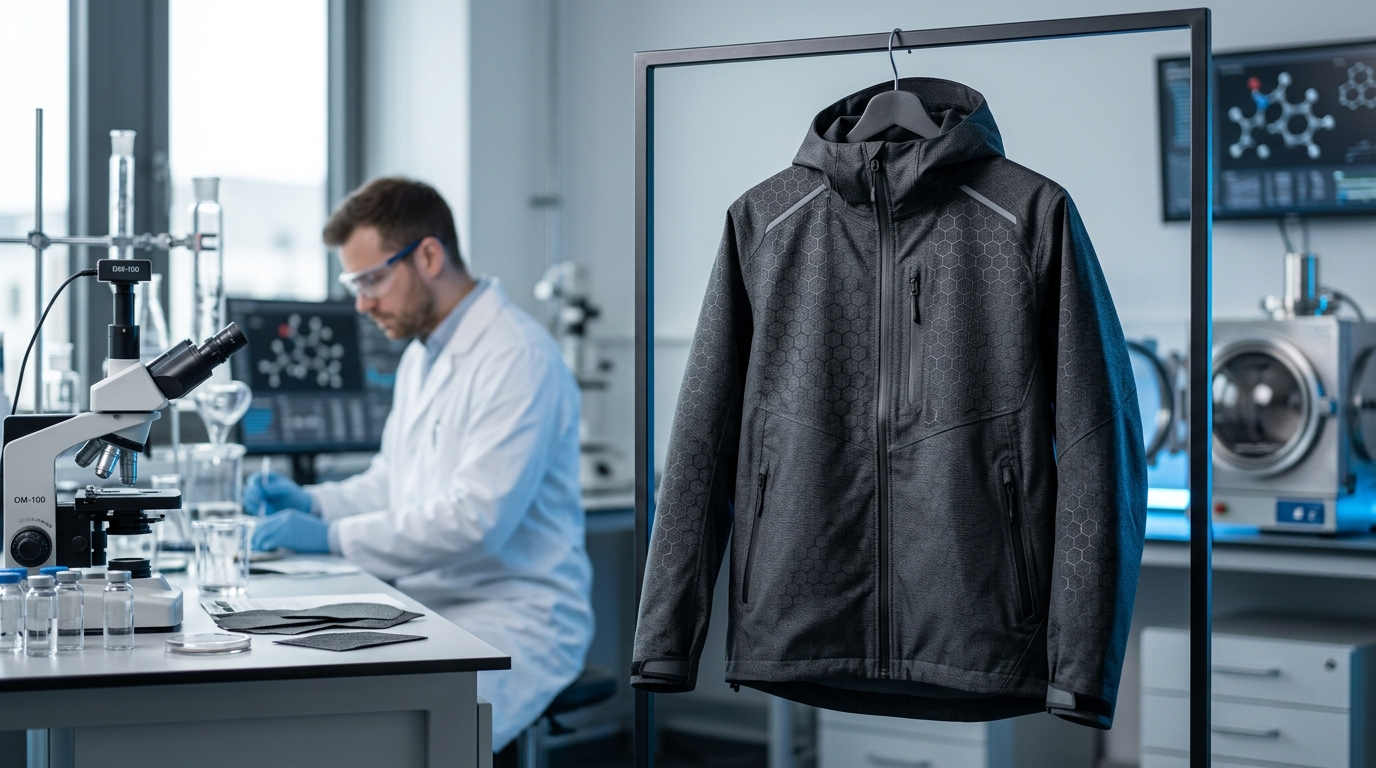

Graphene Fabric
A true graphene fabric is not a garment woven purely from microscopic two-dimensional carbon sheets. Instead, it is an engineered textile system in which graphene derivatives—such as graphene oxide, reduced graphene oxide, or graphene nanoplatelets—are integrated into traditional fibers, yarns, or woven and knitted matrices. By incorporating atomic-scale carbon into textile structures, engineers create materials that manage body heat dynamically, conduct electricity for biometric monitoring, resist microbial growth, and endure extreme mechanical wear without adding substantial weight.
How Graphene Is Integrated into Textiles
Integrating a single-atom-thick hexagonal lattice of carbon into flexible, permeable, and washable textiles requires specialized chemical and physical processing methods. The performance of the resulting fabric depends heavily on how the nanomaterial binds to the host fiber.
1. Fiber Melt-Spinning and Solution Compounding
In synthetic fabrics such as polyester, nylon, and polypropylene, graphene nanoplatelets can be blended directly into the polymer melt prior to extrusion. The molten mixture is pushed through spinnerets to form continuous filament yarns. This method encapsulates the nanomaterial entirely within the fiber core and sheath. Because the carbon particles reside inside the polymer matrix, fabrics produced this way offer exceptional wash permanence, though electrical conductivity is often lower because the polymer acts as an electrical insulator surrounding the isolated flakes.
2. Surface Coating and Dip-Pad-Cure Methods
Natural fibers like cotton, silk, and wool cannot be melt-spun, so graphene is typically applied as an aqueous surface treatment. The pad-dry-cure method immerses the fabric in a suspension of graphene oxide, squeezes out excess liquid through mechanical rollers, and thermally or chemically treats the textile to reduce the oxide back toward conductive graphene. Cross-linking binders—such as polyurethane or acrylic resins—are frequently added to lock the carbon sheets onto the fiber surfaces, preventing them from rinsing away in water.
3. Continuous Graphene Yarns
In specialized laboratory and high-end technical applications, pure or hybrid graphene fibers are produced via wet-spinning liquid-crystalline suspensions of graphene oxide into chemical coagulation baths. These continuous filaments consist primarily of aligned, overlapping graphene sheets. While they offer the highest electrical conductivity and tensile strength along the fiber axis, their mechanical stiffness, low elongation at break, and high manufacturing costs limit their use to specialized sensor patches and aerospace technical textiles rather than mass-market consumer apparel.
Core Functional Mechanisms and Properties
Graphene fundamentally modifies the physical and chemical interactions at the fabric surface. These modifications deliver several distinct functional advantages.
Thermal Regulation and Infrared Emission
Pristine graphene exhibits an in-plane thermal conductivity exceeding that of copper and diamond. When dispersed across a textile matrix, these carbon networks act as micro-scale heat sinks, drawing concentrated thermal energy away from the skin and spreading it laterally across the fabric surface to accelerate evaporative cooling.
Simultaneously, graphene exhibits high emissivity in the far-infrared spectral range. When worn against the body, the material absorbs body heat and re-radiates it as far-infrared radiation back into the subcutaneous tissue. This balance allows graphene textiles to perform dual thermal roles: dissipating excess heat in warm environments while promoting microcirculatory blood flow and perceived warmth in cold conditions.
Electrical Conductivity and E-Textiles
When the concentration of graphene flakes on a fiber exceeds the percolation threshold, individual carbon platelets touch to create an uninterrupted pathway for electrons. This conductive network turns passive fabric into an active platform for flexible electronics. Engineers utilize this property to build:
- Piezoresistive sensing elements that change their electrical resistance when stretched or compressed, capturing breathing rates, joint flexion, and pulse waves.
- Textile-integrated electrodes for continuous electrocardiogram (ECG) and electromyography (EMG) monitoring without the need for irritating electrolytic gels.
- Static-dissipative surfaces for industrial cleanrooms and explosive environments where electrical discharge presents a safety hazard.
Antimicrobial and Barrier Mechanisms
Graphene surfaces inhibit bacterial proliferation through physical and chemical pathways. The sharp atom-thin edges of exposed flakes can physically disrupt bacterial cell membranes upon contact—a mechanism often described as a nano-knife effect. Furthermore, graphene generates mild oxidative stress that compromises bacterial metabolic functions without releasing chemical biocides into the environment. Because the antimicrobial mechanism is largely mechanical rather than chemical, it does not easily wash out or induce bacterial resistance.
Mechanical Durability and Abrasion Resistance
Graphene exhibits an intrinsic tensile strength over one hundred times greater than structural steel. When bonded to textile fibers, it increases interfacial shear strength, shielding delicate polymers from friction and surface wear. In outdoor performance apparel and protective equipment, graphene coatings dramatically reduce fabric pill formation, fiber fraying, and tear propagation under high mechanical loads.
Comparison of Graphene Textile Manufacturing Methods
Choosing a manufacturing approach requires balancing electrical performance, wash durability, hand feel, and production cost.
| Integration Method | Conductivity | Wash Durability | Breathability Impact | Primary Application |
|---|---|---|---|---|
| Polymer Melt Compounding | Low to Moderate | Permanent | Negligible | Athletic wear, thermal base layers, bedding |
| Pad-Dry-Cure Surface Coating | Moderate to High | Moderate (20–50 washes) | Low | Antimicrobial apparel, antistatic workwear |
| Screen / Inkjet Printed Circuits | High | Variable (requires sealant) | Moderate (localized) | Wearable biosensors, heated garments |
| Pure Wet-Spun Graphene Fiber | Extremely High | Permanent | High stiffness | Aerospace composites, military e-textiles |
Engineering Trade-offs and Limitations
While graphene adds exceptional functional properties, textile engineers must navigate several material trade-offs during development.
Color and Aesthetic Constraints
Graphene, reduced graphene oxide, and graphite nanoplatelets are intensely black or dark charcoal in their functional states. Applying them as surface coatings inevitably shifts fabric color toward gray or black, making pastel or vibrant dye palettes challenging to achieve. While unreduced graphene oxide is lighter in color (yellow-brown), it lacks the electrical and thermal conductivity of its reduced counterpart.
Laundering Stability and Flake Shedding
Surface-coated graphene textiles face degradation during standard laundry cycles. The combination of mechanical agitation, alkaline detergents, and hot water can cleave binder polymers, causing carbon flakes to shed into wastewater. Maintaining conductivity and antimicrobial efficacy across dozens of wash cycles requires sophisticated surface-functionalization chemistry, such as silane coupling agents or plasma-assisted surface activation.
Flexibility and Hand Feel
To achieve high electrical conductivity via surface treatments, fabric pores must be coated with relatively dense layers of carbon flakes and polymer binders. This coating can block the natural porosity of the knit or weave, reducing moisture-vapor transmission and stiffening the fabric drape. Balancing low electrical resistance with softness and breathability remains a primary formulation challenge.
Practical Applications Across Industries
Commercialization of graphene fabric spans multiple distinct sectors, ranging from consumer apparel to critical life-support systems.
Athletic Apparel and Outdoor Gear
In sports performance apparel, graphene-infused synthetic yarns distribute surface heat away from hot zones like the back and underarms while speeding moisture evaporation. In outerwear, tear-resistant ripstop fabrics reinforced with graphene nanoplatelets offer abrasion protection for mountaineering and cycling without the weight penalty of heavy denier nylon.
Smart Healthcare and Remote Patient Monitoring
E-textiles made with graphene-printed circuits allow continuous physiological tracking without rigid, intrusive hardware. Chest bands, sleepwear, and infant garments with integrated graphene electrodes monitor heart rate variability, respiration, and movement patterns. Because graphene is chemically inert and non-metallic, it reduces the risk of skin sensitization compared to silver or copper threads.
Protective Workwear and Defense
Workers in petrochemical, manufacturing, and electronic assembly sectors require clothing that prevents electrostatic discharge while resisting chemical permeation and physical tears. Graphene-enhanced fire-retardant fabrics provide an added layer of thermal dissipation and surface stability under extreme environmental conditions.
Evaluating Graphene Fabric Quality
Because the term is sometimes applied to garments with minimal functional nanomaterial content, buyers and engineers must evaluate fabrics against verified physical metrics:
- Loading Percentage and Distribution: Effective masterbatches generally incorporate between 0.5% and 5% graphene by weight. Microscopic analysis should demonstrate uniform dispersion without large agglomerates that weaken base fibers.
- Wash-Cycle Testing: Functional claims (such as antistatic behavior, surface conductivity, or antimicrobial activity) must be evaluated after standard laundering tests (such as 20 to 50 home wash cycles) rather than solely on unwashed samples.
- Standardized Thermal and Electrical Verification: Thermal claims should be validated by surface infrared thermography and thermal diffusivity testing, while electrical functionality requires standardized surface resistivity measurements (ohms per square).
Since the mechanical isolation of single-layer carbon in 2004, the material has transitioned from a fundamental laboratory wonder to a versatile additive in technical textiles. When properly bonded and engineered, graphene fabric transforms ordinary fibers into multifunctional materials that manage heat, sense biological signals, and resist wear while preserving the flexible comfort of everyday clothing.