Graphene Nanoplatelets
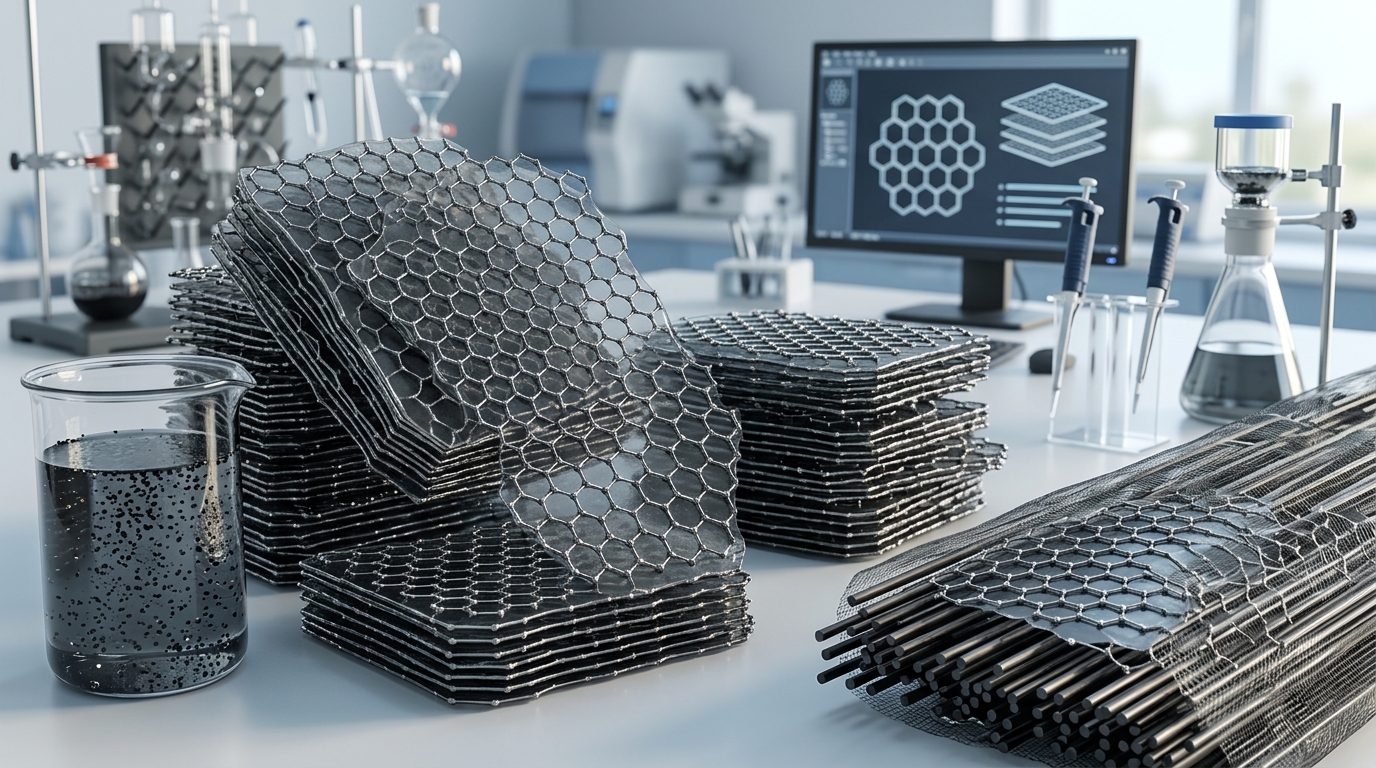
Graphene nanoplatelets (frequently abbreviated as GNPs) are microscopic stacks of multi-layer graphene that bridge the gap between single-layer carbon sheets and conventional microcrystalline graphite. Structurally, a nanoplatelet consists of short stacks of planar, sp²-hybridized carbon sheets with an overall thickness typically ranging from 1 to 20 nanometers and lateral dimensions spanning from 1 to over 50 micrometers. Because they retain much of the extraordinary stiffness, electrical conductivity, and thermal transport of pristine graphene while being significantly easier and more cost-effective to produce in bulk quantities, nanoplatelets have become the primary commercial workhorse for industrial graphene adoption.
Morphology and Structural Characteristics
To understand the utility of graphene nanoplatelets, one must look closely at their physical geometry. A single sheet of graphene is just 0.335 nanometers thick. When between 2 and roughly 60 of these individual sheets remain bound together via weak van der Waals forces, the resulting particle is categorized as a nanoplatelet. If the stack grows significantly thicker, it behaves essentially as conventional micronized graphite flakes; if it is isolated down to one to three layers, it is classified as single- or few-layer graphene.
The defining geometric parameter of a nanoplatelet is its high aspect ratio—the ratio of its lateral diameter to its cross-sectional thickness. A platelet that is 5 nanometers thick and 25 micrometers wide exhibits an aspect ratio of 5,000:1. This plate-like morphology gives GNPs a massive external surface area per unit volume, which is critical for interacting with surrounding polymer chains, blocking diffusing molecules, and establishing electrical contact networks across insulating matrices.
Manufacturing Methods
Producing graphene nanoplatelets requires separating the stacked basal planes of natural flake graphite without destroying the crystalline integrity of the carbon lattice. Several distinct industrial pathways are used, each producing platelets with different defect densities, aspect ratios, and surface chemistries.
Thermal Expansion and Exfoliation
One of the most widespread production routes begins with graphite intercalation compounds (GICs). Chemical agents, such as sulfuric or nitric acid, are inserted between the graphene layers of natural graphite. When exposed to rapid, intense heat, these intercalated compounds vaporize instantly. The resulting gas pressure forces the graphite layers apart along the c-axis, producing expanded or exfoliated graphite with an accordion-like structure. Subsequent high-shear mechanical milling or ultrasonic treatment fragments this expanded structure into discrete, multi-layer nanoplatelets.
Liquid-Phase Shear Exfoliation
In liquid-phase exfoliation, raw graphite is suspended in a solvent or an aqueous surfactant solution and subjected to controlled fluid shear forces, cavitation, or high-pressure microfluidization. The hydrodynamic shear stresses overcome the interlayer van der Waals attraction, peeling off stacks of graphene sheets. This mechanical method produces high-purity nanoplatelets with very low chemical defect rates, though it requires precise energy tuning to avoid fracturing the lateral dimensions of the sheets into sub-micron fragments.
Mechanochemical Ball Milling
Dry or wet ball milling uses planetary or attritor mills to shear graphite flakes. When carried out in the presence of reactive gases or chemical modifiers, this technique enables simultaneous size reduction and edge-functionalization. Mechanical forces selectively break the carbon-carbon bonds at the flake edges, leaving the basal planes intact while attaching functional chemical groups (such as carboxyl, hydroxyl, or amine groups) strictly to the platelet perimeters. This selective functionalization dramatically improves how well the platelets disperse in polar solvents or resin systems.
Key Material Properties
Graphene nanoplatelets deliver a distinct balance of properties that stem directly from their crystal structure and 2D shape.
- Thermal Transport: Pristine single-layer graphene possesses theoretical thermal conductivity values exceeding 3,000 W/m·K. While interlayer phonon scattering reduces the bulk conductivity of stacked sheets, GNPs still maintain exceptional in-plane thermal conductivity (often measured between 1,000 and 1,500 W/m·K along the basal plane). This allows them to dissipate heat rapidly across their surface.
- Electrical Conductivity: The delocalized pi-electron cloud across the sp² carbon network allows charge carriers to move with minimal resistance. When dispersed throughout an insulating material, GNPs create interconnected conductive pathways at low mass concentrations.
- Mechanical Reinforcement: With an intrinsic Young’s modulus approaching 1 TPa along the basal plane, nanoplatelets act as rigid planar supports that resist mechanical deformation and arrest microcrack propagation in composite matrices.
- Impermeability and Barrier Performance: The tightly packed hexagonal carbon lattice is impermeable to gases and liquids. Platelets aligned parallel to a substrate create a physical shield that blocks permeating moisture, oxygen, and corrosive ions.
Comparative Analysis: Carbon Additives
Selecting the right carbon nanomaterial requires balancing performance against processing feasibility and cost. The following table contrasts the practical characteristics of common carbon-based additives.
| Material Form | Morphology | Typical Aspect Ratio | Primary Advantage | Main Processing Challenge |
|---|---|---|---|---|
| Graphene Nanoplatelets (GNPs) | 2D multi-layer discs/platelets | 500 to 5,000+ | High aspect ratio, balanced cost, barrier properties | Anisotropic alignment, viscosity buildup |
| Single-Layer Graphene | 2D single-atom sheet | 10,000 to 100,000+ | Maximum theoretical conductivity and stiffness | Extremely high production cost, aggressive agglomeration |
| Carbon Nanotubes (CNTs) | 1D tubular cylinders | 1,000 to 10,000 | Low percolation threshold, flexible network | Entanglement, bundling, processing viscosity |
| Carbon Black | 0D/quasi-spherical clusters | 1 to 10 | Low raw material cost, established processing | Requires high loading levels, compromises ductility |
Industrial and Practical Applications
Polymer Matrix Composites
Integrating GNPs into thermoplastics (such as polyamide, polypropylene, and PEEK) and thermosets (such as epoxy and vinyl ester resins) alters their structural and functional capabilities. Because of the platelet shape, composite strength increases not only through direct load transfer but also through crack deflection: when a microcrack approaches a platelet, it is forced to tilt and twist around the rigid 2D barrier, consuming fracture energy. In automotive and aerospace components, low GNP loadings provide stiffness gains, reduce component weight, and impart electrostatic discharge (ESD) capability.
Thermal Interface Materials and Heat Dissipation
Modern microelectronics require efficient heat removal from densely packed circuits. GNPs are compounded into silicones, phase-change matrices, and thermal greases to form thermal interface materials (TIMs). In these systems, platelets bridge gaps between hot components and metallic heat sinks. However, performance depends strongly on platelet orientation: random alignment creates high interfacial thermal resistance (Kapitza resistance) between adjacent particles, whereas directional alignment along heat flux paths maximizes cooling efficiency.
Corrosion Protection and Barrier Coatings
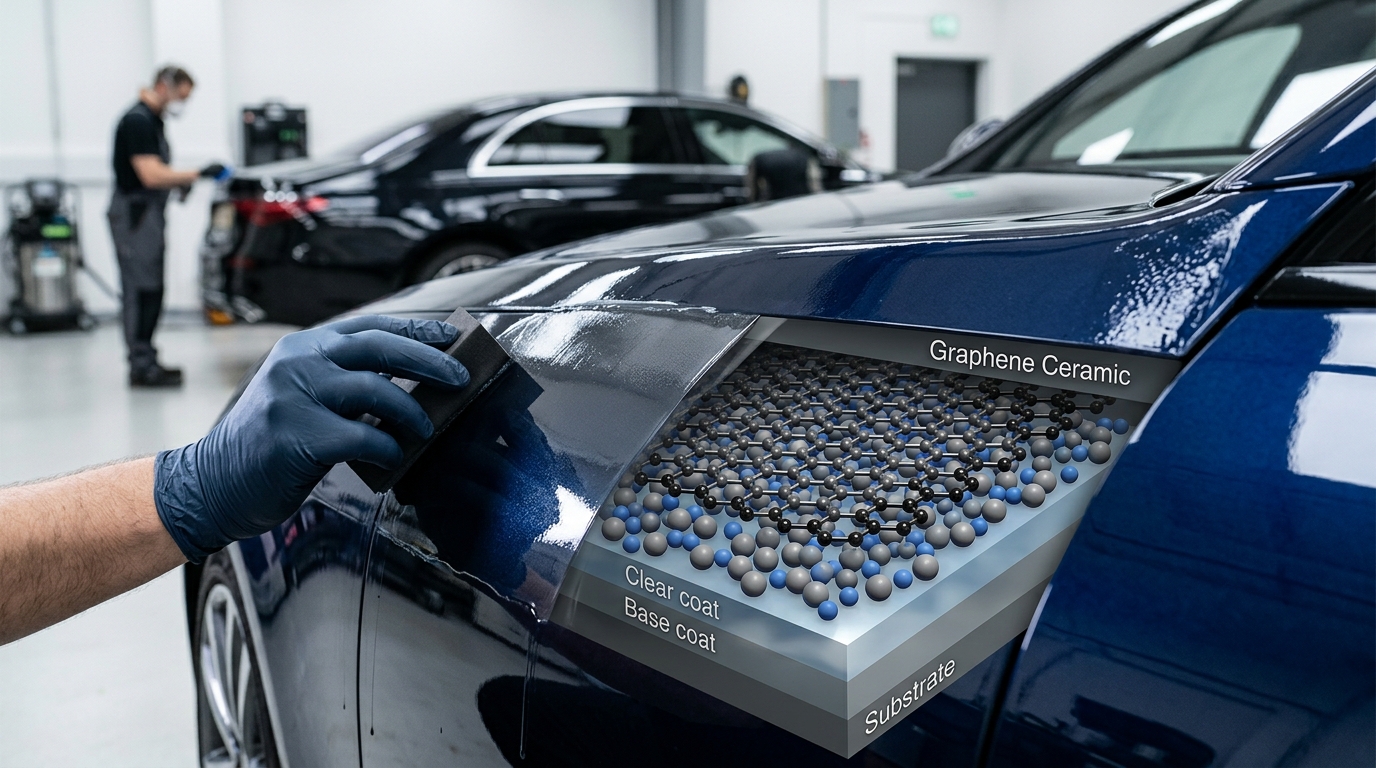
In marine, structural, and industrial coatings, GNPs dramatically reduce coating permeability via the tortuous path effect. Instead of traveling in a straight line through the protective film, diffusing water molecules, chloride ions, and oxygen must navigate around thousands of overlapping, impermeable platelets. This extended diffusion distance delays substrate oxidation and prevents blistering.
Electrochemical Energy Storage
In lithium-ion battery electrodes and supercapacitors, graphene nanoplatelets are incorporated as conductive additives in place of, or alongside, conventional carbon black. The planar sheets wrap around active cathode or anode particles, establishing continuous electrical contact while maintaining electrolyte pathways. This lowers internal cell impedance, improves charge-discharge rate capabilities, and cushions against volume changes during extended cycling.
Processing Challenges and Engineering Trade-Offs
While the intrinsic properties of graphene nanoplatelets are exceptional, translating those benefits into final bulk products involves several physical and chemical trade-offs.
Dispersion and Agglomeration
Due to substantial surface areas and strong attractive forces, nanoplatelets tend to re-stack and form dry agglomerates. If these agglomerates are not fully separated during compounding, they act as macroscopic defects and stress concentrators, reducing tensile strength and impact resistance rather than improving them. High-shear twin-screw extrusion, three-roll milling, or masterbatch dilution strategies are required to achieve uniform dispersion.
Rheological Impact and Viscosity Limits
The high aspect ratio that makes GNPs effective at low concentrations also causes substantial increases in melt or resin viscosity. Adding even small fractions of platelets can elevate viscosity to levels that impede injection molding, fiber spinning, or spray application. Formulators must balance the target performance threshold against the flow properties needed for manufacturing.
Electrical vs. Thermal Percolation
The physical mechanisms governing electrical and thermal transport differ fundamentally. Electrical conduction relies on quantum mechanical tunneling and direct contact; once a continuous network forms at the percolation threshold (often below 1 to 3 weight percent), conductivity jumps by several orders of magnitude. In contrast, thermal conduction relies on atomic lattice vibrations (phonons). Phonons scatter whenever they cross the interface between a platelet and the host matrix. As a result, achieving high thermal conductivity typically demands much higher loading levels (often 15 to 40 weight percent), which can compromise resin ductility and processability.
Quality Metrics and Selection Criteria
Selecting an appropriate grade of graphene nanoplatelets requires evaluating specific material metrics rather than relying on generic product labels:
- Lateral Dimensions (D50 / D90): Platelet diameter dictates aspect ratio and reinforcement efficacy, but larger flakes induce greater viscosity increases and require gentler processing to avoid breakage.
- Specific Surface Area (BET): Measured via nitrogen gas adsorption, specific surface area indicates both platelet thickness and the extent of exfoliation. Higher values generally correspond to thinner platelets.
- Defect Density (Raman ID/IG Ratio): Raman spectroscopy compares the intensity of the disorder-induced D band to the graphitic G band. A low ID/IG ratio signifies high structural purity and superior electrical/thermal transport, whereas a higher ratio indicates edge functionalization or basal-plane defects.
- Bulk Density and Flowability: Low bulk tap density can complicate feeding into industrial extruders, often necessitating specialized gravimetric feeders, liquid slurries, or pre-dispersed masterbatches.
By aligning platelet morphology, surface chemistry, and processing techniques with the specific engineering requirements of an application, graphene nanoplatelets provide a practical, scalable route to creating high-performance multifunctional materials.