Adams Graphene Coating
Automotive surface protection has evolved rapidly over the past decade, progressing from traditional carnauba waxes and synthetic polymer sealants to liquid ceramic coatings. More recently, hybrid formulations incorporating carbon nanomaterials have entered the market. Among these, the Adam’s Graphene Coating lineup has gained significant attention across the detailing industry. Rather than replacing ceramic chemistry entirely, these products infuse functionalized graphene derivatives into silazane and silica matrices to address common limitations of conventional coatings, such as water spotting and high-spot application errors.
Understanding how Adam’s Graphene Coating works requires separating practical material science from marketing narratives. This overview examines the product lineup, chemical architecture, application workflow, manufacturer claims, and real-world durability expectations.
The Adam’s Graphene Coating Product Lineup
Adam’s Polishes categorizes its graphene offerings into distinct tiers based on active resin concentration, carrier solvent chemistry, application complexity, and expected longevity. These range from user-friendly trigger sprays designed for routine maintenance to high-solids liquid formulations intended for multi-year protection.
| Product Name | Active Resin Loading (wt %) | Claimed Longevity | Format & Primary Application |
|---|---|---|---|
| Graphene Ceramic Spray Coating | ~7% | 1+ Year | Trigger spray; ideal for entry-level DIYers, seasonal protection, or coating toppers. |
| Graphene Ceramic Spray Coating Advanced | ~15% | 2+ Years | High-output spray sealant; designed for extended exterior durability with simple spray-and-wipe mechanics. |
| Graphene Ceramic Coating (Standard) | ~30% | 7+ Years | 60 mL liquid bottle; professional-grade coating for exterior paint, trim, glass, and wheels. |
| Graphene Ceramic Coating Advanced | ~45% | 9+ Years | 60 mL liquid bottle; high-solids formula providing maximum film thickness and chemical resistance. |
The standard liquid bottle coatings provide the thickest cross-linked barrier, whereas the spray variants lower the barrier to entry by using lighter solvent blends that reduce curing wait times and application friction.
Chemical Architecture: Reduced Graphene Oxide in an SiO2/Silazane Matrix
A common misconception in automotive detailing is that graphene coatings form a free-standing, pure sheet of pristine carbon over the vehicle’s paintwork. In reality, pure pristine graphene is chemically inert and incapable of adhering directly to automotive polyurethane clear coats. Commercial graphene coatings, including the Adam’s formulation, function as hybrid ceramic-graphene composites.
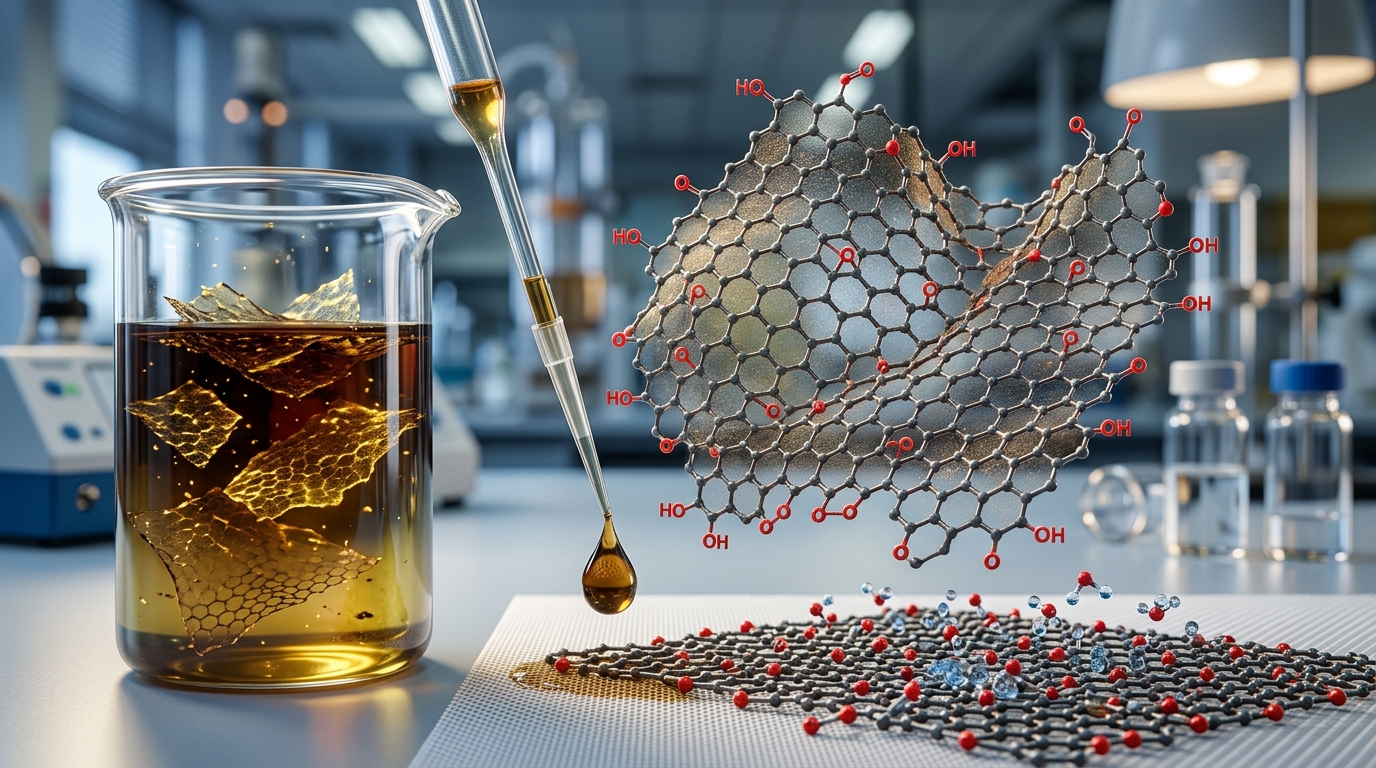
The structural backbone of Adam’s Graphene Coating consists of an organosilazane and silicon dioxide (SiO2) resin system. Suspended within this reactive matrix is Reduced Graphene Oxide (rGO). Oxygen-functionalized groups remaining on the rGO flakes allow them to chemically graft into the inorganic ceramic backbone during polymerization.
When applied to a prepared clear coat, the silazane pre-polymers react with ambient atmospheric moisture and the hydroxyl groups on the vehicle’s surface, creating robust covalent bonds. As the matrix cross-links, the incorporated rGO nanoplatelets align along the film, lowering surface energy, reinforcing mechanical abrasion resistance, and significantly altering how water and heat interact with the outer surface.
Ceramic Glow Technology: The Role of UV Tracing
One of the primary challenges when installing multi-year ceramic coatings is the risk of leaving behind “high spots”—areas where excess coating was not fully leveled before flash-off, resulting in permanent dark or iridescent smudges once cured. Adam’s addresses this installation risk through its patent-pending Ceramic Glow Technology™.
How the UV Tracer Works
The coating formula is infused with a specialized optical brightener that remains inert within the cured matrix. When illuminated with an ultraviolet inspection light emitting at roughly 395 nm, the brightener fluoresces, producing a distinct bluish-white glow across treated panels.
Practical Detailing Utility
- Uniformity Verification: Installers can verify full panel coverage, ensuring no dry spots or low-thickness areas remain during application.
- High-Spot Identification: Excess residue, unlevelled product streaks, and pooled edges around body lines fluoresce brightly, allowing for prompt leveling with a microfiber towel prior to curing.
- Substrate Compatibility Check: Useful when coating textured plastic trim, wheels, or complex grilles where visual confirmation under standard shop lighting is difficult.
It is important to note that the optical brightener is an installation and inspection aid; it slowly degrades under solar UV exposure over time and is not designed to serve as an indicator of long-term coating wear.
Evaluating Performance and Manufacturer Claims
Understanding the protective capabilities of Adam’s Graphene Coating requires evaluating manufacturer claims against standard material testing methods and real-world environmental dynamics.
Hardness Claims (>10H)
Marketing documentation frequently highlights a hardness rating exceeding 10H. In the coatings industry, this refers specifically to the ASTM D3363 pencil hardness test, which measures the resistance of a thin film to physical gouging by graded graphite pencils. It does not correlate to the Mohs mineral hardness scale (where diamond is 10). While a >10H rating indicates a high degree of cross-linked surface rigidity capable of resisting minor wash marring, it does not render the paint immune to deep scratches or high-velocity rock chips.
Water Evacuation and Spotting Reduction
Traditional SiO2 ceramic coatings are notoriously prone to water spotting because inorganic silica has a natural affinity for mineral deposits when water droplets evaporate in hot sunlight. Adam’s Graphene Coating mitigates this issue through two distinct surface properties:
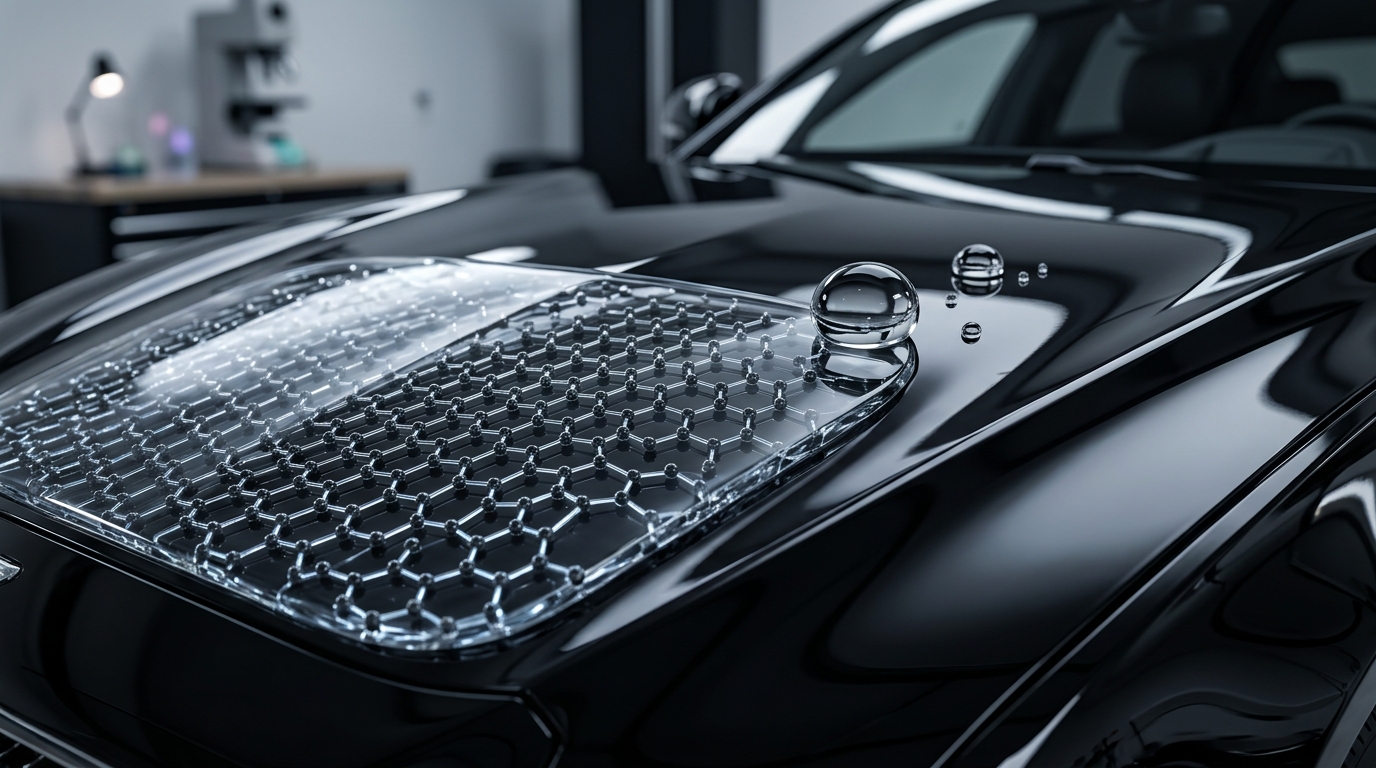
- High Contact Angle: Produces a static water droplet contact angle between 110° and 118°, forcing water into tight, spherical beads.
- Low Sliding (Roll-Off) Angle: Reduces the sliding angle to <10° to 15°. Water beads roll off panels at minimal tilt angles or moderate driving speeds, preventing stagnant puddles from baking calcium and mineral salts into the clear coat.
Durability Ratings (7 to 9+ Years)
The advertised lifespans of 7 to 9+ years reflect controlled laboratory abrasion cycles and indoor environmental testing. In real-world daily driving conditions, exposure to road salts, industrial fallout, UV radiation, and mechanical contact will gradually degrade any coating. Realistic exterior lifespans are detailed in the durability section below.
Adam’s Graphene Coating vs. Conventional Ceramic (SiO2)
| Performance Attribute | Traditional SiO2 Ceramic Coating | Adam’s Graphene Coating |
|---|---|---|
| Water Spotting Susceptibility | Higher; mineral deposits readily bond to silica-heavy surfaces under heat. | Significantly Lower; reduced surface energy and lower roll-off angle clear water quickly. |
| Surface Slickness & Tactile Feel | Often feels grabby or glassy; typically requires a dedicated slick topper. | Noticeably Slicker; rGO integration lowers surface friction directly out of the bottle. |
| Application Window | Longer flash-off open time; high spots can be difficult to see without angle lighting. | Faster Flashing; sweats and hazes rapidly; UV tracer highlights unlevelled areas instantly. |
| Installation Visibility | Relies exclusively on high-CRI detailing inspection lamps. | Ceramic Glow Technology; reveals coverage and leveling flaws under 395nm UV light. |
Step-by-Step Surface Preparation, Application, and Curing
Because Adam’s Graphene Coating establishes a semi-permanent bond to the substrate, thorough surface preparation is essential. Any defects remaining in the paintwork will be locked underneath the cured resin layer.
Step 1: Decontamination Wash
Wash the vehicle thoroughly using a dedicated strip-wash shampoo free of gloss enhancers, waxes, or silicones. This strips existing traffic film and loose dirt from the surface.
Step 2: Chemical and Mechanical Decontamination
Spray an iron fallout remover over the painted panels to dissolve embedded ferrous brake dust and industrial contamination. Rinse thoroughly, then use a clay bar or synthetic clay pad with a clean clay lubricant to remove remaining bonded contaminants until the clear coat feels completely smooth.
Step 3: Paint Correction
Machine polish the vehicle using a dual-action polisher paired with appropriate cutting compounds and finishing polishes. Remove swirl marks, micro-marring, light scratches, and oxidation to achieve the desired level of gloss and clarity before locking in the finish.
Step 4: Solvent Surface Preparation (Panel Wipe)
Mist a dedicated isopropyl alcohol (IPA) or solvent-based surface prep spray over every panel. Wipe the surface down using clean, edgeless microfiber towels to remove polishing oils, residue, and lubricants. The clear coat must be completely bare to allow the silazane resins to covalently bond.
Step 5: Product Application
- Wrap a suede microfiber applicator around a firm foam block.
- Shake the bottle thoroughly, then apply several drops of liquid coating down the length of the applicator face.
- Work across the vehicle in manageable sections, typically 3 ft x 3 ft, applying the product in a cross-hatch pattern (horizontal passes followed by overlapping vertical passes at 25% to 50% overlap) to ensure complete coverage.
- Illuminate the panel with a 395 nm UV inspection flashlight to confirm edge-to-edge coverage and verify the absence of dry spots.
Step 6: Flashing and Leveling
Observe the applied coating as the carrier solvents begin to evaporate. The coating will “sweat” into distinct droplets and develop an iridescent, rainbow-like oil-slick haze. Depending on ambient temperature and humidity, this process generally takes between 1 and 3 minutes.
Once the sweat beads flatten, immediately level the residue using a low-pile microfiber towel. Follow immediately with a secondary, clean, plush microfiber buffing towel to eliminate all remaining haze. Use the UV flashlight to confirm that no high spots remain.
Step 7: Curing Requirements
- Initial Dry Time: Keep the vehicle in a dry, covered indoor environment for a minimum of 24 hours (4 to 6 hours for spray formulations) to prevent moisture from disrupting the initial polymerization phase.
- Full Chemical Cure: The coating takes approximately 5 to 7 days to achieve maximum cross-linking density and chemical resistance. Avoid using automotive soaps, degreasers, or harsh cleaners during this initial week.
Pros, Cons, and Realistic Durability Expectations
Advantages
- Reduced Water Spotting: The low sliding angle allows rain and rinse water to sheet off rapidly, minimizing mineral etch marks on horizontal panels.
- UV Tracing Efficiency: Ceramic Glow Technology provides practical visual feedback, making the coating uniquely accessible to DIY enthusiasts.
- Broad Multi-Substrate Compatibility: Safe for application on clear coats, single-stage paint, matte and satin wraps, polycarbonate headlights, exterior glass, chrome, and textured black plastic trim.
Disadvantages and Practical Limitations
- Short Flash Window on Advanced Formulations: The high solids content (~45% in the Advanced bottle) shortens the open working time, demanding swift leveling in hot or humid environments.
- Pencil Hardness Misinterpretation: The coating will not prevent deep stone chips or aggressive physical scratching.
Realistic Lifespan Expectations
While the product packaging claims up to 7 to 9+ years of durability based on standard laboratory metrics, exterior conditions impact longevity. For daily-driven vehicles exposed to fluctuating weather, road grime, and regular wash cycles:
- Bottled Liquid Formulations (Standard / Advanced): Expect 3 to 5 years of dependable hydrophobic performance and self-cleaning ability under proper maintenance.
- Graphene Spray Coatings: Expect 6 to 12 months of robust protection before a maintenance reapplication is required.
Routine Maintenance Recommendations
Proper long-term maintenance preserves the hydrophobic top layer and prevents road films from clogging the microscopic valleys of the rGO-ceramic matrix.
- Two-Bucket or Foam Cannon Washes: Wash the vehicle every 2 to 4 weeks using a pH-neutral car shampoo that contains no added waxes or gloss sealants. Avoid abrasive automatic tunnel car washes.
- Semi-Annual Decontamination: Every 6 months, apply a pH-neutral iron fallout remover during the wash cycle to dissolve embedded metallic particles that hinder water sheeting.
- Sacrificial Boosters: Apply a graphene-infused maintenance spray (such as Adam’s Graphene Boost or CS3) every 3 to 6 months. These products refresh the sacrificial top layer, restore peak contact angles, and maintain surface slickness over the life of the coating.