303 Graphene Nano Spray Coating
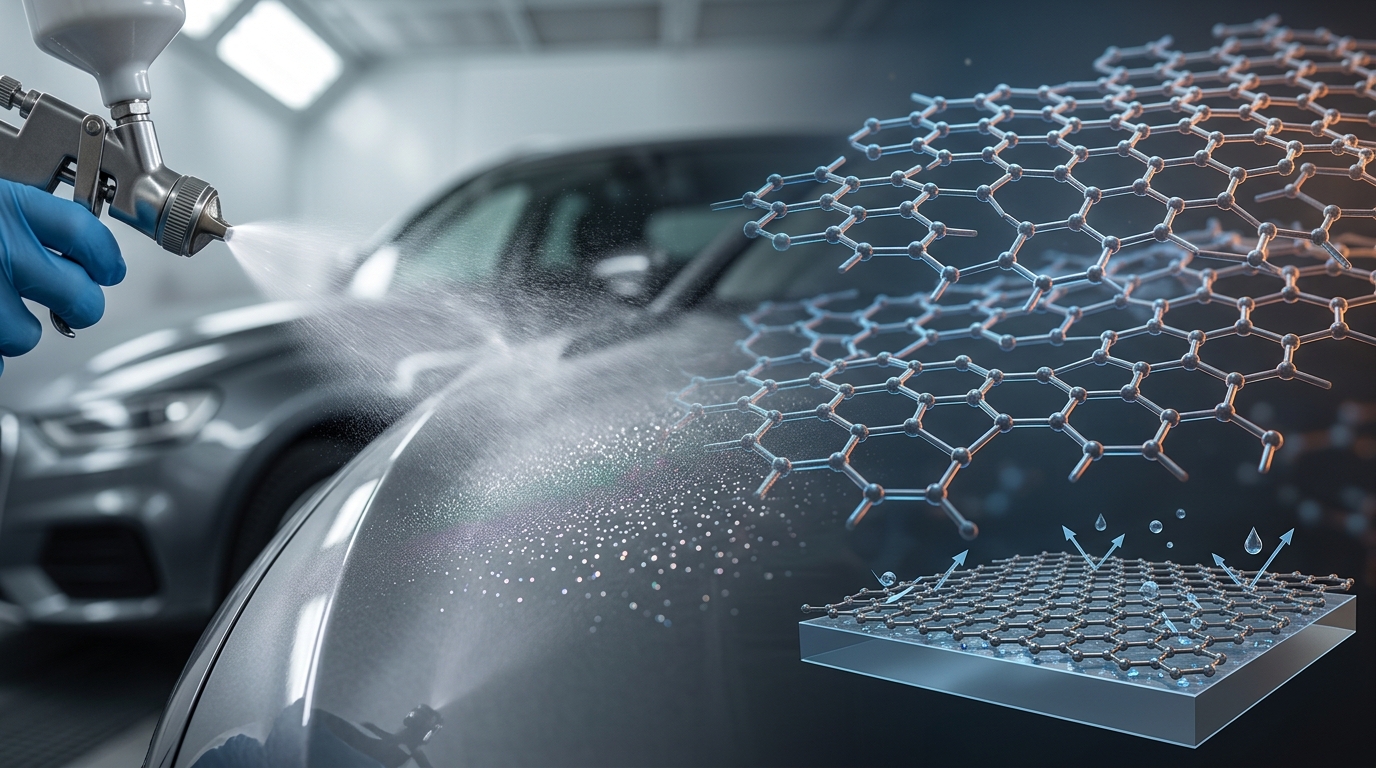
Exterior automotive detailing has evolved rapidly from traditional carnauba waxes to synthetic polymer sealants, silicon dioxide (SiO2) ceramic coatings, and now graphene-infused formulations. Among the consumer-accessible options on the market, 303 Graphene Nano Spray Coating—manufactured by Gold Eagle Co.—has emerged as a widely discussed entry. Formulated as a spray-on, wipe-off surface protectant, it blends reduced graphene oxide (rGO) nanoplatelets with a polymer carrier to deliver enhanced thermal properties, water behavior, and multi-surface versatility.
This comprehensive review and guide evaluates the core claims behind 303 Graphene Nano Spray Coating, breaks down how it differs from conventional ceramic sprays, provides a step-by-step application protocol, and analyzes its real-world performance on daily-driven vehicles.
What Is 303 Graphene Nano Spray Coating?
Developed under Gold Eagle Co.’s long-standing 303 Products brand, 303 Graphene Nano Spray Coating is an enthusiast-grade liquid protectant designed to shield exterior automotive, marine, and powersport surfaces. Unlike professional-grade, multi-year liquid ceramic coatings packaged in small glass vials with solvent-heavy bases, this product is engineered for straightforward DIY application directly from a trigger spray bottle.
The formulation incorporates suspended graphene oxide nanoplatelets within a proprietary resin matrix. The primary objective is to make advanced hydrophobic protection accessible to home detailers without the demanding prep, finicky flash times, and permanent high-spot risks associated with traditional professional coatings.
Core Claims and Chemical Mechanism
Gold Eagle highlights several functional benefits enabled by the inclusion of graphene in the formula:
- Up to 12+ Months of Durability: The product is marketed to provide a full year of exterior paint protection under ideal conditions.
- Thermal Dissipation and Anti-Water Spotting: Standard SiO2 ceramic coatings can suffer from water spotting when beads act as miniature magnifying lenses under intense sunlight, baking dissolved minerals into the clear coat. Graphene’s inherent thermal conductivity helps disperse heat across the vehicle panel, lowering surface temperatures and modifying droplet evaporation dynamics to reduce mineral etching.
- High Hydrophobic Contact Angles: The cured polymer-graphene matrix creates a low-energy surface that forces water to bead tightly and sheet off rapidly under airflow.
- Broad Environmental and UV Resistance: The protective barrier shields clear coats, gel coats, and trim from harsh ultraviolet radiation, acid rain, industrial fallout, and road grime.
- Direct Sunlight Application: Unlike many SiO2 ceramic sprays that flash instantly and streak on hot panels, the 303 formula is engineered to remain workable even in direct sunlight and on warm vehicle panels.
303 Graphene Nano Spray vs. Traditional SiO2 Ceramic Sprays
Understanding where graphene spray sealants fit within vehicle care requires a direct comparison to standard silicon dioxide spray sealants.
| Feature / Property | 303 Graphene Nano Spray Coating | Traditional SiO2 Ceramic Spray |
|---|---|---|
| Active Chemistry | Reduced Graphene Oxide (rGO) + polymer matrix | Silicon Dioxide (SiO2) / Polysilazane resins |
| Application Environment | Forgiving; usable in direct sun and on warm panels | Requires shade and cool panels to avoid flash streaking |
| Water Spot Resistance | High; thermal dissipation lowers surface heat | Moderate to low; prone to prism-effect water spots |
| Visual Finish | Deep, warm, darkening gloss; accentuates flakes | Sharp, reflective, glassy “candy-shell” shine |
| Initial Towel Wipe-Off | Slight drag/grab during initial haze leveling | Generally slick immediately or requires topper |
| Cure Requirements | Zero mandatory wait time before rain exposure | Often requires 4 to 24 hours of dry curing |
Surface Compatibility Matrix
One of the strongest operational advantages of 303 Graphene Nano Spray Coating is its wide-ranging surface compatibility. Because it does not rely on white chalky carrier powders or aggressive solvents, it can be applied to virtually every exterior automotive surface:
- Clear Coat and Single-Stage Paint: Bonds to glossy finishes, darkening the pigment and enhancing metallic flake clarity without hazing the topcoat.
- Exterior Glass and Mirrors: Functions as a hydrophobic rain repellent on windshields and side windows, improving wet-weather driving visibility.
- Unpainted Plastic and Rubber Trim: Restores a rich satin black finish to faded, porous trim without leaving chalky white stains or powdery residues.
- Wheels and Brake Calipers: Withstands high brake and hub temperatures to resist iron dust embedment, simplifying routine wheel cleaning.
- Brightwork, Chrome, and Polished Metals: Protects polished aluminum, stainless steel, and chrome emblems from oxidation and water staining.
- Protective Films and Wraps: Fully safe for Paint Protection Film (PPF), matte/satin vinyl wraps, and marine fiberglass gel coats.
Step-by-Step Preparation and Application Protocol
Proper surface preparation dictates the longevity and visual clarity of any spray-applied protectant. Following a systematic process ensures maximum bonding efficiency.
Step 1: Decontamination and Paint Preparation
Begin by washing the vehicle thoroughly with a dedicated car wash shampoo to remove loose road film and dirt. While 303 Graphene Nano Spray Coating can bond to clean daily drivers without prior paint correction, performing a mechanical clay bar treatment and an isopropyl alcohol (IPA) surface wipe ensures optimal durability. Removing embedded iron particles, industrial fallout, and old wax layers creates an uncontaminated clear coat surface for the graphene polymers to anchor to.
Step 2: Bottle Preparation and Dispensing
Because graphene oxide particles settle in liquid suspension over time, shake the bottle vigorously before and during use. Spray the product directly onto a dense foam or microfiber applicator pad rather than spraying the body panel. Applying directly to the pad prevents overspray from drifting onto adjacent untreated areas.
Step 3: Panel Application
Spread the coating evenly across one manageable section at a time (such as half a hood or a single door) using a cross-hatch (crisscross) pattern. This pattern guarantees uniform coverage without leaving thin or missed spots.
Step 4: The Hazing Window
Allow the product to dwell on the surface. Within 2 to 5 minutes in moderate temperatures (or up to 10 minutes in colder environments), the liquid will transform into a noticeable white/grey haze. This visual indicator signals that the solvent carriers have flashed off and the protective film is ready for leveling.
Step 5: Towel Buff-Off
Using a clean, plush microfiber towel (folded into quarters), buff the hazed panel until the surface is completely clear and streak-free. Flip the towel frequently to a clean side to avoid redepositing leveled residue. If the product feels tacky or difficult to remove, apply slightly more pressure or use a secondary clean microfiber buffing towel to clear remaining streaks.
Step 6: Curing and Layering
The coating features zero mandatory cure time before weather exposure; the vehicle can be driven in rain immediately following the final buff. If a second coat is desired to ensure comprehensive coverage or enhance depth, it can be applied immediately, though allowing the first layer to settle for 1 to 2 hours is an effective detailing best practice.
Real-World Performance Evaluation
Visual Finish and Darkening Effect
On dark paints—such as deep blacks, charcoal greys, and navy blues—303 Graphene Nano Spray Coating delivers a noticeable darkening effect. Rather than creating the cold, mirror-like, ultra-reflective look typical of SiO2 ceramics, the graphene formula introduces a rich, warm depth that sharpens body contours and highlights metallic flake within the clear coat. On textured plastic trim, it deepens greyed-out surfaces into a clean factory-satin look.
Slickness Dynamics
Immediately after the initial buff-off, surface slickness is moderate. As the polymer-graphene network settles over the first 12 to 24 hours, tactile slickness increases noticeably, making the paint feel smooth and resistant to dry debris accumulation.
Application Ergonomics
The application is straightforward, though users must respect the flash window. If applied too thickly or allowed to dry far past the white-haze stage, the towel removal can become grabby and require extra leveling effort. Working panel-by-panel rather than coating the entire car at once prevents over-drying.
Durability: Marketing Claims vs. Real-World Lifespan
Gold Eagle claims up to 12+ months of protection. In real-world testing on daily-driven vehicles exposed to rain, road grime, sun exposure, and standard maintenance washes, the hydrophobic water-beading performance generally remains strong for 3 to 6 months. While trace protective polymers may linger beyond that window, the aggressive water sheeting and contact angles naturally decline without maintenance.
To approach the full 12-month mark, vehicle owners should wash the car using pH-neutral automotive soaps and apply a graphene detailer or a quick maintenance layer every 3 to 4 months.
Graphene Formulation Realities
It is worth distinguishing commercial consumer sprays from structural graphene materials. Products in this detailing category utilize trace amounts of suspended reduced graphene oxide nanoplatelets within a liquid carrier matrix. While this inclusion successfully modifies thermal behavior and visual warmth, it does not create a continuous, impenetrable solid crystalline barrier or render paint scratch-proof.
Pros and Cons Summary
| Pros | Cons |
|---|---|
| Applicable in direct sunlight and on warm vehicle panels | Durability on daily drivers typically ranges 3–6 months without top-ups |
| Thermal dissipation helps mitigate severe water spot etching | Towel removal can feel grabby if over-applied or left too long |
| Safe for clear coats, glass, wheels, metals, and unpainted plastic trim | Initial slickness takes several hours to fully develop |
| Zero mandatory cure time before exposure to rain | Suspended particles require constant shaking during application |
| Restores rich color depth to dark paint and faded trim | Requires routine maintenance washes to maintain peak hydrophobics |
Maintenance Tips to Maximize Lifespan
To preserve the coating’s hydrophobic properties and extend its working life, follow these care steps:
- Use pH-Neutral Shampoos: Avoid high-pH touchless car washes or aggressive degreasers that prematurely degrade polymer sealants.
- Avoid Abrasive Polishing: Machine polishing or aggressive cleaner waxes will strip the coating; reserve abrasives for when you are ready to reapply a fresh baseline layer.
- Use Safe Wash Techniques: Utilize a two-bucket wash system or foam cannon with plush microfiber wash mitts to minimize micro-marring.
- Apply Periodic Top-Ups: Applying a light mist of graphene-infused quick detailer during the drying stage every few washes refreshes slickness and reinforces water-beading performance.
Final Verdict
303 Graphene Nano Spray Coating is a versatile, user-friendly detailing protectant that bridges the gap between conventional spray waxes and rigid ceramic coatings. Its forgiving application profile—particularly its ability to cure in direct sunlight with zero mandatory dry time—makes it especially practical for DIY detailers who lack climate-controlled garage spaces.
While real-world standalone durability on daily-driven cars sits comfortably in the 3 to 6-month range rather than a maintenance-free 12 months, its anti-water-spotting performance, multi-surface safety, and darkening finish make it a reliable, high-value detailing solution for modern automotive care.