Graphene Car Coating
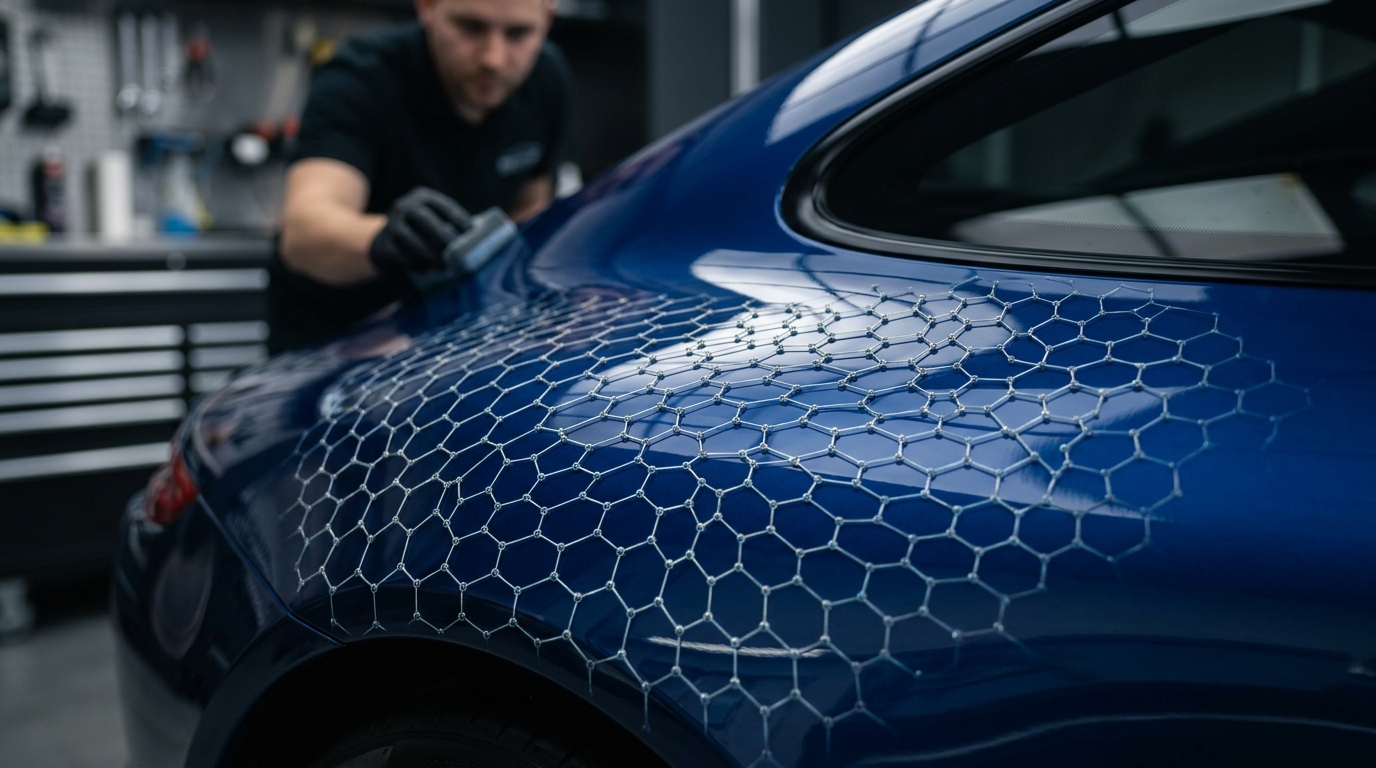
A graphene car coating is an advanced liquid polymer surface protectant formulated by infusing graphene derivatives into a ceramic or polymer resin matrix. Designed to bond chemically with automotive clear coats, these coatings provide long-term protection against ultraviolet (UV) radiation, chemical etching, oxidation, and road grime. While marketed as the next evolution in vehicle surface care beyond conventional silica-based (SiO2) ceramic coatings, understanding their actual chemical makeup, realistic physical limitations, and precise application requirements is essential before investing in or applying them to a vehicle.
Composition: What is a Graphene Car Coating?
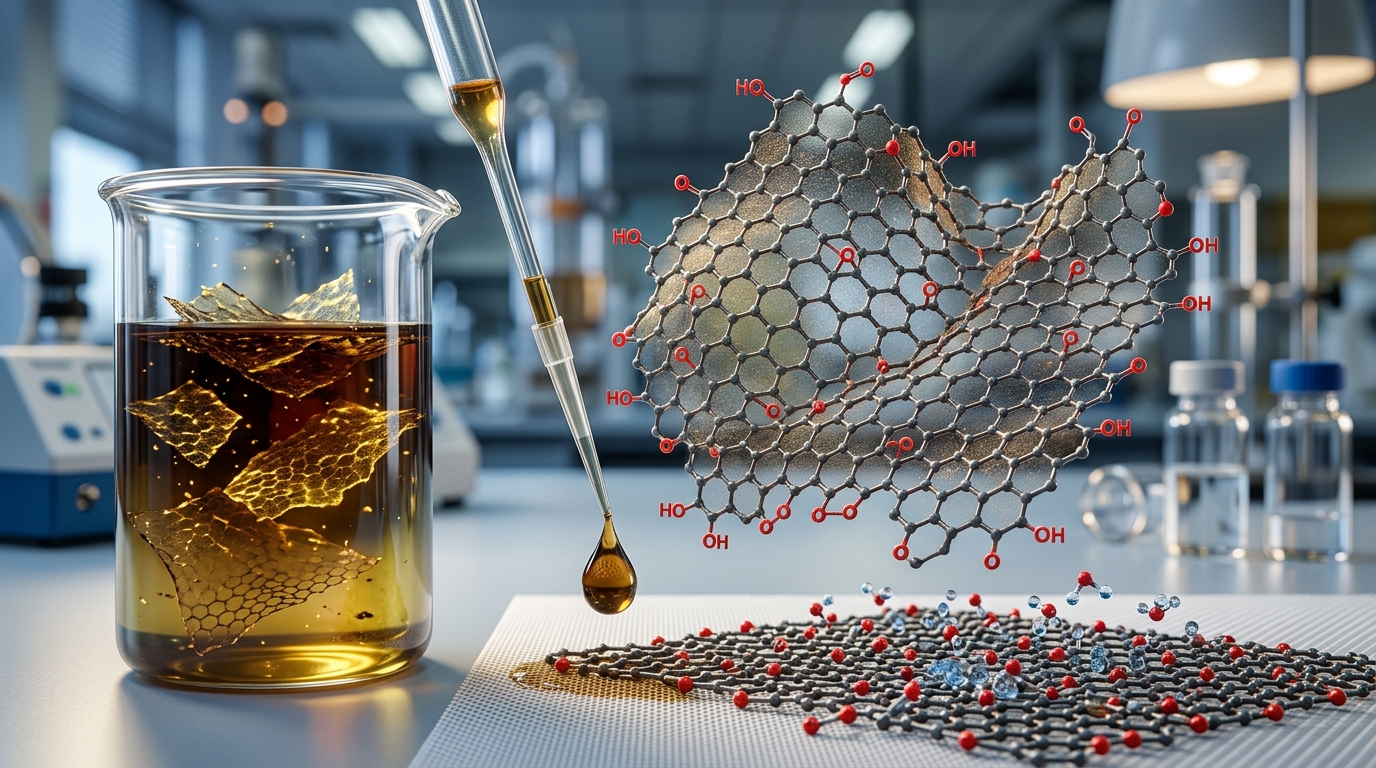
In modern automotive surface protection, a coating is not a solid sheet of pure, single-atom-thick hexagonal carbon. Pure pristine graphene is insoluble and cannot adhere to automotive clear coat independently. Instead, automotive coatings utilize functionalized graphene derivatives—primarily graphene oxide (GO) or reduced graphene oxide (rGO)—suspended in a liquid carrier system.
The structural backbone of these formulations remains similar to traditional ceramic coatings, utilizing organosilicon compounds, polydimethylsiloxanes (PDMS), or polysilazanes. These ceramic resin precursors form strong covalent bonds with the polyurethane clear coat upon curing. The suspended graphene oxide nanosheets are integrated within this polymer matrix, acting as a structural and functional additive. This hybrid matrix provides enhanced mechanical stability, altered surface energy, and increased thermal conductivity across the cured layer.
Graphene Coatings vs. Traditional SiO2 Ceramic Coatings
To evaluate whether a graphene car coating justifies the investment over a standard SiO2 ceramic coating, detailing professionals and materials scientists examine several performance metrics:
| Performance Attribute | Standard SiO2 Ceramic Coating | Graphene-Infused (rGO) Coating |
|---|---|---|
| Water Contact Angle | 100° – 110° | 110° – 120°+ |
| Water Sliding Angle | Higher (water beads linger longer) | Lower (water rolls off at lower tilt) |
| Water Spot Susceptibility | Moderate to High (concave lens effect) | Reduced (better heat dissipation and shedding) |
| Surface Slickness | Glossy, moderately slick | Noticeably slicker tactile feel |
| Chemical Resistance | pH 2 to pH 12 | pH 2 to pH 13+ (broad solvent resistance) |
| Anti-Static Properties | Standard dust attraction | Reduced surface static and dust pickup |
Water Spotting and Heat Dissipation
One primary limitation of traditional SiO2 ceramic coatings is their vulnerability to mineral etching and water spotting. Standard ceramic coatings form high-contact-angle beads that act like small convex lenses under direct sunlight. As droplets evaporate, the intense localized heat bakes dissolved calcium, magnesium, and environmental minerals directly into the coating or underlying paint.
Graphene matrices exhibit higher thermal conductivity than pure silicon dioxide layers. By distributing surface heat more evenly across the panel, graphene coatings help reduce localized surface hot spots. Combined with a lower water sliding angle (allowing droplets to roll off vertical and horizontal panels before full evaporation occurs), graphene formulations significantly lower the incidence of stubborn mineral deposit rings.
Hydrophobic Dynamics and Surface Slickness
Graphene coatings generate higher water contact angles—frequently exceeding 115 degrees—while simultaneously minimizing surface friction. This low-friction surface provides a distinct tactile slickness that reduces drag during hand washes, minimizing the micro-abrasions commonly caused by wash mitt friction.
Realistic Durability and the Hardness Scale Demystified
Automotive detailing marketing frequently highlights 9H or 10H hardness ratings. It is vital to distinguish between the pencil hardness test used in these claims and the Mohs mineral hardness scale.
The Wolff-Wilborn Pencil Test vs. Mohs Hardness
When a coating manufacturer claims 9H or 10H hardness, they are referencing the Wolff-Wilborn pencil hardness test (ASTM D3363), not the Mohs mineral scale where a diamond ranks as 10. In the pencil test, a calibrated 9H drawing pencil lead is pushed across the cured film at a 45-degree angle under a specified load. Passing the test simply means the pencil lead did not gouge or tear the micron-thin coating film.
On the Mohs scale, clear coat sits around 3 to 4, and a cured liquid coating layer adds structural density up to approximately 5 to 6. It does not transform automotive paint into an impenetrable diamond-hard shield.
What a Graphene Car Coating Will and Will Not Protect Against
- Demonstrated Protection: Micro-marring from proper hand washing, environmental fallout, industrial fallout, avian dropping etching, tree sap penetration, light acid rain, and broad-spectrum UV oxidation.
- Limitations: High-velocity rock chips, deep key scratches, heavy road debris impacts, severe automated car wash brush scouring, and direct physical abrasion.
DIY Sprays vs. Professional Multi-Year Liquid Coatings
The market for graphene coatings is divided into two distinct product tiers: consumer spray-on sealants and true liquid bottleneck coatings.
Consumer Graphene Spray Sealants
Spray formulas contain low concentrations of active resin solids and emulsified graphene oxide suspended in a water- or solvent-diluted carrier. They are formulated for easy application: spray on a clean panel, spread with a microfiber towel, and buff off immediately.
- Longevity: Typically 3 to 12 months depending on climate, washing frequency, and storage conditions.
- Pros: Highly forgiving, minimal curing time required, low entry cost, and ideal as a standalone sealant or maintenance booster.
- Cons: Micro-thin layer thickness, limited chemical barrier resistance, and shorter service life.
Professional-Grade Bottled Liquid Coatings
True liquid graphene coatings consist of high-solids resin matrices with functionalized rGO that undergo moisture-cured crosslinking over a 24- to 48-hour window.
- Longevity: 2 to 7+ years when correctly prepped, applied, and maintained.
- Pros: Forms a dense, chemically resilient sacrificial barrier with superior hydrophobic properties and gloss depth.
- Cons: Demands extensive paint correction before application, strictly controlled ambient installation conditions, and unforgiving flash-timing where high spots require machine polishing to correct.
Compatibility with Paint Protection Film (PPF) and Vinyl
True liquid graphene coatings and spray sealants can be safely applied over modern aliphatic polyurethane Paint Protection Film (PPF) and quality vinyl wraps. The coating fills the micro-pores of the film, enhancing hydrophobic shedding, reducing UV degradation of the film’s topcoat, and keeping the vinyl or PPF cleaner without compromising its self-healing capabilities.
Preparation and Application Workflow
Applying a true liquid graphene coating requires meticulous surface decontamination and preparation. The coating creates a permanent or semi-permanent bond with whatever surface it touches; any lingering clear-coat defects, oils, or contaminants will be sealed beneath the layer.
Step 1: Chemical and Mechanical Decontamination
- Deep Cleanse: Wash the vehicle using a dedicated pH-neutral or strip-wash automotive shampoo to remove road film and loose debris.
- Iron Removal: Apply a dedicated iron fallout remover to dissolve embedded ferrous brake-dust particles from wheels and lower body panels.
- Mechanical Clay Treatment: Use an automotive clay bar or clay mitt with clean lubricant to remove remaining bonded industrial fallout, overspray, and tree sap.
Step 2: Paint Correction
Because the coating preserves the paint in its current visual condition, all swirl marks, scratches, water etching, and oxidation must be corrected prior to application.
- Perform a single-stage or two-stage machine polish using a dual-action polisher paired with appropriate foam or microfiber pads and compound/polish formulations.
- Refine the paint until achieving the desired surface clarity and optical depth.
Step 3: Surface Prep / Isopropyl Alcohol (IPA) Wipe
Machine polishes leave behind lubricating oils and carriers that prevent the graphene resin from bonding directly to the clear coat. Mist a panel-wipe solution or an isopropyl alcohol (IPA) dilution across every painted surface and wipe thoroughly using clean, low-nap microfiber towels.
Step 4: Coating Application
- Wrap a suede microfiber applicator cloth around a foam applicator block.
- Apply an even line of the liquid graphene coating across the suede cloth.
- Work in small, manageable sections (typically 2×2 feet or one panel section at a time) using a cross-hatch pattern (horizontal passes followed by overlapping vertical passes) to ensure uniform coverage.
Step 5: Flash Time, Leveling, and Buffing
As the carrier solvents evaporate, the coating undergoes a visual phase change called "flashing" or "sweating," where the liquid beads or exhibits an oily, rainbow-like appearance. Depending on ambient temperature and relative humidity, flash times generally range from 1 to 5 minutes.
- First Wipe: Use a plush, short-nap microfiber towel to gently level the coating and wipe away the bulk of the carrier carrier residue.
- Second Wipe: Follow immediately with a clean, dry, high-pile microfiber towel to buff the surface to a streak-free, high-gloss finish. Inspect under high-lumen detailing lights to eliminate any lingering "high spots" (areas of excess, un-leveled coating).
Step 6: Curing Time
Keep the vehicle in a dry, enclosed environment for at least 24 hours to prevent moisture from disrupting the initial crosslinking process. Avoid washing the car with detergents or exposing it to harsh chemicals for at least 7 to 14 days while the polymer matrix fully hardens.
Post-Application Maintenance Guidelines
A graphene car coating is low-maintenance, not zero-maintenance. To ensure the coating reaches its full functional lifespan and maintains its self-cleaning properties, follow these care principles:
The Two-Bucket Hand Wash Method
Avoid automated brush car washes entirely; the abrasive rotating nylon bristles will scour the coating and create heavy swirl patterns. Instead, hand wash the vehicle every one to two weeks using the two-bucket wash technique (one bucket for soapy wash water, one dedicated to rinsing the wash mitt) fitted with grit guards.
Use pH-Neutral Shampoos
Cleanse the surface using high-lubricity, pH-neutral automotive shampoos that contain no added waxes, silicone gloss enhancers, or sealants. Heavy waxes leave residues over the graphene matrix, temporarily masking its native hydrophobic properties and water-shedding performance.
Decontaminate Periodically
Over months of daily driving, road oils, traffic film, and airborne pollutants will settle into the coating’s microscopic peaks and valleys, causing what appears to be premature failure. Wash the vehicle with a dedicated ceramic/graphene maintenance shampoo or apply a mild iron remover every six months to unclog the coating surface.
Apply Maintenance Boosters
Every three to six months, apply a dilute graphene or SiO2 spray topper following a regular wash. These maintenance sprays refresh sacrificial top layers, restore high contact angles, and ensure the underlying protective matrix remains resilient over years of driving.