First Graphene Stock
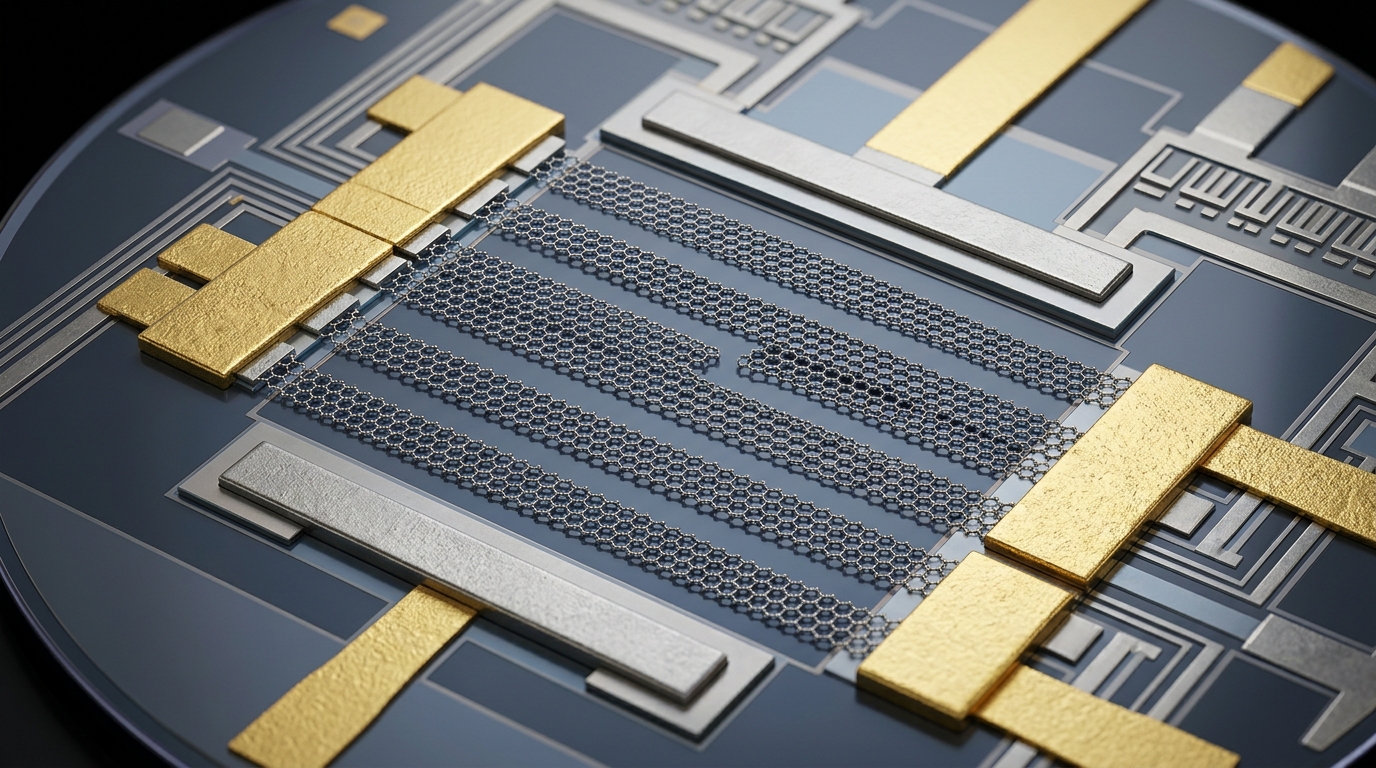
First Graphene Limited is an Australian advanced materials company focused on the large-scale industrial manufacturing and commercial supply of high-performance graphene products. As a pure-play participant in the nanomaterials sector, First Graphene has positioned itself as an integrated developer of standardized graphene nanoplatelets, pre-dispersed formulations, and masterbatches tailored for heavy industry, construction, and polymer composites.
For investors researching first graphene stock opportunities, the company operates under ticker symbols across several international financial markets, reflecting its primary listing in Australia and cross-border accessibility in North America and Europe.
Corporate Identity and Global Exchange Listings
First Graphene Limited is headquartered in Henderson, Western Australia, where it operates its primary manufacturing facility. The company maintains an international research and technical development footprint, including a dedicated facility at the Graphene Engineering Innovation Centre (GEIC) located at the University of Manchester in the United Kingdom. This dual geographic presence enables close technical proximity to European industrial partners while leveraging Australian manufacturing infrastructure.
Investors and market analysts track First Graphene across three primary exchanges:
- Australian Securities Exchange (ASX): Ticker:
FGR(Primary Listing) - US Over-the-Counter Market (OTCQB): Ticker:
FGPHF - German Stock Exchanges (Börse Frankfurt / Tradegate): Tickers:
FRA: M11,FSE: FSE(WKN: A2ABY7)
Historically transitioning from early-stage mineral resource exploration toward advanced manufacturing, the company shifted its primary strategic focus toward commercial-scale electrochemical processing of high-purity graphite into industrial graphene additives.
Core Commercial Product Portfolio: The PureGRAPH® Series
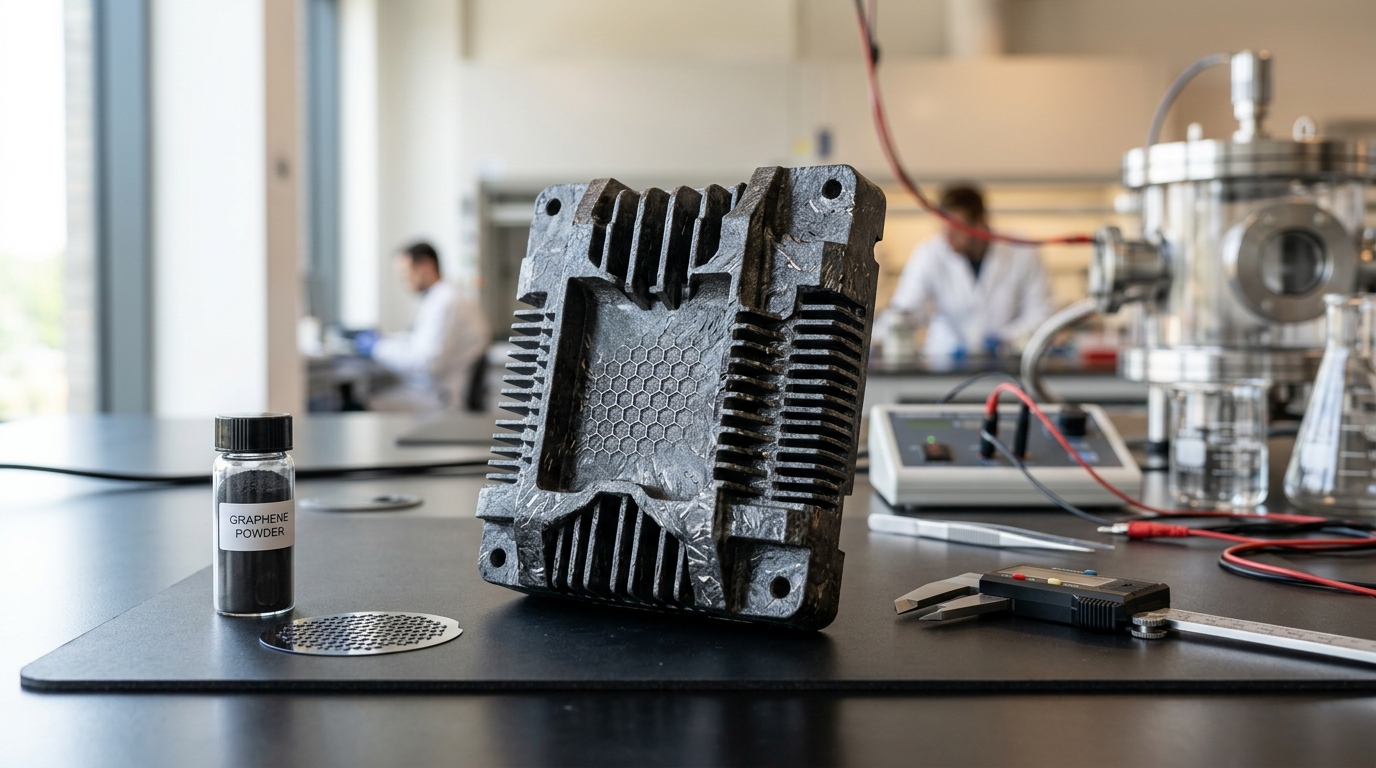
Rather than producing functional graphene on a purely experimental basis, First Graphene manufactures standardized, bulk-scale materials under its proprietary PureGRAPH® brand. These products consist of high-purity, few-layer graphene nanoplatelets characterized by high aspect ratios, pristine crystal structures, and low defect density.
PureGRAPH® Nanoplatelet Range
The primary powder portfolio is classified by nominal lateral platelet dimensions, allowing industrial formulators to optimize mechanical reinforcement, electrical conductivity, or barrier performance:
- PureGRAPH® 5: Nominal 5 µm lateral dimensions, commonly selected for barrier coatings, micro-cracking prevention in dense matrices, and high-surface-area applications.
- PureGRAPH® 10: Nominal 10 µm lateral dimensions, widely used across elastomeric compounds and specialty coatings.
- PureGRAPH® 20: Nominal 20 µm lateral dimensions, optimized for composite mechanical reinforcement and thermal dissipation.
- PureGRAPH® 50: Nominal 50 µm lateral dimensions, engineered for high aspect-ratio reinforcement in structural materials and specialty polymer systems.
Engineered Dispersions and Masterbatches
To overcome industrial processing barriers—such as agglomeration, dust handling, and difficult dispersion in client manufacturing lines—the company produces specialized ready-to-use intermediate forms:
- PureGRAPH® AQUA: Aqueous pre-dispersed liquid formulations designed for waterborne systems, concrete admixtures, and water-based protective coatings.
- PureGRAPH® Polymer Masterbatches: Pelletized thermoplastic masterbatches, including low-density polyethylene (MB-LDPE) and ethylene-vinyl acetate (MB-EVA and MB-EVA Bitumen), enabling drop-in compatibility for standard injection molding, extrusion, and asphalt blending.
- Functionalized Formulations: Surface-modified and chemically functionalized graphene derivatives (incorporating technologies such as MITO Material Solutions IP) to maximize interfacial bonding in specialty thermoset resins.
Manufacturing Infrastructure and Production Capabilities
A critical metric for advanced materials enterprises is the ability to reliably deliver metric-ton quantities with consistent batch-to-batch quality control. First Graphene’s primary production hub in Henderson, Western Australia, houses an established commercial capacity of 100 tonnes per annum (tpa) of PureGRAPH® material.
The company’s proprietary manufacturing route utilizes a single-step electrochemical exfoliation process. This technique converts high-purity (typically 90% to 98% graphitic carbon) vein graphite feedstock directly into few-layer graphene nanoplatelets. Unlike harsh chemical oxidation routes (such as the traditional Hummer’s method), electrochemical exfoliation avoids severe basal-plane oxidation, thereby preserving electrical conductivity, mechanical strength, and environmental integrity while minimizing hazardous chemical waste.
Key Commercial Application Sectors
Commercialization across the graphene sector depends on industrial adoption within volume-driven verticals. First Graphene focuses on four primary market sectors:
1. Cement and Concrete
Marketed under the PureGRAPH® CEM admixture line, the integration of graphene nanoplatelets into cementitious matrices promotes accelerated early-stage hydration, reduces porosity, and enhances compressive and flexural strength. By elevating mechanical performance, ready-mix producers can optimize cement content, thereby lowering clinker consumption and reducing the embodied carbon footprint of structural concrete.
2. Elastomers, Rubbers, and Polyurethanes
In high-wear environments such as bulk material handling, mining consumables, and conveyor transfer systems, polyurethane and rubber components suffer severe abrasive degradation. Compounding PureGRAPH® into elastomers significantly improves tensile strength, tear resistance, and dynamic abrasion life, reducing maintenance downtime in mineral processing operations.
3. Composites and Thermosets
Structural composite applications include fiberglass-reinforced polymers (FRP) and carbon-fiber laminates used in automotive, marine, and wind energy structures. Small loadings of graphene nanoplatelets improve fracture toughness, shear modulus, and cyclic fatigue resistance without adding significant net weight.
4. Protective Coatings and Fire Retardancy
PureGRAPH® acts as an impermeable physical barrier in protective paints and epoxies, significantly impeding the migration of moisture, oxygen, and corrosive ions across substrate surfaces. Additionally, formulated additives provide non-halogenated fire-retardant properties, forming protective char layers during thermal exposure.
Business Model and Revenue Generation
First Graphene operates as an upstream and midstream B2B advanced materials provider. Revenue generation relies on three primary commercial avenues:
- Direct Bulk Material Supply: Supplying raw PureGRAPH® powders and liquid concentrates directly to tier-1 and tier-2 chemical compounders, concrete producers, and masterbatch manufacturers under recurring supply contracts.
- Downstream Integration and Commercial Offtake: Structuring joint-development programs with industrial partners that transition into long-term commercial offtake agreements across sectors like mining consumables and infrastructure materials.
- High-Margin Value-Added Formulations: Monetizing tailored, intellectual-property-protected formulations (such as proprietary resin blends and functionalized admixtures) that command higher unit margins than unformulated base graphene.
Material Investment Risks and Sector Volatility
Investing in pure-play advanced materials equities involves substantial operational, financial, and sector-specific risks. Market participants evaluating First Graphene stock should consider several structural risk factors:
- Extended Industrial Qualification Timelines: The primary commercial markets for graphene—such as construction, aerospace, and heavy mining infrastructure—operate with conservative adoption cycles. Material qualification, field validation, and regulatory approvals frequently require 12 to 36 months, leading to prolonged delays between initial testing and scaled recurring revenues.
- Pre-Profit Cash Burn and Capital Requirements: Like many early-commercialization technology and materials microcaps, ongoing operating expenses for manufacturing, R&D, and global sales channels often outpace gross revenues. Companies in this category frequently rely on periodic equity capital raisings, which create potential share dilution risks for existing shareholders.
- Microcap Liquidity and Market Volatility: Secondary listings and over-the-counter cross-listings (such as OTCQB or European regional exchanges) typically demonstrate lower trading volume and higher bid-ask spreads than primary domestic exchanges, amplifying share price volatility.
- Competitive and Substitution Dynamics: The commercial nanomaterials landscape is competitive. First Graphene competes not only against other graphene synthesis companies (utilizing chemical vapor deposition, plasma reactors, or alternative mechanical exfoliation methods) but also against established industrial additives like carbon black, carbon nanotubes, and silica.
Financial and Investment Disclaimer
This article is published strictly for informational, educational, and research purposes and does not constitute financial, investment, legal, or tax advice. Advanced materials equities and microcap securities carry elevated levels of market volatility and financial risk. Readers must conduct independent due diligence and consult with a licensed financial advisor before executing any investment decisions regarding First Graphene Limited or any associated securities.