Flux Graphene Xt
Flux Graphene XT refers to an engineered composite sports frame architecture that pairs second-generation graphene-reinforced resin matrices with a specialized structural geometry. Primarily recognized in high-performance padel and racquet sports equipment, this design leverages exfoliated graphene nanoplatelets to alter the mechanical behavior of carbon fiber laminates. Instead of relying purely on heavy structural carbon layers, the material system redistributes mass toward functional leverage points while maintaining structural stiffness, maximizing swing momentum, torsional stability, and kinetic energy transfer during ball impact.
Understanding Graphene XT Material Science
To understand the mechanics of the Flux design, one must first look at the matrix reinforcement known as Graphene XT. Standard composite equipment relies on woven or unidirectional carbon fibers set in a thermoset epoxy resin. While carbon fibers provide immense tensile strength along their axis, the cured epoxy resin between the fibers remains the structural weak point under high shear stresses and localized shock loading.
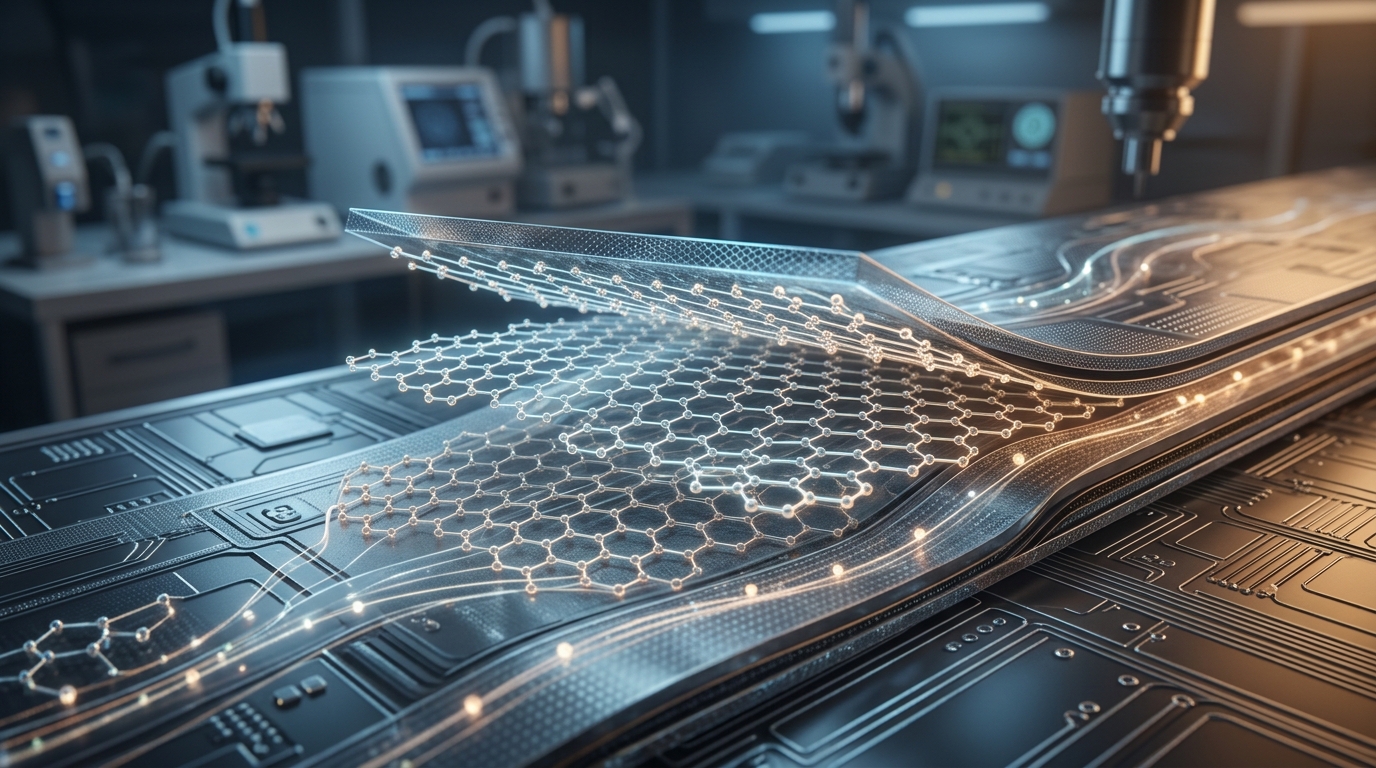
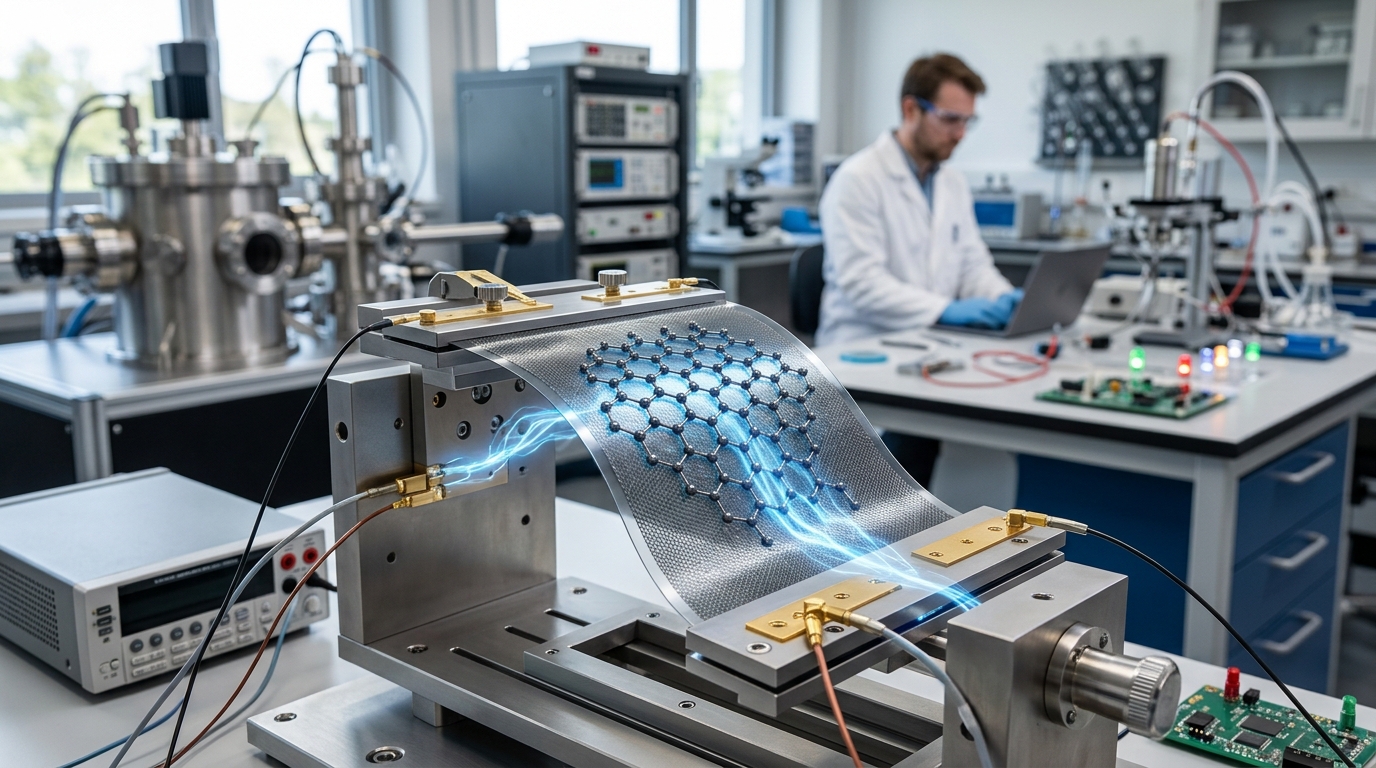
Graphene XT integrates high-aspect-ratio carbon sheets directly into the polymer matrix. Because a single layer of carbon atoms possesses exceptional intrinsic strength and high thermal and mechanical conductivity, dispersing these microscopic platelets through the resin achieves several distinct structural enhancements:
- Interfacial shear strength: The microscopic platelets bond with polymer chains, preventing microscopic cracks from propagating through the resin during repetitive high-velocity impacts.
- Weight-to-strength optimization: Reinforcing the polymer matrix allows engineers to reduce the total thickness of structural carbon plies without sacrificing frame rigidity.
- Vibration harmonic shifting: The high stiffness-to-weight ratio alters the natural resonance frequencies of the frame, dampening harsh, low-frequency oscillations before they reach the player’s arm.
Structural Architecture of the Flux Frame
In sporting equipment, mass distribution determines how an implement feels during motion and how much kinetic energy transfers to an object upon contact. The traditional engineering limitation has always been that increasing frame strength requires adding material, which raises the overall weight and slows down swing acceleration.
The Flux Graphene XT construction solves this trade-off through deliberate mass redistribution. By using graphene-reinforced composite matrices in the central throat and bridge sections, structural integrity is maintained using fewer laminate layers. This shaved weight is strategically repositioned toward the extreme polar ends of the frame: the tip and the handle base.
Polar Moment of Inertia
Moving structural mass away from the center of the frame and toward the perimeter increases the polar moment of inertia. In practical play, this yields two immediate mechanical advantages:
- Torsional stability: Off-center impacts exert twisting forces across the frame face. A higher moment of inertia resists this torsional deflection, keeping the hitting surface planar and preventing trajectory drift.
- Impact energy transfer: Greater effective mass concentrated behind the hitting zone generates a higher coefficient of restitution, allowing more kinetic energy to transfer directly into ball velocity rather than dissipating as frame deformation.
Comparative Mechanics: Standard Carbon vs. Graphene XT
Integrating nanomaterials into sporting goods is not merely a branding exercise; it alters the fundamental mechanical profile of the composite structure. The table below illustrates how the evolution from standard carbon fiber to Graphene XT systems affects physical performance properties.
| Performance Attribute | Standard Carbon Composite | First-Generation Graphene | Flux Graphene XT Composite |
|---|---|---|---|
| Matrix Tensile Modulus | Baseline standard epoxy | Moderate gain (+15-20%) | High enhancement (+30-40%) |
| Weight Distribution Flexibility | Uniform / constrained | Slight center lightening | Optimized polar concentration |
| Torsional Resistance | Standard fiber alignment dependent | Enhanced shaft stability | Maximum bridge and tip stability |
| Impact Shock Attenuation | Relies on elastomeric inserts | Slight intrinsic dampening | High dynamic structural damping |
| Flex Fatigue Resistance | Standard delamination curve | Improved interlaminar toughness | Extended micro-crack resistance |
Kinetic Transfer and Impact Damping Mechanisms
When a solid object strikes a composite racquet, mechanical shock waves travel along the frame perimeter. In an unreinforced frame, this kinetic shock creates structural flutter—micro-flexing that robs the shot of rebound energy and sends jarring vibrations down the shaft into the user’s wrist and elbow joints.
Flux Graphene XT frames mitigate this through structural shock dissipation. The high electron and phonon transmission characteristics of graphene sheets correspond to rapid mechanical wave dispersion. Instead of concentrating shock waves at the junction between the head and handle, the graphene-infused resin spreads the impact wave across the entire composite matrix instantaneously. This dispersion flattens the peak amplitude of the shock wave, providing a solid, predictable impact feel without deadening the dynamic responsiveness of the hitting surface.
Manufacturing and Integration Challenges
While the mechanical advantages of Graphene XT composites are clear, manufacturing them requires tight process control. Integrating nanomaterials into industrial composite production presents several engineering hurdles:
Platelet Dispersion and Agglomeration
Graphene platelets naturally tend to agglomerate due to strong van der Waals forces between individual carbon sheets. If graphene clumps together into microscopic graphite clusters within the resin, it acts as a stress concentrator rather than a reinforcing agent, causing premature structural failure. Achieving uniform, isotropic dispersion requires specialized high-shear mixing and proprietary chemical functionalization before resin infusion.
Laminate Curing and Thermal Dynamics
Because graphene possesses extraordinarily high thermal conductivity, it alters the heat transfer dynamics during the autoclave or compression molding cure cycle. Composite tooling and cure temperature ramps must be recalibrated to ensure uniform cross-linking across both graphene-dense sections and standard structural plies, avoiding internal residual stresses.
Performance Trade-offs and Misconceptions
Despite the functional benefits of Flux Graphene XT technology, prospective users and composite designers must evaluate the material without unrealistic expectations. Nanomaterial enhancement improves composite efficiency, but it cannot override basic physics.
- Frame Stiffness vs. Arm Comfort: Graphene XT increases rigidity. While the material dampens high-frequency flutter, an inherently stiffer frame transfers higher instantaneous peak impact forces compared to a flexible, low-modulus frame. Players sensitive to stiff equipment must balance frame stability against individual ergonomic needs.
- Total Weight vs. Swing Weight: A lighter overall static weight does not automatically mean the equipment feels featherlight in motion. Because mass is shifted toward the tip to generate power, the dynamic swing weight can remain substantial, demanding proper swing mechanics.
- Indestructibility Myth: Graphene is theoretically the strongest known material at the atomic scale, but a graphene-enhanced composite remains subject to catastrophic failure under severe point-impact stresses (such as collisions with hard surfaces or court walls). The material improves cyclic fatigue resistance, not invulnerability.
Evaluating Flux Graphene XT Equipment
When assessing equipment built with Flux Graphene XT architecture, focus on quantifiable structural characteristics rather than marketing claims:
- Balance Point: Measure the static balance point relative to the total weight to determine whether the polar mass distribution aligns with your swing speed and control preferences.
- Sweet Spot Consistency: Test off-center contact responsiveness. The primary functional indicator of a properly executed Graphene XT matrix is the retention of ball velocity on shots hit outside the geometric center of the face.
- Frame Torsion: Evaluate the torsional deflection under high-speed ball impacts. Minimal head twisting indicates effective reinforcement at the bridge and throat sections.
By pairing kinetic energy optimization with precision mass placement, the Flux Graphene XT construction demonstrates how targeted nanotechnology transforms traditional carbon fiber manufacturing into a high-efficiency composite system.