Adams Graphene Spray Coating
Vehicle protection formulations have rapidly evolved from traditional carnauba waxes and synthetic polymer sealants to nanotechnology-driven coatings. Among consumer-accessible options, adams graphene spray coating (officially branded as Adam’s Graphene Ceramic Spray Coating™) has emerged as a widely discussed hybrid product designed to bridge the gap between high-maintenance professional coatings and short-lived spray sealants.
By blending a curable silica-based liquid ceramic resin with functionalized reduced graphene oxide (rGO) nanosheets, the product aims to deliver extended chemical resistance, thermal mitigation, high contact angles, and ease of application. Understanding how this product functions requires evaluating its underlying chemistry, demonstrated performance metrics, proper installation protocols, and realistic functional lifespan.
Product Overview and Formulations
Adam’s Polishes offers two primary formulations in its spray-applied graphene portfolio:
- Adam’s Graphene Ceramic Spray Coating™ (Standard): Engineered for straightforward DIY application, this formulation serves as a high-durability spray sealant claiming up to 1+ year of protection against environmental contamination, UV degradation, and chemical etching.
- Adam’s Graphene Ceramic Spray Coating™ Advanced: Designed with a reported 100% increase in active resin content relative to the standard spray. This higher concentration elevates stated durability to 12 to 18 months, increases chemical resilience, and offers slightly deeper optical enhancement, while remaining in an atomized spray format.
Both products are formulated for multi-surface compatibility, rapid flash times, and integrated visual application verification via patent-pending tracer dyes.
The Chemistry: The Role of rGO in a Ceramic Matrix
To evaluate the performance of any graphene-infused automotive spray, it is necessary to demystify the material science. Monolayer or pristine graphene cannot form a continuous, crosslinked, adherent barrier on clear coat by itself. Instead, the structural backbone of Adam’s spray coating is a polysilazane or polysiloxane (silica-based) ceramic resin suspended in volatile organic carrier solvents.
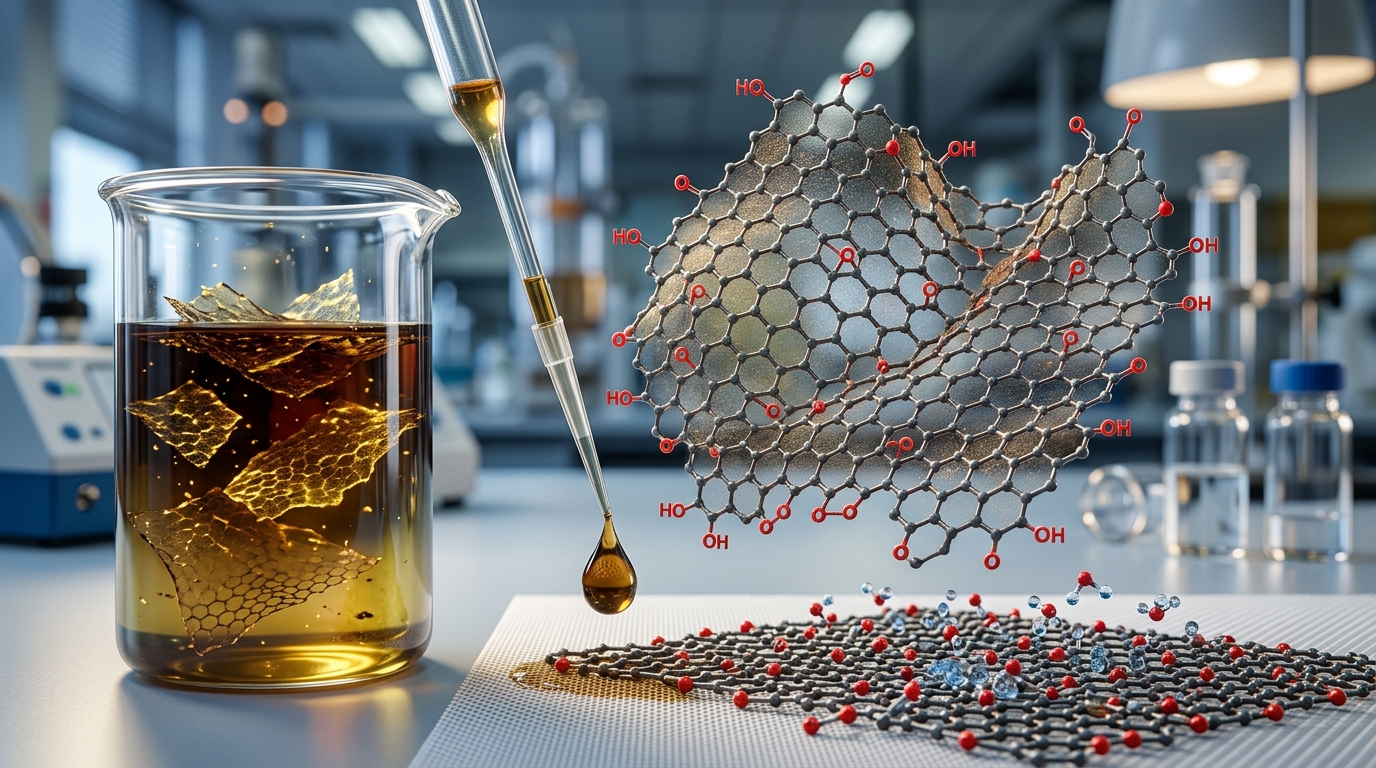
Functionalized reduced graphene oxide (rGO) nanoplatelets are suspended within this liquid ceramic polymer matrix. When cured, this hybrid network offers several specific physical and chemical characteristics:
- Thermal Dissipation & Reduced Water Spotting: Traditional pure silica (SiO₂) coatings have high surface energy and low thermal conductivity, which can cause water droplets to magnify solar heat and bake dissolved minerals directly into the clear coat. The integration of rGO enhances heat dispersion across the panel, lowering localized surface temperatures on dark-colored paint and significantly reducing severe mineral-deposit etching.
- Chemical Tolerance: The cured organosilicon-rGO matrix forms an impermeable chemical barrier rated to withstand a wide pH spectrum (pH 2 through pH 12), resisting harsh alkaline traffic film removers, acidic rain, bird droppings, and industrial fallout.
- Antistatic Characteristics: Unlike organic carnauba waxes or thick silicone polymers that generate electrostatic charge, rGO nanoplatelets reduce static buildup on vehicle surfaces, mitigating the attraction of dry ambient road dust.
- Mechanical Matrix Reinforcement: The nanosheet geometry of rGO provides tensile reinforcement within the crosslinked siloxane network, yielding a flexible sacrificial layer that helps resist wash-induced micro-marring.
Key Performance Characteristics and Specifications
Independent detailing tests, gloss-meter evaluations, and manufacturer data identify several core performance benchmarks for Adam’s Graphene Ceramic Spray Coating:
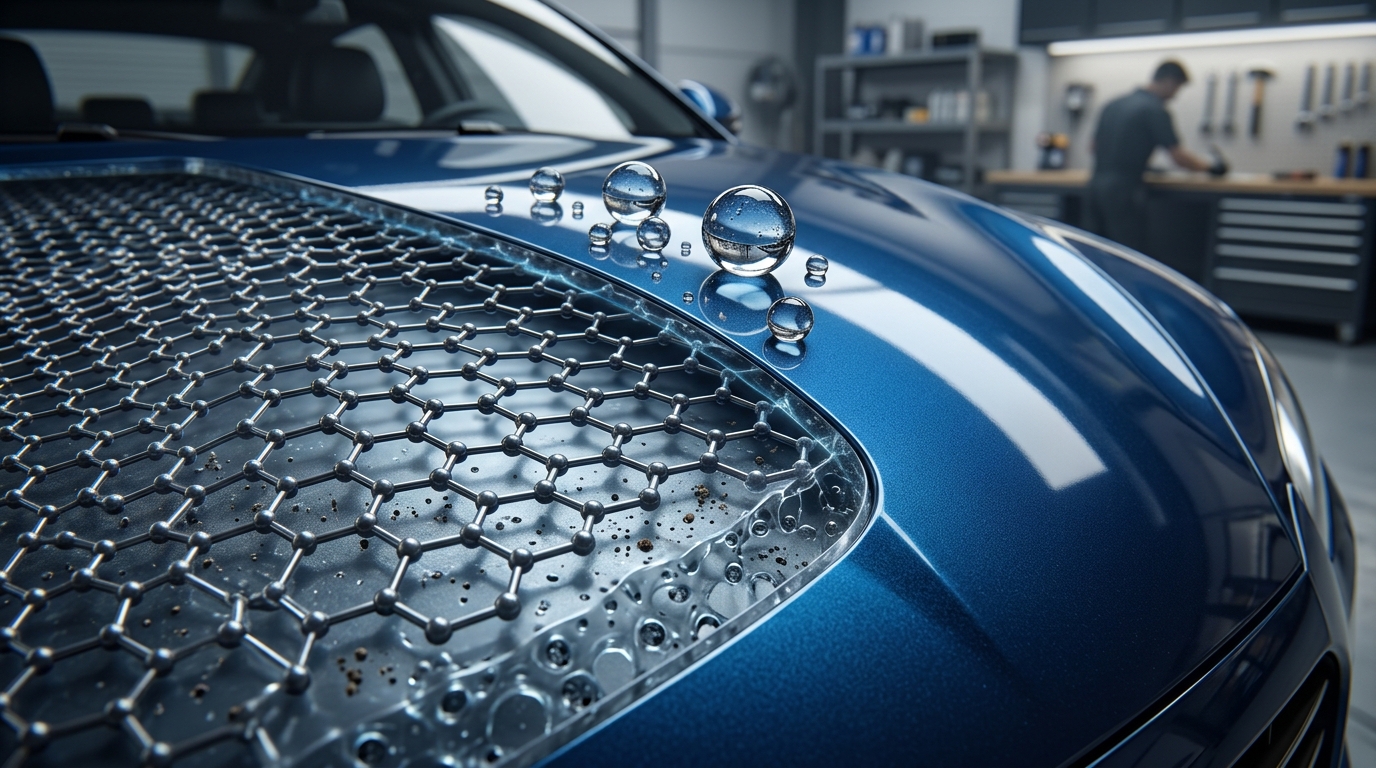
- Hydrophobic Contact Angle: The cured surface produces a static Water Contact Angle (WCA) ranging between 110° and 118°, creating tall, round water beads that minimize surface friction.
- Sliding (Roll-Off) Angle: The coating exhibits a low roll-off angle (less than 10° to 15°), which allows water droplets to evacuate panels quickly at low driving speeds, taking surface dust with them via the self-cleaning effect.
- Hardness Claims: The manufacturer cites a fully cured pencil hardness rating of >9H. While this provides sacrificial resistance against light swirls and chemical degradation, it should not be confused with total scratch-proofing against heavy physical abrasion.
- Gloss and Optical Depth: Independent gloss-meter tests regularly document upwards of ~93.7 Gloss Units (GU) on properly prepped, polished surfaces, delivering noticeable surface darkening and reflective clarity.
- Ceramic Glow Technology™ (UV Tracer): The formulation contains an optical brightener that fluoresces under a 395 nm UV blue LED flashlight. This allows users to visually detect high spots, leveling streaks, overspray, and missed sections in real time during the application process.
Step-by-Step Preparation and Application Walkthrough
Proper surface decontamination and mechanical preparation directly dictate the bond strength and actual operational lifespan of the coating. Applying a ceramic-graphene spray over existing waxes, road oils, or embedded fallout severely limits durability.
Phase 1: Decontamination and Surface Preparation
- Strip Wash: Wash the entire vehicle using a dedicated strip-wash detergent or an alkaline pre-wash soap to remove road grime, grease, and old organic wax layers.
- Chemical Decontamination: Spray a dedicated iron-fallout remover across all exterior painted panels and wheels to chemically dissolve sintered brake dust and ferrous industrial fallout. Rinse thoroughly.
- Mechanical Decontamination: Lubricate the vehicle surfaces and glide a clay bar or synthetic clay mitt over the finish to pull out embedded particulates, tree sap, and paint overspray.
- Paint Correction (Recommended): Machine polish the clear coat using a compound or fine finishing polish to remove swirls, scratches, and oxidation. Coatings lock in the underlying paint condition.
- Solvent Panel Wipe: Thoroughly wipe down every panel with an isopropyl alcohol (IPA) solution or dedicated surface prep spray (such as Adam’s Surface Prep) to strip remaining polishing oils, lubricants, and surfactants.
Phase 2: Spray Application Protocol
- Applicator Priming: Shake the bottle thoroughly to evenly disperse the suspended rGO platelets. Spray 2 to 4 light mists directly onto a microfiber applicator pad or a folded, low-pile microfiber towel. Avoid spraying directly onto dry paint panels to prevent heavy solvent spotting.
- Section Distribution: Work on one manageable section at a time (approximately 3×3 feet, or half a hood). Apply the product using cross-hatch passes (overlapping horizontal lines followed by vertical lines) to ensure uniform coverage.
- Flashing & Dwell Window: Allow the product to dwell for 1 to 2 minutes. As the volatile solvent carriers evaporate, the coating will exhibit a distinctive “rainbow” or oil-slick haze. In warmer, more humid climates, flashing occurs faster; in cooler environments, dwell times extend slightly.
- Two-Towel Leveling Method:
- Towel 1 (Leveling): Use a low-pile microfiber towel to gently wipe away carrier solvents and level any raised ridges or heavy spots.
- Towel 2 (Final Buff): Immediately follow with a clean, plush microfiber towel, buffing the panel to a high-gloss, streak-free optical finish.
- UV Inspection: Turn off bright ambient overhead lights and illuminate the treated panel with a 395 nm UV flashlight. Any glowing streaks or un-leveled areas represent high spots that must be buffed down before the resin fully sets.
Phase 3: Curing Requirements
- Initial Set (Touch-Dry): 1 to 2 hours after final buffing.
- Moisture-Free Window: Keep the vehicle completely dry and protected from rain, dew, or water exposure for a minimum of 4 hours.
- Full Chemical Cure: The polysiloxane network crosslinks fully over 24 hours. Avoid washing the vehicle with detergents during this initial 24-to-48-hour window.
- Layering: If applying a second layer for maximum coverage, wait at least 1 to 2 hours after the first coat. Adding more than two layers offers diminishing returns.
Comparative Analysis: Spray vs. Traditional Sealants vs. Bottled Coatings
Understanding how the standard and advanced spray formulations compare to conventional ceramic sprays and high-solid bottled coatings helps establish realistic expectations regarding durability, layer thickness, and installation difficulty.
| Attribute | Conventional SiO₂ Spray Sealant | Adam’s Graphene Spray Coating | Professional Bottled Graphene / Ceramic (50–60 ml) |
|---|---|---|---|
| Active Resin Concentration | Low (5% – 10%) | Moderate (Optimized for spray atomization) | High (35% – 45%+ solid active resin) |
| Durability Range | 3 to 6 months | 12 to 18 months | 5 to 9+ years |
| Film Build / Thickness | Micro-thin sacrificial layer | Thin, flexible sacrificial barrier | Substantial hard film (often requires compounding to strip) |
| Water Spot Mitigation | Low to Moderate (Prone to mineral baking) | High (Enhanced heat dispersion & low sliding angle) | Very High |
| Application Risk / Difficulty | Very low (Simple spray-and-wipe) | Low (Forgiving flash window; UV tracer assistance) | High (Rapid flash; improper leveling requires wet sanding/polishing) |
| Primary Use Case | Quick maintenance topper | Durable standalone DIY protection | Multi-year permanent/semi-permanent barrier |
Multi-Surface Compatibility
One major operational benefit of organosilicon-graphene spray chemistry is broad substrate versatility across modern vehicle exteriors:
- Clear Coat & Single-Stage Paint: Bonds tightly with all modern factory clear coats, custom lacquers, and single-stage finishes, creating deep reflections without clouding.
- Unpainted Textured Plastics & Trim: Restores rich black pigment to oxidized exterior plastic cowls, mirror caps, and bumper moldings without leaving white chalky residue.
- Glass & Polycarbonate: Functions as a durable hydrophobic glass treatment on side windows and windshields, improving wet-weather visibility while remaining safe on acrylic/polycarbonate headlight lenses.
- Wheels & Brake Calipers: Cured siloxane-graphene matrices resist high thermal loads from braking systems, repelling corrosive, hot metallic brake dust and simplifying subsequent wheel washes.
- Paint Protection Film (PPF) & Vinyl: Completely safe for gloss and satin/matte vinyl wraps and polyurethane PPF, providing essential UV screening and chemical resistance without altering the film’s intended texture or causing adhesive lifting.
- Brightwork & Bare Metals: Prevents oxidation and tarnishing on chrome, polished aluminum wheels, stainless steel exhaust tips, and composite truck bed surfaces.
Maintaining Longevity and Hydrophobic Integrity
While the product claims up to a year or more of protection, real-world longevity depends heavily on wash maintenance and exposure conditions. To maximize performance:
- Perform routine bi-weekly maintenance washes using a pH-neutral, additive-free automotive shampoo that leaves no synthetic gloss-enhancers or waxes behind.
- Periodically decontaminate the coating if water beading slows down. Traffic film and road oils can temporarily “clog” the microscopic surface structure; an alkaline pre-wash or iron-remover wash typically restores contact angles.
- Use a graphene-infused detail spray or waterless wash as a drying aid every 3 to 4 washes to recharge the sacrificial top layer and maintain slickness.