Graphene Powder
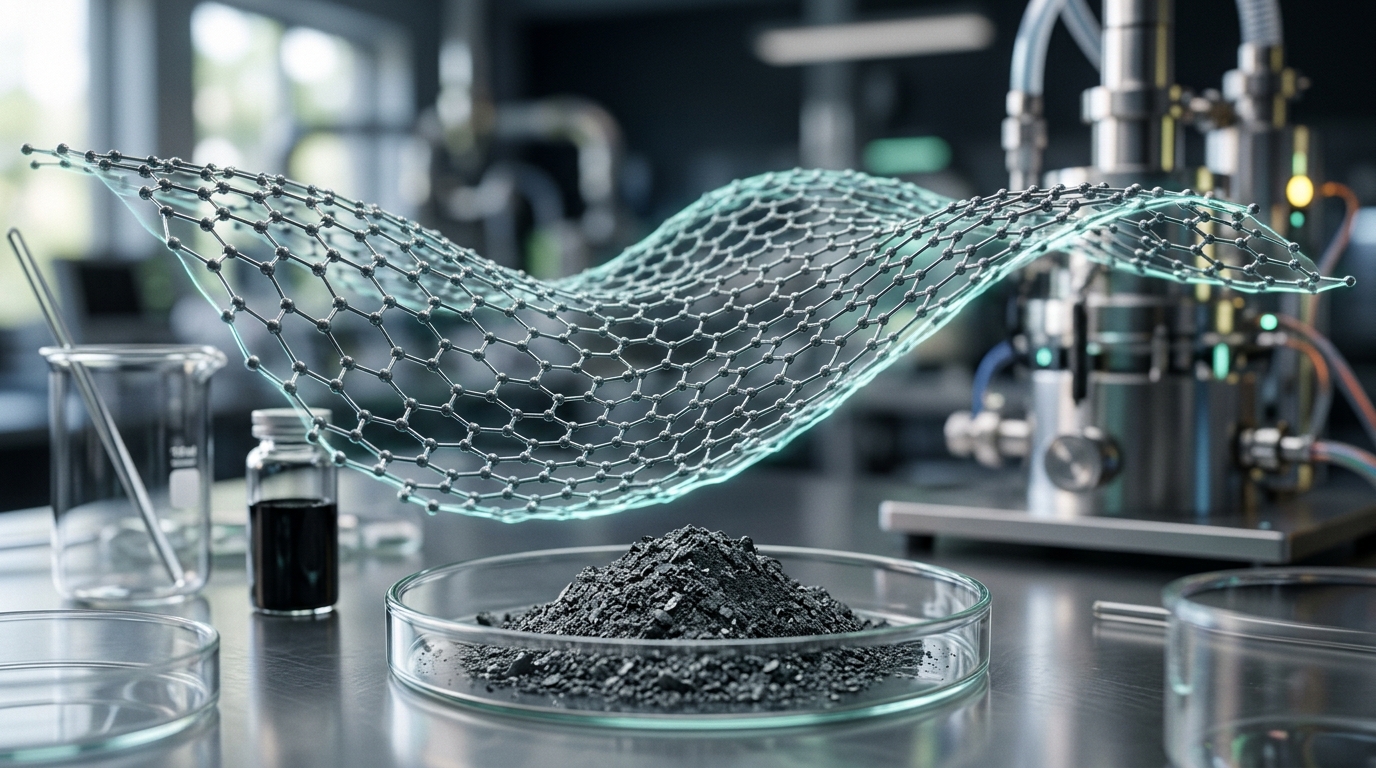
Graphene powder is a dry, particulate nanomaterial composed of microscopic, unbonded graphene flakes, platelets, or agglomerates. Unlike continuous monolayer graphene films grown via chemical vapor deposition (CVD) for microelectronics, graphene powder is produced as a bulk material intended for high-volume industrial mixing, compounding, and coating applications.
As an additive, graphene powder imparts the core mechanical, electrical, and thermal properties of two-dimensional carbon into host matrices such as polymers, elastomers, ceramics, battery slurries, and industrial fluids. However, the commercial efficacy of the powder depends heavily on flake thickness, lateral particle size, surface chemistry, and the degree of dispersion achieved in the final formulation.
Classifications of Graphene Powder
In the commercial market, materials sold under the broad banner of “graphene powder” span distinct structural categories defined by the International Organization for Standardization (ISO) and the Graphene Council. The number of carbon layers directly impacts surface area, mechanical flexibility, and electronic performance.
- Single-Layer Graphene Powder: Composed of individual sheets of sp2-hybridized carbon atoms (thickness ~0.34 nm). True single-layer dry powders are rare, cost-intensive to produce, and highly prone to irreversible agglomeration due to strong inter-sheet van der Waals forces.
- Few-Layer Graphene (FLG) Powder: Flakes containing between 2 and 10 distinct graphene layers (thickness ~0.7 to 3.5 nm). FLG retains much of single-layer graphene’s high surface area and electrical conductivity while exhibiting slightly higher resistance to restacking and improved ease of mechanical dispersion.
- Graphene Nanoplatelets (GNPs): Multilayer carbon flakes ranging from roughly 10 to 100 carbon layers (thickness up to 100 nm) with lateral dimensions from 1 to 50 micrometers. GNPs represent the primary commercial workhorse for polymer reinforcement, thermal management, and conductive additives due to their balance of scalable production and performance.
Comparing Graphene Powder, rGO, and Graphite Powder
Material specifiers must distinguish between pristine graphene powders, chemically derived reduced graphene oxide (rGO) powders, and conventional micronized graphite powders. Each material offers distinct cost profiles, defect densities, and chemical reactivity.
| Property / Characteristic | Pristine Graphene Powder | Reduced Graphene Oxide (rGO) | Graphite Powder |
|---|---|---|---|
| Layer Thickness | 1 to 10 layers (0.34 – 3.5 nm) | 1 to 5 layers (distorted, 0.5 – 2 nm) | >100 layers (>100 nm) |
| Oxygen Content | < 1% to 2% | 5% to 15% (residual functional groups) | < 1% |
| Electrical Conductivity | Very High (104 – 105 S/m) | Moderate to High (102 – 104 S/m) | Moderate (bulk scale) |
| Specific Surface Area (BET) | High (300 – 1,000+ m²/g) | Very High (400 – 900 m²/g) | Low (< 20 m²/g) |
| Dispersibility in Solvents | Requires specialized surfactants or high shear | Disperses readily in polar solvents | Poor dispersion stability; settles rapidly |
| Primary Industrial Function | High-performance thermal and electrical additives | Electrode slurries, water-based coatings, functional composites | Lubricants, refractory components, basic conductive fillers |
Reduced Graphene Oxide (rGO) Powder
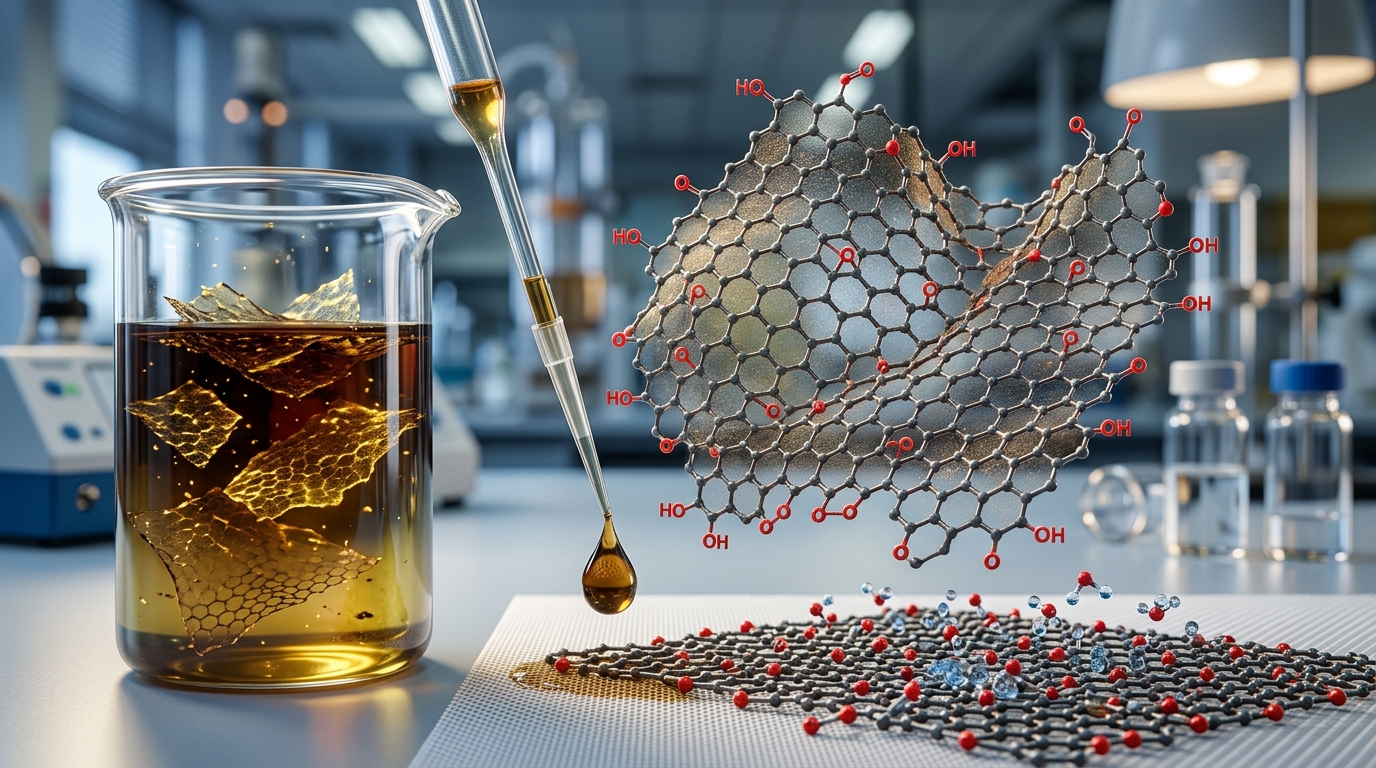
Produced via the oxidation of natural graphite to graphene oxide (GO) followed by thermal or chemical reduction, rGO powder retains residual oxygen functionalities (such as hydroxyl, carboxyl, and epoxy groups) and structural lattice defects. While these defects slightly reduce pristine electrical and thermal conductivity relative to pristine FLG, the residual functional groups enable easier chemical compatibility with polar matrices and functional crosslinkers.
Graphite Powder
Standard graphite powder consists of three-dimensional stacked crystalline carbon with hundreds or thousands of layers. While cost-effective, graphite lacks the high aspect ratio, extreme specific surface area, and percolation efficiency that define two-dimensional graphene powders. A much higher loading fraction of graphite is required to achieve comparable mechanical reinforcement or electrical percolation.
Key Physical and Functional Properties
The selection of graphene powder for manufacturing workflows depends on several standardized bulk properties:
- Specific Surface Area (SSA): Measured by nitrogen Brunauer-Emmett-Teller (BET) analysis, SSA indicates the surface available for interfacial contact with host matrices. Theoretical single-layer graphene possesses an SSA of 2,630 m²/g, whereas commercial powders typically range from 50 m²/g (thick GNPs) to 800+ m²/g (few-layer and rGO powders).
- Electrical Percolation Threshold: Because of the high aspect ratio (lateral width relative to thickness) of two-dimensional flakes, graphene powder can create an electrically continuous pathway through insulating polymers at low loading levels, often between 0.5% and 5% by weight.
- Thermal Conductivity: Individual graphene sheets exhibit theoretical in-plane thermal conductivity above 3,000 W/m·K. In bulk powders, inter-flake contact resistance reduces this value, but the powder remains exceptionally effective at building thermal conduction networks inside polymers, phase change materials, and greases.
- Bulk and Tap Density: Graphene powders typically exhibit low bulk densities (often 0.02 to 0.15 g/cm³), making them light and voluminous. Handling low-density powders requires specialized containment, feeding equipment, and dust extraction systems.
Synthesis and Production Methods
Bulk quantities of graphene powder are synthesized through top-down mechanical or chemical separation of natural flake graphite, as well as bottom-up synthesis methods.
Liquid-Phase Exfoliation (LPE)
LPE relies on high-energy shear mixing, cavitation, or ultrasonic agitation of graphite suspended in a liquid medium (such as N-methyl-2-pyrrolidone, dimethylformamide, or water-surfactant mixtures). The shear stresses overcome inter-layer van der Waals forces, stripping off thin graphene sheets. The flakes are then centrifuged, filtered, and dried into a loose powder. LPE produces pristine, low-defect flakes, though yields per pass require careful process optimization.
Mechanical Ball Milling and Shear Milling
Dry or wet high-energy ball milling uses colliding grinding media to induce shear and normal forces on graphite. When carried out in the presence of chemical additives or mild exfoliating agents (mechanochemical exfoliation), milling cleanly delaminates graphite layers into few-layer graphene powders and nanoplatelets. This route offers high production throughput and scalability for structural composite applications.
Chemical Oxidation-Reduction Routes
The modified Hummers’ method exposes graphite to strong oxidizing acids (sulfuric acid, potassium permanganate) to produce graphene oxide. The resulting material is chemically exfoliated in water, then thermally or chemically reduced back to a conductive state before spray-drying or freeze-drying into rGO powder. This process provides high exfoliation yields and high surface area, though it introduces permanent sp3 defect sites into the carbon lattice.
Primary Industrial and Commercial Applications
Because graphene powder acts as an active micro- and nanoscale additive, it has seen widespread adoption across several key engineering sectors.
1. Polymer Composites and Masterbatches
Adding low concentrations (0.1% to 3.0% by weight) of graphene powder or GNPs to thermoplastics (e.g., polyamide, polypropylene, PEEK) and thermoset epoxies enhances tensile strength, elastic modulus, and fracture toughness. Furthermore, the 2D sheets form tortuous pathways that reduce gas and moisture permeability, while simultaneously providing static dissipation (ESD protection) without the heavy loading levels associated with carbon black.
2. Energy Storage and Battery Electrodes
In lithium-ion, sodium-ion, and lead-acid batteries, graphene powder functions as a conductive additive within the cathode and anode slurries. It bridges the gaps between active materials (such as LFP, NMC, or silicon nanoparticles), lowering internal impedance, improving cycle life at fast charge/discharge rates (C-rates), and providing mechanical stabilization against volume changes in silicon-based anodes.
3. Electrically and Thermally Conductive Coatings
Graphene powder can be formulated into conductive inks, paints, and anti-corrosion barrier coatings. These coatings provide electromagnetic interference (EMI) shielding, electrostatic discharge prevention, and corrosion resistance for marine, aerospace, and electronics packaging applications.
4. Thermal Interface Materials (TIMs) and Greases
Electronics packaging requires rapid heat dissipation from semiconductor dies to heat sinks. Formulating silicones, epoxy adhesives, and mineral oils with graphene powder creates high-performance thermal interface materials, pads, and greases that transfer heat across micro-scale surface roughness without requiring high concentrations of abrasive ceramic fillers.
Surface Functionalization for Matrix Compatibility
In their pristine state, graphene sheets are chemically inert and hydrophobic, which can lead to phase separation or poor interfacial stress transfer when compounded into organic polymers. Surface functionalization alters the powder’s surface chemistry to promote wetting and chemical bonding.
- Amine Functionalization (-NH2): Enhances covalent bonding with epoxy networks, bismaleimides, and polyamides, yielding higher mechanical load transfer across the composite interface.
- Silane Treatment: Employs organosilanes to improve dispersion and bonding in silica-rich systems, polyolefins, and elastomer formulations.
- Carboxyl and Hydroxyl Functionalization (-COOH, -OH): Increases powder compatibility with waterborne systems, polyols, polyurethanes, and acrylic resins.
Dispersion Challenges and Manufacturing Workflow
The primary barrier to maximizing the performance of graphene powder is agglomeration. Due to strong cohesive van der Waals attractions and high surface area, dry flakes tend to re-stack and form macroscopic agglomerates during storage and compounding. Agglomerated graphene behaves like standard graphite, losing its mechanical reinforcement and percolation advantages.
To overcome agglomeration during commercial manufacturing, several processing strategies are standard:
- Masterbatch Compounding: Rather than feeding dry powder directly into an injection molding machine, manufacturers compound graphene powder into a polymer carrier at high concentrations (e.g., 10% to 20% by weight) using high-torque twin-screw extruders. The resulting pellets (masterbatch) are then let down into virgin resin during part fabrication.
- High-Shear Liquid Mixing: For liquid resins, paints, and battery slurries, high-shear rotor-stator mixers, planetary ball mills, or three-roll mills are utilized to break up aggregates and fully wet individual sheets.
- Surfactant and Dispersant Selection: Non-ionic and ionic surfactants, as well as polymeric dispersants (such as block copolymers), help lower interfacial tension and prevent re-agglomeration via steric or electrostatic stabilization.
Safety, Handling, and Occupational Hygiene
Dry graphene powder consists of respirable, low-density carbon nanomaterials. Safe industrial handling requires standard containment and personal protective equipment (PPE) to minimize dust inhalation and skin contact.
- Engineering Controls: Powders should be handled inside certified fume hoods, glove boxes, or localized downflow booths equipped with HEPA filtration. Enclosed automated powder-dosing systems are recommended for high-volume manufacturing lines.
- Personal Protective Equipment (PPE): Personnel handling dry powders must use properly fitted respirators (such as N95, N100, or P100 particulate respirators, or PAPR units depending on airborne concentration), chemical-resistant nitrile gloves, and sealed safety goggles.
- Combustible Dust Considerations: Like many fine carbonaceous particulates, high airborne concentrations of graphene powder can pose a static accumulation or dust explosion risk. Handling equipment, transfer lines, and dust collection systems should be electrically grounded and bonded in accordance with local safety standards.