What Is Graphene Used for?
What is graphene used for? In modern commercial industry and advanced engineering, graphene is used primarily for thermal dissipation in smartphones, structural reinforcement in lightweight composites, conductive additives in lithium-ion batteries, high-durability protective coatings, and precision magnetic sensors. Beyond these commercially deployed applications, graphene is undergoing active development in pilot-scale water desalination membranes, next-generation semiconductor devices, and experimental biomedical technologies.
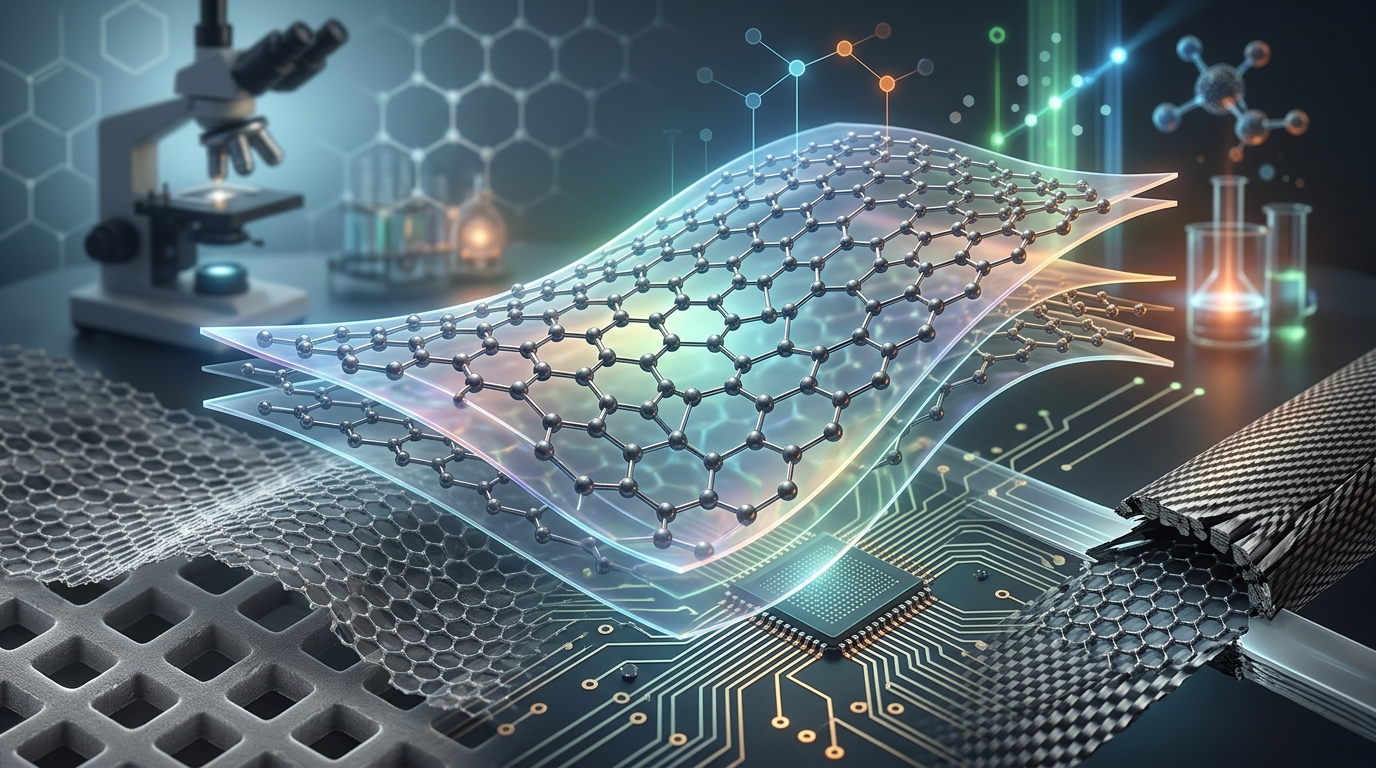
First isolated experimentally in 2004, graphene is a two-dimensional sheet of carbon atoms bonded in a hexagonal honeycomb lattice. While early public reception labeled it an all-purpose “miracle material,” its industrial adoption has followed a practical, engineering-driven trajectory. Today, graphene is applied selectively where its singular physical, thermal, and electrical metrics solve distinct engineering bottlenecks that conventional materials cannot address.
Why Graphene Is Useful: Core Physical and Chemical Properties
Graphene’s commercial utility originates from the combination of mechanical, electrical, and thermal properties inherent to its atomic structure. Composed of $sp^2$-hybridized carbon atoms tightly bound in a single atomic layer, it exhibits several benchmark physical characteristics:
- Exceptional Tensile Strength: Single-layer graphene has an intrinsic tensile strength of approximately 130 GPa and a Young’s modulus of roughly 1 TPa. At equal unit weight, it is roughly 100 to 200 times stronger than structural steel.
- Superior Thermal Conductivity: Graphene exhibits an in-plane thermal conductivity between 3,000 and 5,000 W/m·K. This substantially outperforms standard thermal conductors such as copper (~400 W/m·K) and synthetic diamond.
- High Electrical Conductivity and Charge Mobility: Under ambient conditions, graphene demonstrates electron mobility exceeding 200,000 $text{cm}^2/text{V}cdottext{s}$, permitting rapid electron transport with minimal resistive energy loss.
- Impermeability and Barrier Density: The electron density within graphene’s aromatic carbon rings is sufficient to prevent the passage of even the smallest gas molecules, such as helium, making continuous graphene layers completely impermeable to fluids and chemical oxidizers.
- High Surface Area and Optical Transparency: Graphene provides a theoretical specific surface area of approximately 2,630 $text{m}^2/text{g}$ while absorbing only ~2.3% of incident white light, resulting in ~97.7% optical transmittance.
Material Form Factors: Nanoplatelets vs. Single-Layer CVD
Understanding what graphene is used for requires distinguishing between its primary commercial form factors. The term “graphene” encompasses a family of distinct carbon nanomaterials with different production routes, price points, and end uses:
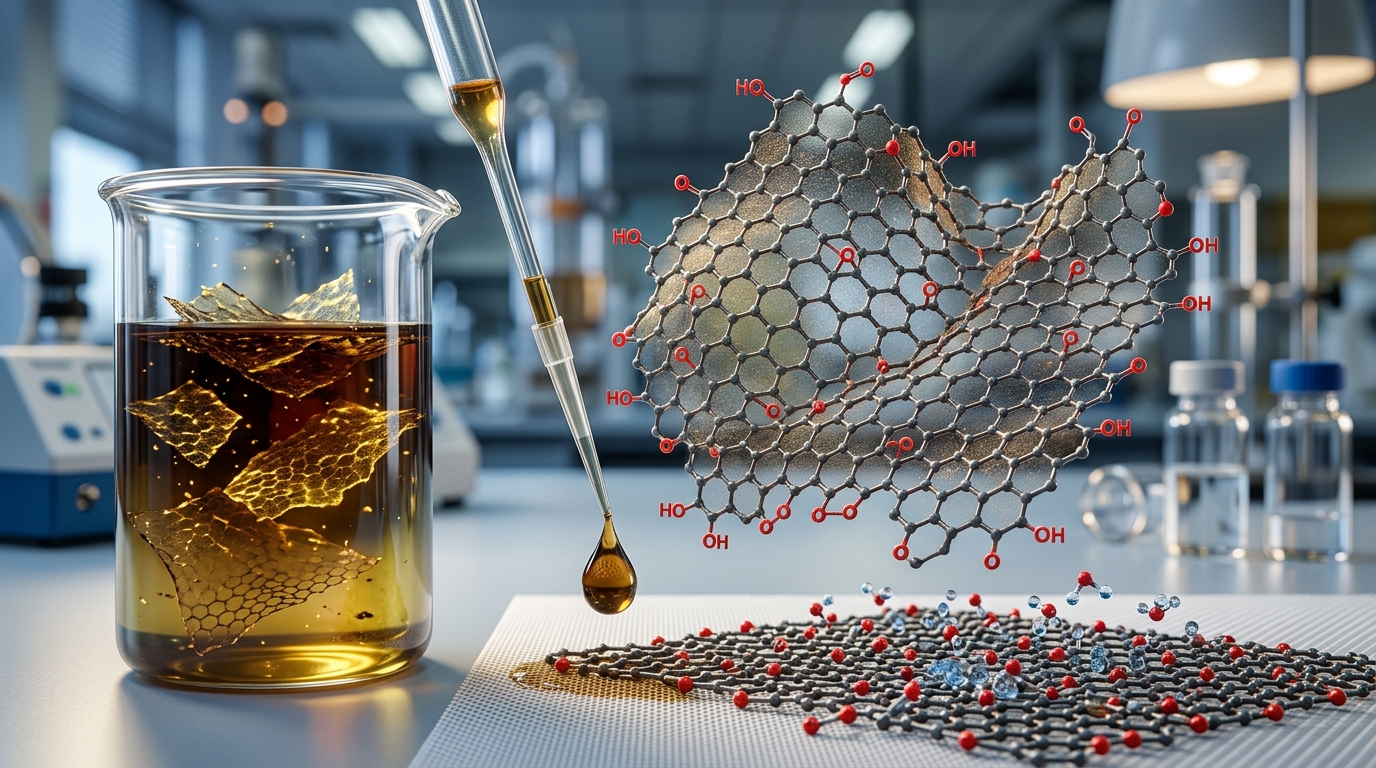
Graphene Nanoplatelets (GNPs) and Reduced Graphene Oxide (rGO)
GNPs and rGO consist of stacks containing between a few and several dozen graphene layers. Produced at scale via chemical, mechanical, or electrochemical liquid-phase exfoliation of mined or synthetic graphite, these powders are cost-effective to manufacture in bulk volume. GNPs and rGO are the primary forms used as additives in polymer composites, battery slurries, elastomers, conductive inks, and anti-corrosion paints.
Chemical Vapor Deposition (CVD) Graphene
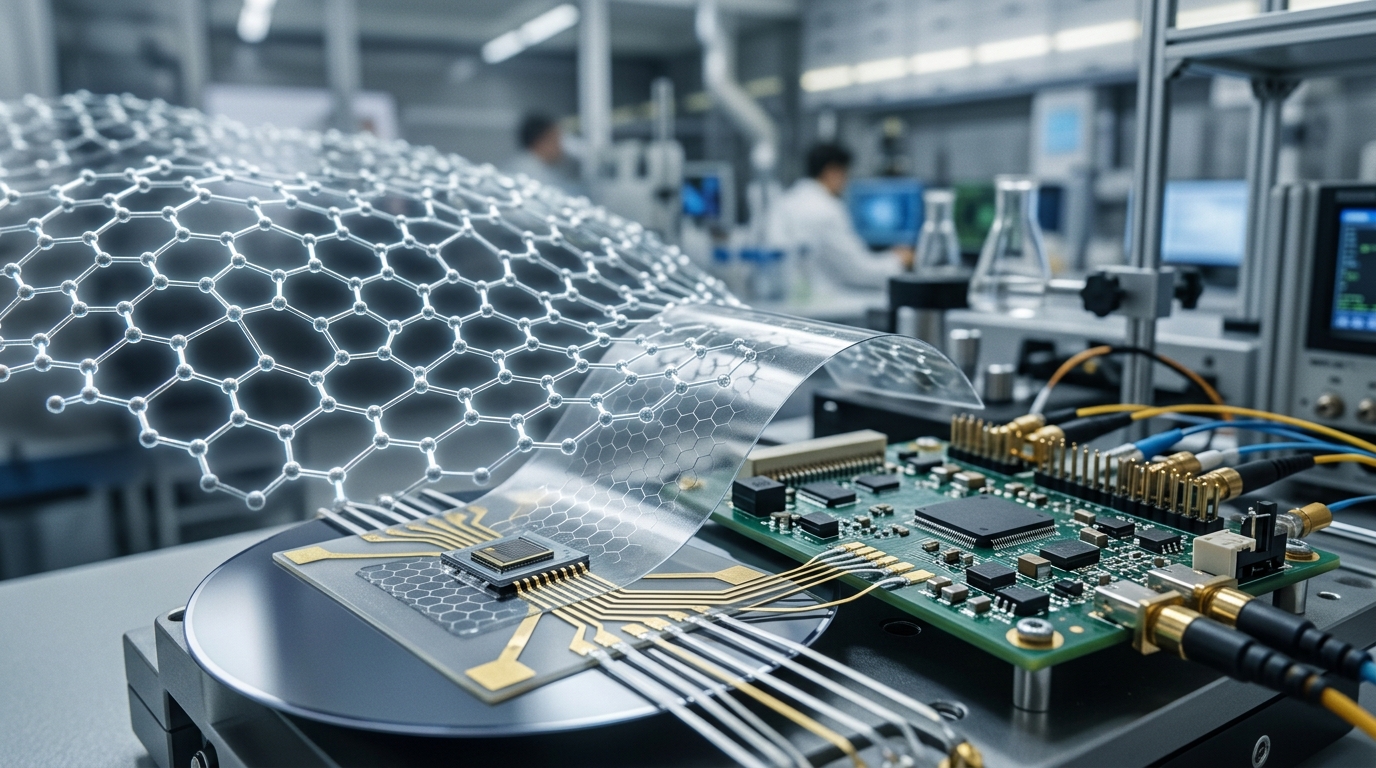
CVD graphene consists of continuous, single-layer or few-layer films grown directly onto metal catalytic substrates (such as copper or nickel foils). CVD produces high-purity crystalline sheets essential for advanced electronic components, precision magnetic sensors, optical devices, and experimental semiconductor platforms. However, CVD synthesis remains more technically complex and expensive per unit area than bulk powder production.
Commercially Mature Real-World Applications
Graphene is no longer confined strictly to academic laboratories. Several market sectors incorporate graphene into mass-produced consumer and industrial products.
Thermal Management in Consumer Electronics
Excess heat accumulation limits processor performance, battery life, and charging speeds in compact electronics. Graphene thermal dissipation films and synthetic graphene vapor chambers have become standard components in flagship mobile devices, foldable smartphones, and high-performance gaming hardware. Multi-layer graphene heat spreaders transfer localized heat away from central processing units (CPUs) and battery packs across the device’s surface faster than traditional graphite or copper foils, mitigating thermal throttling.
Advanced Composites, Sportswear, and Automotive Parts
By blending low weight-percentage concentrations of graphene nanoplatelets into base resins, polymers, and synthetic rubbers, manufacturers improve mechanical strength and wear resistance without increasing component weight:
- Footwear Outsoles: Elastomers infused with graphene nanoplatelets (such as Inov-8 G-Grip running and hiking shoes) show measurably increased tensile strength, elasticity, and abrasion resistance on abrasive terrain.
- Sports Equipment: Structural sporting equipment—including high-end tennis racquets (e.g., Head Graphene series), golf ball core formulations, and cycling frames—incorporates graphene to optimize torsional stiffness and weight distribution.
- Automotive and Supercars: Graphene-reinforced carbon fiber composites and polyurethane structural foams are utilized in automotive body panels (such as the BAC Mono supercar) to reduce vehicle mass and dampen interior cabin noise.
Protective and Anti-Corrosion Industrial Coatings
Corrosion incurs billions of dollars in annual industrial maintenance costs. Adding graphene oxide or nanoplatelets to industrial epoxy primers creates an impermeable tortuous path that blocks moisture, oxygen, and chloride ions from contacting underlying metal substrates. These formulations allow marine, aerospace, and civil infrastructure coatings to achieve long-term corrosion resistance with lower concentrations of toxic sacrificial metals like zinc.
High-Fidelity Acoustics
Due to its high stiffness-to-weight ratio, graphene oxide-based composite membranes (such as ORA GrapheneQ drivers) are utilized in premium headphone transducers and speaker drivers. The ultra-light, rigid membrane reduces mechanical distortion and extends high-frequency response compared to conventional mylar or paper cones.
Energy Storage and Battery Applications
Electrification across transportation and consumer hardware requires batteries with faster charge acceptance, higher energy density, and extended cycle life. Graphene plays a critical functional role in next-generation electrochemical cells.
Conductive Additives in Lithium-Ion Batteries
In standard lithium-ion battery manufacturing, graphene nanoplatelets and rGO are introduced into cathode and anode slurry formulations. Graphene creates an interconnected electrical percolation network throughout the active material, lowering internal cell impedance and facilitating faster electron transfer during extreme fast-charging (XFC) cycles while moderating internal heat generation.
Silicon-Graphene Anode Architectures
Silicon is an attractive anode material because its theoretical lithium capacity is significantly higher than that of traditional graphite. However, silicon particles expand and contract by up to 300% during charge-discharge cycling, causing rapid mechanical pulverization and battery failure. Encapsulating silicon nanoparticles inside an elastic, conductive graphene matrix cushions volumetric expansion, maintains continuous electrical contact, and prevents cell degradation over hundreds of cycles.
Supercapacitors and Fast-Response Storage
Supercapacitors (electric double-layer capacitors, or EDLCs) store energy electrostatically rather than chemically. Graphene aerogels and curved graphene sheets offer exceptionally high accessible surface areas that maximize charge accumulation. These systems deliver rapid charge-discharge cycles suited for regenerative braking systems, industrial power leveling, and grid frequency regulation.
Electronics, Sensors, and Semiconductor Technology
Graphene’s high carrier mobility and 2D geometry make it a foundational material for specialized electronic and sensor components.
Solid-State Magnetic and Hall-Effect Sensors
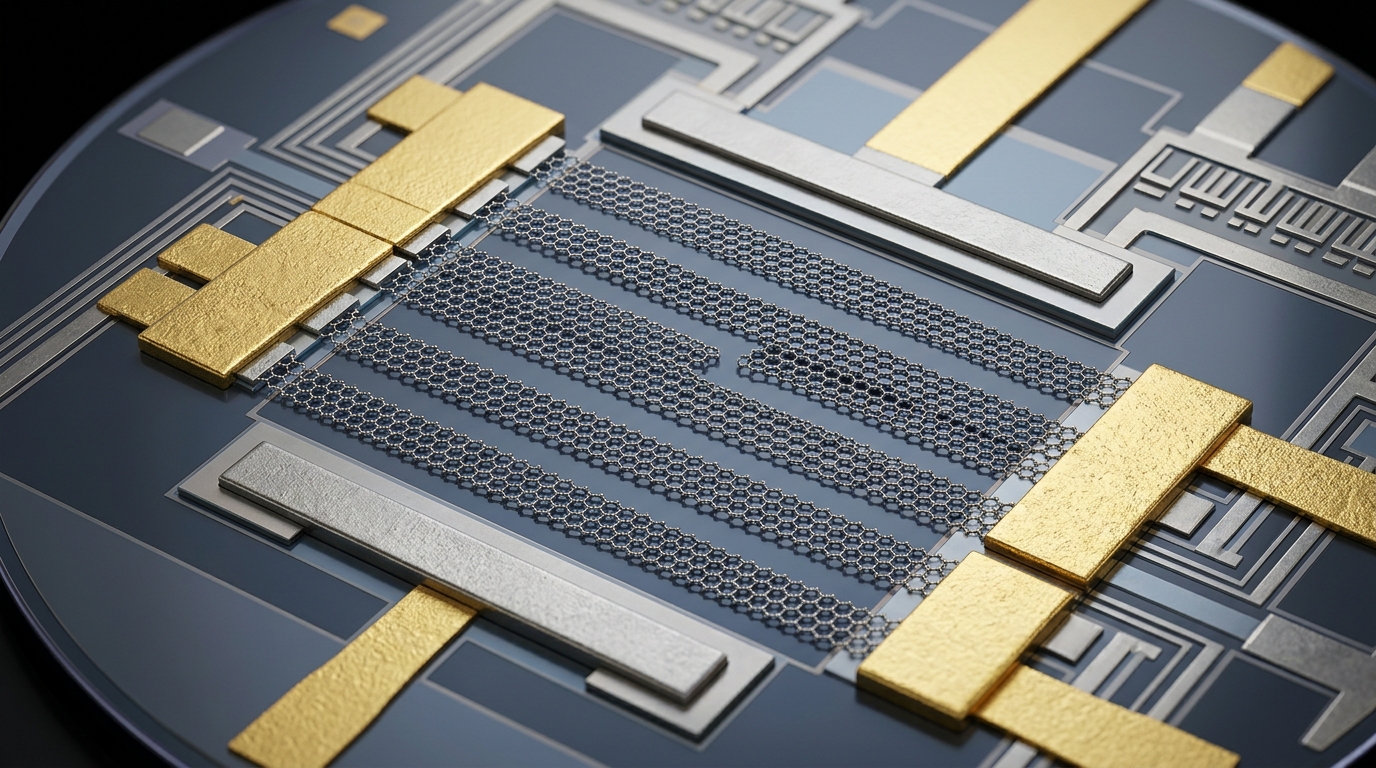
Graphene-based Hall-effect sensors (such as monolithic devices manufactured by Paragraf) measure magnetic fields with high linearity and low electrical noise across extreme operational temperatures ranging from -270°C up to +150°C. These solid-state sensors operate reliably in harsh aerospace, automotive, and cryogenic environments where standard silicon-based sensors degrade.
Conductive Inks and Flexible Circuits
Graphene-based conductive inks can be printed via inkjet, screen, or roll-to-roll methods onto flexible plastic, paper, and textile substrates. These inks enable the production of low-profile RFID antennas, wearable fitness sensors, and flexible touch-sensitive human-machine interfaces.
Graphene Field-Effect Transistor (gFET) Biosensors
gFETs utilize single-layer graphene channels exposed to a biological test sample. Because every carbon atom in graphene is directly on the surface, any biomolecule binding event (such as a viral protein, antibody, or DNA sequence) alters the electrical conductance of the channel. This allows diagnostic devices to detect trace levels of disease biomarkers rapidly without complex optical labeling.
Semiconductor Research and Bandgap Engineering
Pristine graphene lacks an intrinsic electronic bandgap, preventing it from functioning directly as a standard digital logic switch (transistor) to replace silicon in general-purpose CPUs. However, advanced laboratory research—including functionalized epitaxial graphene grown on silicon carbide (SiC)—has successfully demonstrated semiconducting graphene variants with measurable bandgaps, keeping long-term graphene semiconductor integration an active field of research.
Environmental Remediation and Water Filtration
Graphene’s atomic thickness and tunable pore architecture make it a leading candidate material for selective molecular separation and environmental cleanup.
Desalination and Reverse Osmosis Membranes
Standard reverse osmosis (RO) desalination relies on dense polyamide membranes that require significant hydraulic pressure to push pure water through while rejecting dissolved salts. Nanoporous graphene membranes and layered graphene oxide laminates feature engineered sub-nanometer channels. Water molecules slip through these atomically smooth carbon channels with minimal friction, achieving high water permeation rates while rejecting over 99% of dissolved sodium chloride ions at reduced energy requirements.
Wastewater Purification and Contaminant Adsorption
Engineered graphene oxide aerogels and functionalized carbon sponges possess vast surface areas functionalized with chemical oxygen groups. These materials exhibit rapid adsorption capacities for heavy metals (such as lead, cadmium, and arsenic), toxic industrial dyes, per- and polyfluoroalkyl substances (PFAS), and microplastics, facilitating water purification in municipal and industrial treatment facilities.
Gas Separation and Carbon Capture
Perforated single-layer graphene sheets with precisely engineered sub-nanometer pores act as molecular sieves. These membranes can separate small gas molecules from larger ones based on molecular size and chemical affinity, offering energy-efficient solutions for post-combustion carbon dioxide capture ($text{CO}_2$), hydrogen purification ($text{H}_2$), and natural gas processing.
Biomedical Research and Pre-Clinical Uses
Graphene’s high surface area, broad functionalization chemistry, and electrical conductivity have made it a major focus of biomedical research, particularly across three experimental domains:
- Targeted Drug Delivery: Functionalized graphene oxide nanosheets can carry hydrophobic pharmaceutical payloads, such as chemotherapy agents, across physiological barriers. In experimental oncology research, localized near-infrared (NIR) light triggers controlled drug release and photothermal ablation of targeted tumor cells.
- Tissue Engineering and Scaffolding: Biocompatible graphene scaffolds support cell attachment and growth. Because graphene is electrically conductive, applying small electrical currents through the scaffold stimulates the differentiation and regeneration of neural and osteogenic (bone) tissues in laboratory cell cultures.
- Neural Interfaces and Electrodes: Flexible microelectrode arrays constructed with graphene (such as the EGNITE neuro-interface platforms) offer high spatial resolution and low interfacial impedance for high-density neural recording and deep-brain stimulation in pre-clinical studies.
Medical and Pre-Clinical Research Disclaimer: All biomedical, drug delivery, neural interface, and clinical therapeutic uses of graphene are currently restricted to pre-clinical laboratory research and animal model evaluations. Graphene-based formulations are not approved by the U.S. Food and Drug Administration (FDA), the European Medicines Agency (EMA), or equivalent global regulatory authorities for systemic human medical administration or long-term therapeutic implantation, pending conclusive studies on long-term biocompatibility, systemic toxicity, and metabolic clearance pathways.
Commercial Maturity: Market-Ready Products vs. Laboratory Research
To accurately understand what graphene is used for today, it is essential to distinguish between proven commercial products in active production and experimental technologies still undergoing laboratory research.
| Industry Sector | Commercially Mature / In-Market | Development & Pilot Testing | Laboratory Research |
|---|---|---|---|
| Consumer & Industrial | Smartphone thermal dissipation films, reinforced footwear outsoles, sports racquets, anti-corrosion paints | Structural concrete additives, self-heating road infrastructure | Autonomous self-healing composite surfaces |
| Energy Storage | Conductive slurry additives for consumer Li-ion batteries | Silicon-graphene composite anodes, fast-charge EV pack prototypes | Pure graphene supercapacitor grids, solid-state aluminum-ion cells |
| Electronics & Sensors | Cryogenic & industrial Hall-effect sensors, conductive inks for RFID | gFET point-of-care diagnostic chips, flexible touch interfaces | Bandgap-engineered digital logic processors (CPUs) |
| Filtration & Environment | Industrial adsorbent filtration media for heavy metal capture | Graphene-coated reverse osmosis (RO) desalination pilots | Atomically precise single-layer molecular gas sieves |
| Biomedicine | None (commercial human therapeutics are not yet approved) | In-vitro diagnostic test strips & biosensor chips | Targeted oncology drug nanocarriers, deep-brain neural implants |
Summary
Graphene has shifted from theoretical physics into high-value engineering integration. Rather than replacing every traditional material outright, it delivers specific improvements where standard materials reach their thermal, electrical, or structural boundaries. Today, it operates primarily inside smartphone thermal management architectures, performance composites, industrial coatings, and lithium-ion batteries. As industrial manufacturing processes continue to standardize material quality and reduce production costs, pilot-stage applications in water desalination, point-of-care diagnostic sensors, and specialized electronics are positioned to enter broader commercial deployment.