Graphene Dispersions
Dry graphene powder rarely integrates directly into manufacturing lines as pristine, isolated single sheets. Because isolated carbon sheets experience exceptionally strong attraction to one another, dry powders rapidly collapse into irreversible aggregates. Graphene dispersions—stable liquid suspensions of single- or few-layer graphene sheets distributed throughout a solvent or liquid medium—serve as the primary bridge between raw nanomaterials and scalable industrial applications.
By maintaining individual flakes in a separated state within a carrier fluid, dispersions enable precision deposition, spray coating, liquid blending into polymers, and the formulation of functional conductive inks. Achieving a stable, high-concentration dispersion without compromising the intrinsic electrical, thermal, or mechanical properties of the graphene remains one of the central challenges in applied nanomaterials engineering.
The Thermodynamics of Graphene Aggregation
Graphene sheets possess an exceptionally high specific surface area, theoretically reaching up to 2,630 square meters per gram. This massive surface area generates immense van der Waals attraction between adjacent sheets. When two pristine graphene flakes meet in a liquid medium, the thermodynamic driving force to minimize free surface energy causes them to stack back together into graphite-like agglomerates, a process known as re-stacking or agglomeration.
To keep graphene suspended, the repulsive forces between the suspended sheets must exceed their attractive forces. In colloid chemistry, this balance is governed by classic interaction theories where energy barriers prevent approaching particles from falling into an irreversible thermodynamic energy well. Formulators achieve this energy barrier using three primary strategies: solvent surface energy matching, electrostatic repulsion, and steric hindrance.
Stabilization Mechanisms
Formulating stable graphene dispersions requires engineering the interface between the two-dimensional carbon lattice and the surrounding liquid matrix. Depending on the carrier fluid and the chemical nature of the graphene, different stabilization mechanisms are deployed.
Solvent Matching and Hansen Solubility Parameters
Pristine graphene consists entirely of sp2-hybridized carbon atoms without functional groups or inherent electrical charges. To disperse pristine graphene in pure solvents without chemical modifiers, the solvent must have a surface energy that closely matches that of graphite (roughly 40 to 50 millijoules per square meter).
Formulators rely on Hansen solubility parameters, which quantify dispersion forces, dipolar intermolecular forces, and hydrogen bonding energy. Solvents like N-methyl-2-pyrrolidone (NMP), dimethylformamide (DMF), and ortho-dichlorobenzene (DCB) match these parameters effectively, minimizing the net enthalpy of mixing. In these matched solvents, individual graphene sheets can remain suspended for long periods. However, high boiling points, cost, and toxicity profiles often make these organic solvents difficult to use in high-volume open-atmosphere processing.
Electrostatic Stabilization
When working in water or polar solvents, electrostatic stabilization provides an effective pathway to prevent re-stacking. Charged groups on the flake surface create an electrical double layer around each sheet, generating repulsive forces whenever two sheets approach each other.
Graphene oxide (GO) naturally exhibits strong electrostatic stabilization in water because of its abundant oxygen-containing functional groups, including carboxyl, hydroxyl, and epoxy groups. In neutral or alkaline water, carboxyl groups deprotonate, giving the sheets a strong negative surface charge. Suspensions with a zeta potential magnitude greater than approximately negative 30 millivolts generally show robust colloidal stability over extended storage periods.
Steric and Electrosteric Stabilization
Because pristine graphene lacks ionic groups, dispersing it in water requires surfactants or polymers. In steric stabilization, large polymer chains or non-ionic surfactant molecules physically adsorb onto the basal plane of the graphene sheet through hydrophobic interactions or pi-pi stacking.
As two coated graphene sheets approach, the adsorbed polymer chains compress, causing an unfavorable decrease in entropy and an increase in local osmotic pressure. This forces solvent molecules back between the sheets, keeping them apart. Common non-ionic stabilizers include block copolymers and non-aromatic non-ionic surfactants. Ionic surfactants, such as sodium dodecyl sulfate (SDS) or sodium cholate, provide electrosteric stabilization by combining physical polymer shielding with electrostatic charge repulsion.
Primary Manufacturing Routes for Dispersions
The manufacturing process determines the flake thickness distribution, lateral size, defect density, and the presence of chemical residues in the dispersion.
Liquid-Phase Exfoliation (LPE)
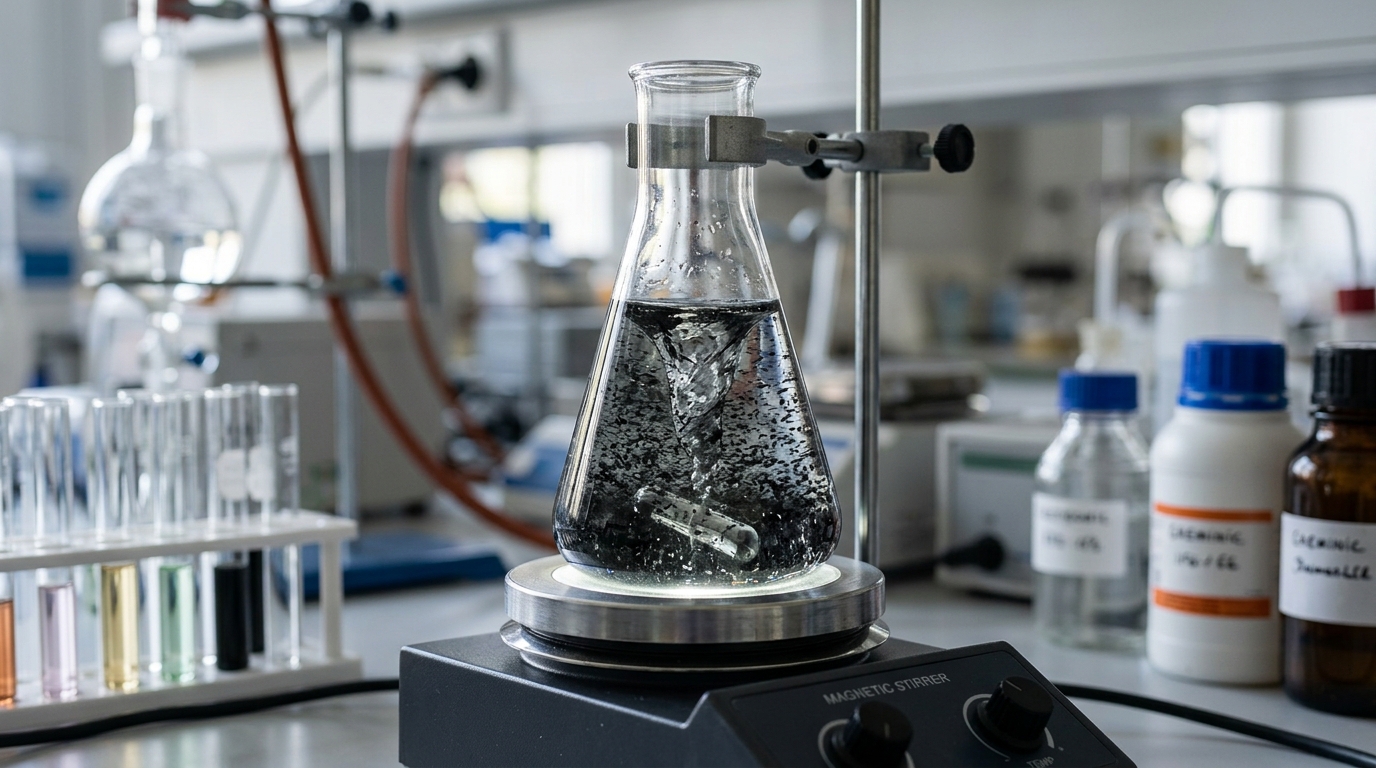
Liquid-phase exfoliation applies mechanical energy to bulk graphite suspended in a stabilizing liquid. Energy sources include ultrasonic cavitation, high-pressure microfluidization, and high-shear rotor-stator mixing.
- Ultrasonic Exfoliation: Cavitation bubbles generate intense local shockwaves and micro-jets that shear graphite layers apart. While effective in laboratory settings, high sonication power can break sheets into smaller fragments, reducing the average lateral flake size.
- High-Shear Mixing: Scaled industrial facilities typically favor high-shear mixing and wet milling. Fluid shear forces slide the graphene layers apart along their basal planes with minimal perpendicular fragmentation, yielding larger lateral dimensions suitable for electrical networks.
Graphene Oxide and Chemical Reduction
Bulk graphite is first oxidized into graphene oxide using strong mineral acids and oxidizing agents via modified versions of the method established by Hummers in 1958. Graphene oxide exfoliates spontaneously into single-atom-thick sheets in water with light agitation.
Because oxidation disrupts the conjugated carbon network, GO is electrically insulating. To restore conductivity, the aqueous GO dispersion undergoes chemical, hydrothermal, or thermal reduction to produce reduced graphene oxide (rGO). However, as oxygen groups are removed, rGO loses its surface charge and rapidly precipitates unless stabilizing surfactants or secondary polymers are added during or immediately following the reduction step.
Electrochemical Exfoliation
Electrochemical exfoliation uses bulk graphite as an electrode immersed in an ionic solution. By applying an electrical bias, ionic species intercalate between the graphite layers, expanding the interlayer spacing. Gas evolution generated by the electrolysis of the solvent further forces the sheets apart into the liquid medium. This method balances high throughput with lower structural defect density compared to aggressive chemical oxidation.
Formulation and Processing Tradeoffs
Choosing or formulating a graphene dispersion involves balancing several competing material and processing tradeoffs:
| Dispersion Route | Carrier Solvent | Conductivity | Concentration Limits | Key Processing Consideration |
|---|---|---|---|---|
| Pristine LPE | High-boiling organics (NMP, DMF) | High | Low to moderate (0.1–2 g/L) | Requires high-temperature drying to remove solvent; solvent toxicity limits use cases. |
| Surfactant-Assisted LPE | Water | Moderate to High | Moderate (0.5–5 g/L) | Surfactant residue coats flakes, creating inter-flake resistance unless washed or thermally decomposed. |
| Graphene Oxide (GO) | Water / Polar organics | Insulating (as formulated) | High (1–10+ g/L) | Highly stable and viscous; requires post-deposition reduction to achieve conductivity. |
| Reduced GO (rGO) | Water with stabilizers / Solvents | Moderate | Low to moderate (0.2–2 g/L) | Prone to aggregation; residual oxygen defects limit maximum electrical conductivity. |
The Surfactant Tradeoff
Surfactants are essential for creating high-concentration water-based pristine graphene dispersions, but they introduce a significant performance penalty. When the dispersion dries into a functional film, surfactant molecules remain trapped between the graphene sheets. This insulating layer disrupts inter-flake percolation, increasing the electrical sheet resistance of the film by several orders of magnitude.
Applications requiring high electrical or thermal conductivity must incorporate post-processing steps, such as chemical washing or thermal annealing above 250 degrees Celsius, to decompose and volatilize residual surfactants. For applications where high annealing temperatures would damage temperature-sensitive substrates like PET plastic, formulators must minimize surfactant ratios or employ fugitive stabilizers that evaporate at lower temperatures.
Key Characterization and Quality Metrics
Industrial deployment requires strict quality control to verify that a dispersion contains true few-layer graphene rather than unexfoliated graphite particles.
- Optical Absorption Spectroscopy (UV-Vis): Diluted pristine graphene exhibits a characteristic absorption peak in the ultraviolet spectrum around 260 to 270 nanometers. Using the Beer-Lambert law with a calibrated extinction coefficient allows rapid non-destructive measurement of dispersion concentration.
- Raman Spectroscopy: Performed on dried dispersion samples, the intensity ratio of the D band (around 1350 cm⁻¹) to the G band (around 1580 cm⁻¹) reveals the defect density of the carbon lattice. The shape and position of the 2D band provide clear verification of single-, few-, or multi-layer thickness.
- Dynamic Light Scattering (DLS): While DLS assumes spherical particles and therefore cannot measure the exact thickness of 2D sheets, it provides a fast metric for measuring the relative lateral flake size distribution and detecting early-stage agglomeration over time.
- Rheology and Viscosity Profiles: The concentration and lateral size of graphene sheets directly dictate fluid behavior. At high concentrations, dispersions exhibit shear-thinning behavior (pseudoplasticity), where viscosity drops under applied shear. Controlling rheology is critical to prevent nozzle clogging in inkjet printing or sagging in industrial coatings.
Demonstrated Commercial Applications
Liquid graphene dispersions find use across diverse sectors where thin films, continuous coatings, or bulk nanocomposites are manufactured.
Conductive Inks and Printed Electronics
Formulated graphene dispersions are used directly in screen printing, flexography, and inkjet printing to manufacture radio-frequency identification (RFID) antennas, flexible sensors, and heating elements. Formulations must balance flake size—large flakes improve electrical pathways but can clog fine printing nozzles—against solvent drying rates and substrate adhesion.
High-Performance Protective Coatings
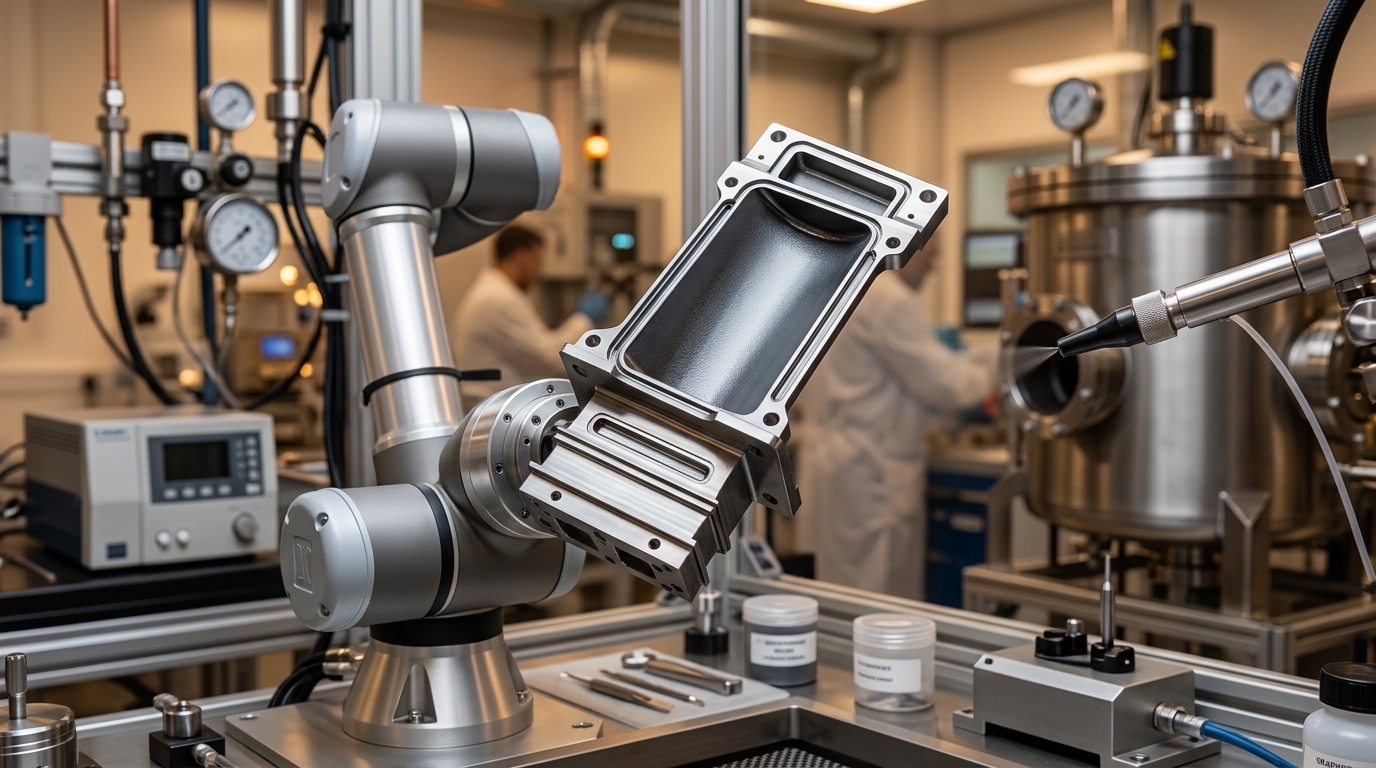
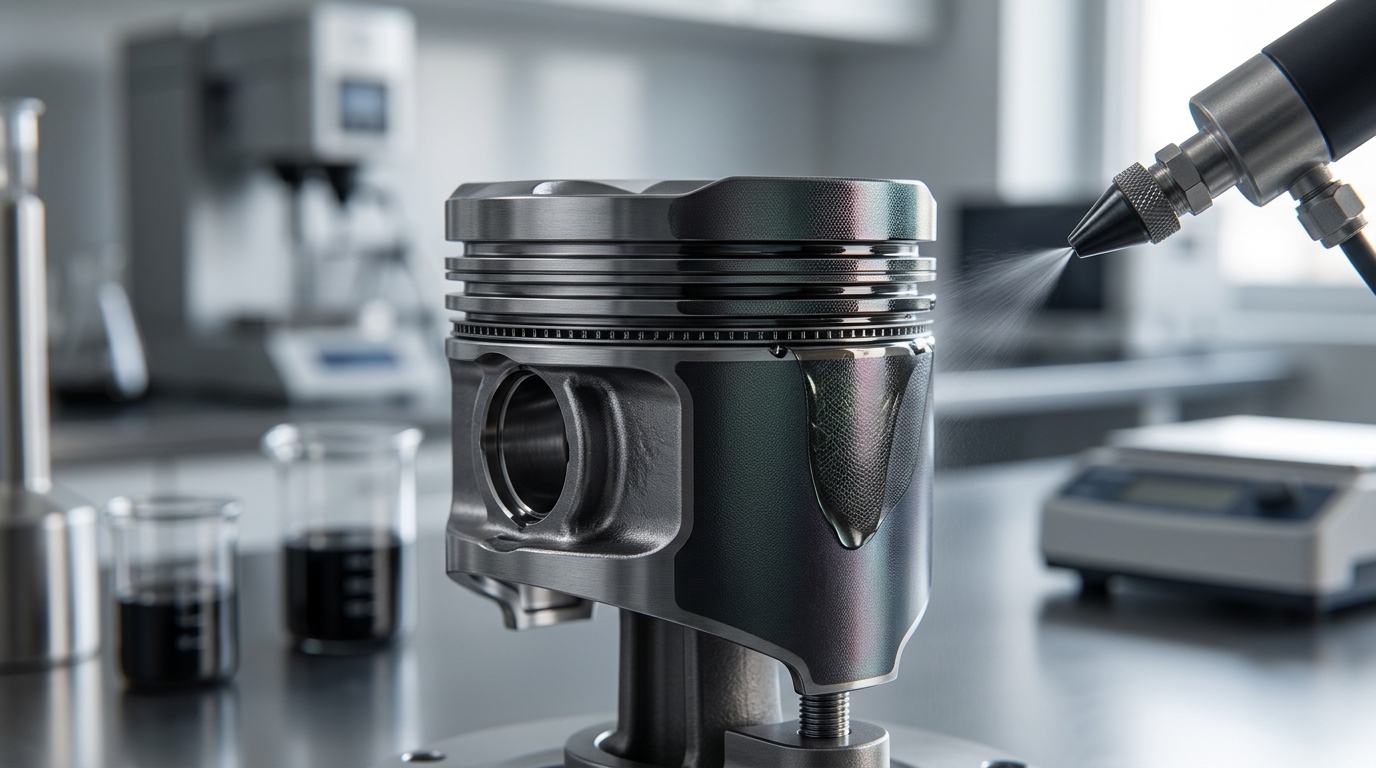
Integrating graphene dispersions into epoxy, polyurethane, or acrylic matrices produces anti-corrosion barrier coatings. The impermeable, two-dimensional nature of dispersed graphene sheets creates a tortuous diffusion pathway that significantly slows the penetration of moisture, oxygen, and corrosive chloride ions toward metallic substrates.
Polymer Nanocomposites and Masterbatches
Directly blending dry graphene into molten thermoplastics often yields poor dispersion and clumping. Liquid masterbatching involves mixing a liquid graphene dispersion directly into polymer solutions or latex emulsions before solvent extraction or polymer curing. This approach ensures uniform flake distribution throughout the polymer matrix, improving tensile modulus, flame retardancy, and electrostatic dissipation at very low filler loadings.
Energy Storage Slurries
In lithium-ion battery manufacturing, conductive graphene dispersions are added to cathode and anode slurries alongside active materials. Dispersed graphene sheets wrap around active cathode particles, establishing continuous conductive networks that reduce internal cell resistance, enhance fast-charging capability, and improve cycle life compared to traditional carbon black additives alone.
Selecting and Handling Graphene Dispersions
When selecting a commercial dispersion or formulating an in-house system, engineers must evaluate the material against several operational criteria:
- Solvent Compatibility: The carrier solvent must be chemically compatible with down-stream resins, binders, and substrates without inducing premature phase separation or substrate degradation.
- Shelf Life and Re-dispersibility: Dispersions inevitably experience some settling over long storage periods. Formulations must be evaluated for whether settled material can be fully restored via mild agitation or if it forms hard, irreversible cakes.
- Purity and Residual Ions: For electronics and battery applications, residual ionic contaminants from oxidation or surfactant synthesis must be minimized to prevent electrochemical side reactions.
- Solids Loading versus Viscosity: Increasing graphene concentration to maximize throughput often spikes viscosity. Finding the optimum concentration window ensures smooth processing without exceeding pump or nozzle pressure limits.
By tailoring stabilization mechanisms, lateral flake dimensions, and carrier fluid chemistry, graphene dispersions transform raw two-dimensional carbon into a practical, highly processable material for advanced manufacturing.