Graphene Coating Near Me
Searching for a graphene coating near me typically leads vehicle owners and equipment managers to specialized detailing studios and surface protection shops. While the term sounds futuristic, automotive and surface-grade graphene coatings are a commercially established category of protective treatments. Rather than applying a single sheet of pure carbon, professional installers apply liquid formulations containing reduced graphene oxide suspended within a reactive siloxane or ceramic backbone. Understanding the science behind these formulations, the rigorous preparation required, and how to evaluate local installers ensures you get genuine surface protection rather than marketing hype.
What Professional Graphene Coatings Actually Are
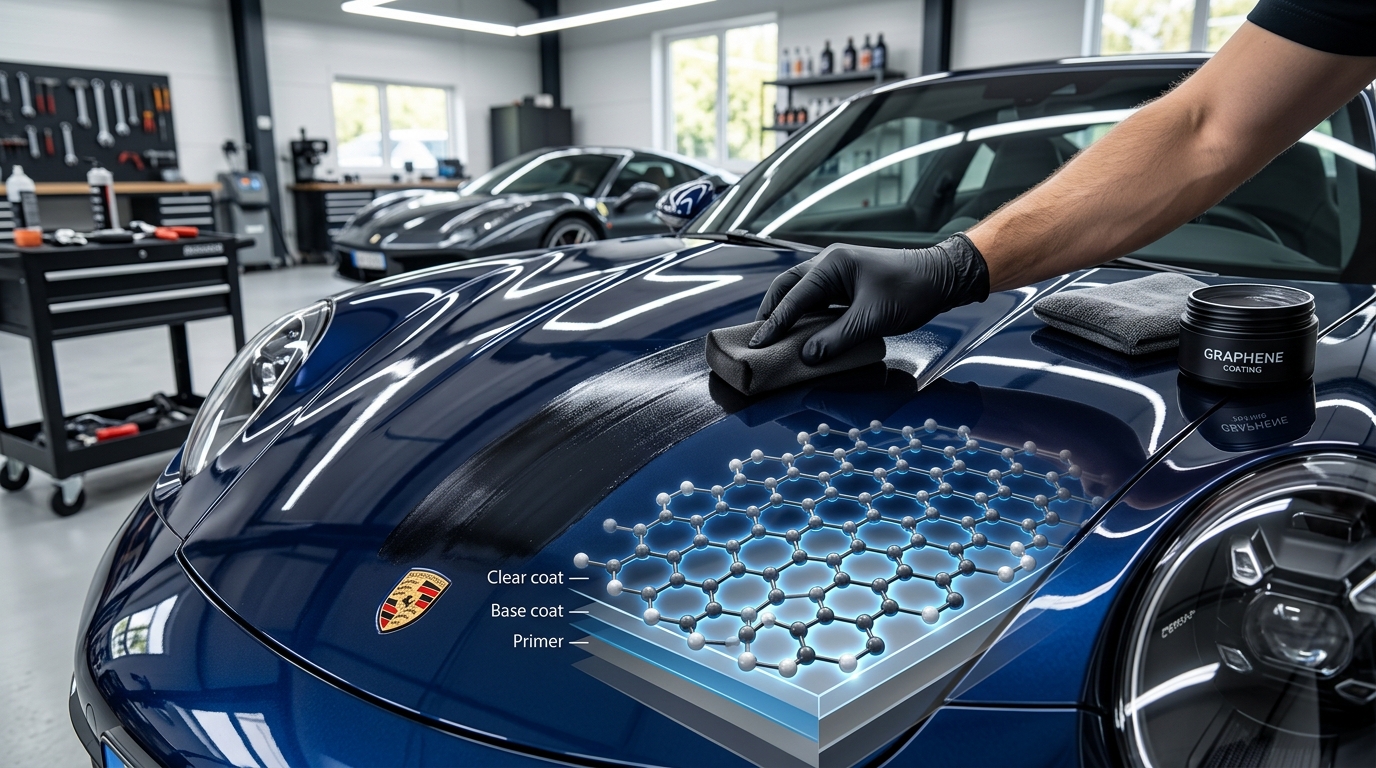
In commercial surface protection, pure freestanding graphene is rarely used because an isolated, single-atom carbon sheet cannot readily adhere to clear coat or bare metal on its own. Instead, manufacturers functionalize carbon nanomaterials to create graphene oxide flakes or reduced variants. These microscopic platelets are blended with liquid polymers—primarily polydimethylsiloxane and silicon dioxide resins.
When an installer applies the liquid to a prepared surface, the solvent carrier evaporates, allowing the siloxane molecules to form covalent bonds with the microscopic pores of the automotive clear coat. As the matrix cures, the graphene platelets settle near the outer boundary of the layer, reinforcing the chemical mesh and altering the surface energy. The result is a resilient, protective barrier designed to shield the underlying surface from ultraviolet radiation, bird droppings, acid rain, road salts, and fine environmental wash marring.
Graphene Coating vs. Ceramic Coating: Key Differences
Before booking an appointment with a local installer, it helps to understand how graphene-infused coatings compare to standard ceramic coatings. While both belong to the liquid quartz/polymer protection family, graphene modifications yield specific chemical and thermal differences.
| Performance Attribute | Traditional Ceramic (SiO2) | Graphene-Infused Coating |
|---|---|---|
| Water Contact Angle | 100° to 110° (Hydrophobic) | 110° to 125° (Superhydrophobic) |
| Water Sliding Angle | Moderate; droplets bead tall but can sit flat surfaces | Low; droplets roll off at shallow tilt angles |
| Water Spotting Susceptibility | Higher; beads can act as magnifying lenses in sunlight | Lower; improved heat dissipation and water evacuation |
| Chemical Resistance | pH 2 to pH 12 range | pH 1 to pH 14 range (formulation dependent) |
| Thermal Conductivity | Low; heat concentrates on the paint surface | Higher; reduces localized surface heat retention |
| Electrical Antistatic Properties | Non-conductive; attracts light dust via static | Mildly antistatic; reduces dry dust accumulation |
The primary real-world advantage reported by technicians is reduced water spotting. Because ceramic coatings create high, spherical beads on horizontal surfaces, mineral-laden rainwater can evaporate in hot conditions, leaving concentrated mineral rings etched into the coating. The higher water slide angle and thermal dissipation of graphene formulations help water run off flatter panels faster, mitigating etch marks.
How to Evaluate a Local Graphene Coating Installer
The success of any liquid surface treatment depends heavily on the preparation work done before the bottle is even opened. When searching for a provider of graphene coating near you, use these criteria to distinguish high-end master detailers from low-tier production shops.
1. Surface Preparation and Paint Correction Standards
A professional coating should never be applied directly over contaminated or swirled paint. The coating locks in whatever sits underneath it. A qualified shop will always include or require:
- Chemical Decontamination: Applying iron removers and tar solvents to eliminate embedded metal fallout and industrial pollutants.
- Mechanical Decontamination: Utilizing a clay bar or clay mitt to extract remaining bonded particulates.
- Multi-Stage Paint Correction: Machine compounding and polishing the clear coat using rotary or dual-action polishers to remove swirl marks, scratches, and oxidation.
- Solvent Panel Wipe: Stripping all polishing oils, waxes, and lubricants using an isopropyl alcohol or specialized solvent solution to allow uninhibited chemical bonding.
2. Environmental Controls
Graphene-infused carrier solvents are sensitive to ambient temperature, relative humidity, and airborne dust during application. Inquire whether the shop performs installations inside an enclosed, climate-controlled clean room. Applying coatings outside in direct sunlight or in drafty, open-bay garages can cause the carrier liquids to flash prematurely, leading to uneven streaks, known as high spots, that require abrasive sanding to fix.
3. Curing Methods and Facilities
While some formulations cure at room temperature over multiple days, professional detailing studios often utilize short-wave infrared curing lamps. Infrared baking accelerates cross-linking within the resin matrix, ensuring the coating reaches maximum chemical resistance and hardness before the vehicle encounters rain or road grit.
The Step-by-Step Professional Application Process
Understanding what happens during a professional installation helps explain the labor investment and timeline, which typically spans one to three days.
Surface Inspection and Measurement
The technician inspects the clear coat using high-intensity inspection lights and takes digital paint depth readings. This step ensures there is adequate clear coat thickness to safely withstand paint correction polishing.
Panel-by-Panel Application
Working in manageable sections (typically two feet by two feet), the installer dispenses the coating onto a microfiber applicator block. The product is leveled across the panel in a cross-hatch pattern to ensure uniform coverage.
Observing Flash Time and Leveling
As the carrier solvent evaporates, the liquid exhibits a visual change known as flashing, which often appears as an oily rainbow effect or a sweating bead pattern. The technician precisely monitors this flash time, which can vary from 30 seconds to several minutes depending on ambient conditions, before gently buffing away the excess carrier using clean, tagless microfiber towels.
Final Inspection and Post-Cure
Using diffused inspection lights, the technician checks every panel from multiple angles to identify and eliminate high spots. The vehicle then remains in a controlled dry environment for a designated resting period, often followed by an infrared baking cycle.
Cost Factors When Booking Locally
When requesting quotes for a graphene coating near you, prices will vary based on several technical factors rather than the cost of the liquid product alone:
- Vehicle Size and Surface Complexity: Larger SUVs, trucks, and vans require substantially more labor, polishing surface area, and product volume than compact sedans. Complex body lines and textured trim also increase masking and prep time.
- Condition of the Existing Clear Coat: A new car requiring only a light single-stage enhancement polish costs less to prepare than an older vehicle with deep scratches, severe swirl marks, and heavy clear coat oxidation requiring multi-stage wet sanding or aggressive compounding.
- Coating Durability Tier: Formulations engineered for extended multi-year lifespans feature higher solids content and may require multi-layer applications (a dedicated base coat for adhesion followed by a slick, hydrophobic topcoat).
- Wheel, Glass, and Trim Add-ons: Comprehensive packages often coat wheel faces, wheel barrels, exterior plastics, and glass with specialized heat-resistant or optically clear formulations.
Maintenance: Preserving the Coated Surface
Even the highest-grade graphene surface protection is not self-cleaning or impervious to abuse. To preserve the coating’s hydrophobicity and warranty coverage, follow fundamental care principles:
- Use Two-Bucket Wash Methods: Wash the surface using a pH-neutral automotive shampoo without added gloss-enhancing waxes or silicone sealants, which can temporarily mask the coating’s natural hydrophobic properties.
- Avoid Automatic Friction Washes: Spinning nylon brushes in automated car washes harbor abrasive grit that mechanically scratches coatings and clear coats alike. Touchless washes or gentle hand washes are strongly recommended.
- Perform Periodic Decontamination Washes: Over time, microscopic road grime, iron particles, and mineral deposits settle into the coating pores, reducing water beading. A periodic mild acid wash or iron remover dissolves these contaminants, restoring original hydrophobic performance.
Separating Fact from Fiction in Coating Claims
As graphene technology gained popularity in the detailing market, marketing claims occasionally outpaced material capabilities. Review these common misconceptions before choosing a local service:
Myth 1: Graphene coatings make paint scratch-proof and chip-proof.
No liquid-applied coating can stop stone chips, heavy key scratches, or abrasive scrape damage. Physical impacts from road debris require the thicker, shock-absorbing urethane barrier of paint protection film (PPF). Coatings protect against environmental corrosion, oxidation, UV degradation, and minor wash-induced marring, not mechanical impacts.
Myth 2: True 10H hardness means diamond-like strength.
Coating hardness claims use the pencil hardness scale (from 9B to 9H/10H), which measures resistance to gouging by standardized graphite pencil leads under specific downward pressure. It is not the mineralogical Mohs hardness scale. A 10H pencil-hardness rating means the cured resin resists scratching from a calibrated hard pencil, not that it matches the hardness of a diamond.
Myth 3: Graphene eliminates the need to ever wash the vehicle.
While high surface contact angles make it harder for dirt and mud to stick—allowing high-pressure water rinses to remove a significant portion of surface dust—fine road film and electrostatic traffic grime still build up. Routine washing remains essential.
By understanding the material properties of functionalized graphene matrices and verifying that a local shop adheres to stringent paint correction, decontamination, and curing practices, you can confidently invest in a high-performance surface treatment that preserves your vehicle’s finish for years.