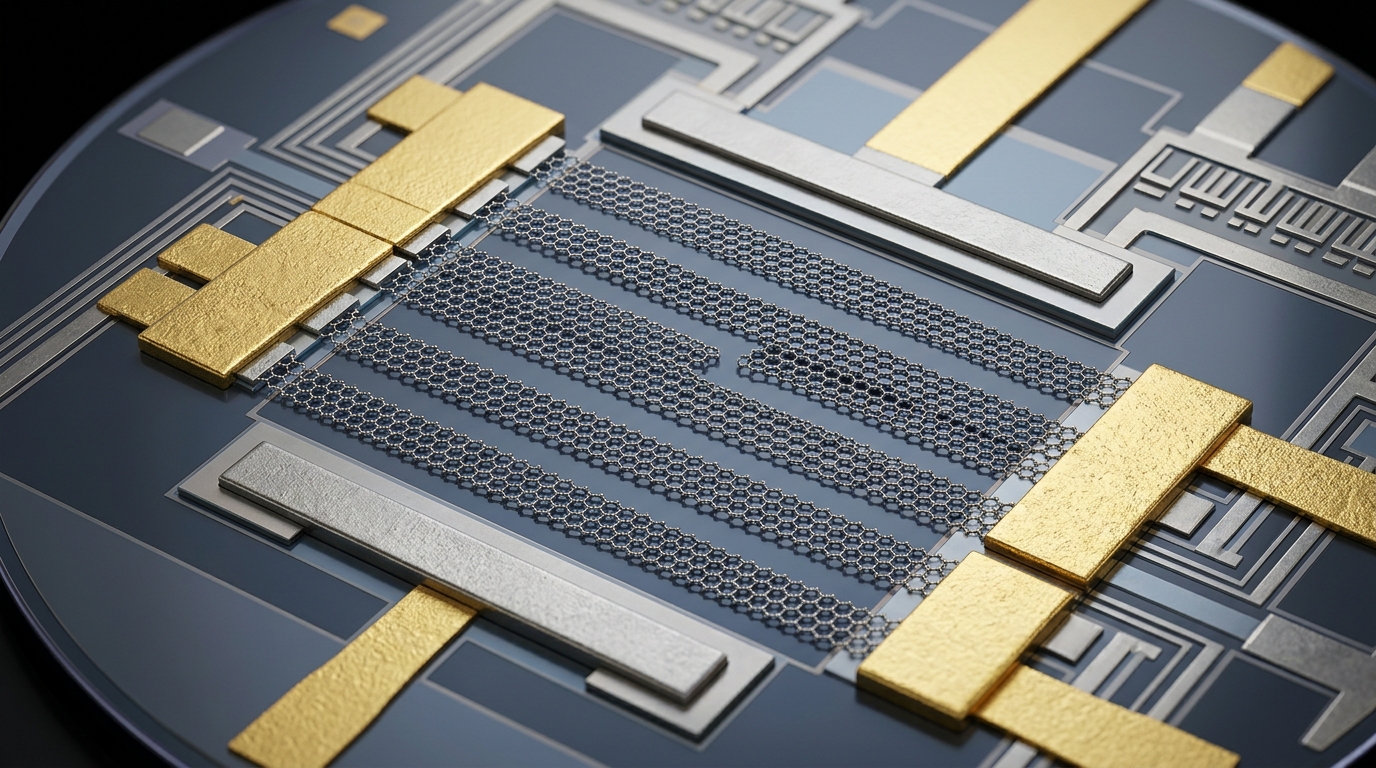

Graphene Market
The global graphene market has transitioned from an early phase of laboratory discovery and speculative venture funding into an established industrial additive and advanced materials sector. Today, commercial buyers evaluate graphene not as an exotic standalone novelty, but as a high-performance functional modifier benchmarked strictly against industrial economics, supply chain reliability, and compatibility with standard manufacturing lines.
As commercialization accelerates, enterprise procurement teams, materials scientists, and industry analysts require transparent data on market size, realistic pricing structures, product variations, and addressable adoption barriers across global supply chains.
Global Graphene Market Size and Growth Forecasts
Estimates for the global graphene market vary depending on the scope of research methodologies. Specifically, valuations diverge based on whether analysts evaluate the addressable revenue of raw graphene materials (such as bulk nanoplatelets, oxide dispersions, and chemical vapor deposition films) or aggregate the broad ecosystem of downstream graphene-enabled products (including pre-mixed masterbatches, battery packs, and electronic components).
When focused strictly on the core pure-play and merchant material market, consensus assessments place the global baseline at $340 million to $700 million across the 2024 to 2025 period, expanding at compound annual growth rates (CAGR) ranging from 27% to 39% into the mid-2030s:
- Grand View Research (June 2026): Valued the market at $341.4 million in 2025, projecting expansion to $456.8 million in 2026 and reaching $4.57 billion by 2033, driven by a 39.0% CAGR.
- Fortune Business Insights (September 2026): Tracked the market at $694.0 million in 2024, forecasting an increase from $941.1 million in 2025 to $8.33 billion by 2032 at an aggregate 36.5% CAGR.
- IMARC Group (August 2026): Sized the 2025 global market at $400.0 million, forecasting revenues of $7.83 billion by 2034 with an annualized growth rate of 39.03%.
- BCC Research (August 2025): Modeled growth from $694.4 million in 2025 to $2.30 billion by 2030, establishing a conservative baseline CAGR of 27.5%.
- Precedence Research: Documented a 2023 baseline of $332.5 million, forecasting the market to scale to $5.81 billion by 2033 at a 31.7% CAGR.
Interpreting Divergent Market Scope Estimates
Broad-spectrum market reports that incorporate finished downstream components—such as graphene-doped energy storage devices, specialized consumer apparel, and integrated circuitry—present much larger numbers. Certain outlier studies project baseline revenues exceeding $1.11 billion in 2024 and expanding beyond $17.04 billion by 2032 at a 40.6% CAGR.
Conversely, conservative pure-material models (such as those from Market Research Future) size raw graphene sales at $240 million in 2024 and $301.9 million in 2025, reaching $3.0 billion by 2035 at a 25.8% CAGR. For enterprise industrial planning, isolating the merchant material supply ($340 million to $700 million baseline) provides the most realistic picture of actual tonnage and physical material demand.
Market Segmentation by Product Type
Graphene is not a monolithic commodity. It exists across distinct physical morphologies, layer counts, and chemical variants, each engineered for specific end-use environments. Revenue distribution heavily favors bulk structural forms over pristine monolayer sheets.
| Product Segment | Estimated Revenue Share | Key Technical Attributes | Primary End-Use Sectors |
|---|---|---|---|
| Graphene Nanoplatelets (GNPs) | 50% – 56% | Multilayer stacks (typically 10+ carbon layers), high aspect ratio, lowest cost per kilogram. | Polymer compounding, automotive composites, tires, concrete, thermal management. |
| Graphene Oxide (GO) & rGO | 30% – 38.5% | Oxygenated functional groups, solution-processable, dispersible in polar solvents. | Battery slurries, water filtration membranes, conductive coatings, biomedical devices. |
| CVD Graphene Films | <15% | Continuous monolayer or few-layer sheets, high optical transparency (97%+), high electron mobility. | Optoelectronics, photonic devices, semiconductor interconnects, GFET biosensors. |
1. Graphene Nanoplatelets (GNPs)
Graphene nanoplatelets dominate the commercial revenue pool, capturing 50% to 56% of global market value. Because GNPs can be processed using standard industrial mixing hardware—such as twin-screw extruders and high-shear dispersers—they serve as the primary drop-in additive for volume-driven compounding, elastomer reinforcement, and structural concrete.
2. Graphene Oxide (GO) and Reduced Graphene Oxide (rGO)
Accounting for 30% to 38.5% of market revenue, graphene oxide derivatives offer hydrophilic surface chemistry. The presence of epoxide, hydroxyl, and carboxyl groups allows GO to disperse reliably in water and polar matrix chemistries without heavy surfactants. Thermal or chemical reduction to rGO partially restores electrical conductivity, making it an essential precursor for battery electrode coatings and industrial membranes.
3. Chemical Vapor Deposition (CVD) Films
CVD films represent a low-volume, high-value specialty segment accounting for under 15% of revenue. Producing continuous, high-purity films on metal substrates (such as copper or nickel) involves complex synthesis and transfer steps. Historically commanding prices between $800 and $1,200 per square meter for high-specification research substrates, CVD graphene is primarily restricted to microelectronics, photonics, and precision biosensors.
Market Breakdown by Key End-Use Applications
The industrial uptake of graphene spans several core sectors, with composites and energy systems leading commercial volume consumption.
Composites and Structural Materials (30% – 36% Share)
Structural integration represents the largest physical volume destination for graphene. Adding low loadings—typically 0.5% to 3.0% by weight—improves the tensile strength, interlaminar fracture toughness, and fatigue life of epoxy resins, thermoplastics, and carbon-fiber-reinforced polymers (CFRP). In automotive and aerospace applications, this enables lightweighting gains of 10% to 15% without reducing structural integrity. Bulk civil construction has also emerged as a significant consumer, using graphene-dosed concrete and asphalt to increase compressive strength and reduce micro-crack propagation.
Energy Storage and Batteries (Fastest-Growing Segment)
Expanding at an annual sub-segment rate exceeding 35%, energy storage is the fastest-growing sector for graphene materials. Graphene functions as a conductive additive in lithium-ion battery cathode formulations, outperforming traditional carbon black in electron transport and thermal dissipation during high-rate discharge. In advanced anode designs, graphene sheets stabilize silicon microparticles, mitigating the volume expansion and pulverization that historically degraded silicon-graphene composite anodes.
Electronics, Photonics, and Thermal Management
Thermal management uses graphene sheets and platelet pastes as thermal interface materials (TIMs), heat spreaders, and electromagnetic interference (EMI) shielding enclosures for consumer electronics. Within optoelectronics and radiofrequency (RF) systems, printed conductive inks and flexible sensors benefit from graphene's mechanical flexibility and environmental stability compared to silver flake alternatives.
Biomedical and Healthcare
While biomedical integration represents the smallest volume share of the graphene market, it yields some of the highest margins. Commercial interest centers on graphene field-effect transistor (GFET) biosensing platforms for point-of-care disease diagnostics, targeted drug carrier platforms, synthetic tissue scaffolds, and anti-microbial coatings for medical hardware.
Regional Demand and Production Analysis
Production capacity, chemical processing hubs, and downstream end-use demand vary considerably by geographic region.
Asia-Pacific (33% – 38% Market Share)
The Asia-Pacific region leads the global graphene market in both volume production and commercial consumption, anchored by battery manufacturing infrastructure and access to raw natural flake graphite.
- China: Functions as the world’s volume manufacturing center for low-cost graphene nanoplatelets and graphene oxide. Regional initiatives and direct proximity to mining hubs have driven unfunctionalized industrial-grade powder prices below $80 per kilogram in the domestic market.
- Japan and South Korea: Direct their resources toward high-end electronics, displays, secondary lithium-ion battery integration, and semiconductor research.
North America (30% – 34% Market Share)
The North American market, led by the United States and Canada, is driven by aerospace, defense, advanced composites, and next-generation energy storage manufacturing. The region is home to notable synthesis innovators focused on alternative, scalable production routes such as Flash Joule Heating (FJH) and methane pyrolysis, reducing dependence on foreign natural flake graphite.
Europe (20% – 22% Market Share)
European market development was significantly advanced by the decade-long European Union Graphene Flagship initiative, which established collaborative links between universities and manufacturing companies. Industrial deployment in the United Kingdom, Germany, Italy, and Spain focuses on green composites, REACH-compliant chemical processes, sustainable asphalt, and specialized automotive components.
Industry Growth Drivers and Commercialization Barriers
The path toward broad industrial adoption involves clear performance drivers alongside persistent processing bottlenecks.
Key Growth Drivers
- Electric Vehicle Battery Demands: The demand for faster charging rates, improved cycle life, and thermal safety requires advanced carbon additives that preserve conductivity under demanding thermal conditions.
- Industrial Lightweighting and Decarbonization: Stricter transport emissions targets require structural weight reduction in commercial vehicle fleets, aerospace cabins, and wind turbine blades.
- Scalable Synthesis Innovations: The industry is diversifying beyond classic modified Hummers methods. Thermal plasma conversion, methane cracking, and flash heating of waste carbon are creating more efficient routes to industrial scale.
Commercialization Barriers
- Price Competitiveness Against Incumbents: While industrial graphene powders range from $50 to $150+ per kilogram depending on functionalization and purity, legacy additive carbons remain far cheaper. Standard carbon black trades at $1 to $3 per kilogram, and milled graphite flakes trade at $1 to $2 per kilogram. Graphene must deliver significant, measurable mechanical or thermal improvements to justify its cost premium.
- Dispersion and Agglomeration: Because of strong van der Waals attraction, individual graphene sheets naturally agglomerate and restack into thicker graphitic structures when introduced to polymer melts or aqueous slurries. Without precise surface functionalization or dispersants, agglomeration can create stress concentration points that degrade material performance.
- Quality Standardization: Historically, materials marketed as "graphene" often consisted of multi-layer graphite platelets exceeding 10 to 50 layers, lacking the surface area and properties of real graphene. Adherence to international frameworks—such as ISO/TS 80004-13 (terminology and structural definitions for 2D materials) and ISO/TC 229 (Nanotechnologies standards)—remains vital for quality assurance.
- Yield and Processing Consistency: Scaling batch synthesis to thousands of metric tons per year without batch-to-batch variations in layer thickness, lateral flake size, or residual oxygen content remains an ongoing engineering challenge.
Competitive Landscape Overview
The commercial supply base consists of pure-play advanced materials firms, specialized private startups, and diversified manufacturing groups. Most publicly traded pure-play companies operate as small-capitalization entities that have managed long product qualification timelines across industrial sectors.
| Company | Corporate Domicile / Market Context | Primary Technology & Focus Area |
|---|---|---|
| NanoXplore Inc. | Canada (TSX: GRA, OTCQX: NNXPF) | Large-scale production of bulk GNPs (GrapheneBlack™); integrated into compounding, standard masterbatches, and automotive plastic components. |
| First Graphene Ltd. | Australia (ASX: FGR, OTCQX: FGPHF) | Bulk electrochemical exfoliation (PureGRAPH® line); targets cement, concrete admixtures, elastomers, and industrial wear liners. |
| Directa Plus S.p.A. | Italy / UK (AIM: DCTA) | Patented plasma super-expansion (G+®); specializes in smart performance textiles, environmental remediation, and asphalt additives. |
| Haydale Graphene Industries | UK (AIM: HAYD) | Proprietary HDPlas® low-temperature plasma functionalization process; tailors nanomaterial surfaces for conductive inks and composite prepregs. |
| Graphenea S.A. | Spain (Private) | High-purity CVD graphene films, wafer-scale transfer processes, graphene field-effect transistors (GFETs), and research-grade oxide dispersions. |
| Universal Matter Inc. | US / Canada (Private) | Scales Flash Joule Heating (FJH) technology to upcycle carbon waste into high-purity turbostratic graphene flakes; acquired Applied Graphene Materials assets. |
| The Sixth Element Materials | China (NEEQ: 833674) | Large-capacity manufacturer of graphene oxide and nanoplatelets tailored for industrial anti-corrosion coatings and polymer composites. |
| CVD Equipment Corp. | US (NASDAQ: CVV) | Designs and builds chemical vapor deposition equipment and thermal processing systems used to manufacture synthesized graphene and 2D materials. |
These commercial suppliers increasingly prioritize formulated products—such as pre-dispersed liquid masterbatches, surface-treated powders, and ready-to-mold pellets—over unfunctionalized bulk flakes. Delivering graphene in formats compatible with existing industrial machinery helps reduce adoption friction for non-specialist manufacturers.
Commercial Outlook: The Maturation of Graphene
The graphene market has moved past early assumptions that a single nanomaterial would replace silicon, steel, and carbon fiber all at once. Instead, graphene is establishing itself as a specialized, high-leverage additive that solves targeted engineering bottlenecks: mitigating thermal load in fast-charging batteries, increasing fracture resistance in composite resins, and extending the service life of industrial infrastructure.
Over the next decade, market expansion will hinge on narrowing the cost gap with incumbent industrial carbons, enforcing strict ISO quality classification across supply chains, and refining continuous, lower-carbon production methods. Suppliers that combine reliable, high-volume production with proven compounding and dispersion support will remain best positioned to capture share across the evolving industrial landscape.