Graphene Inks
Introduction to Graphene Inks
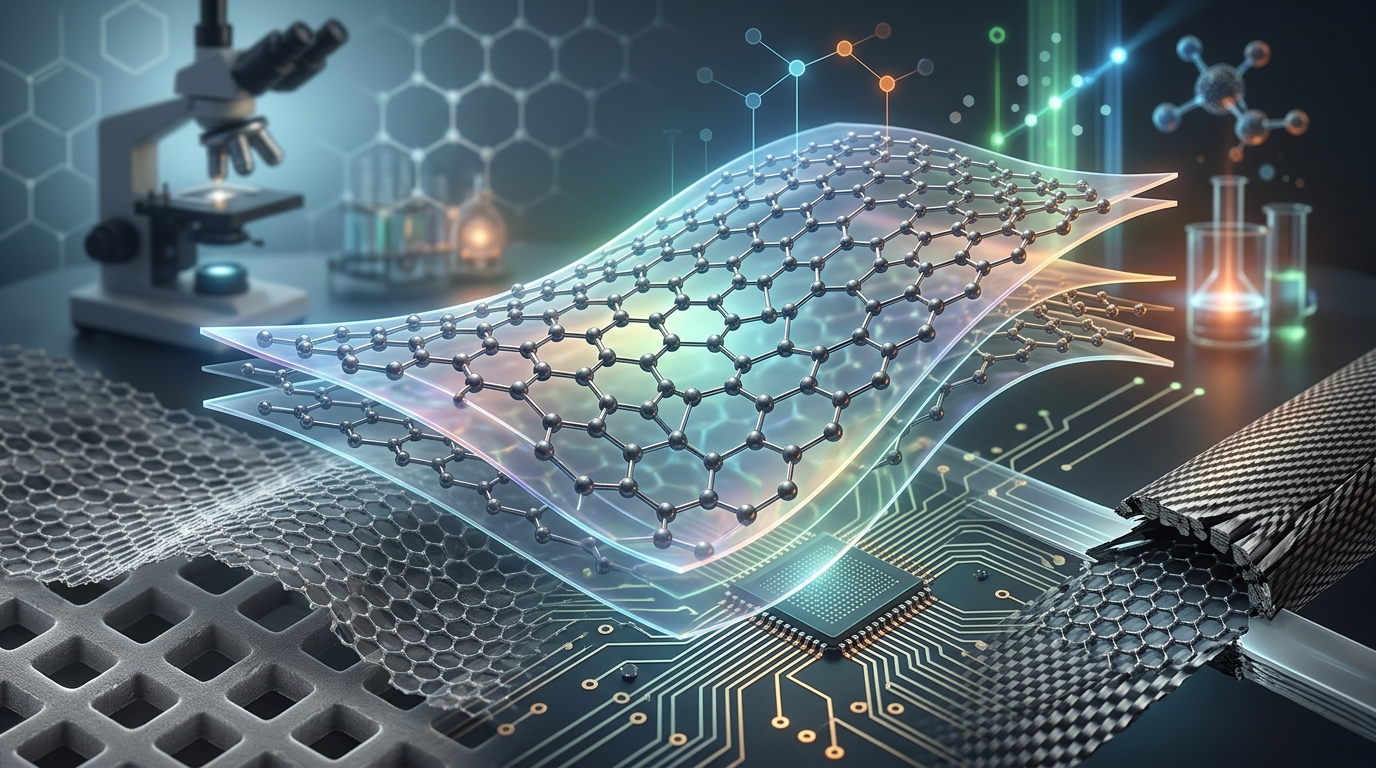
Graphene inks are liquid dispersions of graphene or few-layer graphene flakes engineered for deposition via conventional and digital printing technologies. By translating the exceptional electronic, thermal, and mechanical properties of two-dimensional carbon into a solution-processable format, these formulations serve as foundational building blocks for printed, flexible, and large-area electronics.
Unlike bulk metallic conductors, graphene inks allow manufacturers to fabricate lightweight, chemically inert, and mechanically resilient conductive traces on diverse substrates, including flexible polymers, paper, textiles, and glass. Developing effective graphene inks requires balancing electrical conductivity, fluid mechanics, substrate adhesion, and industrial throughput.
Formulation Science: Components and Chemistry
A functional graphene ink is a multi-component colloidal system. The primary challenge in ink formulation is preventing graphene flakes from irreversibly re-aggregating due to strong inter-sheet van der Waals forces, while ensuring the dried trace maintains adequate electrical percolation and substrate adhesion.
Graphene Flake Morphologies and Concentrations
The active conductive filler typically consists of pristine graphene nanoplatelets (GNPs), reduced graphene oxide (rGO), or liquid-phase exfoliated (LPE) graphene. Flake geometry directly influences the electrical percolation threshold—the minimum concentration required to form continuous conductive pathways:
- Lateral Flake Size: Larger lateral dimensions (typically 1 to 5 microns) reduce the number of flake-to-flake junctions per unit length, minimizing inter-flake contact resistance and boosting conductivity. However, excessive flake size can clog fine printhead nozzles.
- Flake Thickness: Thinner flakes (1 to 5 layers) provide optimal mechanical flexibility and surface area, whereas thicker nanoplatelets (10 to 30 layers) behave more like bulk graphite, yielding lower sheet resistance at the expense of dispersion stability.
- Loading Concentration: Graphene solids loading varies significantly by deposition method, ranging from under 1 wt% for low-viscosity inkjet inks to over 20 wt% for high-viscosity screen printing pastes.
Solvent Systems: Water-Based vs. Organic Formulations
The carrier liquid dictates the thermodynamic stability of the dispersion and the drying kinetics of the printed layer:
- Organic Solvents: High-boiling, highly polar solvents such as N-methyl-2-pyrrolidone (NMP), dimethylformamide (DMF), and cyclohexanone match the surface energy of pristine graphene (~40 mN/m), yielding stable dispersions without heavy additives. However, their high boiling points demand intensive curing conditions, and their toxicity limits consumer-facing manufacturing. Lower-boiling alcohols (isopropanol, ethanol) and glycols are frequently used when faster drying and lower toxicity are necessary.
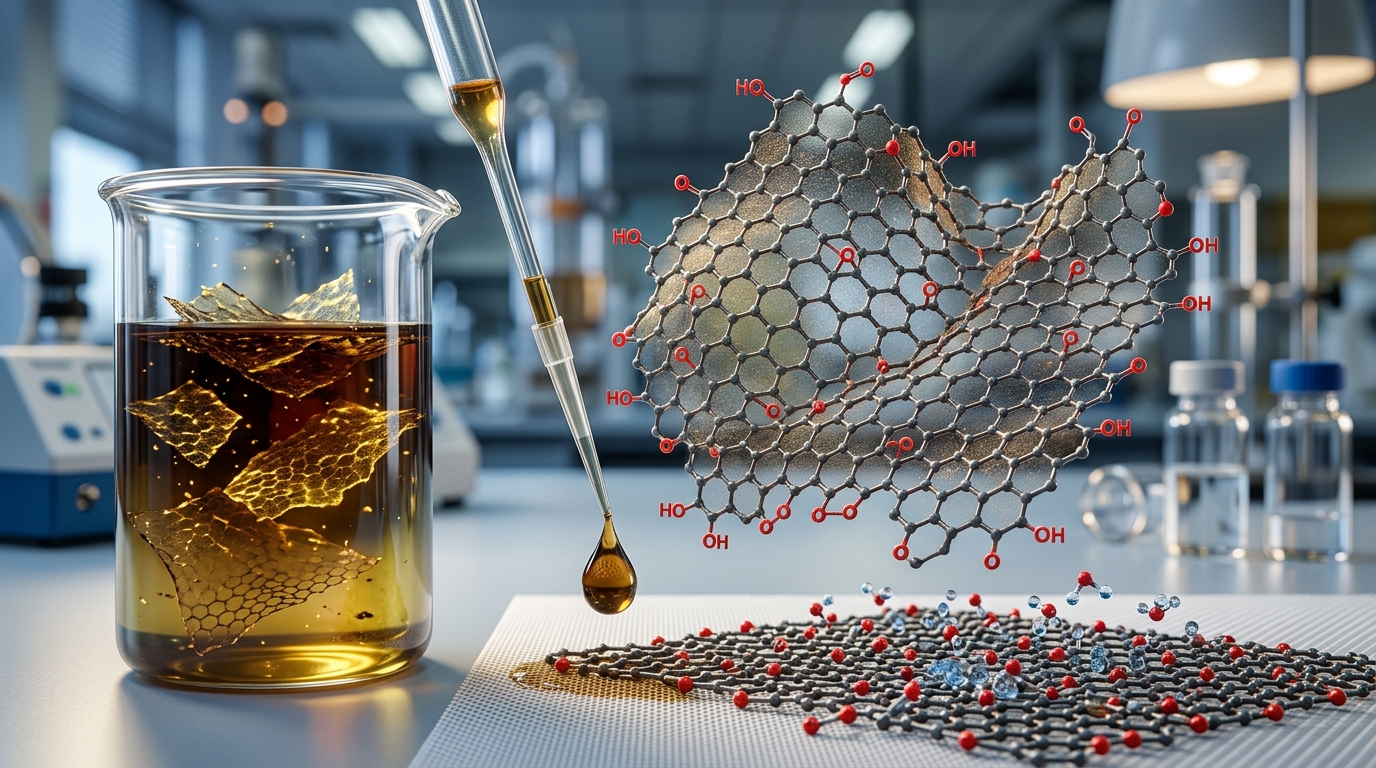
- Water-Based Formulations: Aqueous systems are environmentally benign, non-flammable, and compatible with high-speed production environments. Because pristine graphene is inherently hydrophobic, water-based formulations strictly require chemical functionalization (e.g., graphene oxide) or surfactant stabilization to achieve dispersion stability.
Surfactants, Stabilizers, and Polymeric Binders
Without surface stabilization, dispersed flakes quickly agglomerate. Formulators add ionic surfactants (e.g., sodium dodecyl sulfate, sodium cholate) or non-ionic stabilizers (e.g., polyvinylpyrrolidone, ethyl cellulose) to provide steric or electrostatic repulsion.
Polymeric binders, such as acrylics, polyurethane, or nitrocellulose, serve a dual purpose: they adjust fluid rheology and bind the graphene network to the underlying substrate after solvent evaporation. While binders improve mechanical adhesion and scratch resistance, they introduce electrically insulating barriers between flakes, establishing a constant engineering trade-off between electrical performance and mechanical durability.
Key Performance Properties
The commercial utility of a printed graphene trace is evaluated across several distinct physical and chemical parameters.
Electrical Conductivity and Sheet Resistance
Unlike isotropic metallic films, the conductivity of printed graphene films is determined by percolative transport through an interconnected network of overlapping flakes. Performance is primarily reported as sheet resistance (expressed in ohms per square, Ω/sq), normalized by film thickness.
Commercial graphene ink traces typically exhibit sheet resistances ranging from 10 Ω/sq to 500 Ω/sq for thick screen-printed layers (several micrometers thick), and 1 kΩ/sq to 100 kΩ/sq for sub-micron inkjet-printed layers. Bulk conductivity values generally range between 103 and 105 S/m, which is lower than bulk metals but well within the operational window for sensor electrodes, electrostatic dissipation, and electromagnetic interference (EMI) shielding.
Rheology and Viscosity Profiles
Ink fluid dynamics must match the chosen deposition method. Key rheological parameters include:
- Viscosity: Ranges from 1 to 20 mPa·s for inkjet printing, up to 1,000 to 100,000 mPa·s for screen printing.
- Shear-Thinning (Pseudoplasticity): Formulations must exhibit lower viscosity under high shear (e.g., ejection through a nozzle or squeegee blade displacement) and recover higher viscosity rapidly at rest to prevent uncontrolled spreading on the substrate.
- Surface Tension: Typically engineered between 25 and 45 mN/m to achieve reliable droplet breakup in digital systems and proper wetting across target polymer substrates.
Substrate Adhesion and Mechanical Flexibility
Graphene’s intrinsic two-dimensional crystalline structure gives it remarkable flexibility. When properly formulated with elastomeric or semi-crystalline binders, printed graphene tracks can withstand thousands of cyclic bending, stretching, and twisting motions without undergoing brittle fracture or catastrophic conductivity loss. Adhesion is routinely verified using standard cross-hatch tape tests (ASTM D3359), ensuring the layer does not delaminate from substrates such as polyethylene terephthalate (PET), polyimide (PI), or uncoated paper.
Compatible Deposition and Printing Techniques
Graphene inks can be formulated for both high-resolution digital patterning and high-throughput analog roll-to-roll (R2R) printing presses.
| Printing Method | Viscosity Range | Typical Thickness | Key Applications |
|---|---|---|---|
| Inkjet Printing | 1 – 20 mPa·s | 100 nm – 1 μm | Rapid prototyping, biomedical sensors, micro-supercapacitors |
| Screen Printing | 1,000 – 100,000 mPa·s | 3 – 25 μm | RFID tags, planar heating elements, textile integration |
| Flexography | 50 – 500 mPa·s | 0.5 – 2 μm | High-speed packaging, distributed sensor lines |
| Gravure Printing | 10 – 200 mPa·s | 0.8 – 3 μm | High-volume smart labels, roll-to-roll continuous foils |
Inkjet Printing
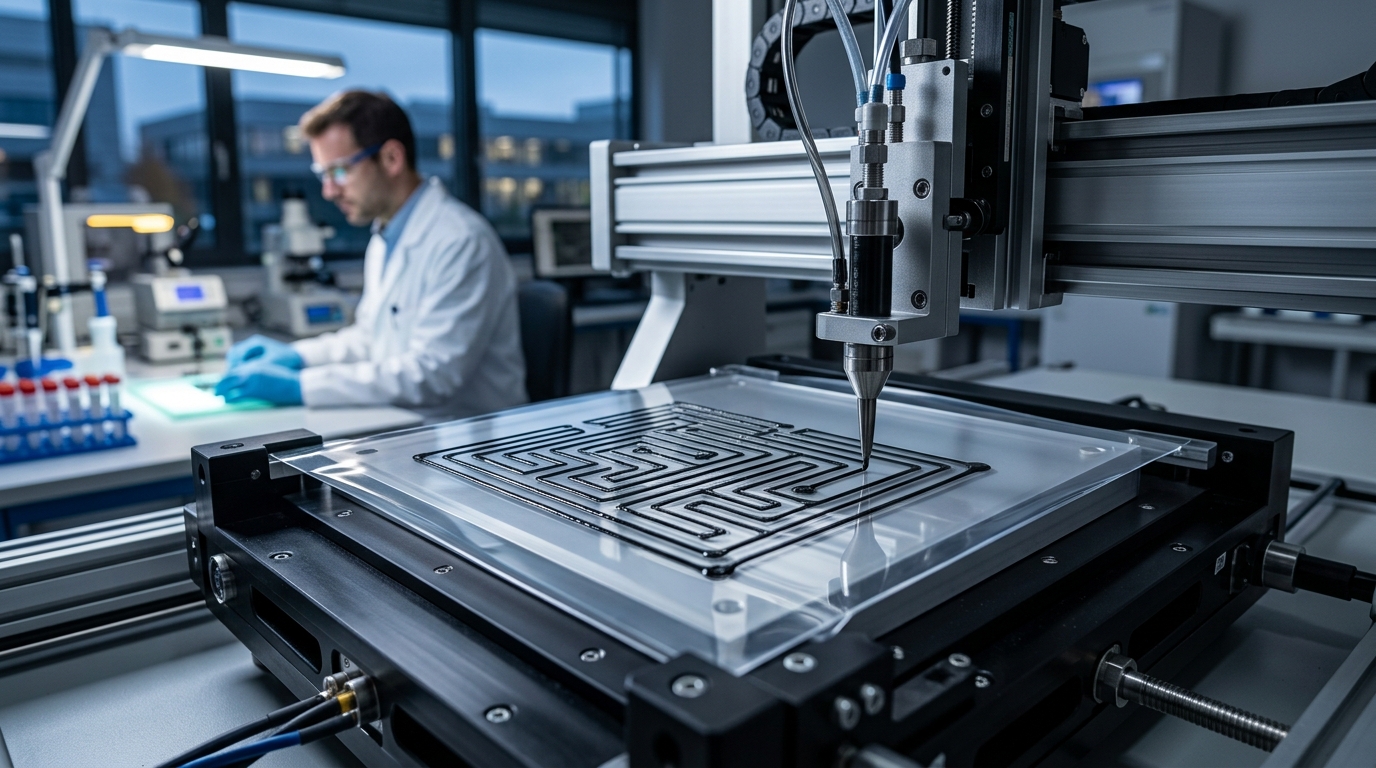
Inkjet deposition is a maskless, digitally controlled technique best suited for precise designs and rapid prototyping. Drop-on-demand (DoD) piezo printheads impose strict formulation limits: flakes must generally have lateral sizes smaller than one-fiftieth of the nozzle aperture (typically <500 nm) to avoid nozzle clogging. Inkjet formulations use low solid loadings and require careful optimization of the inverse Ohnesorge number ($Z = sqrt{gamma rho a}/eta$) to achieve stable droplet formation without satellite splatters.
Screen Printing
Screen printing is the most widely adopted industrial method for thick-film graphene electronics. High-viscosity thixotropic pastes are pressed through a patterned emulsion mesh using a squeegee. This method accommodates large flakes and high solids loading (often 10–25 wt%), yielding thick, low-resistance traces in a single pass. It is the preferred technique for printed heaters, heavy-duty electrodes, and smart textile tracks.
Flexographic and Gravure Printing
Flexography and gravure printing support industrial-scale roll-to-roll (R2R) production, operating at web speeds exceeding 100 meters per minute. Flexography uses flexible photopolymer relief plates to transfer low-to-medium viscosity ink, while gravure relies on microscopic cells engraved into metallic cylinders. Both processes require inks that wet high-speed running webs, dry rapidly, and establish strong inter-flake connectivity during rapid solvent evaporation.
Curing and Post-Processing Requirements
Directly after deposition, printed graphene lines exhibit poor electrical conductivity because residual solvents, insulating binders, and dispersing surfactants surround individual flakes. Post-deposition processing is necessary to evaporate solvents, decompose non-conductive additives, and compact the flake network.
Thermal Annealing
Convective or radiative thermal drying is the traditional curing method. Thermal exposure removes solvent molecules and causes binder matrix shrinkage, pulling adjacent graphene flakes closer together to establish percolation paths. Complete thermal decomposition of stabilizing surfactants often requires temperatures between 250°C and 400°C. However, standard low-cost flexible substrates degrade at much lower temperatures:
- Paper Substrates: Degrade between 100°C and 140°C.
- Polyethylene Terephthalate (PET): Glass transition and deformation occur around 120°C to 150°C.
- Polyethylene Naphthalate (PEN): Dimensionally stable up to roughly 180°C to 200°C.
- Polyimide (Kapton): Resilient up to 350°C to 400°C, enabling high-temperature curing at higher material costs.
Photonic Sintering and Non-Thermal Methods
To overcome substrate thermal limits, specialized post-processing techniques deliver energy selectively to the printed ink without overheating heat-sensitive polymer backings:
- Photonic Sintering (Intense Pulsed Light – IPL): High-energy xenon flash lamps emit microsecond-duration light pulses. Graphene absorbs this broadband light efficiently, generating high localized heat that burns away organic stabilizers and anneals the film in milliseconds, while the transparent or heat-sensitive substrate below remains undamaged.
- Laser Annealing: Focused laser scanning selectively sinters printed patterns, allowing for localized post-processing and precision conductivity tuning across specific circuit segments.
- Mechanical Compression: Cold or roll pressing compacts loose flake networks into aligned, densely packed planes, significantly reducing sheet resistance without requiring added heat.
Direct Comparison Against Alternative Conductive Inks
Selecting an ink formulation requires balancing conductivity, raw material costs, environmental durability, and processing constraints. Graphene inks compete directly with silver nanoparticles, copper inks, and conductive polymers.
| Attribute | Graphene Inks | Silver Nanoparticle Inks | Copper Inks | PEDOT:PSS |
|---|---|---|---|---|
| Conductivity | Moderate (103 – 105 S/m) | Very High (106 – 107 S/m) | High (106 S/m) | Low to Moderate (102 – 103 S/m) |
| Raw Material Cost | Moderate; decreasing with scale | High and volatile (precious metal) | Low (abundant base metal) | Moderate to High |
| Oxidation Resistance | Excellent (chemically inert) | Good (susceptible to tarnishing/sulfidation) | Poor (readily forms non-conductive oxide) | Moderate (degrades with UV/moisture) |
| Flexibility & Fatigue | Exceptional (two-dimensional sliding) | Moderate (prone to microcracking) | Moderate (cracks under repeated bending) | High (intrinsically flexible polymer) |
| Processing Atmosphere | Ambient air | Ambient air | Requires inert or reducing gas | Ambient air |
While silver nanoparticle inks remain the benchmark for pure electrical performance, their high material cost and tendency to migrate under electric fields create clear engineering constraints. Copper inks offer an inexpensive metallic alternative, but copper nanoparticles oxidize rapidly under ambient conditions, demanding complex reducing agents or inert sintering atmospheres (such as nitrogen or formic acid vapor).
PEDOT:PSS provides excellent optical transparency and mechanical elasticity, but its lower electrical conductivity and sensitivity to atmospheric moisture limit long-term reliability. Graphene inks fit into a practical operational middle ground: they are stable against oxidation, maintain consistent conductivity under dynamic flexing, and process cleanly under ambient conditions without precious metals.
Real-World Application Sectors
Flexible and Wearable Electronics
Graphene’s natural resilience against bending stress makes it an effective conductor for on-body electronics and smart garments. Screen-printed graphene tracks directly applied to textiles or elastomeric substrates maintain electrical continuity during movement and standard laundering cycles, providing durable interconnects for body-worn sensors.
RFID Antennas and Smart Packaging
Ultra-high-frequency (UHF) radio-frequency identification (RFID) tags and near-field communication (NFC) transponders demand thin, low-cost antenna loops that can be produced in high volumes. Printed graphene inks can achieve the skin depths and radiation efficiencies needed for UHF operation. Unlike etched copper or aluminum foils, which generate chemical waste, printed graphene antennas can be deposited directly onto paper packaging in an additive, roll-to-roll process.
Planar Heaters and Thermal Management
Graphene’s high thermal conductivity and rapid Joule heating response support printed surface-heating elements. When current passes through a printed graphene trace, heat distributes quickly and evenly across the entire surface. This property is used in defogging systems, automotive seat warmers, heated apparel, and de-icing components, where low weight and mechanical flexibility are required.
Biomedical and Electrochemical Sensors
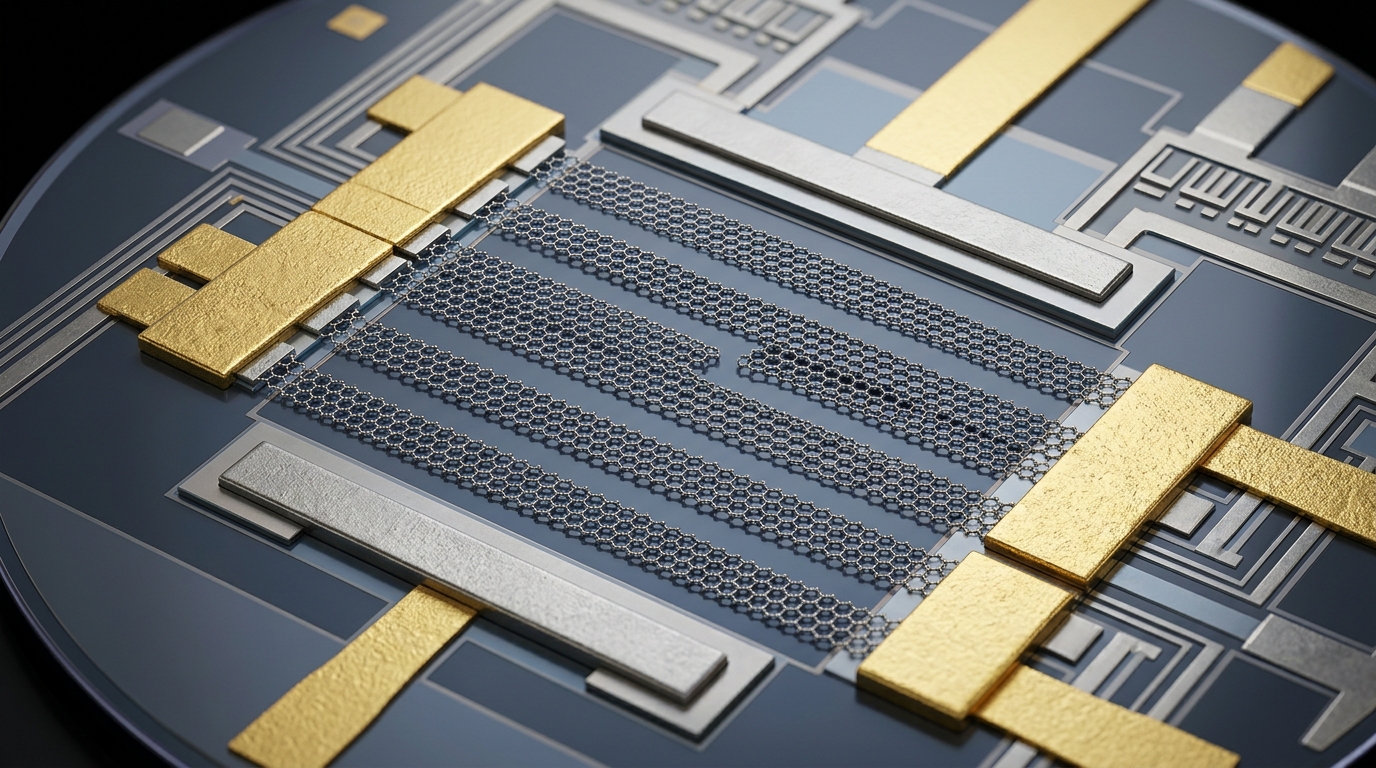
Graphene’s high electroactive surface area and wide electrochemical potential window make it an exceptional material for printed sensor electrodes. Commercial applications include single-use diagnostic test strips (such as blood glucose monitors), environmental heavy-metal detectors, and electromyography (EMG) or electrocardiogram (ECG) skin patches. Graphene does not oxidize under physiological saline conditions, providing reliable signal transmission without the toxic leaching risks associated with copper.
Sustainability and Recyclability Benefits
As electronic waste continues to accumulate worldwide, the environmental profile of conductive printing inks has become an active design consideration. Metallic nanoparticle inks—especially silver—are resource-intensive to mine, chemically refine, and reclaim, and they introduce heavy metals into recycling waste streams.
Graphene consists exclusively of elemental carbon. When printed on compostable or paper substrates using non-toxic water-based formulations, the electronics avoid introducing heavy metals into standard paper repulping loops. The absence of rare or toxic elements simplifies disposal and aligns with sustainable life-cycle designs for disposable packaging and single-use diagnostics.
Commercial Selection and Implementation Trade-offs
When selecting a graphene ink for a specific manufacturing process, engineering teams must evaluate three balanced trade-offs:
- Sheet Resistance vs. Layer Thickness: If high conductivity is mandatory, thick-film deposition (e.g., screen printing) must be used. Thin inkjet passes may require multiple printing passes, which reduces manufacturing throughput.
- Substrate Compatibility vs. Curing Method: Low-cost substrates like PET limit convective oven temperatures to ~120°C. Achieving high conductivity at these temperatures requires either longer drying runs or capital investment in photonic sintering systems.
- Mechanical Durability vs. Flake Purity: Formulations loaded with polymeric binders offer superior substrate adhesion and abrasion resistance, but the binder network increases electrical resistance. For high-conductivity interconnects, binder content must be reduced, requiring top-layer encapsulation to prevent mechanical wear.
Carefully balancing these formulation, printing, and thermal parameters allows engineers to exploit graphene’s distinctive properties—delivering durable, mechanically robust, and cost-effective printed electronic devices.